
Fire Captain Killed in Backdraft During a Fire in One-Story Strip Store
– Little Rock, Arkansas – October 8, 1940
On October 8, 1940, Little Rock Fire Captain William E. Blevins died while battling a working fire involving a one-story strip store building housing four mercantile businesses. As firefighters began to stretch a 2.5-inch hoseline to the front of the building, a backdraft occurred, showering the men with shards of glass, hot bricks, burning timbers, and steel beams. Additional companies were called to the scene to help dig the men out of the steaming rubble. Captain Blevins was pulled out of the ruins and rushed to the hospital, where doctors determined that he had been killed instantly in the blast. Eight others including six firefighters, a police lieutenant, and a bystander were injured by flying bricks. None of the injured were seriously hurt. The cause of the fire and subsequent explosion were never determined. Captain Blevins was the twelfth firefighter killed in the line of duty in the history of the Little Rock Fire Department.
The structure involved in the incident was a one-story Type III Ordinary construction strip store located at 1801-1807 West 16th Street on the southwest corner of Wolfe Street in a residential neighborhood about a one mile south of the State Capitol Building in Little Rock. The building measured about 90 feet wide, 50 feet deep and 14 feet tall with a flat roof and was occupied by four mercantile occupancies including a drug store, a grocery store, a beauty shop, and a barber shop. Side Alpha had a wood frame canopy roof and glass display windows across the front of the building facing 60-foot-wide West 16th Street. Side Bravo faced 60-foot-wide Wolfe Street. A small one-story wood frame dwelling was close on Side Charlie. A small two-story wood frame setback was attached near the Charlie/Delta corner. On Side Delta was a small one-story wood frame dwelling. The building was not equipped with a fire alarm system or an automatic fire sprinkler system. A fire hydrant fed by an eight-inch water main was located one block west at the intersection with South Battery Street.
Little Rock is the capital and most populous city of the State of Arkansas. The 103 square mile city’s population was 202,591 as of the 2020 U.S. census. The six-county Little Rock metropolitan area is the 81st-most populous in the United States with 748,031 residents according to the 2020 U.S. census. As the county seat of Pulaski County, the city was incorporated on November 7, 1831, on the south bank of the Arkansas River close to the state’s geographic center in Central Arkansas. Little Rock is a cultural, economic, government, and transportation center within Arkansas and the American South.
The city is protected by the 335 career members of the Little Rock Fire Department operating from 22 fire stations deploying 21 engine companies, 8 ladder companies, 1 heavy rescue USAR company, 6 squad units, 1 hazardous materials unit, a bomb squad, and 13 battalion chiefs. The city is divided into 4 fire battalions and commanded by 4 battalion chiefs each shift. In 2018 the department responded to 34,617 total calls for service of which 21,431 (61.9%) were rescue and emergency medical incidents.
At the time of the fire in 1940, the Little Rock Fire Department protected the city of 85,000 residents with 80 paid members including a chief, 3 assistant chiefs, and 76 men operating from 9 fire stations deploying 8 engines, 1 hose truck, 1 aerial ladder truck, and 1 service truck with 2 engines and 1 service truck were in reserve. The city had a municipal water supply with a system of reservoirs and standpipe tanks, and pumping stations supplying 112 miles of water mains and 958 double fire hydrants. A Gamewell fire alarm system had 37 street fire alarm boxes monitored from the Central Fire Station.
Shortly before midnight, on Tuesday, October 8, 1940, a fire was reported in a one-story strip store on the southwest corner of 16th and Wolfe Streets in a residential area south of the downtown business district of the city. Little Rock Engines 5, 6, and Truck 2 were dispatched to the scene. In the building there were several businesses including a drug store, a grocery store, a beauty shop, and a barber shop. The crew of Engine 5, commanded by Captain William “Olie” Blevins, stretched a 2.5-inch hoseline to the sidewalk in front of the building and were playing their stream into the heavily involved drug store portion of the structure. The members of Engine 6 were stretching an additional hoseline and the truck company crew was laddering the building and preparing to open the flat roof.
Suddenly, a blast of flame, smoke and heat blew out the front plate glass windows of the drug store catching everyone by surprise and showering the firemen with shards of glass, hot bricks, burning timbers, and steel beams. Eight persons including six firefighters, a police lieutenant and a bystander were injured in the blast as a portion of a brick wall collapsed. Captain Blevins was directing the hose crew from just outside the front door at close range when the blast toppled the masonry wall, burying him in a pile of debris on the front sidewalk while the others were struck and injured by flying bricks.
Additional companies were called to the scene to help dig the men out of the steaming wreckage. Captain Blevins was pulled out of the rubble and rushed to the hospital, where doctors determined that he had been killed instantly in the blast.
The injured included Assistant Fire Chiefs B.S. Harmon and H.D. Compton, Ladderman N.F. Teague, Hoseman W.W. Aley, and Drivers R. Strohsahl and Roy Bell. Little Rock Police Lieutenant G.C Adkins and T.J. Hendrix, a bystander who was helping the firefighters, both suffered burns and bruises. None of the injured were seriously hurt.
The fire completely destroyed the building including the four shops. Damages were estimated at $12,000. The cause of the fire and subsequent explosion were not determined.
Captain William E. Blevins, age 42, was survived by his wife, Myrtle, his two daughters, Mrs. J.L. Dyson and Miss Martha Jane Blevins, his son, William E. Blevins Jr, his parents, Mr. and Mrs. C.F. Blevins, and his two brothers, H.F. and E.F. Blevins. He was buried in Roselawn Memorial Park in Little Rock.
The name of Little Rock Fire Captain William E. Blevins has been honored at the Arkansas Fallen Firefighters Memorial on the grounds of the Arkansas State Capitol Complex in Little Rock. The memorial features four statues: “Old Leather Lungs”, representing the origins of firefighters; “The Angel of Mercy”, representing paramedic firefighters; “On the Line”, representing wildland and forestry firefighters; and “Pushin’ In”, which represents modern day firefighters. The center statue and fountain are known as the Win Rockefeller Fountain of Faith.
The site of the fatal fire is now a vacant lot. There is no memorial marker at the site.
Commentary:
Legacy Type III Ordinary construction mercantile buildings are noted for often having combustible void spaces, particularly in the void created when a dropped ceiling has been installed during renovations. This may result in several layers of combustible void spaces over the heads of unsuspecting firefighters conducting an interior fire attack. During a fire, this hidden combustible space can accumulate substantial amounts of smoke, heat and unburned products of combustion that can suddenly ignite explosively. Firefighters operating along the front facade wall of such a structure may be in the direct path of the explosion and can be tossed into street or struck by building components as they are hurled from the structure with great force.
Retired FDNY Deputy Chief Vincent Dunn has likened entry into a mercantile building that has been closed up and burning for an extended period of time as entering into the barrel of a shotgun. Firefighters must be trained to recognize the warning signs of backdraft. These indicators may include a well-sealed building; little or no visible flame; black smoke becoming dense, greyish yellow without visible flames; smoke-stained windows with visible cracking and/or rattling; smoke leaving the building in puffs and then being drawn back in; and the sudden rapid movement of air and smoke inward when an opening in the building is made. Backdraft prevention includes vertical ventilation to relieve the pressure of the accumulated gases harmlessly into the atmosphere and prevent an explosive ignition as firefighters open up the building for entry. Recognized the signs of impending flashovers, and backdrafts and smoke explosions are basic firefighter survival skills that need to be taught to all firefighters.
In the more than 80 years since this incident, there has been considerable research and testing that can educate firefighters in these important skills. Each phenomena have specific warning signs that firefighters can identify and use to prevent being caught in one of these deadly rapid fire events. Flashovers are heat driven occurrences while smoke explosions and backdrafts are air driven events. Once firefighters understand the characteristics between the two very different manifestations on the fireground, steps can be taken to protect personnel from being caught in a situation that is often not survivable.
Unfortunately, there are no photos of incident available. We have attached a detail from the 1939 Sanborn fire insurance map of the area showing the configuration of the fire building and the surrounding exposures.
We have attached a video of a backdraft occurring in a storefront in St. Johnsbury, Vermont in 1998 as firefighters attack from the sidewalk in front of the burning structure: https://www.bing.com/videos/riverview/relatedvideo?q=backdraft+St.+Johnsbury+VT+video&mid=A23E70E7A3778E59D6AAA23E70E7A3778E59D6AA&FORM=VIRE&ajaxhist=0&ajaxserp=0
And we have attached the link to a free course produced by the FSRI on Fire Dynamics in Structures that examines how fire burns inside a compartment and explores the difference between fuel-limited and ventilation-limited fires: https://training.fsri.org/course/125/fire-dynamics-in-structures
Thanks to multiple media sources for the content of this article.
Remember the service of Captain William E. Blevins by touring a legacy mercantile building in your local response district and by discussing the warning signs of backdraft with your crew members today.
Remember Fallen Brothers.
Get Out There And Know Your Local!!!
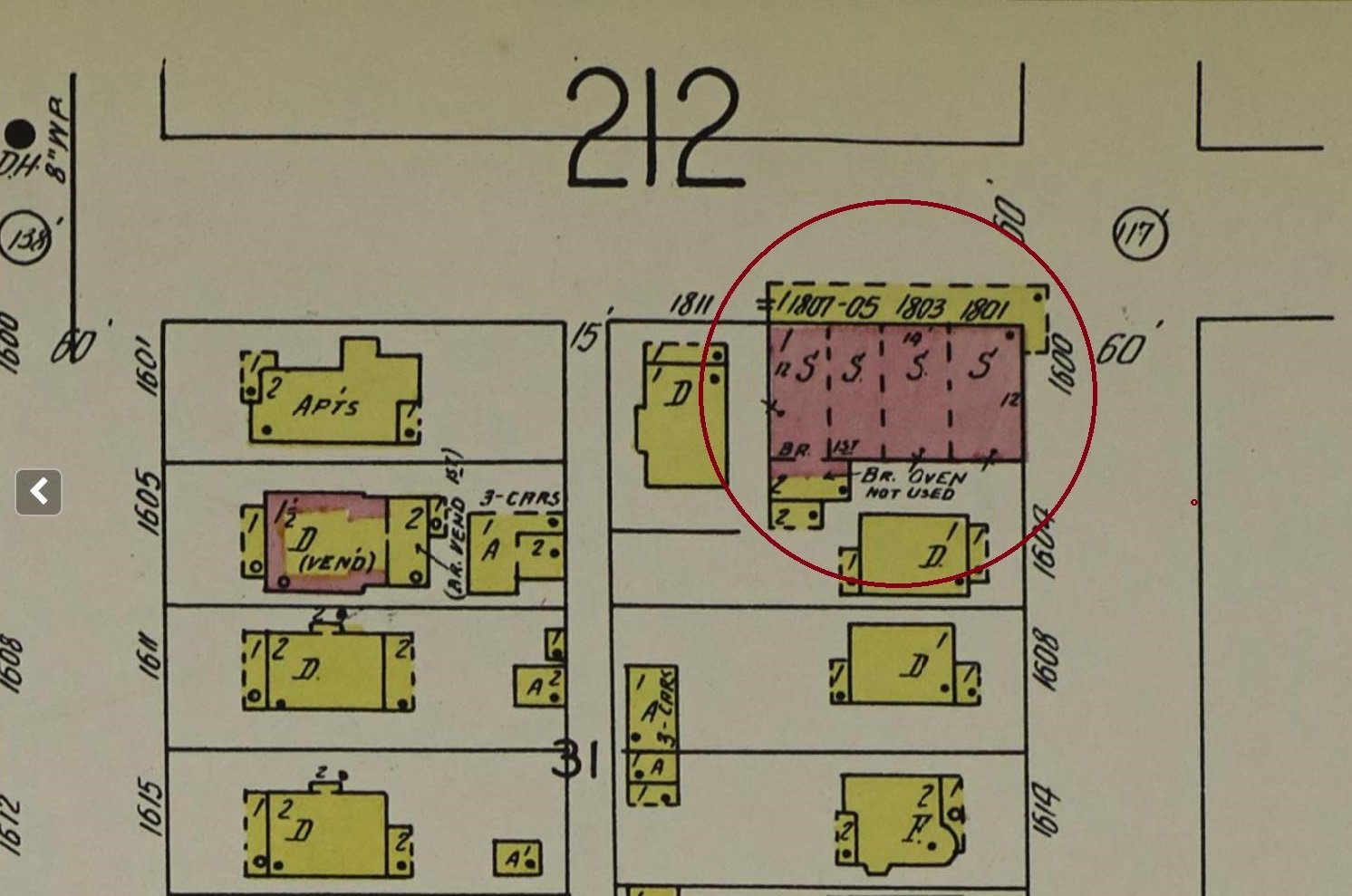
The structure involved in the incident was a one-story Type III Ordinary construction strip store located at 1801-1807 West 16th Street on the southwest corner of Wolfe Street in a residential neighborhood about a one mile south of the State Capitol Building in Little Rock. The building measured about 90 feet wide, 50 feet deep and 14 feet tall with a flat roof and was occupied by four mercantile occupancies including a drug store, a grocery store, a beauty shop, and a barber shop. Side Alpha had a wood frame canopy roof and glass display windows across the front of the building facing 60-foot-wide West 16th Street. Side Bravo faced 60-foot-wide Wolfe Street. A small one-story wood frame dwelling was close on Side Charlie. A small two-story wood frame setback was attached near the Charlie/Delta corner. On Side Delta was a small one-story wood frame dwelling. The building was not equipped with a fire alarm system or an automatic fire sprinkler system. A fire hydrant fed by an eight-inch water main was located one block west at the intersection with South Battery Street.
Detail from the 1939 Sanborn fire insurance map of the area showing the fire building (circled in red) and the surrounding exposures.


Graphic courtesy of Vincent Dunn.

Time temperature curve graphic of the fire progress in a compartment as the stages of fire occur.


