Assistant Chief Engineer and Two Firemen Killed in Fire Collapse of Lodging House – The Owl Lodging House Fire – San Francisco, California – October 5, 1917
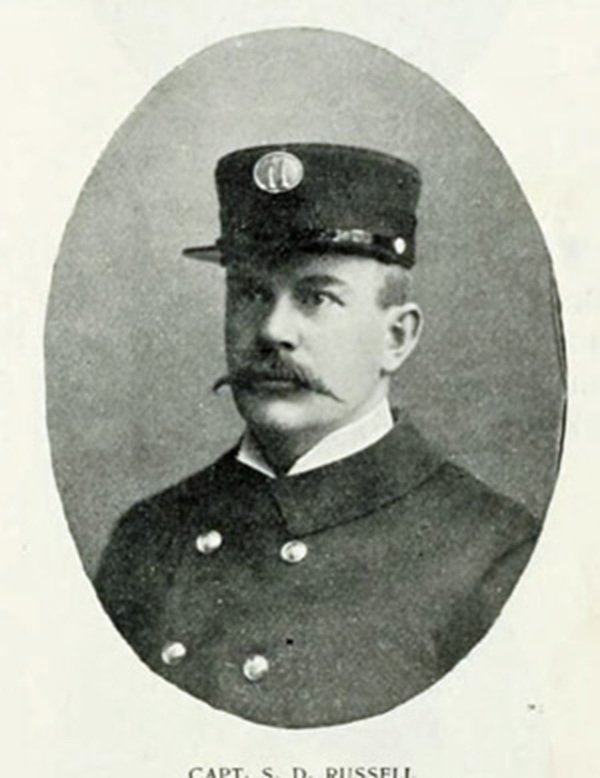
On October 5, 1917, First Assistant Chief Engineer Stephen D. Russell, Hoseman Joseph L. Allen of Engine 9 and Truckman Timothy F. Collins of Truck 1 were killed, and twenty others were seriously injured when the Owl Lodging House, an old rickety wood frame rooming house collapsed during a raging fire in the downtown section of the city of San Francisco. Assistant Chief Engineer Russell was removed from the debris and rushed by ambulance from the scene but was pronounced dead at the hospital. Hoseman Allen and Truckman Collins were found unresponsive when their bodies were dragged from the blazing timbers of the collapsed building. Several roomers were taken from the blazing building by firemen and policemen before the collapse. Only minutes before the building failed, thirty firemen were ordered from the building by Fire Chief Thomas R. Murray. Several were caught in the collapse as they were evacuating the groaning structure. For a moment, the crowd of soldiers and sailors that had gathered to watch the fire were stunned by the crash but soon rushed into the wreckage alerted by the cries of several trapped firemen. The cause of the fire which appeared to have started in the hay loft of a storehouse attached to the rear of the lodging house was never determined but investigators believed the weight of water from fire streams was absorbed by hay in the loft and expanded the walls of the building causing the collapse. Following the tragic fire, the municipal government began a crackdown on dilapidated lodging houses in the city.
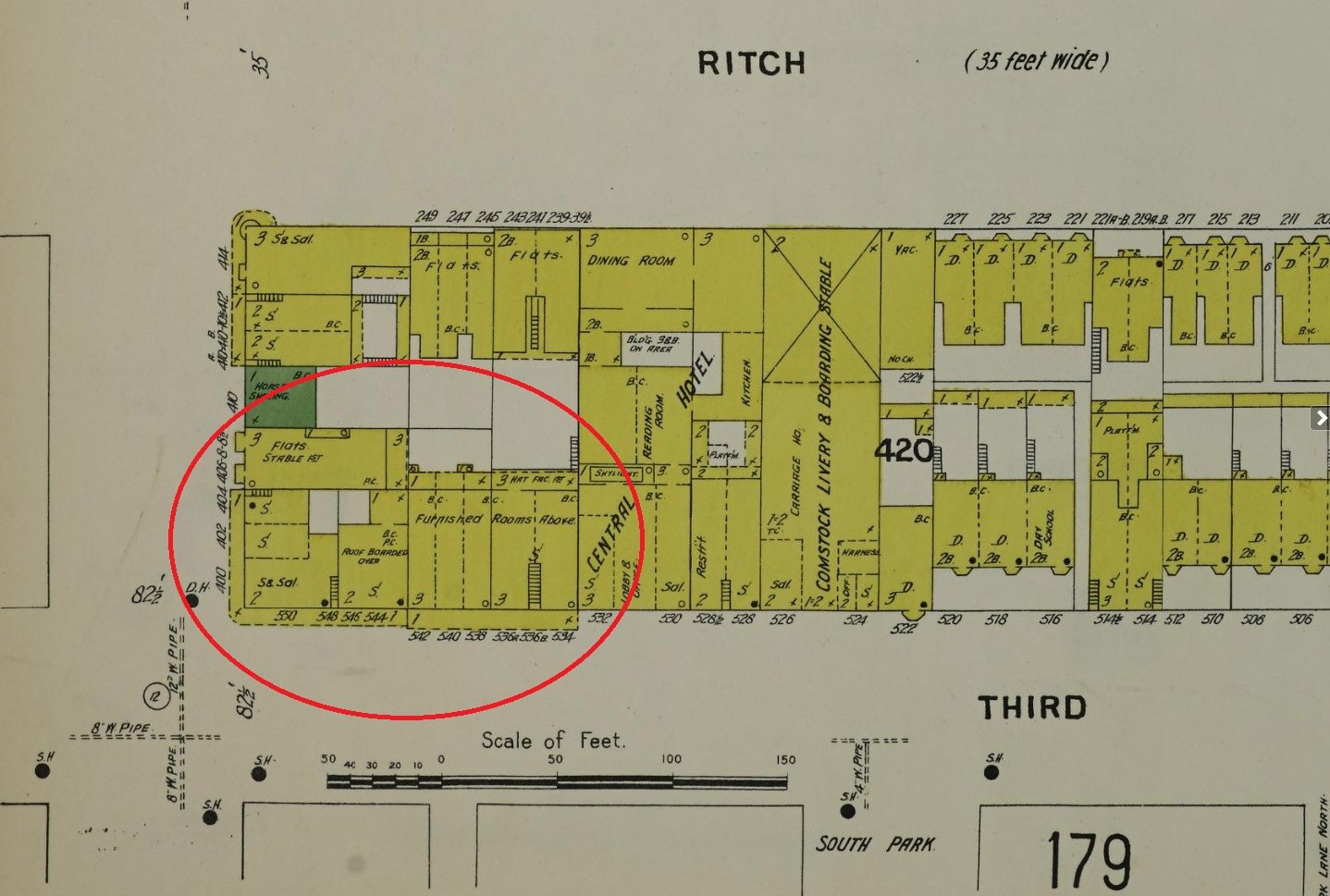
The incident occurred in an old ramshackle three-story Type V Wood frame structure that was being used as a rooming and boarding house. The occupancy was known as the Owl Lodging House and was located at 548 Third Street midblock between Brannan and Bryant Streets in the downtown area of the city. The three-story lodging house portion of the building measured about 75 feet wide and 50 feet deep with shops on the first floor. The second and third floors contained furnished rooms for rent. Side Alpha faced 80-foot-wide Third Street. On Exposure Bravo was an attached two-story wood frame building at the corner Brannan Street with shops and a saloon on the first floor. On Exposure Charlie was an attached three-story storehouse with a hay loft and an enclosed rear yard. On Exposure Delta was the three-story wood frame Central Hotel with shops, a restaurant and a saloon on the first floor and hotel rooms on the upper floors. A wood frame awning covering the front sidewalk wrapped around the front of the lodging house on Sides Alpha and Exposure Bravo. The building did not have a fire alarm or an automatic fire sprinkler system. Fire hydrants including one at the Alpha/ Bravo corner of the building and several on the opposite side of Third Street were fed by 8- and 12-inch water mains. The nearest fire alarm call box was located one half block west at Third and Bryant Streets.
Today the City of San Francisco is the commercial, financial, and cultural center of Northern California. The city proper is the fourth most populous in California, with an estimated 2024 population of 827,526, and covers a land area of 46.9 square miles at the end of the San Francisco Peninsula, making it the second most densely populated large U.S. city after New York City. After California was granted statehood in 1850, San Francisco grew rapidly with the development of the Port of San Francisco and the establishment in 1869 of overland access to the eastern U.S. rail system via the newly completed Union Pacific Railroad that helped make the Bay Area a center for trade. The city’s sea of Victorian houses began to take shape as affluent merchants and professionals sought larger and finer quarters. By 1890, San Francisco’s population approached 300,000, making it the eighth-largest city in the United States at the time. A disastrous earthquake struck the city in 1906. The devastating quake and resulting uncontrolled fires that leveled about 80% of the city. Reconstruction was swift, and largely completed by 1915, in time for the 1915 Panama–Pacific International Exposition which celebrated the reconstruction of the city and its “rise from the ashes”.
The history of the San Francisco Fire Department can be traced back to 1849 when the city suffered a catastrophic fire on Christmas Eve that destroyed 50 buildings. Concerned citizens resolved to form an organized department of volunteer firemen. By 1866, the first paid fire department was organized to protect the quickly expanding city. The Fire Department consisted of a chief engineer, 2 assistant chiefs, 1 corporation yard keeper (apparatus chief), and 6 steam fire engine companies. Each engine company was to have 1 foreman, 1 engineer, 1 driver, 1 fireman, and 8 extra or “call” men. There were 2 hook-and-ladder companies each consisting of 1 foreman, 1 driver, 1 tillerman and 12 extra men. Additionally, there were 3 hose companies, each consisting of 1 foreman, 1 driver, 1 steward and 6 extra men. The department went into active operation on December 3, 1866, making it the first paid fire department west of the Mississippi River.
By 1913, the Fire Department had expanded to include 772 fully paid members staffing 45 fire stations deploying 45 steam engine companies, 45 hose wagons, 12 hook and ladder companies, 11 chemical companies, 2 water towers, 3 monitor batteries, 2 fireboats, 13 officers’ buggies, 3 automobiles and 380 horses. A fire patrol funded by the Board of Fire Underwriters of the Pacific had 3 stations with 30 corpsmen, 3 automobile salvage wagons, 2 horse drawn salvage wagons, 6 horses, 1 captain’s automobile and 1 steam pump. The city was protected by a fire alarm telegraph system with 567 call boxes across developed areas and a public water system supplying about 5,200 fire hydrants.
In the fall of 1917, San Francisco was humming with activity as the effort to support the ongoing war in Europe drove economic activity in the city. On the afternoon of Friday, October 5 at about 4 p.m., a fire was discovered burning in a storehouse attached to the rear of the Owl Lodging House at 548 Third Street in the downtown area of the city. An alarm was raised that soon brought out multiple units from the Fire Department but not before the fire had had spread so rapidly that the flimsy three-story wood frame rooming house and the storehouse were a mass of flames. Police and firemen entered the house and removed three tenants that were in the building as luckily many of the dozens lodgers were still at work at that hour.
The firemen began their work stretching hoselines as the steamers were connected to nearby hydrants. Hose streams were directed at the blazing structures and were trained on the adjacent wood frame structures in hopes to limit the spread of the flames. Meanwhile, the police officers were busy holding back a large crowd that had gathered to watch the spectacle as fire lines were set up on the surrounding streets.
Fire Chief Thomas R. Murray arrived on the third alarm and was directing the firefight when he gave the order for all the members to evacuate the three-story building as he feared that the poorly built structure was about to collapse. Less than three minutes after the Chief’s order to withdraw from the blazing building had been given, the structure with a great groan fell toward into an adjacent vacant lot where more than thirty firemen were operating. A few had time to stumble away from the falling mass but the rest were caught in the avalanche of burning timbers.
For a minute, the crowd of soldiers, sailors, firemen, police and civilians in the street stood in awe of the spectacular fall. Then cries of help from the unhurt men on the other side, barred from sight by a big metal billboard, brought them to their senses. Firemen leaped over the hose and attacked the boards with their axes. A few crawled under, and their cries for help were added to the men trapped within the rumble. Excited men yelled for the six ambulances that were held a block away. Soldiers and sailors broke through the police lines and rushed to the pile of blazing debris.
Then they began to take the men out through the holes they cut in the boards. Dazed firemen, not badly hurt, but covered in mud and soot, came first. Some of them fought off the hospital men and tried to fight their way back into the trap. Others gritted their teeth as the men who carried them jarred a sprained back or touched a cut head.
The men caught under the heavier load of falling timbers were the last to be rescued. The crowd parted to make room for a stretcher bearing an unconscious man. It was First Assistant Chief Engineer Russell who had been directing operations before the collapse. “He’s dead,” someone whispered. “He was the best friend I ever had. Someone else will drive his little red car home tonight.” Russell was pronounced dead when he arrived at the hospital. He was not burned, the doctors said he was suffocated.
The firemen fought on. Feverishly they tied ropes to the heavy sections of the walls and pulled them into the street. Every few minutes another injured man was carried out. Men of various companies looked anxiously to see how badly their friends were hurt, but they stopped only for a moment before again seizing their axes and went back to work.
They brought out the body of Fireman Joseph L. Allen of Engine 9. Another fireman broke through the crowd as the body was placed in an ambulance. There was a big “9“ on his helmet. “Who was that?” he asked. “Joe Allen,” said a steward. “He’s dead.” “My God!” said the fireman. “He was my chum!” He turned white and staggered, but he went back into the burning timbers. The body of Firemen Timothy Collins of Truck 1 was found under a seven-foot pile of debris four hours after the blazing wall fell. Fireman David Lichnor found the body, with the skull crushed.
Fireman Jim Desmond of Truck 11 was standing near the lodging house with three other firemen when the building crumbled. He had come out of it three minutes before, on Chief Murphy’s order, after searching a number of rooms for lodgers. “The wall began to sag in the middle; that was the first warning,” he said. “We had time to stumble back in the direction of the saloon on the other side of the lot, and then there was a great crash. We could see some of the men as the burning wall caught them, and they disappeared. It was awful.” Desmond continued, “I was caught on the hip by a falling timber and thrown against the saloon. That saved my life. I guess my time hadn’t come. But we would all have died if the building had fallen straight out instead of buckling. I saw Chief Murphy as a piece of timber brushed by him.” With Desmond were Fireman E.F. Downs of Engine 12 and Firemen Wally Graham and Charles MacDonald of Engine 18. They escaped unhurt. Desmond was painfully hurt on the hip but refused to go home.
William Norton, Chief Russell’s driver, stood by his side and was buried under a pile of debris near the edge of the ruin. A crowd of rescuers stood directly over him for several minutes before he attracted their attention. While the firemen worked frantically to release him, he was given fresh water from a hat. While the rescue work continued, two streams of water were played on the feed storehouse of Anspacher Brothers that was built flush against the lodging house.
Battalion Chief Michael Flaherty, a young fireman at the time of the incident, gave his account of the collapse. “We were placing a ladder against the side of the building in an effort to rescue the late Assistant Chief Engineer Steven Russell and other firemen inside the house, when the cry went up that the building was falling.” “We ran. I thought I had picked out the right direction away from the falling house, but I went down under the pile. My buddy, Truckman Tim Collins and Joe Allen from Engine 9 perished in the crash.” Chief Flaherty was seriously injured at the Owl Lodging House fire and was in the hospital for a year following the fire recovering from his wounds.
The fire is believed to have started in the loft at the rear of the storehouse. “Responsibility for these deaths lies with the city’s failure to condemn these flimsy firetraps,” said Chief Murphy, as he learned of the deaths of three of his men. “Time after time we have asked them to condemn buildings like this, but they haven’t done it.”
The lodging house and the storehouse were totally destroyed. The property loss was estimated at more than $50,000 dollars. Hundreds of tons of grain and feed, owned by a number of persons and firms, were destroyed by fire or ruined by water. Thousands of persons watch the fire for hours, some standing blocks away. The fire smoldered in the storehouse long after the blaze was doused in the lodging house.
The storehouse had recently changed hands. It was formerly owned by the J. F. Holland & Company. In the last few days before the fire, a large quantity of hay and grain had been moved into the building. George J. Panario, assistant cashier of the Italian American Bank, said he had stored there 600 tons of hay valued at $15,000.
Fire Commissioners Timothy A. Readon and Daniel Fraser, and Chief Building Inspector inspected the scene of the tragedy the following day and issued a statement that the building was constructed in conformance with the ordinances at the time of erection, and that its collapse was due to the expansion of the baled hay in the loft of the adjoining storehouse as it became saturated with water. Even if the structure had been many times stronger, they said it would have collapsed under the pressure.
Following the tragic fire, the Fire Commissioners held a hearing on October 11, 1917, to determine whether or not orders given by Fire Chief Murray to withdraw from the fire building were complied with by some of those who were killed or injured. Chief Murray testified that he gave orders to a battalion chief and other subordinates to have everyone leave the building and that if the orders had been obeyed promptly there might have been no loss of life. The jury later found that the deaths of the three firefighters were deemed accidental but demanded that the city Board of Supervisors pass the necessary ordinances to protect the lives of city firemen.
The city also instituted a crackdown on lodging houses in disrepair such as the Owl Lodging House. While the inquest also found that the Board of Public Works lacked the authority to condemn such buildings when they compiled with the existing building laws, the Board of Health filed injunctive suits against the owners and lessees of twenty lodging houses in the city. The suits asked that the houses be closed on the grounds that they constitute a menace to public safety. If the injunctive suits were granted, the judge could ordered the lodging houses closed permanently or until they were remodeled to conform with current building regulations.
Members of the San Francisco Fire Department killed in the line of duty at the Owl Lodging House Fire on October 5, 1917:
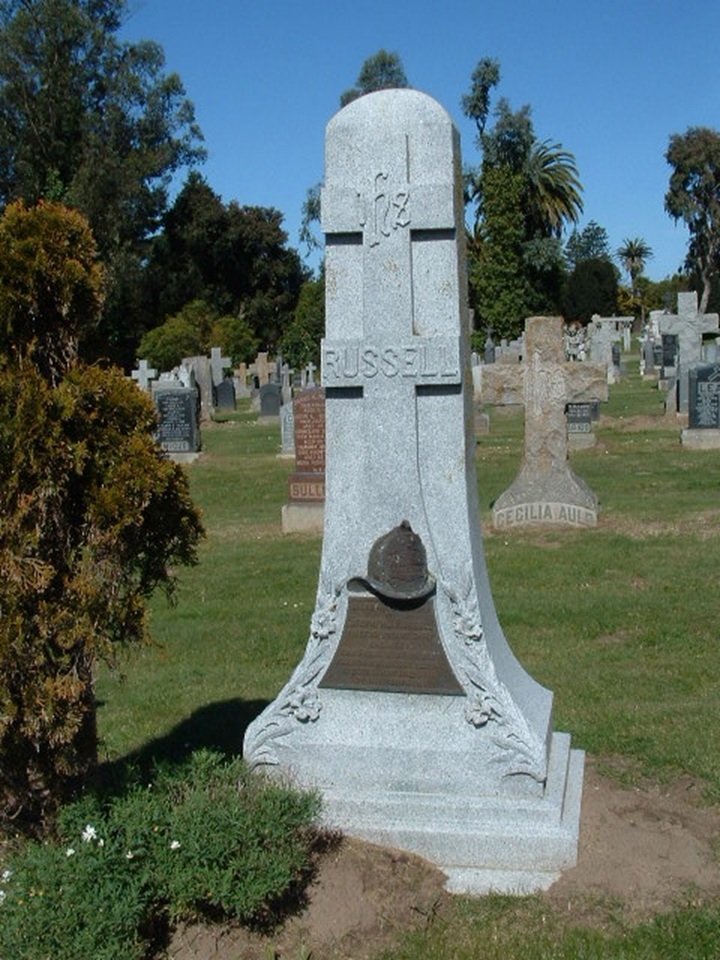
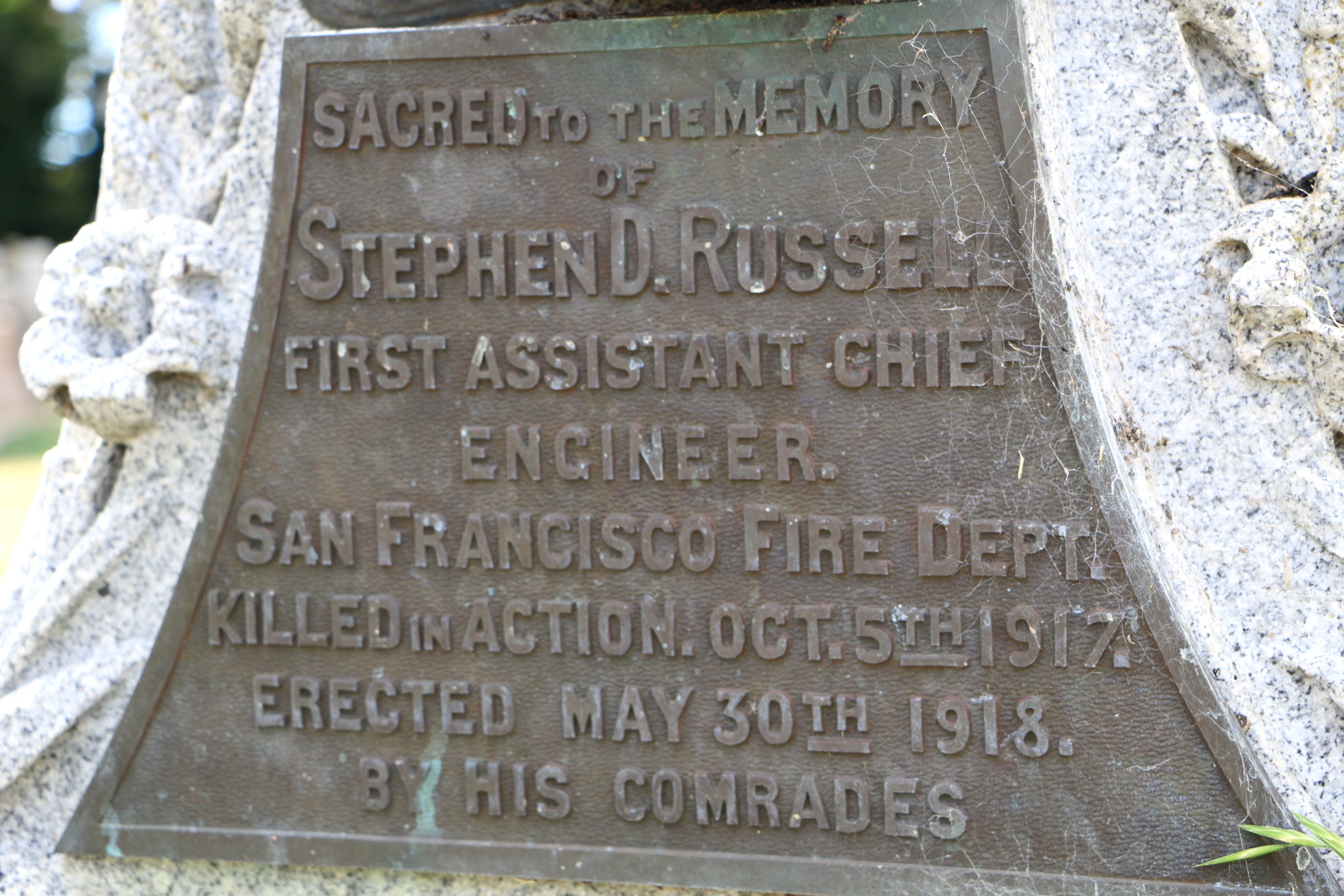
- First Assistant Chief Engineer Stephen D. Russell, age 56, was a 29-year veteran of the San Francisco Fire Department and was revered as one of the best firemen in the department. Born in Menlo Park, San Mateo County, he was appointed to the Department on August 8, 1888. He was survived by his wife, Emma, his two grown sons, John and Frank, and his daughter Lucile, age 13, and his brother, San Francisco Policeman Charles Russell. He was buried at Holy Cross Catholic Cemetery in Colma, San Mateo County, California.
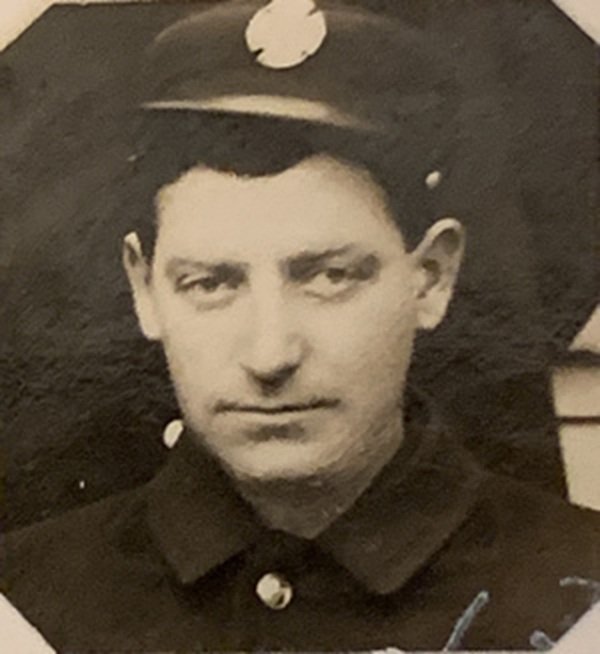
- Hoseman Joseph L. Allen, age 34, was a member of the San Francisco Fire Department assigned to Engine 9. He was survived by his wife, Catherine, and his children, Cecelia, Edward and William, his brothers James and John and sisters, Mrs. E. Zepeda and Mrs. T. Moran. He was buried at Holy Cross Catholic Cemetery in Colma, San Mateo County, California.
- Truckman Timothy F. Collins, age 32, was a member of the San Francisco Fire Department assigned to Truck 1. He was survived by his Mary, his children, Harold and Alice, and his parents, John and Margaret Collins, and his brother, Frank and sister, Mrs. O.E. Jones. He was buried at Holy Cross Catholic Cemetery in Colma, San Mateo County, California.
The city of San Francisco paid tribute to the memory of the three fallen firefighters. More than 10,000 citizens, as well as city officials, members of the Fire and Police Departments, Veteran Firemen of San Francisco and the Knights of Columbus paid their respects to the three dead heroes on October 9, 1917. The bodies lay in state for an hour in the rotunda of City Hall before funeral services at St. Mary’s Cathedral. More than two hundred uniformed firemen of the San Francisco Fire Department stood in a solid phalanx on the grand stairway leading to the rotunda during the services, which lasted more than an hour. The rotunda itself was banked with masses of cut flowers, wreaths and other floral offerings, which, following the services, required seven hose trucks to carry away, and which completely surrounded the caskets, guarded by members of the Fire Department.
Following the services at City Hall, the funeral cortege, led by the Firemen’s Band and including several hundred uniform firemen in addition to city officials and the families of the deceased firemen, made its way to St. Mary’s Cathedral, where the three heroes were accorded the full rites of the Catholic Church in a solemn requiem high mass. Interment services for all three members followed at Holy Cross Catholic Cemetery in Colma, San Mateo County, California.
A monument honoring First Assistant Chief Engineer Stephen D. Russell was erected by members of the Fire Department at his gravesite.
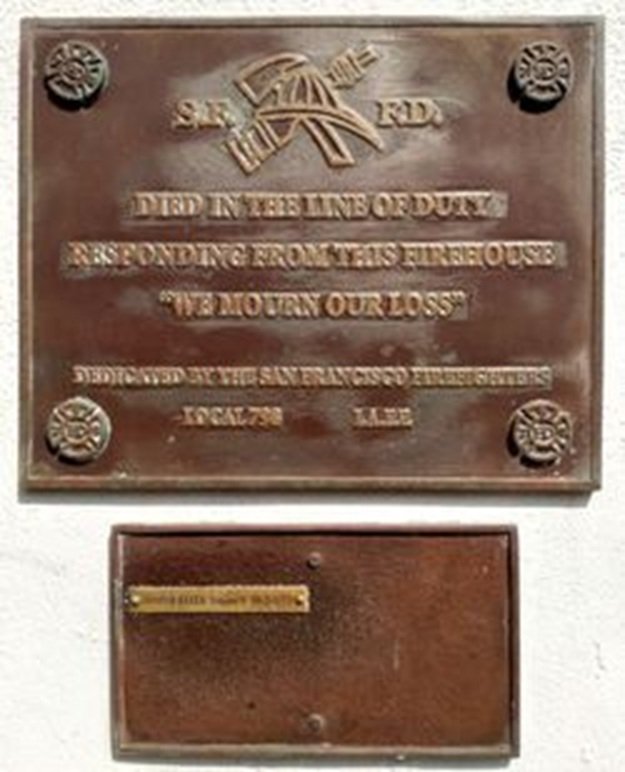
A bronze memorial plaque honoring Hoseman Joseph L. Allen is affixed to the exterior of the quarters of Engine 9 at 2245 Jerrold Avenue.
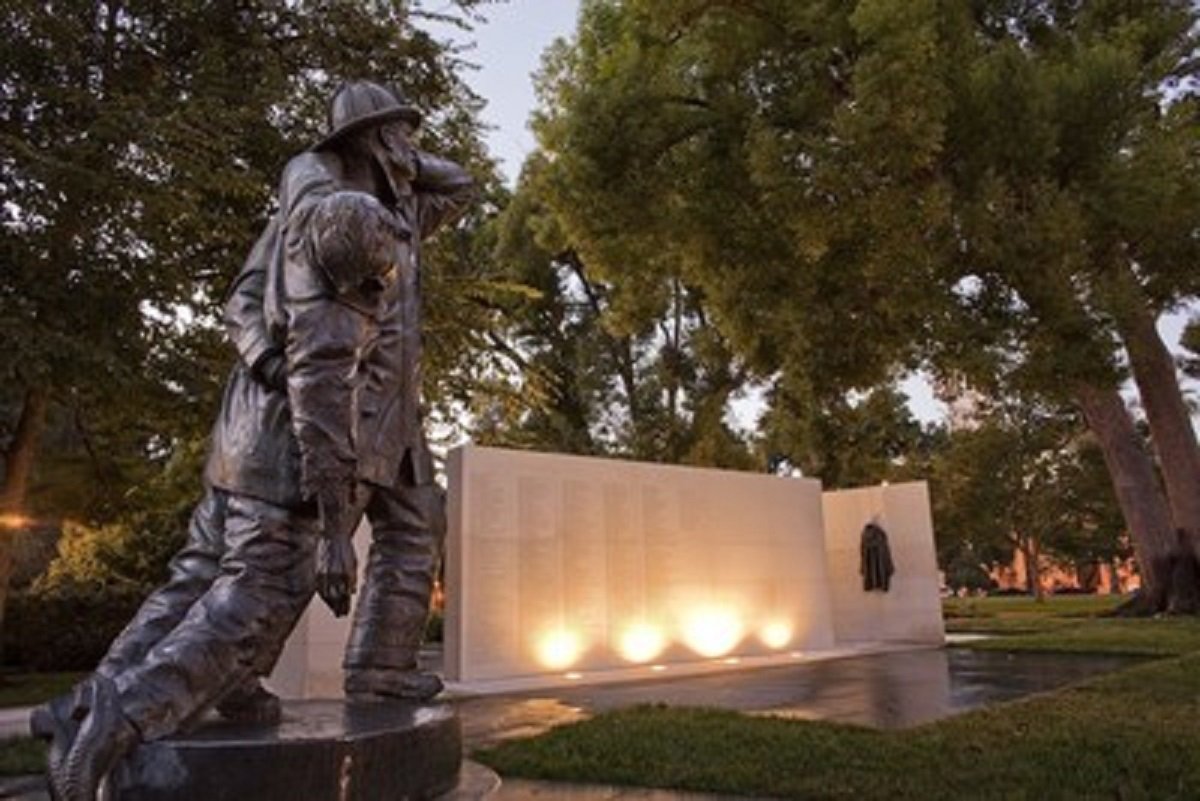
The names of First Assistant Chief Engineer Stephen D. Russell, Hoseman Joseph L. Allen and Truckman Timothy F. Collins have been inscribed on the California Firefighters Memorial Wall on the grounds of the State Capitol Park in Sacramento. The memorial features a two-sided brushed limestone wall on which is inscribed the names of every firefighter who has died in the line of duty since California became a state. A pair of bronze turnout jackets hang at both ends of the wall. The memorial wall is framed by two bronze statues depicting firefighters in action. “Holding the Line” honors the profession of firefighting and depicts four firefighters in action working a hoseline. The statue was created by renowned artist Lawrence Allen Noble. “Fallen Brother” honors our fallen heroes and portrays an anguished firefighter carrying his ‘fallen brother.’ The statue was created by Jesus Romo, a retired Sacramento firefighter.
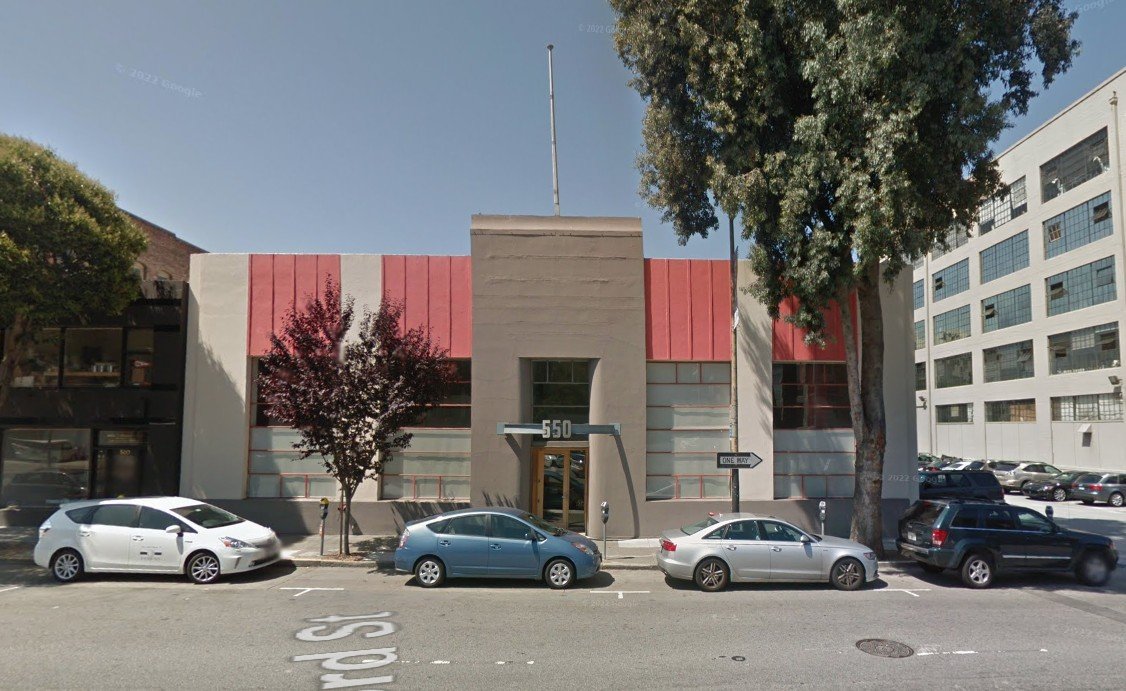
The site of the tragic fire is now occupied by a small two-story commercial office building. There is no memorial marker at the site.
Commentary:
Firefighters must constantly be aware of the weight of water that they are pumping into a fire building when using heavy streams. Throwing 1000 gallons of water per minute into a building that is under thermal assault by fire is the equivalent of tossing two full size automobiles onto the floors of a structure every minute. Most structures were never designed to bear such an impact load even when not being further degraded by fire. When transitioning to a defensive fire attack while using exterior master streams, fire commanders must consider the additional weight of the water discharged into the building, especially when the contents contain highly absorbent materials such as paper, cardboard, textiles and natural materials such as hay and grain, etc. An experienced fire officer should be assigned with the specific duty of monitoring the structural stability of the fire building and the effect that master streams may be having on the structure. Drainage of excess water from the structure should be monitored and appropriately spaced collapse zones must be established, maintained and respected by all members on the scene.
Unfortunately, there are no known photos or illustrations from the incident. We have attached a detail from the 1913 Sanborn fire insurance map showing the configuration of the fire building and the surrounding exposures.
This incident shares similarities with another wood frame building collapse that took the lives of three Newark, New Jersey firefighters in 1972: https://www.facebook.com/FirefighterCloseCalls/posts/pfbid021iaeFwTQHumFWaeYaXrHZrZ5gwWRiA23ga6fRBPXyEgSwrZPqTqRozxRDY3vVgiEl
We have also attached the link to a NIOSH Alert – Preventing Injuries and Deaths of Fire Fighters due to Structural Collapse: https://stacks.cdc.gov/view/cdc/5197
Thanks to multiple media sources for the content of this article especially a series of articles in the San Francisco Chronicle in October 1917.
Honor the service of First Assistant Chief Engineer Stephen D. Russell, Hoseman Joseph L. Allen and Truckman Timothy F. Collins by reviewing the warning signs of impending structural collapse in legacy Type V wood frame structures with your crew members today.
Remember Fallen Brothers.
Get Out There And Know The History Of Your Local!!!
The incident occurred in an old ramshackle three-story Type V Wood frame structure that was being used as a rooming and boarding house. The occupancy was known as the Owl Lodging House and was located at 548 Third Street midblock between Brannan and Bryant Streets in the downtown area of the city. The three-story lodging house portion of the building measured about 75 feet wide and 50 feet deep with shops on the first floor. The second and third floors contained furnished rooms for rent. Side Alpha faced 80-foot-wide Third Street. On Exposure Bravo was an attached two-story wood frame building at the corner Brannan Street with shops and a saloon on the first floor. On Exposure Charlie was an attached three-story storehouse with a hay loft and an enclosed rear yard. On Exposure Delta was the three-story wood frame Central Hotel with shops, a restaurant and a saloon on the first floor and hotel rooms on the upper floors. A wood frame awning covering the front sidewalk wrapped around the front of the lodging house on Sides Alpha and Exposure Bravo. The building did not have a fire alarm or an automatic fire sprinkler system. Fire hydrants including one at the Alpha/ Bravo corner of the building and several on the opposite side of Third Street were fed by 8- and 12-inch water mains. The nearest fire alarm call box was located one half block west at Third and Bryant Streets.
Detail from the 1913 Sanborn fire insurance map showing the configuration of the lodging house (circled in red) and the surrounding exposures.