Firefighter Fatally Injured in Fall Through Skylight While Operating at Restaurant Fire – Philadelphia, Pennsylvania – October 15, 1919
Submitted by Rick DeGroot
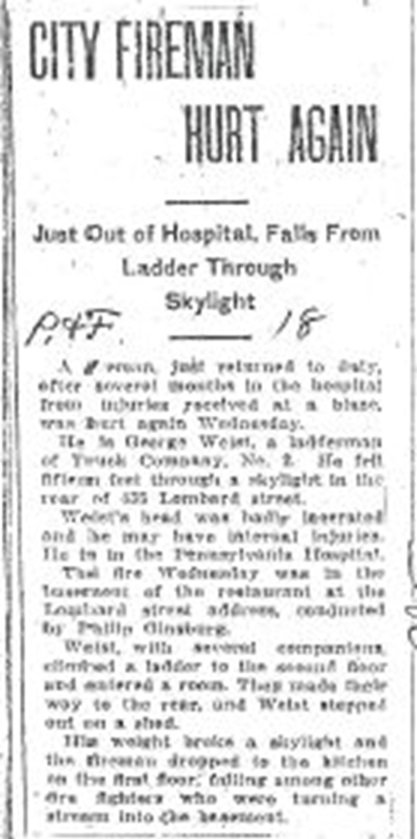
On October 15, 1919, Philadelphia Ladderman George Wiest, Jr. of Truck 2 was fatally injured after falling through a skylight while operating at the scene of a fire in a restaurant in the Society Hill section of the city. Ladderman Wiest was performing ventilation operations on the roof of a one-story wood frame extension at the rear of the three-story brick and wood joist building to clear smoke from a fire in the basement of the first-floor restaurant. After accessing the second floor of the building by ladder with other members of his company, Wiest went out onto the roof of a one-story rear extension of the structure. Wiest then stepped through a rooftop mounted skylight and fell 15 feet into the restaurant kitchen below. He suffered head and internal injuries and was transported to the hospital. Ladderman Wiest died three days later from his injuries. Wiest was only a five-month member of the department and had recently returned to duty after a knee injury. The cause of the basement fire was undetermined.
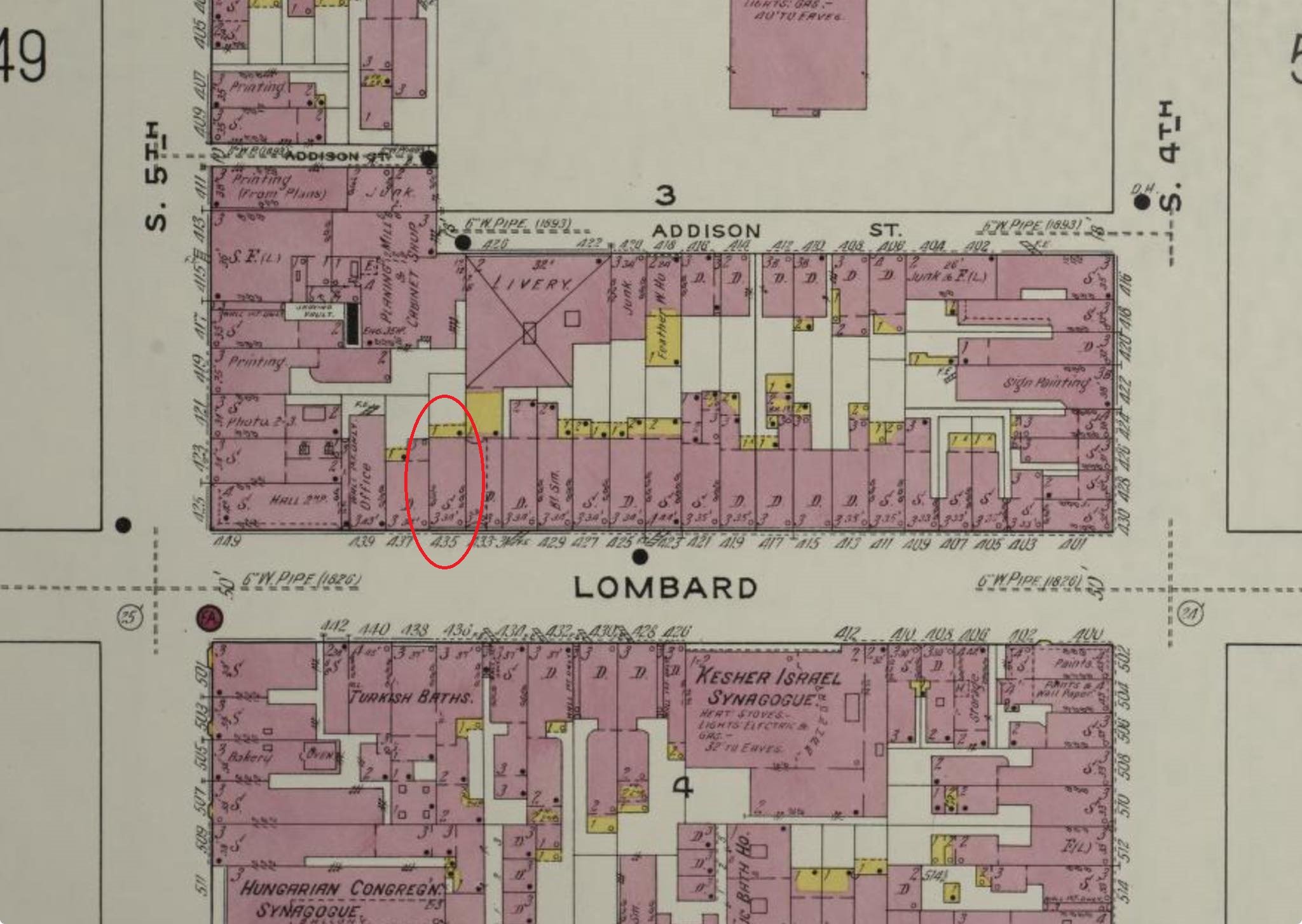
The structure involved in the incident was a three-story with basement Type III Ordinary construction brick and wood joist row house at 435 Lombard Street in the Society Hill section of Center City. Located midblock between South 4th Streets and South 5th Street, the building had a small restaurant on the first floor. Side Alpha of the building had a flat roof with a masonry cornice facing 50-foot-wide Lombard Street. Similar three-story brick and wood joist row houses flanked the fire building on Sides Bravo and Delta. A small one-story wood frame setback on Side Charlie of the building housed the restaurant kitchen. The building was not equipped with a fire alarm system or an automatic fire sprinkler system. A fire hydrant fed from a six-inch water main was located about 100 feet to the east on Lombard Street. The nearest fire alarm call box was located one half block west at South 5th and Lombard Streets.
Philadelphia is the sixth-most-populous city in the United States and the most populous city in the Commonwealth of Pennsylvania with a 2020 U.S. census population of 1,603,797 residents. The city is protected by the 2,800 career members of the Philadelphia Fire Department which is divided into three operational divisions and 13 battalions. Deployed from 63 fire stations, the department operates 58 engines, 23 aerial ladders, 4 tower ladders, 2 squads, 1 rescue, 60 ambulances, 1 Hazmat unit, 1 USAR unit, 10 airport ARFF crash units, 2 wildland units, and 3 fireboats. In 2017 the department responded to 314,722 incidents. Of these, 267,266 were EMS incidents and 47,456 were fire incidents, 2,506 of which were working structure fires.
The incident occurred in an area of Center City Philadelphia known as Society Hill, a neighborhood that is today one of the most sought after residential sections of the city with many restored brick row houses. The neighborhood also includes a number of restaurants, shops, and historic attractions. During the post-Revolutionary era, the neighborhood boasted the homes of notable city officials and merchants. By the middle of the 20th century, however, the neighborhood had slipped into a state of decline and by the late 1940s, Society Hill had become a slum with vacant lots and abandoned buildings. In the 1950s, one of the nation’s first urban renewal programs was begun to revitalize the area. Most of the 19th century buildings were demolished and historically significant houses were restored. Colonial replica streetlamps and brick sidewalks were installed along with a number of modern townhouses. The neighborhood is now one of the most affluent and expensive areas of the city.
The Society Hill neighborhood is protected by fire units of the Philadelphia Fire Department:
- Engine 11, Medic 21 – 601-09 South Street – 0.3 miles from the fire building.
- Engine 8, Ladder 2, Medic 44 – 101-15 North 4th Street – 0.8 miles from the fire building.
- Engine 1, Ladder 5, Medic 35 – 711-23 South Broad Street – 1.2 miles from the fire building.
- Engine 20, Ladder 23, Medic 1 – 133 North 10th Street – 1.3 miles from the fire building.
On Wednesday, October 15, 1919, at 10:22 a.m., an alarm was sounded on Box 1597, 5th Street below Lombard Street, for a fire located at P. Ginsburg’s Restaurant at 435 Lombard Street. Arriving fire units found a working fire in the basement of the restaurant. As engine company personnel stretched hoselines into the building to contain the fire, the members of Truck 2 placed a ladder to the front of the building and climbed through a second-floor window to conduct searches and perform ventilation operations.
Ladderman George Wiest of Truck 2 along with several other members of his company made their way through the second floor and climbed out a rear window onto the shed roof of a one-story wood frame extension that housed the restaurant’s kitchen at the rear of the building. While operating on the shed roof, Ladderman Wiest stepped through a roof-mounted skylight and fell 15 feet into the kitchen below. Firemen operating in the kitchen brought the severely injured Wiest out of the building where he was transported to Pennsylvania Hospital with severe head and internal injuries. He died three days later on October 18, just about five months after being appointed to the Fire Department. Wiest had just returned to duty with Truck 2 after suffering a fractured knee on July 12.
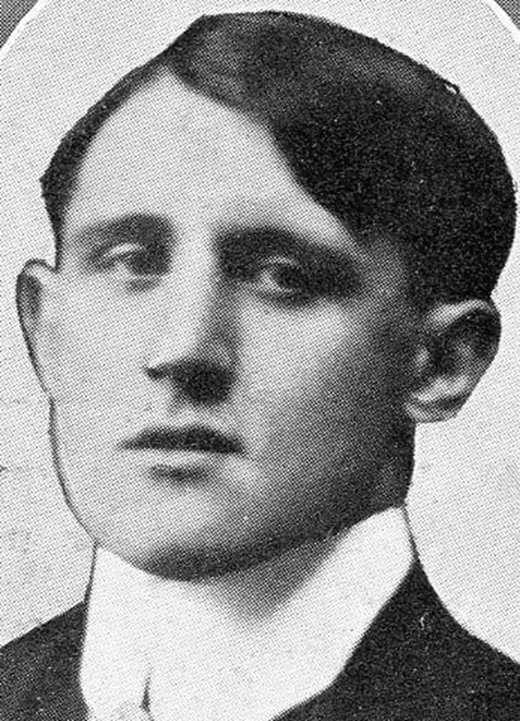
Ladderman George Stephen Wiest, Jr., age 27, was appointed to the Philadelphia Fire Department on May 16, 1919, and was assigned to Truck 2. He had previously worked as a driver before joining the Fire Department. He was survived by his wife, Francis; his son, George Joseph; his daughter, Loretta; and his father George S. Wiest, Sr. His funeral Mass was held on October 20 at St. Peter’s Church with interment at Holy Redeemer Cemetery in Philadelphia.
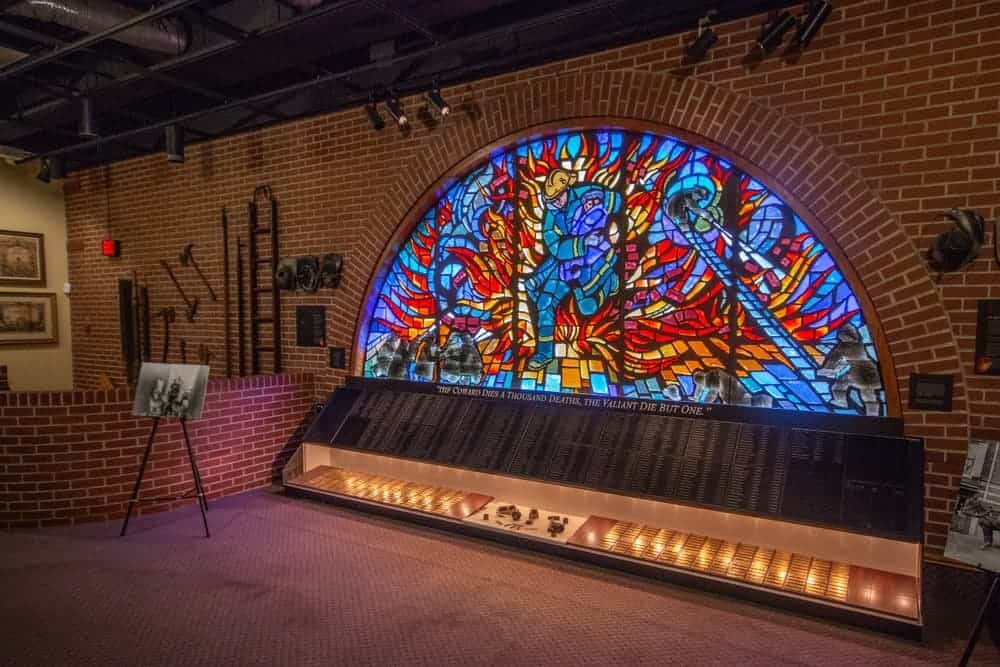
The name of Ladderman Georg S. Wiest, Jr., has been inscribed on the Memorial Wall that is located on the second floor of the Fireman’s Hall Museum housed in a 1902 firehouse at 147 North Second Street in Philadelphia. The names of 75 volunteer firemen and 304 career firefighters of the Philadelphia Fire Department who made the ultimate sacrifice in the line of duty are engraved on tiles that comprise the wall. Above the wall is a stained-glass window dedicated to the memory of these brave and dedicated firefighters. At the base of the wall are display cases with brass plates with name, rank, company, and date of death hand stamped into the plate. The brass plates are made from the brass ring from the coupling of the hose used by the firefighter at the time he was killed. The rings are flattened to allow the information to be stamped by hand on the memorial plates. The earliest line of duty deaths on the wall date back to May 9, 1791.
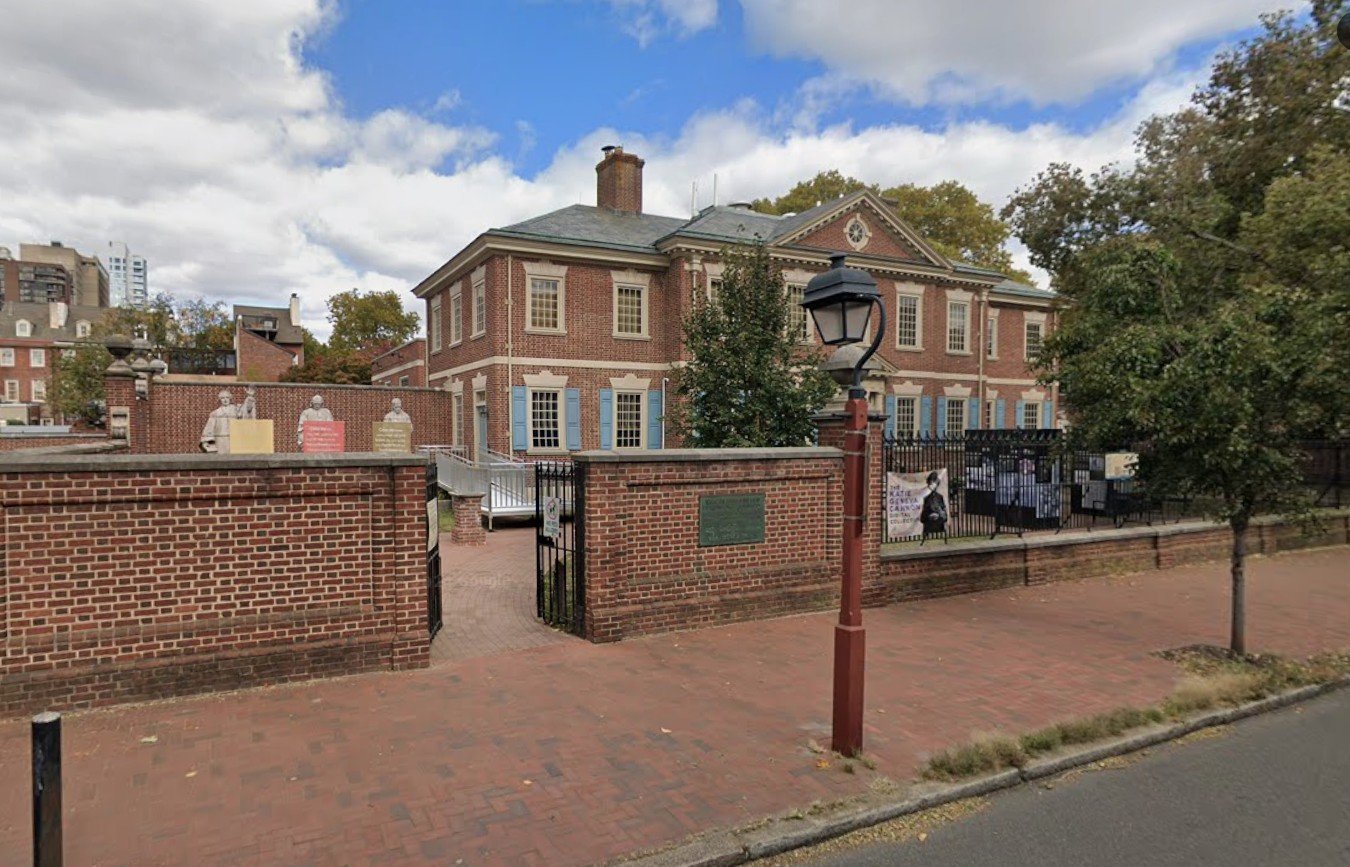
The site of the fatal fire in now occupied by the library and research center of the Presbyterian Historical Society. There is no memorial marker at the site.
Commentary:
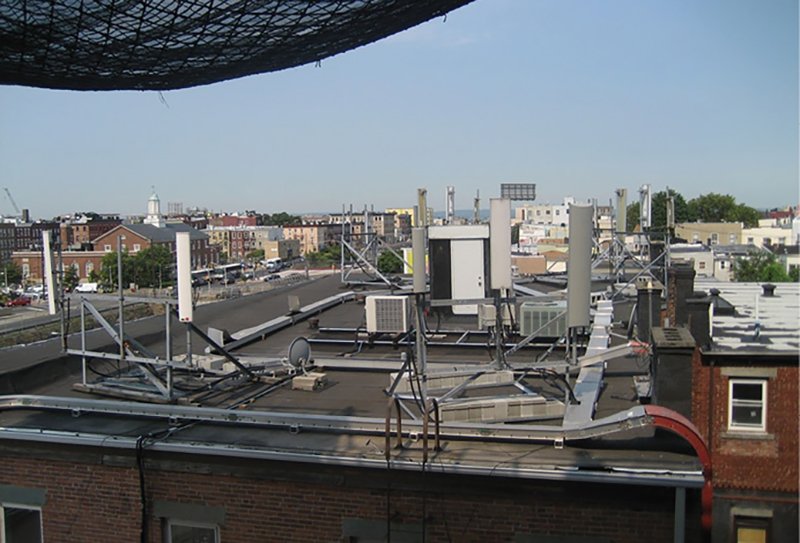
Operating over the fire on a roof is a challenging environment for firefighters. The condition of the roof deck must be continually monitored for stability. Rooftop hazards such air shafts, open scuttles, and skylights can prove deadly when operating in low visibility conditions. The presence of low parapet walls and cornices can become trip hazards. Rooftop equipment such a HVAC units, communications equipment and solar panel installations can be an impediment to operations on roofs. Any ventilation holes that may have already been cut need to be safeguarded so that fire personnel do not accidentally fall through and into the building. Maintaining at least one point of egress from the roof is essential for the safety of the crew should conditions change rapidly. Ideally a second means of egress should also be considered when feasible.
This incident is similar to another firefighter fatality incident that occurred in 1911:
On November 3, 1911, FDNY Fire Captain James. A. Hagen of Engine 107 was killed when he fell through a rooftop skylight while fighting a very smoky and stubborn fire at the Veneer Barrel Company works at 60-62 Water Street in Brooklyn. As Captain Hagen led a group of firefighters operating a hoseline on the roof of the burning four-story brick and joist structure, the roof became compromised. Captain Hagen, sensing that the fire-weakened roof was about to collapse, immediately ordered the firefighters to evacuated the roof via a portable ladder. The Captain remained on the roof until the last of his company members had scrambled down the ladder. Then as he turned to make his escape, he stumbled on a low wall and fell through a skylight some thirty feet into the burning structure, striking beams on the way down. The roof structure and heavy machinery on the top floor then collapsed and fell into the building. Members of his company quickly located Captain Hagen in the debris in the basement and removed him to the exterior. He suffered a fractured skull and died instantly from his injuries: https://www.facebook.com/groups/192218352449074/permalink/1369006811436883/
Unfortunately, there are no photos or illustrations from the fire. We have attached a detail from the 1916 Sanborn fire insurance map showing the configuration of the fire building and the surrounding exposures.
We have also attached the link to an article on flat roof operations published in Fire Engineering magazine by group member Anthony Avillo: https://www.fireengineering.com/firefighting/flat-roof-operations-from-the-street-to-the-roof-and-back/?fbclid=IwY2xjawF3wwZleHRuA2FlbQIxMAABHXZutyXp7aYyaiJYQcBs21U1H8xCVpHxL2jQ5eMcRqA97-kwH-K60CtBng_aem_AF0AIp-5FnlC2gVjFkMm4Q
We have also attached the link to an article on the firefighter’s need reading the roof before and during rooftop ventilation operations published in Firehouse magazine by Kevin Neely: https://www.firehouse.com/operations-training/article/55318878/the-firefighters-art-of-reading-a-roof
Thanks to multiple media sources for the content of this article.
Honor the service of Ladderman George Wiest, Jr. by reviewing your department’s procedures for conducting roof operations on flat roof buildings and by touring a flat roof commercial building in your local response district with a focus on rooftop hazards such as skylights, air shafts, and scuttle covers with your crew members today.
Remember Fallen Brothers.
Get Out There And Know Your Local!!!
The structure involved in the incident was a three-story with basement Type III Ordinary construction brick and wood joist row house at 435 Lombard Street in the Society Hill section of Center City. Located midblock between South 4th Streets and South 5th Street, the building had a small restaurant on the first floor. Side Alpha of the building had a flat roof with a masonry cornice facing 50-foot-wide Lombard Street. Similar three-story brick and wood joist row houses flanked the fire building on Sides Bravo and Delta. A small one-story wood frame setback on Side Charlie of the building housed the restaurant kitchen. The building was not equipped with a fire alarm system or an automatic fire sprinkler system. A fire hydrant fed from a six-inch water main was located about 100 feet to the east on Lombard Street. The nearest fire alarm call box was located one half block west at South 5th and Lombard Streets.
Detail from the 1916 Sanborn fire insurance map showing the configuration of the fire building (circled in red) and the surrounding exposure buildings.