High-Rise Apartment Fire Claims Life of Fire Captain – Houston, Texas – October 13, 2001 – NIOSH Firefighter Fatality Report F2001-22
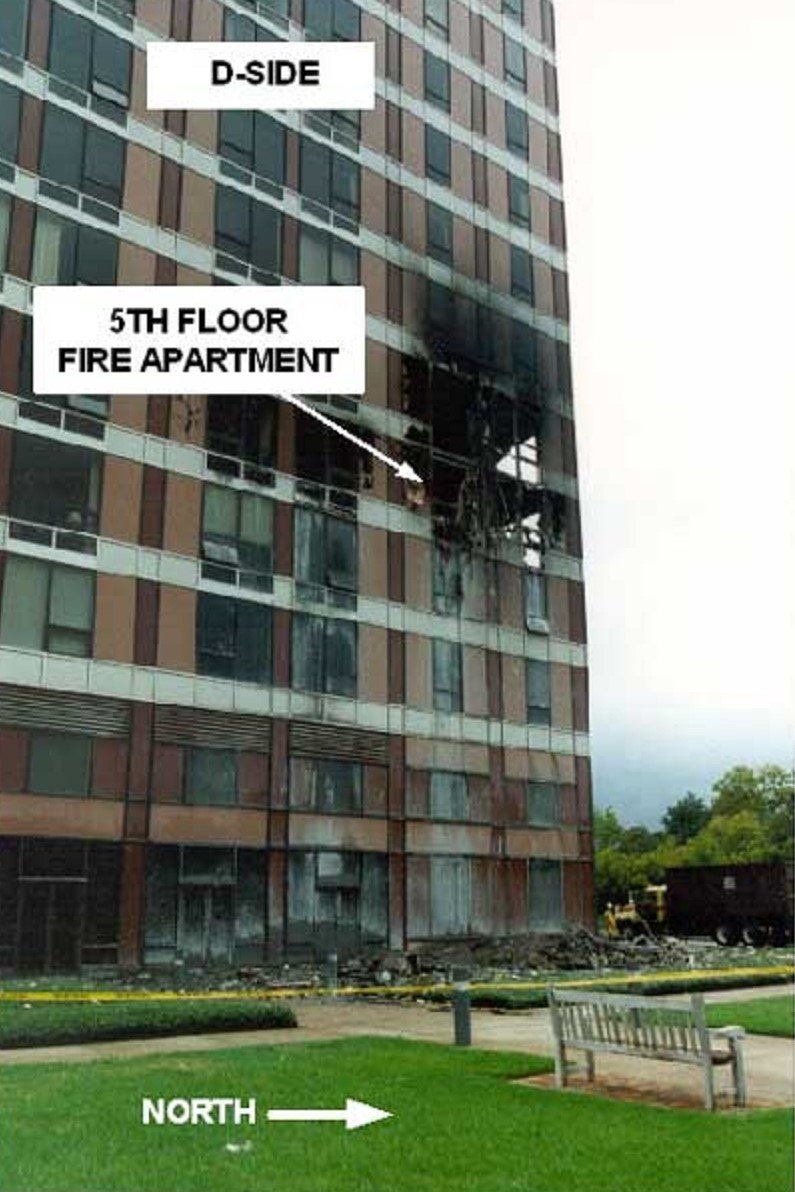
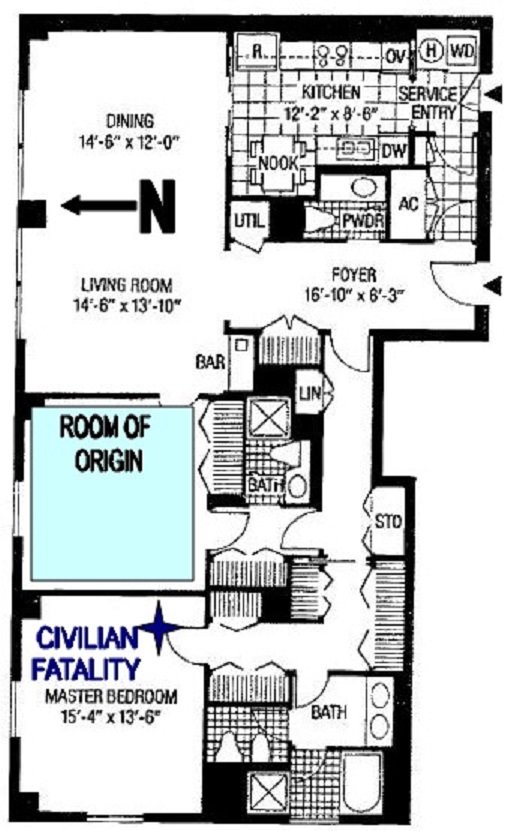
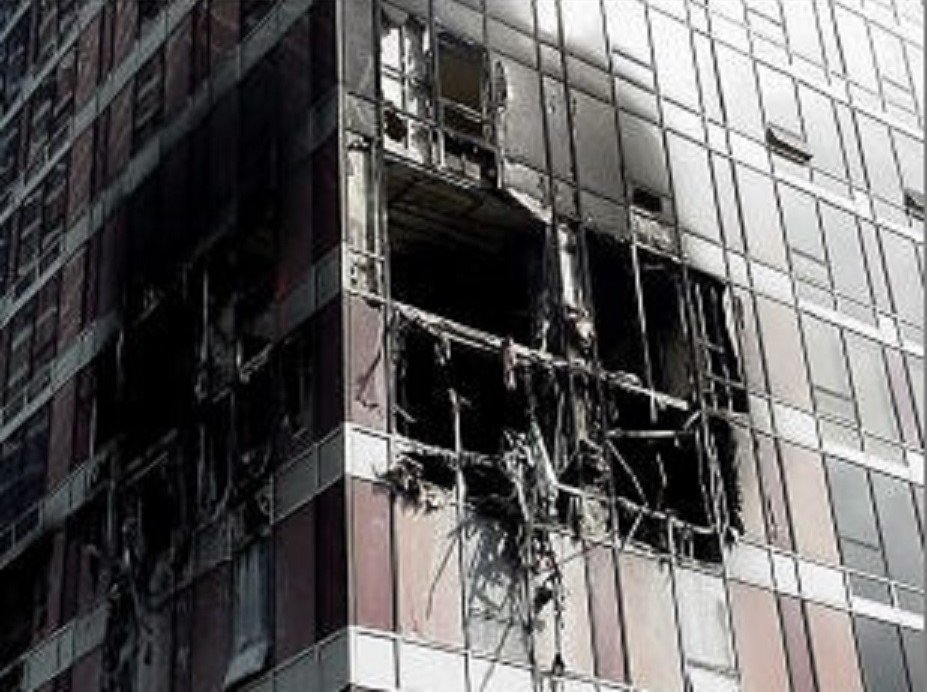
On October 13, 2001, Houston Fire Captain Jay Jahnke of Engine 2 died, and another fire officer was injured while fighting an apartment fire on the 5th floor of a 41-story high-rise condominium apartment building. At 0448 hours, units were dispatched to a fire alarm. Units arrived on the scene at 0453 hours and reported heavy fire showing from the exterior of the building. Crews made immediate entry and attack, but after running low on air, Captain Jahnke and the other officer decided to exit. In the process, Jahnke apparently became disoriented and lost, whereas the other fire officer was able to escape. Rescue crews were sent to the fifth floor where the missing captain was located in the elevator common area. He was transported to an area hospital where he was pronounced dead at 0615 hours. Fire investigators later determined that the fire was accidental in nature and was probably caused by carelessly discarded smoking materials in a spare bedroom being used as a TV/computer room. A civilian fatality was discovered in the master bedroom in the fire apartment.
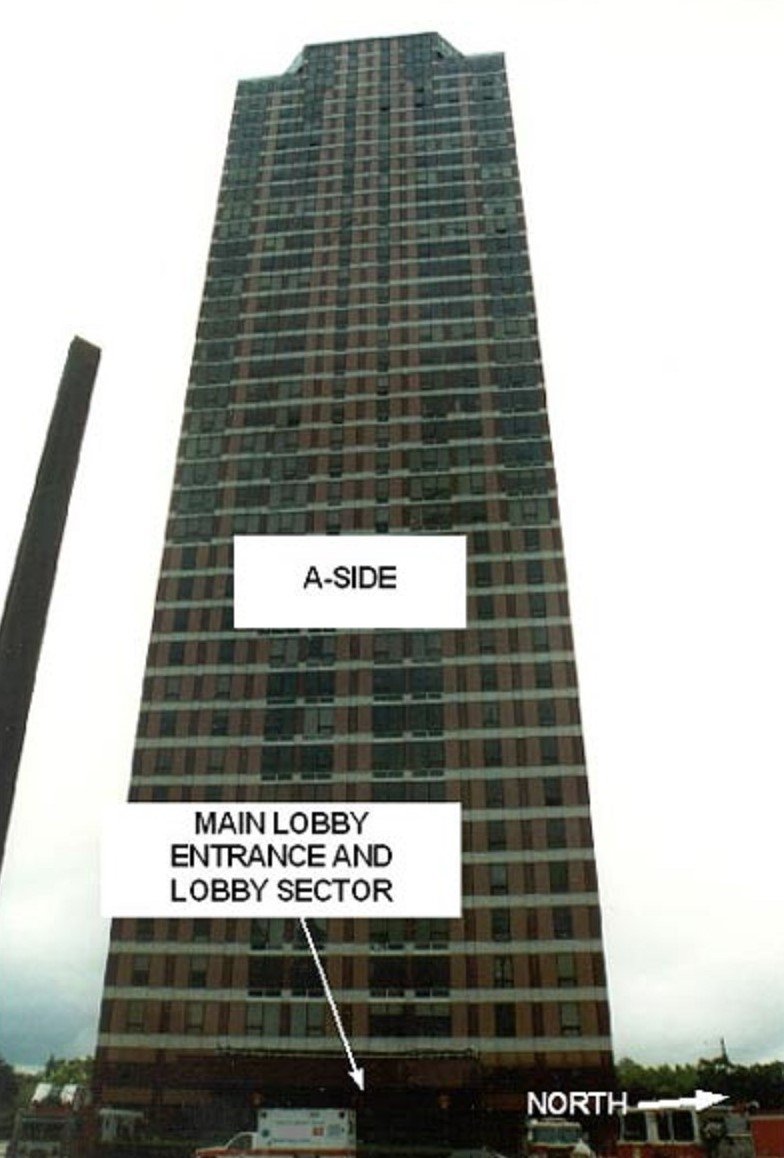
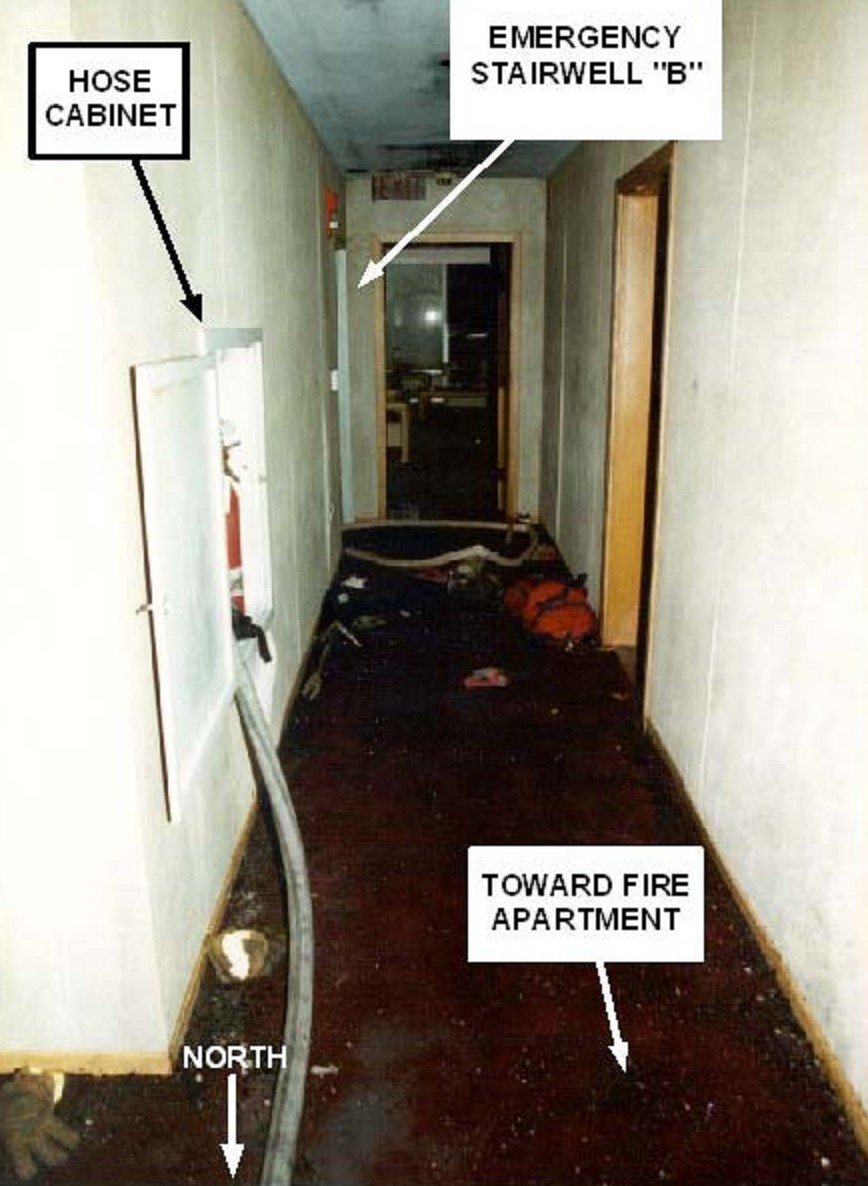
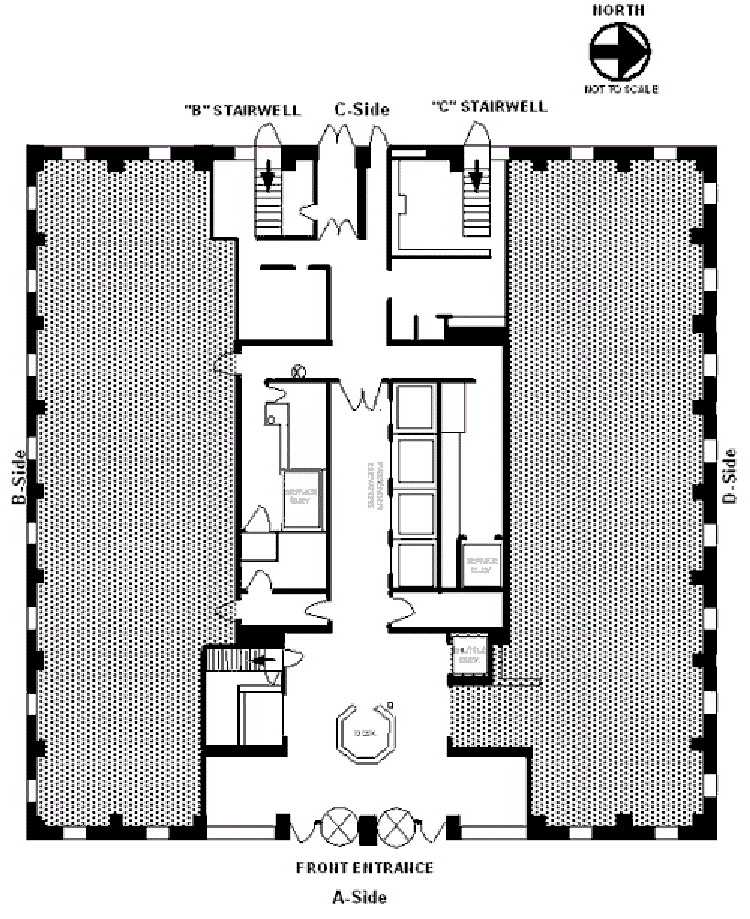
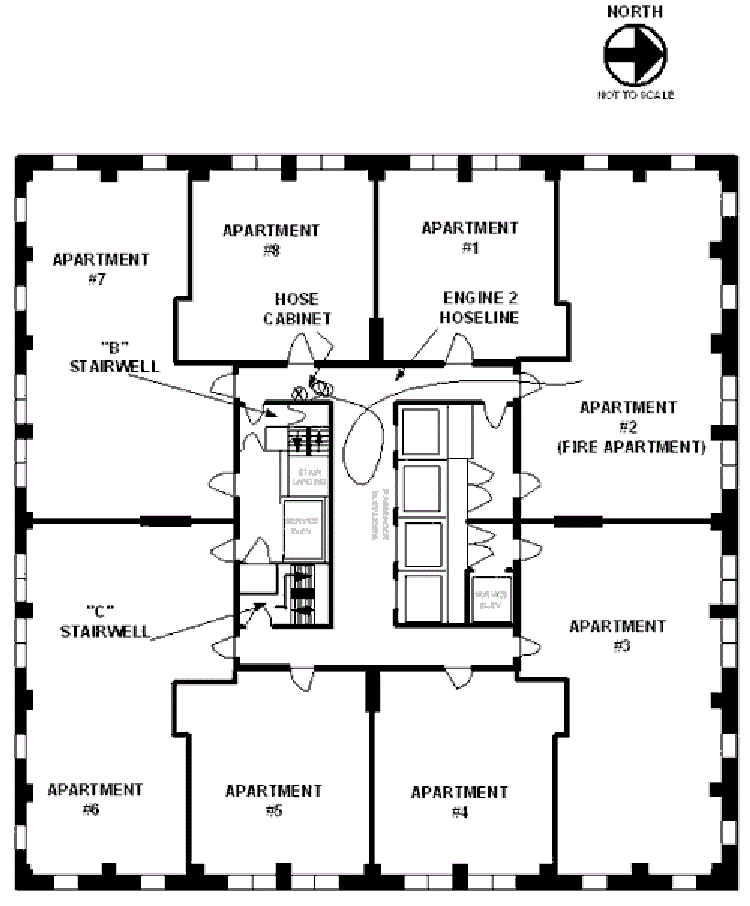
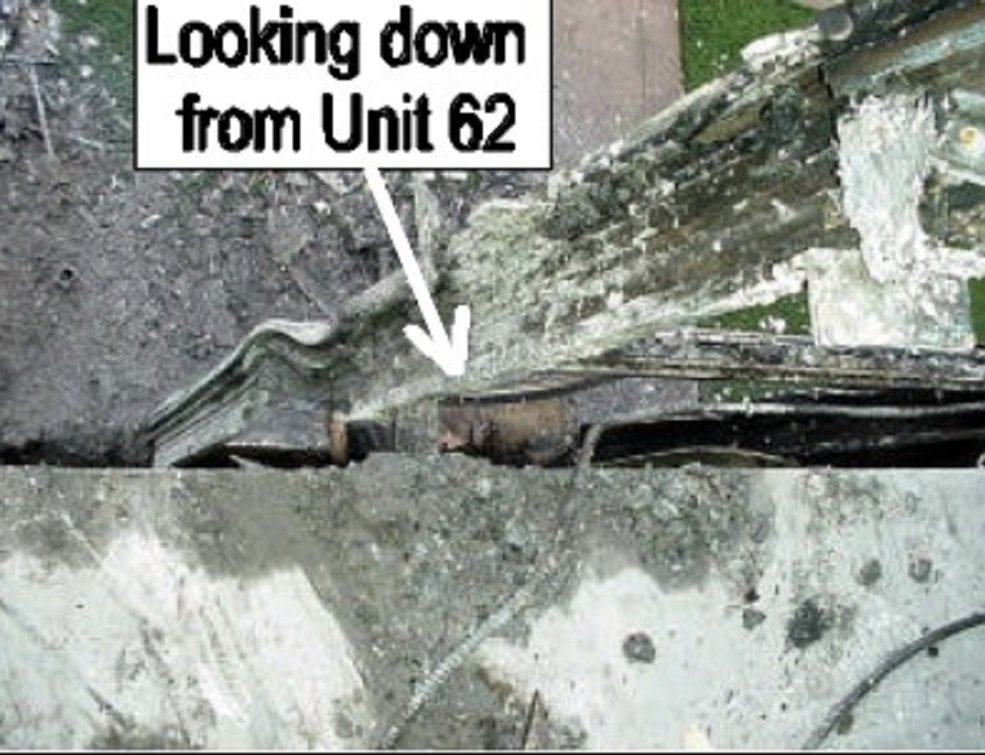
The structure involved in this incident is a Type I Fire Resistive construction 41-story center core high-rise condominium apartment building built in 1980 with a reinforced concrete frame with glass and aluminum curtain walls enclosing the structure. The building is one of two residential high-rise towers in the complex. The West building of the Four Leaf Towers Condominiums, located at 5110 San Felipe Street, has 41 stories above grade and 1 story below grade. The first floor consists of a main lobby area, service facilities, conference rooms, and office space. Storage units are located on the second floor. Floors 3 through 15 contain 8 apartment units each. The remaining floors have 4 apartment units each. All floors are served by 4 passenger elevators and 2 service elevators. There are a total of 200 condominium apartments in the building. Two stairwells, “B” stairwell which is pressurized from the top and bottom, and “C” stairwell, which is only pressurized at the top and was open to the roof and to the ground level on Side Charlie of the building. Class I standpipe outlets are located in both stairwells at each floor level. A Class III hose cabinet is located in the public hallway at each level near the B stairwell. Neither stairwell has communication capabilities. All common areas are sprinklered, but not individual apartments. Note: This incident occurred at a time when automatic sprinkler systems were not required in this building when it was issued a building permit in 1980. Requirements for mandatory sprinklering of high-rise buildings were required for all new high-rises permitted after 1981. Automatic sprinklers are now required throughout the entire building in all new high-rise buildings.
Houston is the most populous city in Texas and the fourth-most populous city in the United States with a population of 2,304,580 residents according to the 2020 U.S. census. Located in the southeastern portion of the state near Galveston Bay and the Gulf of America, it is the seat and largest city of Harris County and the principal city of the Greater Houston metropolitan area. At the time of this incident the city was protected by the Houston Fire Department which was comprised of 3400 uniformed firefighters. The department served a population of approximately 1.8 million residents in a geographic area of about 618 square miles. Today the fire department serves a population of more than 2 million residents in an area of 654 square miles with a staff of more than 4100 firefighters operating from 93 stations deploying 88 engines, 33 ladder trucks, 5 tower ladders, 3 rescues, 46 ALS medic units, 57 BLS units, three HazMat units, 12 airport ARFF units, 11 wildland units, 1 helicopter, 1 fireboat, 13 rescue boats, and 3 light and air units. In 2024, the department responded to 416,122 incidents of which 7,836 were fires, 332,206 EMS incidents, and 76,080 were other types of emergency incidents.
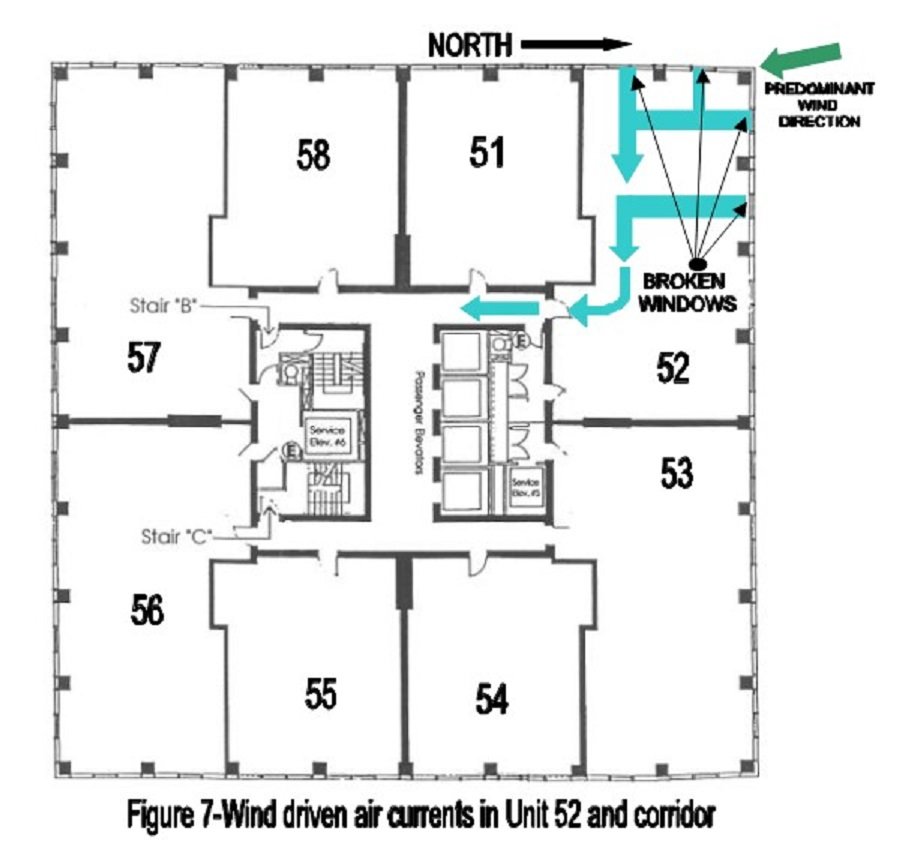
The weather played a significant role in this incident. The National Weather Service reported that the winds at the regional airport shifted to a north-northwest direction when a line of thunderstorms hit the area between 0300 and 0400 hours. The winds diminished after 0400 hours with wind speeds of approximately 8 mph, and a wind direction coming from the north. The wind speeds increased, with gusts exceeding 19 mph after 0500 hours when a front passed through the area. Note: Research by the National Institute of Standards and Technology (NIST) has shown wind speeds on the order of 10 to 20 mph are sufficient to create wind-driven fire conditions in a structure with an uncontrolled flow path (Madrzykowski and Kerber 2009).
On Saturday, October 13, 2001, at 0448 hours, Houston fire units were dispatched to a high-rise condominium apartment building at 5110 San Felipe Street in the Galleria/Uptown area of the city for a reported fire alarm. At 0452 hours, Central Dispatch notified responding units that multiple calls had been received confirming a fire on the fifth floor. At 0453 hours, Engine 2 arrived on the scene and reported to Central Dispatch that they had heavy fire showing from the exterior of the building. Captain Jay Jahnke of Engine 2 instructed the Dispatcher to “go ahead and give him a second alarm.” Note: The second alarm was dispatched at 0456 hours. Captain Jahnke, a firefighter (Firefighter #1), and the engineer/operator from Engine 2 entered the main lobby and met with the security guard. Note: The captain and firefighter had on their full ensemble of turn-out gear and SCBAs, while the engineer/operator was in his station uniform. The security guard informed the crew that the fire was on the fifth floor. The security guard led the Engine 2 crew to the fifth floor via the B stairwell. Captain Jahnke searched for the apartment where the fire was located while Firefighter #1 and engineer/operator connected 100 feet of 1.75-inch hoseline to the hose cabinet.
At 0454 hours, District Chief 28 arrived on the scene, assumed Command, and established an incident command post on Side Alpha of the building. Command ordered the Engine 28 captain to establish the Lobby Sector. The captain met the building security guard in the lobby and secured the elevator keys. A captain and firefighter from Ladder 28 proceeded in the elevator to the fourth floor after being informed by the security guard that civilians were trapped in apartment 5052 on the fifth floor. Note: They took the elevator to the fourth floor to give themselves an opportunity to become familiar with the common area floor layout. Lobby Sector informed the crew of Engine 3 that the fire was on the third floor. Note: From the exterior of the building, the fire reportedly appeared to be on the third floor. This conflicted with the initial reports given to Central Dispatch by the building residents, who reported that the fire was on the fifth floor. This led to confusion as to which floor the backup crews should respond to. Lobby Sector ordered a firefighter from his crew (Engine 28) to assist the Engine 3 crew who was assigned to be the backup crew on the fire floor. At 0459 hours, District Chief 6 arrived on the scene and assumed Lobby Sector. The Engine 28 captain informed Lobby Sector that Engine 2, Engine 3, and Ladder 28 were on the fire floor. He then informed him that the elevators were not working properly, and crews were using the stairwells to reach the fire floor. Lobby Sector ordered Engine 38 and Ladder 38 to proceed to the floor above the fire floor. Command advised Central Dispatch that they had confirmation of a civilian trapped on the fire floor.
At 0501 hours, Captain Jahnke advised Command that they were on the fire floor (fifth), had laid a hoseline, and would lay another. Note: At approximately this time a weather front was passing through the region with wind speeds increasing and gusts exceeding 19 mph. At 0502 hours, Jahnke radioed command asking for a second company. Command replied that Engine 3 should be there backing him up. Note: The Engine 3 crew had taken the elevator to the second floor (believing that the third floor was the fire floor) and were unable to locate either of the two stairwells. Only storage units are located on the second floor. The Engine 3 crew located and assisted a civilian to the elevator and down to the lobby. At 0503 hours, Captain Jahnke advised Command that he was trying to conduct a primary search of apartments (other than the apartment where the fire was located) and that he was waiting for backup before entering the fire apartment.
At 0505 hours, the captain from Ladder 28 and his firefighter (Firefighter #2) reached the fifth floor and met with Captain Jahnke and Firefighter #1. Firefighter #2 informed his captain that he had forgotten the thermal imaging camera (TIC) and went to the stairwell and asked the engineer/operator from Engine 2 to retrieve the TIC. Note: The Engine 2 engineer/operator was unable to return to the fifth floor because he was not wearing any personal protective equipment or a self-contained breathing apparatus (SCBA). The engineer/operator had passed the TIC to another firefighter on the second-floor landing, but the TIC did not make it to the captain of Ladder 28. Firefighter #2 then returned and remained at the entrance to the fire apartment.
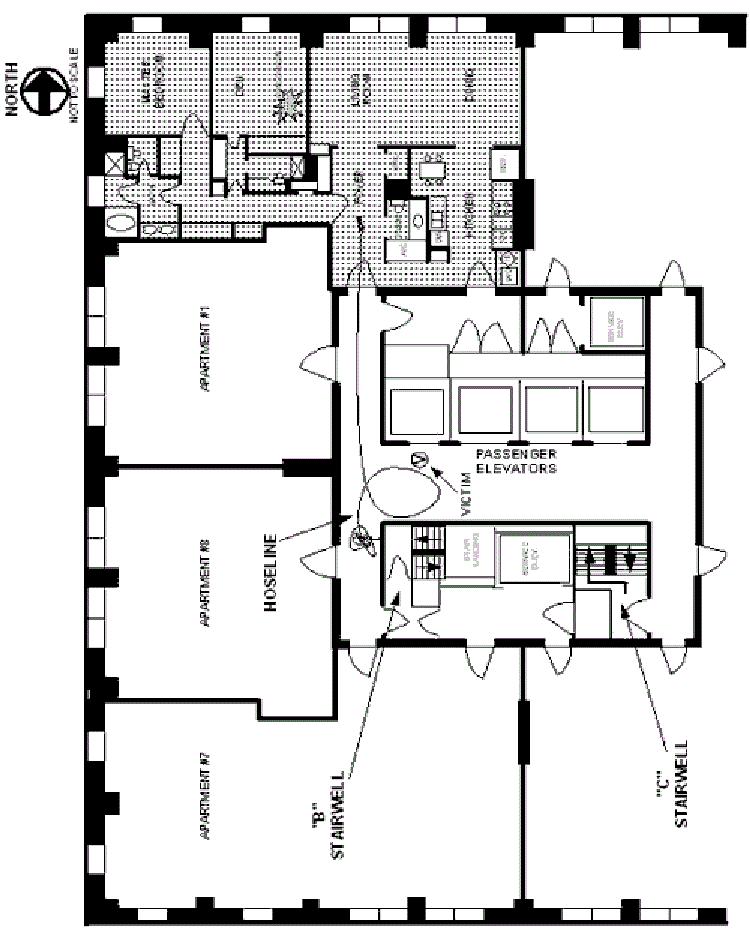
Captain Jahnke, Firefighter #1, and the Ladder 28 captain made entry into the fire apartment and encountered heavy black smoke. Firefighter #1 manned the nozzle, preceding Captain Jahnke and the captain of Ladder 28 on the hoseline. They made their way toward the kitchen area before turning and seeing fire emitting from the foyer area. Firefighter #1 opened the nozzle and began knocking down the fire in the foyer area with Captain Jahnke while Firefighter #2, in the apartment doorway, backing them up. While attempting to locate the seat of the fire, Firefighter #1 informed Captain Jahnke that he was low on air and had to leave. Firefighter #1 passed the nozzle to the captain of Ladder 28 and exited the apartment with Firefighter #2. Approximately 2 minutes later, Captain Jahnke informed the captain of Ladder 28 that they needed to leave because he was running low on air. Jahnke and the captain of Ladder 28 followed the hoseline down the hallway toward the emergency stairwell. Captain Jahnke told the captain of Ladder 28 that they were going the wrong way. Note: The hoseline was laid throughout the common area near the elevators in large loops and was piled in the hallway.
Intense heat and zero visibility at the opposite end of the hallway from the fire apartment may have made it appear to Jahnke that they had gotten turned around and were heading back toward the apartment and not the emergency stairwell. The captain of Ladder 28 informed Jahnke that they were near the hose cabinet and were heading toward the emergency stairwell. Jahnke, who was following him, turned and headed in the opposite direction (toward the fire apartment). Note: The captain of Ladder 28 sustained burns to his wrist and lower back before reaching the emergency stairwell. At 0509 hours, Captain Jahnke radioed, “Emergency, we need help on the fifth floor.” Central Dispatch advised Command that they had a call for help on the fifth floor. At 0510 hours, Jahnke radioed, “Engine 2, we’re trapped on the fifth floor. Engine 2, help.” Command radioed Lobby Sector asking if they had received Engine 2’s message. Lobby Sector confirmed that they had received the message and requested additional companies for the rescue.
At 0512 hours, Central Dispatch notified all companies that they had a Mayday on the fifth floor and toned out a third alarm. At 0512 hours, Captain Jahnke radioed, “Engine 2, we’re trapped on the fifth floor”. Note: The third alarm dispatched, at 0512 hours, consisted of four engines, two ladder trucks, one district chief, one shift commander, and one cascade unit. At 0513 hours Jahnke made his final radio transmission, “Engine 2, emergency, we’re….(the rest of the transmission was unintelligible).”
Command ordered all second alarm companies to report to Lobby Sector. Note: A fourth alarm was also dispatched at 0512 hours. At 0527 hours, Command reported that all firefighters were accounted for except Captain Jahnke of Engine 2. Crew members from Engine 60 and Rescue 11 made it to the fifth floor to search for the missing captain. A tag line was tied off to the door leading into the hallway. A thermal imaging camera was found in the hallway by the captain of Rescue 11, but when he attempted to use it, the screen went completely white. The captain and a firefighter from Rescue 11 then heard Captain Jahnke’s personal alert safety system (PASS) device sounding and located him in the common area near the elevators.
Captain Jahnke did not have his helmet or face mask on when the Rescue 11 crew members reached him. The crew members checked for a pulse (a pulse was not detected) and noted that the Captain was not breathing. They immediately began to move the unresponsive Captain down the hallway toward the B stairwell. Engine 60 crew members assisted in bringing Captain Jahnke down the hallway. Additional firefighters had now reached the fifth floor and were assisting in the removal of the Captain. As Jahnke was being moved from the hallway into the stairwell, two firefighters from Rescue 11 became separated from their crew. The two firefighters crawled into the service elevator area, and after running low on air, radioed Command that they were trapped. The two firefighters were able to locate a floor plan posted near the service elevator, and after determining the floor layout, they entered the stairwell and exited the building.
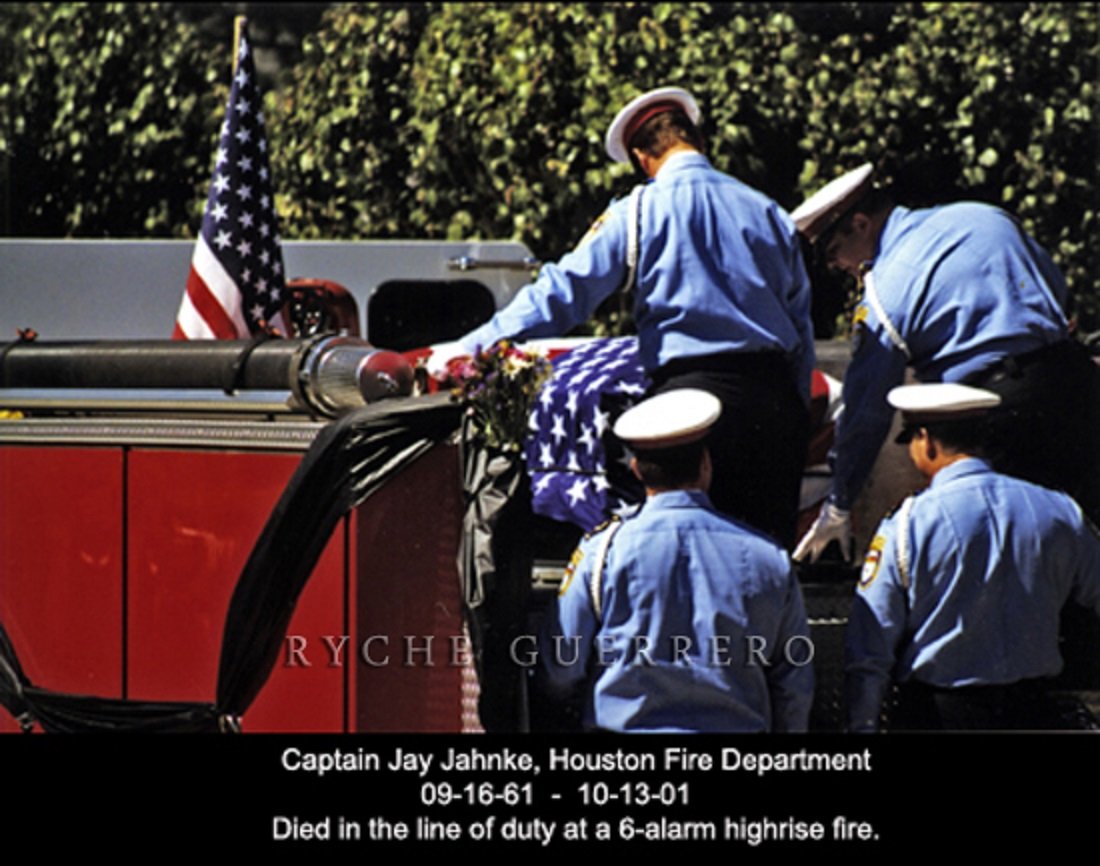
At 0536 hours, rescue crews brought Captain Jahnke down to the ground floor and out to Side Charlie of the building. Firefighters began cardiopulmonary resuscitation (CPR) efforts on Captain Jahnke and he was transported in Ambulance 2 to an area hospital where he was pronounced dead at 0615 hours.
The operation went to a defensive mode from 0613 hours to 0638 hours. Crews then made an offensive attack with the fire being brought under control by 0730 hours.
The death certificate lists the cause of death for Captain Jahnke as asphyxia due to a lack of oxygen. His blood level of carboxyhemoglobin measured 18% saturation.
Fire investigators later determined that the fire was accidental in nature and was probably caused by carelessly discarded smoking materials in a spare bedroom being used as a TV/computer room. A civilian fatality was discovered in the master bedroom in the fire apartment.
NIOSH investigators concluded that, to minimize the risk of similar occurrences, fire departments should:
- ensure that the department’s high-rise Standard Operating Procedures (SOPs) are followed, and refresher training is provided.
- ensure that team continuity is maintained.
- ensure that personnel are in position to maintain an offensive attack.
- ensure that a lifeline is in place to guide firefighters to an emergency stairwell.
- instruct and train firefighters on initiating emergency traffic (Mayday-Mayday) when they become lost, disoriented, or trapped.
- ensure that a Rapid Intervention Team (RIT) is established and in position.
- ensure that a backup line is manned and in position to protect exit routes.
- ensure that adequate numbers of staff are available to immediately respond to emergency incidents.
- ensure that the Incident Commander continuously evaluates the present weather conditions (i.e., high winds) during high-rise fire operation.
- fire departments should establish and enforce standard operating procedures on the use of thermal imaging cameras for search-and-rescue operations.
- the authority having jurisdiction shall ensure that the receipt and processing of alarms is completed in a timely manner.
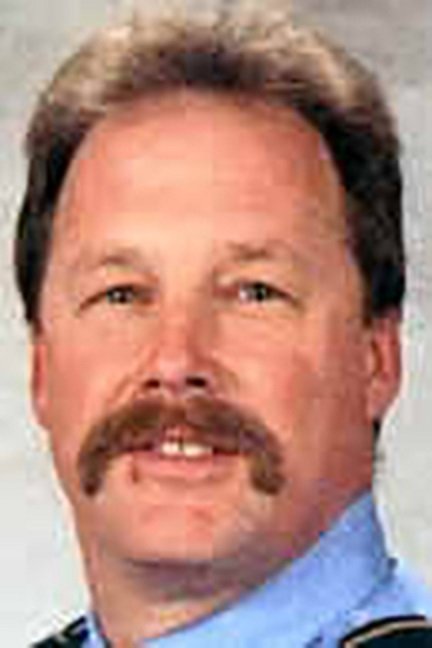
Fire Captain Jay Paul Jahnke, age 40, was a 20-year veteran of the Houston Fire Department assigned to Engine 2. He was a member of the Houston Medical Strike Team‚ the Swift Water Rescue Team‚ and was HazMat certified. He was also Chief Safety Officer with Cy-Creek Volunteer Fire Department‚ an instructor at the Texas A&M Fire School‚ and an instructor for the Houston Fire Department Citizens Fire Academy. He is survived by his wife, Dawn; his daughter, Jayne, age 12 and his son. Hunter, age 8; his mother Katherine Jahnke; his sisters, Karen Johnson and husband Rod, Marianne McNeill and husband Tommy; and his brother Jeff and wife Linda; his in-laws Dianna and Harvey Newcomb; his sister-in-law Natalie Newcomb Cloud; and numerous nieces and nephews and other relatives. His deceased father, Claude Devald Jahnke, had been a District Chief with the Houston Fire Department. His funeral was held on October 17 at the Worship Center of Second Baptist Church in Houston with thousands of area firefighters, emergency responders and the public attending. Following the services he was buried next to his father at Memorial Oaks Cemetery in Houston.
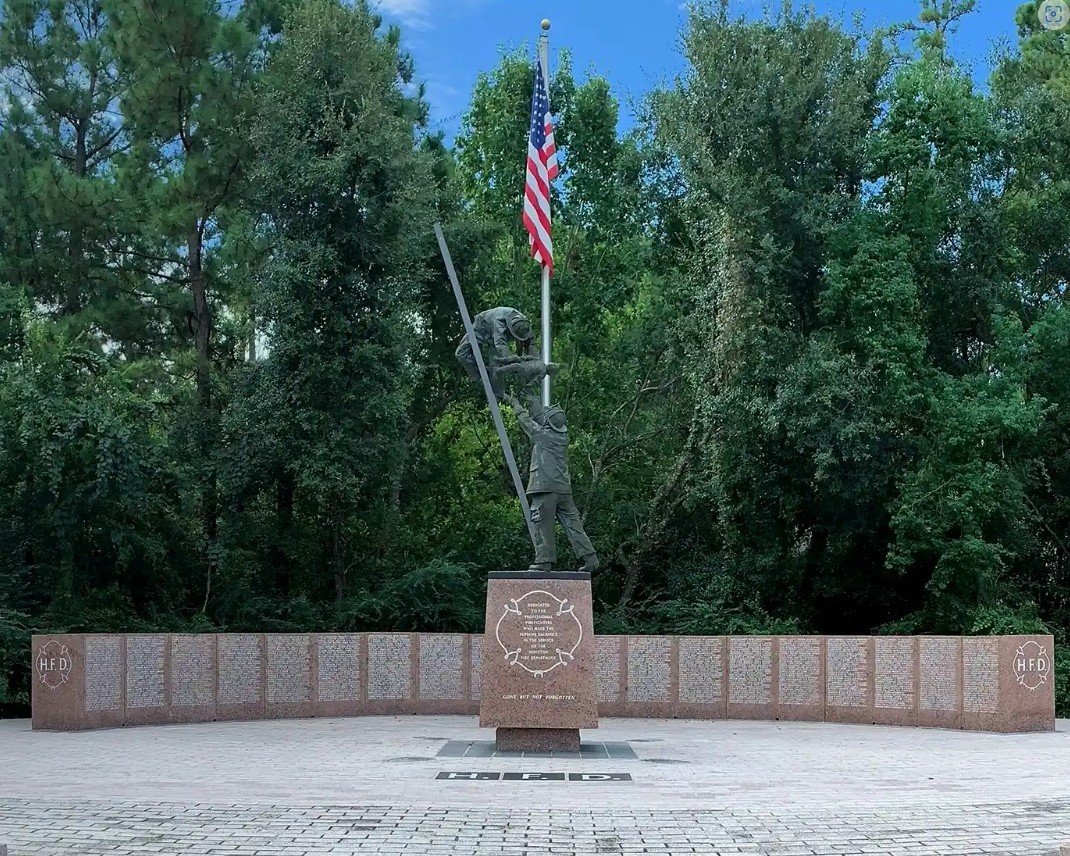
The name of Captain Jay Paul Jahnke has been inscribed on the Wall of Honor at the Houston Firefighters Memorial Garden on the grounds of the Houston Firefighters Relief & Retirement Fund headquarters. The memorial features a bronze statue on a four-sided granite base portraying a firefighter’s rescue as he is locked in on a ladder while handing down a baby to another firefighter on the ground. The base of the sculpture memorializes all firefighters lost in the line of duty.
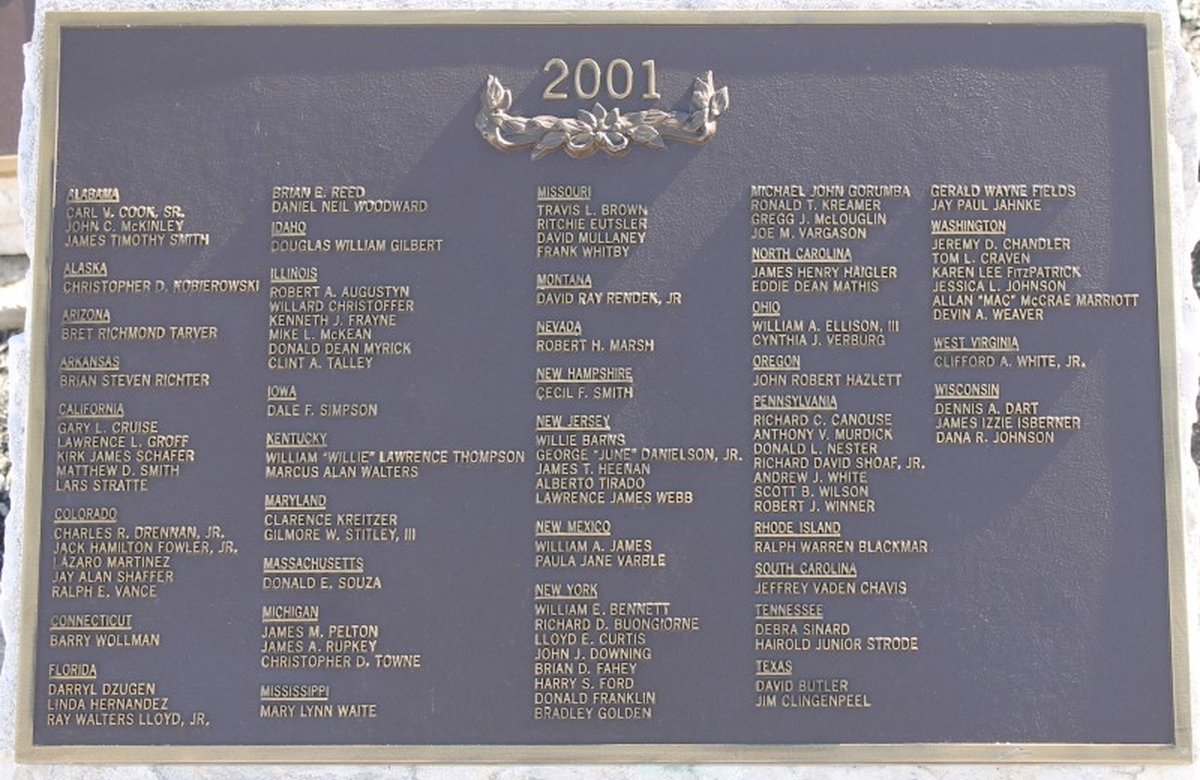
The name of Captain Jay Paul Jahnke has been inscribed on the 2001 plaque displayed at the National Fallen Firefighters Memorial on the campus of the National Fire Academy in Emmitsburg, Maryland.
Commentary:
Fires in high-rise buildings pose unique challenges to firefighters. They become particularly dangerous during periods of high winds which can accelerate the burn rate and heat production in an involved apartment or office space. The attack hose team and a backup hose team should be in position before entry into the fire compartment is attempted. The door to the public hallway should be left in place and closed until the hose crews are ready to make the push into the fire apartment. A rope search line should also be positioned on the fire floor to guide any personnel who may become disoriented in the dense smoke and high heat conditions. In this incident the standpipe outlet that was used was located in the public hallway on the fire floor rather than in the safety of an enclosed stairwell one floor below the fire floor. The hallway location exposes firefighters to high heat and dense smoke should conditions change rapidly during fire attack. When firefighters are conducting fire attack operations when the standpipe outlet is located only in the public hallway, the standpipe outlet in the hallway on the floor below the fire should be used.
Compartment fires in Type I Fire Resistive construction occupancies can be very punishing for fire attack and search crews. While the structural elements of the building will contribute little to the fire load, the combustible contents will often burn furiously, especially under wind driven conditions. Three FDNY firefighters died in 1999 while attempting to attack a compartment fire in a high-rise apartment building during high winds when the exterior window in the fire apartment self-vented causing a flashover and blowtorch-like conditions as the firefighters opened the apartment door to advance on the fire:
https://www.facebook.com/groups/192218352449074/permalink/1404791631191734/
We have attached photos from the incident. We have also included the link to a NIST report documenting experiments with wind driven fires in high-rise occupancies that were conducted with members of the FDNY on Governor’s Island in 2008: http://fire.engineering.nyu.edu/home/documents/NIST_TN_1629.pdf
And we have attached an article published by Chris DelBello on FireRescue 1 on fire attack and stairwell operations in high-rise and mid-rise buildings: https://www.firerescue1.com/high-rise/articles/high-rise-and-mid-rise-firefighting-fire-attack-and-stairwell-operations-bU3gOspUxU2o7bvL/
The link to the NIOSH report for the Houston incident is here:
https://stacks.cdc.gov/view/cdc/163859
We have also included the link to an investigative report on the incident by the Texas State Fire Marshal Office: https://www.tdi.texas.gov/reports/fire/documents/fmloddjahnke.pdf
We have also included the link to an Emergency Traffic podcast produced by group member Paul Prevost on the incident: https://creators.spotify.com/pod/profile/paul-prevost6/episodes/21-Houston-Tx–High-Rise-Out-of-Air-May-Day-and-LODD–October-13–2001-e1qd56u/a-a8qqgso
Thanks to multiple media sources for additional information for this article.
Honor the service of Captain Jay Paul Jahnke by reviewing your department’s standard operating procedures for fire operations in high-rise and large area buildings and by touring such an occupancy in your local response district with your crew members today.
Remember Fallen Brothers.
Get Out There And Know Your Local!!!

View of the fire damage to the structure.
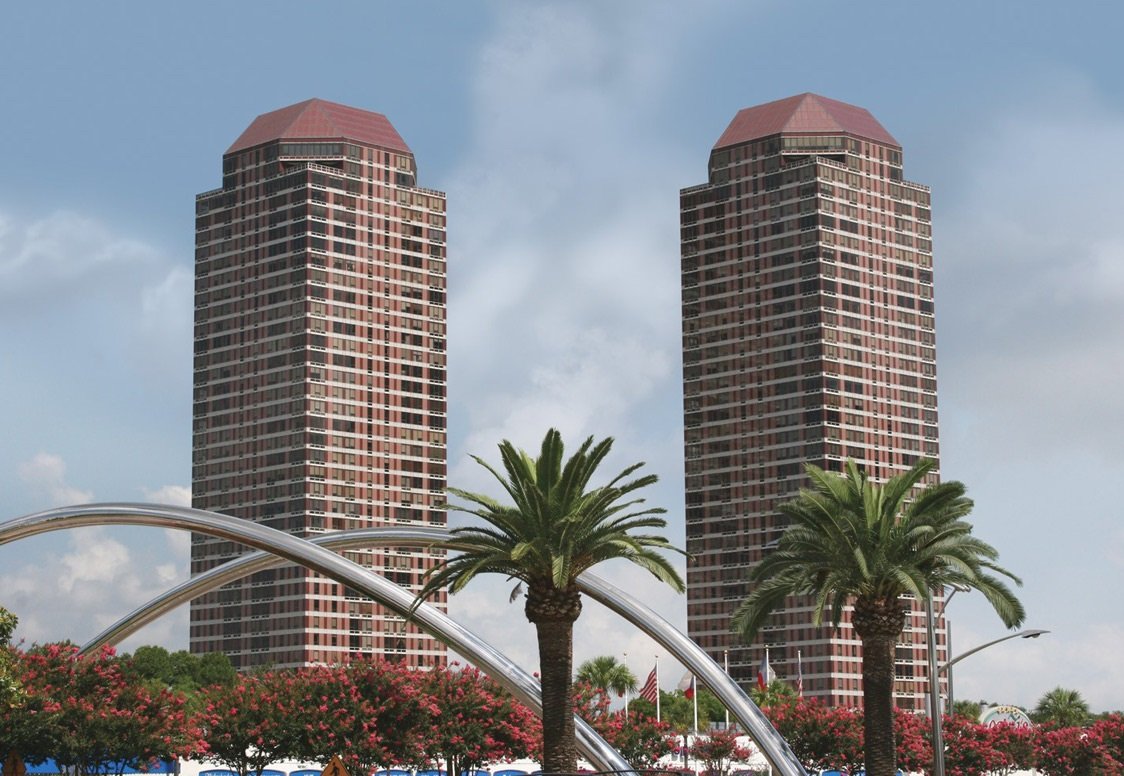
View of the twin high-rise structures at the site.