Two Firefighters Fatally Injured in Wall Collapse While Operating at Fire in Automotive Manufacturing Plant – Texas Wheel and Body Company Fire – Dallas, Texas – June 30, 1923
On June 30, 1923, Dallas Texas Fire Captain Albert Burris of Engine 10 died as a result of serious crushing injuries he received when a wall collapsed trapping him in debris while operating at a fire at the Texas Wheel & Body Company near the central business district in downtown Dallas. Five other firefighters were also trapped and injured in the collapse. Two of the firefighters were critically injured. First Assistant Chief Ernest Orland Jones later died from his injuries on August 18. Fireman Ralph H. Step of Engine 9 was able to recover from the serious injuries he sustained that day. The fire of unknown origin started on the second floor of the plant. Firefighters were operating in a narrow alleyway between the burning three-story brick factory and a small wood frame building when a sidewall suddenly collapsed into the alley crushing the frame building and trapping the men in brick, mortar and timber debris. Captain Burris was trapped in the ruins of the small frame structure for about thirty minutes before rescuers were able to free him. The unconscious Captain was breathing when he was freed and rushed to the hospital but was later pronounced dead from his injuries. Chief Jones expired seven weeks later from complications from injuries he sustained in the collapse. The deaths of the two firefighters were the twelfth and thirteenth suffered in the line of duty in the history of the Dallas Fire Department.
The structure involved in the incident was a large three-story Type III Ordinary construction brick and wood joist automotive parts manufacturing factory located at 2430-2504 Commerce Street midblock between Cabell and Lloyd Streets in a congested neighborhood of mixed residential and commercial occupancies. The fire building measured about 150 feet wide and about 200 feet deep and 40 feet high with a flat roof with multiple wired-glass skylights. Six-foot-high masonry parapet walls were located on Sides Alpha and Charlie. The building had no basement, and the first floor was concrete with the upper floors supported by cast iron columns on the first floor and wood posts on the second and third floors. The ceiling heights ranged from 12 feet high on the lower floors to 15 feet high on the third floor. The floors were divided by a masonry firewall down the centerline of the building from Side Alpha to Side Charlie and were equipped with three tin-clad fire doors. The building had two large iron-clad freight elevators: one near the Alpha end of the structure and one at the Side Charlie end. Metal fire escapes were located on Sides Alpha and Charlie. Side Alpha faced 80-foot-wide Commerce Street, a main thoroughfare in the business district of the city. Large wood frame lumber sheds were immediately on Exposure Bravo, the factory windows facing the lumberyard were equipped with cast iron fire shutters. Side Charlie faced a dead-end section of 80-foot-wide Canton Street with a railroad siding that served the lumberyard. A narrow 12-foot alley separated the fire building from a small two-story wood frame structure with a one-story setback occupied by the Dallas Iron & Metal Company and a café on Side Delta. Several fire hydrants fed by a six-inch water main were available on the block. The building was not equipped with a fire alarm system or an automatic fire sprinkler system. The nearest fire alarm call box was located two blocks north at Main and Lloyd Streets. The quarters of Dallas Engine 2 was located a half block west of the fire building.
Dallas is the third largest city in Texas and the largest city in the Dallas–Fort Worth metroplex, the fourth largest metropolitan area in the United States at 7.5 million people. It is the largest city in and seat of Dallas County with portions extending into Collin, Denton, Kaufman, and Rockwall counties. With a 2020 U.S. census population of 1,304,379, it is the ninth most populous city in the country. Located in the flatlands of the east central section of the state, the growing City of Dallas has a diverse economy including defense, financial services, information technology, telecommunications, and transportation businesses. The 385.9 square mile city is protected by the Dallas Fire-Rescue Department, an ISO Class 1 agency, which today has about 2,000 employees deployed from 59 fire stations staffing 2 divisions, 9 battalions, 58 engines, 24 trucks, 2 rescues, 57 ambulances, 1 tender, 1 HazMat unit, 5 ARRF airport crash units, 1 wildland unit, 1 fireboat, 6 rescue boats, and 1 light and air unit. The department also staffs the Texas Task Force 2 Urban Search and Rescue Team. In the 12-month period between July 1, 2025 and June 30, 2026, the agency responded to 285,274 emergency calls for service.
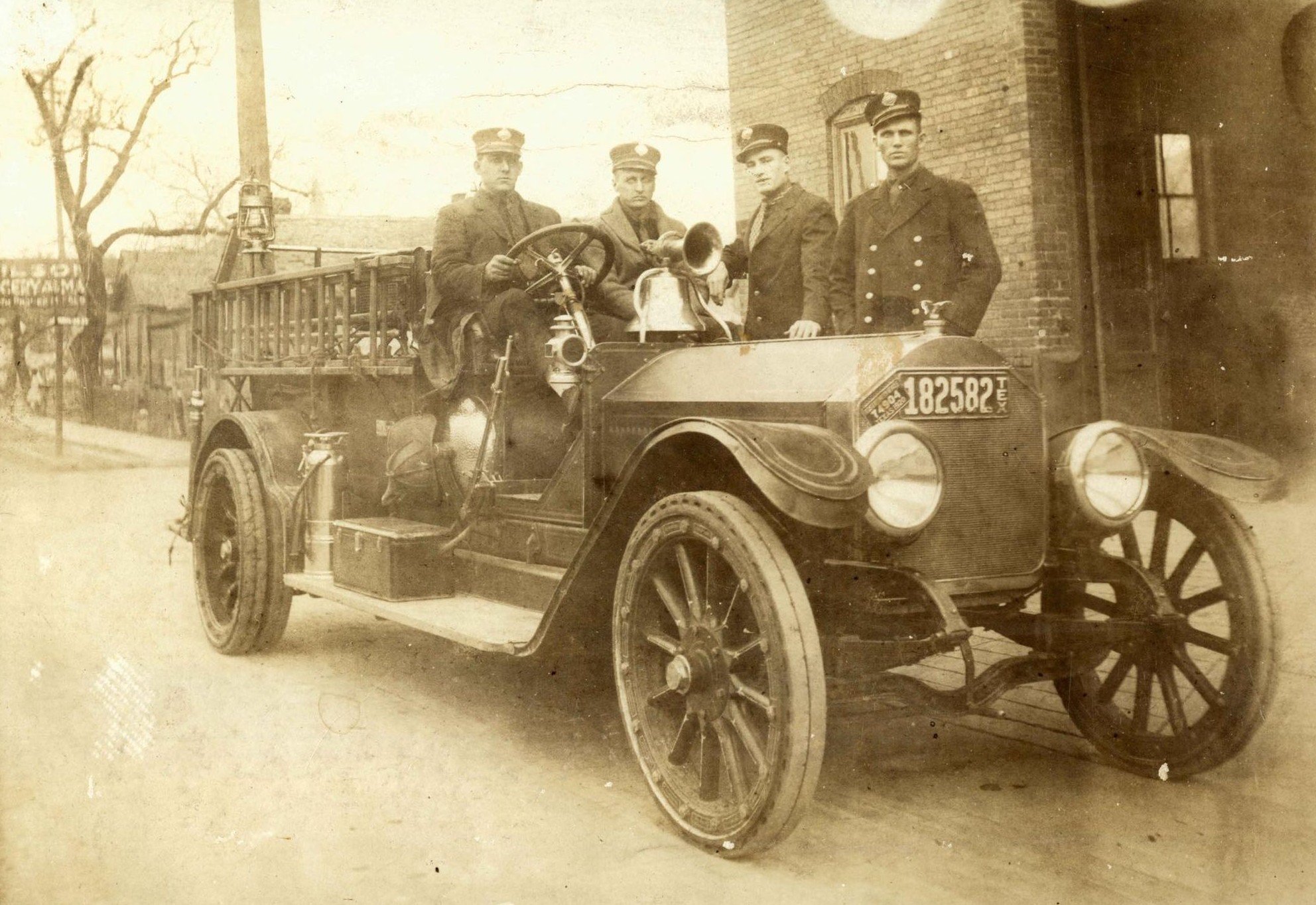
At the time of the incident in 1923, the city had a population of more than 178,000 residents, having tripled since 1900. The city was protected by the Dallas Fire Department with 220 paid members deployed from 16 fire stations staffing 19 combination pumper and hose trucks, 3 combination chemical hose trucks, 1 combination chemical hose and hook and ladder truck, 1 horse drawn steamer, 1 horse drawn hose wagon, 1 hook and ladder truck and 5 horse drawn steamers in reserve. The city was protected by a Gamewell telegraph fire alarm system with 381 street fire call boxes distributed about the city. A strong municipal water system had more than 1,600 fire hydrants distributed about the developed areas of the city.
Shortly before 5 p.m. on Saturday, June 30, 1923, M.B. Gilson, manager of the Texas Auto Market, which adjoined the Texas Wheel and Body works building on Commerce Street near Dove Street said he heard a muffled explosion and within minutes dense clouds of black smoke poured from the windows and through the roof. He quickly turned in the alarm to the Fire Department.
First arriving firemen found the entire top floor of the large three-story factory building to be heavily involved in fire. Concerned that the rapidly growing fire would extend to the surrounding business district, a second alarm was sounded quickly followed by a general alarm calling all available fire apparatus to the scene. Firemen set up heavy hoselines and fought the fire from Commerce Street, from Williams Street in the rear, and from a narrow alleyway on the west side of the structure.
Several firefighters were operating in a narrow 12-foot passageway on Side Delta between fire building and a small two-story wood frame structure occupied by the Dallas Iron & Metal Company. It was in this alley that six firefighters were caught in the collapse that suddenly occurred after the west wall of the brick fire building failed and fell into the alley crushing the frame structure to the ground and trapping six firefighters. The crash came at about 5:40 p.m., about thirty minutes after the firefighters first arrived at the scene. Firemen and hundreds of spectators rushed to the stricken men and began removing the hot masonry and broken timbers that entrapped the members. Calls were sent out for ambulances and in a few minutes, several were bearing the injured to St. Paul’s Sanitarium.
Captain Bert Burris of Engine 10 was trapped in a rear room of the frame structure. Tons of brick, mortar and timber fell on him, pinning him to the floor, crushing his face and chest. Rescuers worked feverishly for thirty minutes to extricate the severely injured fire officer. Although the Captain was breathing when taken from under the debris, he died before reaching St. Paul’s Sanitarium. Investigators later speculated that Captain Burris had attempted to avoid the cascading wall by jumping through a window into the wood structure before being crushed in a tangle of wood and masonry.
Two of the five other firefighters who were injured in the collapse received serious injuries. First Assistant Chief Ernest Orland Jones suffered serious internal injuries, his kidneys crushed and severely bruised about the body and head. His condition was critical. Chief Jones died seven weeks later on August 18 from his injuries. Fireman Ralph H. Step of Engine 9 was able to recover from the serious injuries he sustained that day including a broken left leg, a broken right arm and severe bruises about the body. Jones and Stepp had just walked into the passageway intending to go to the rear of the building when the wall fell without an instant’s warning. Both men were almost completely covered by the falling wall.
The other injured firemen included Captain Oscar F. Walter of Hook and Ladder 6, who suffered cuts and bruises on the face and head, Kenneth J. Spier, Assistant Chief’s driver, had cuts on the hand and face, and Fireman Alfred G. Brantley of Engine 3, who suffered injuries to the head and bruises about the body. Brantley was in the rear of the frame structure with Walter and several other firemen. A brick from the crumbling wall struck him on the right side of his head knocking him to the ground. D.W. Quill, ambulance driver for Ed C. Smith and Brothers, was cut on the face and had his arm injured. Quill had rushed to the rescue of the injured firemen and was struck with a brick which fell from the unstable wall.
Fireman K. J. Spier was standing beside Burris just before the fatal accident. “I called to Burris,” said Spiers, “that wall is going to cave in Burt.” Burris said to me, “What did you say?” I then repeated what I had said. As I did so the wall began to fall. Burt’s last words were, “There it is, Butch.” Spiers escaped with slight injuries running through the debris into the adjacent frame building.
“Five minutes before the crash came, Chief Jones asked me to let him take a detail of men with a line of hose up the stairway and fight the flames from within,” said Fire Chief Thomas A. Myers. “I told him that I was afraid of the building falling and would not let him go. He and the men he was handling then started back towards the rear and were caught in the crash.” Chief Myers was deeply affected by the accident that cost the life of one of his men and serious and minor injuries to several other members of the department.
Sam Greenburg, who operated the Dallas Iron and Metal Company in the adjacent frame building, was in his place of business when the crash came. How he escaped death is a miracle. Almost all of the roof of the eastern half of the building was crushed and the east wall was pushed in, causing heavy timbers and brick to fall to the floor. Greenburg, however, was only slightly injured and did not want to get in an ambulance to go to a hospital for medical attention.
The injured Captain Burris was found in the rear part of the frame building, which was only one-story in height and received the bulk of the weight of the falling wall. The opinion was expressed that when Burris saw the wall beginning to topple, he leaped through a window of the frame building in an effort to escape. He was not quick enough, however, and the crashing wall of the three-story brick factory buried him under tons of broken timbers, brick and mortar. It was more than a half hour after the wall crashed before Burris was found by a detail of firemen ordered by Chief Myers to search the debris. Saturday was Captain Burris’ day off duty, but when the general alarm was sounded, he ascertained the location of the fire, and was there to do his bit, and was doing it valiantly when caught and crushed by the falling walls. Chief Myers expressed his deep sorrow at the death of Burris. “He was a splendid man,” said the Chief, “One of the best in the department. His only fault was that he was too game. While sorrowing for him, I can only be thankful that no more men were killed.”
A number of firemen working three hoselines from the Williams Street side of the structure narrowly escaped when the walls fell on Side Charlie. Part of their equipment was buried and the burst of flame following drove firemen and spectators alike many hundreds of feet away from the building. Thirty or more firemen were manning hoselines on the Commerce Street front of the building when the walls crashed. Some of them had narrow escapes but not a man working at this end of the building was injured. Assistant Chief Joe Marder and a number of firemen were on the roof of the three-story building on the east when the crash came. They stuck to their posts to a man, although realizing that some of their comrades had been killed or maimed. There was also danger every moment that the building on which they were working would catch fire.
Following the collapse firemen were able to play their heavy streams deep into the building and the fire darken down quickly. The fire started on the second floor of the three-story building occupied by the Texas Wheel & Body Works and the American Auto Baking & Enameling Company. R. F. Robinson, manager of the wheel and body company, estimated his company’s loss at approximately $100,000. W. P. Anderson and Paul Fox, owners of the enameling plant, said their loss would probably be $10,000. The loss to the building will reach approximately $60,000. Damage to the frame structure occupied by the Dallas Iron & Metal Company will be approximately $5,000, according to Sam Greenberg, owner.
Members of the Dallas Fire Department fatally injured in the Texas Wheel and Body Fire on June 30, 1923:
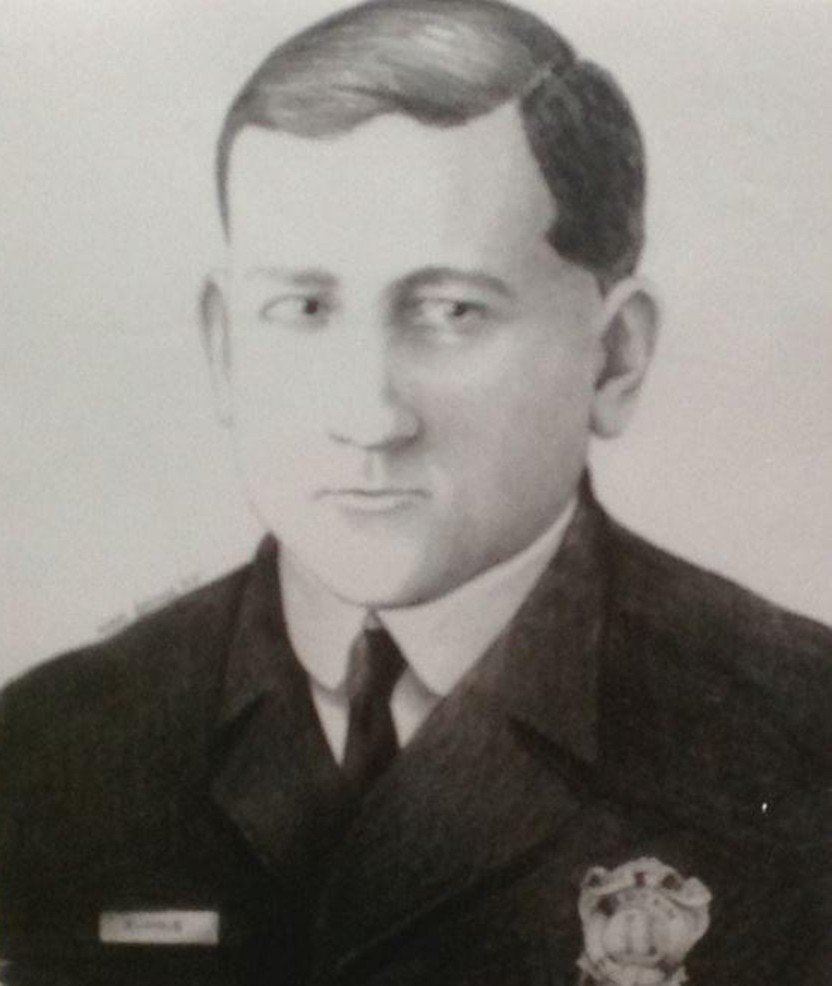
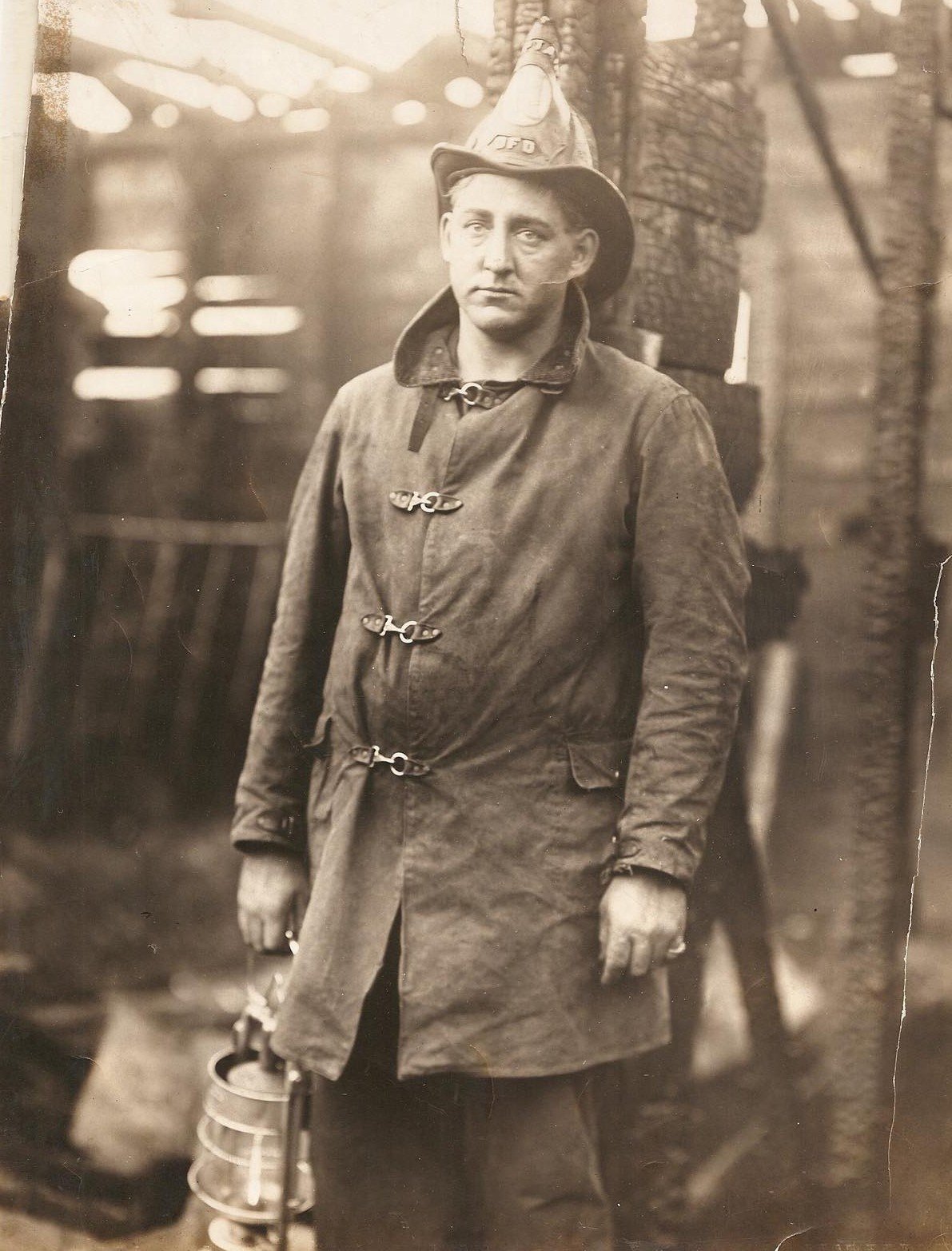
- Fire Captain Albert “Bert” E. Burris, age 30, was assigned to Engine 10. He was promoted to captain the previous August. Captain Burris was said by his superiors to have been one of the best captains in the Dallas Fire Department and one who never hesitated because danger lay ahead. Captain Burris had been cited for special acts of bravery in rescuing trapped victims from a fire which cost four lives and destroyed a two-story rooming house on the morning of October 17, 1921. Thirty people were trapped in their rooms by the flames, which had gained great headway before the alarm was turned in. Several firemen, among whom was Captain Burris, made repeated trips into the house to remove the trapped victims. He is said to have rushed through a sheet of flame, entered the house and rescued a young woman who later died at a local hospital from burns. Captain Burris also proved a hero at a fire on Elm Street in July of 1922 when, with his unusual strength, he held up some heavy timbers and prevented several of his brother firemen from being crushed to death when a roof collapsed. He was one of the best loved firemen in the department. He was survived by his wife, Dora: his daughter, Louise Marie, age 4; a brother, Boyd Burris; a sister, Mrs. Anna Canton, and his mother, Mrs. Mattie Watson, all of Dallas and one half-brother, Andy Kenyon of Boyles, Alabama. Funeral services were held at the residence of his mother. Burial was at Oakland Cemetery in Dallas.
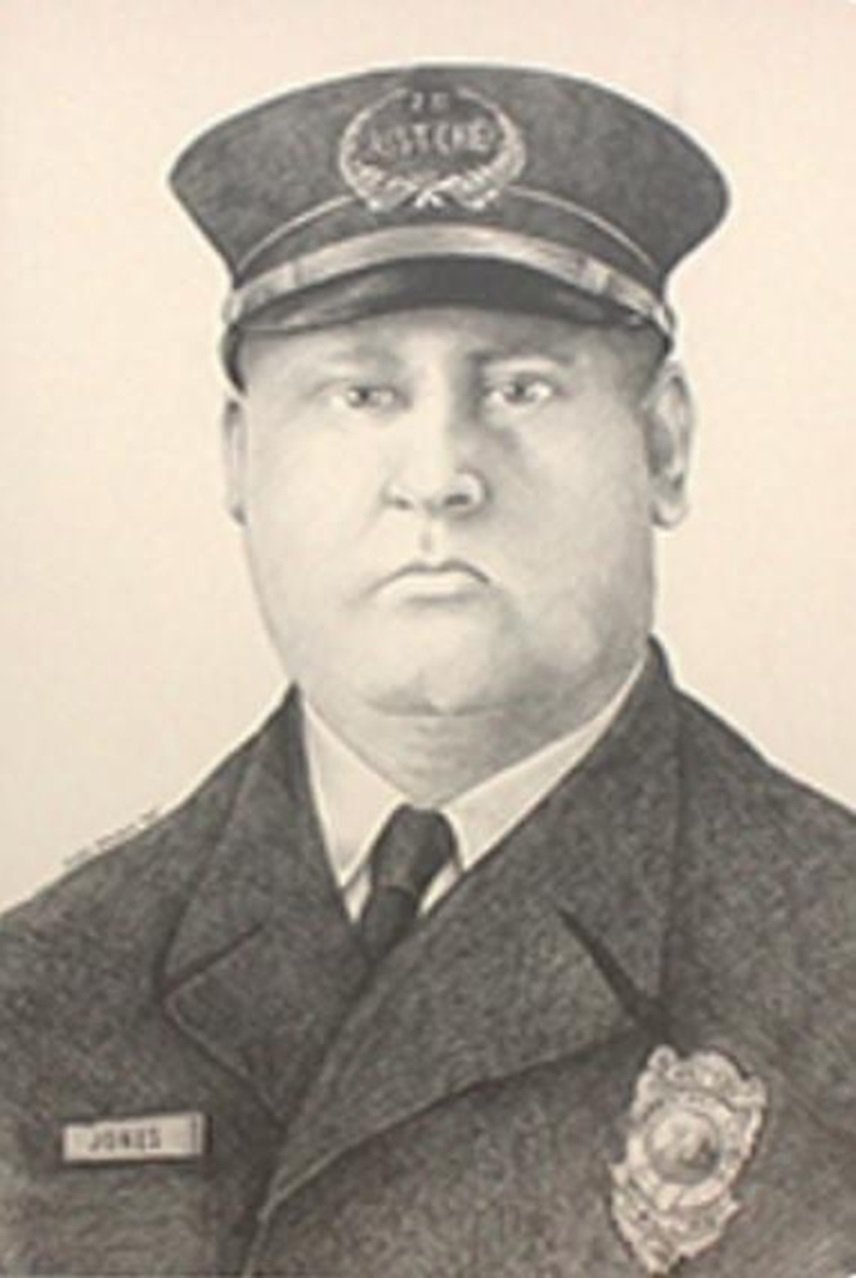
- First Assistant Chief Ernest Orland “Charlie” Jones, age 47, was a 23-year veteran assigned to the Oak Cliffs fire station. Chief Jones expired on August 18, seven weeks after the fire from complications from injuries he sustained in the collapse on June 30. He was off duty on the afternoon of the fatal fire and was visiting friends at the Central fire station when the alarm came in for the fire at the wheel and body plant. Obeying the call of duty when the general alarm sounded, Chief Jones hurried to the scene of the fire. Chief Jones was a member of the Dallas Masonic Temple. He was well known in Dallas sporting circles as an accomplished wrestler and operated a private gymnasium where area boxers and wrestlers trained. As an athlete, the Chief was an advocate of strict physical training to keep members of the fire department in top condition for fighting fires. He was survived by his widow, Emma; two brothers, A. M, Jones of Dallas, and C. H. Jones of Tulsa, Oklahoma; and two sisters, Mrs. W. H. Rea of Fort Worth and Mrs. Elm Elgin of Dallas. His funeral was held at the Scottish Rite Cathedral with burial following at Oakland Cemetery in Dallas.
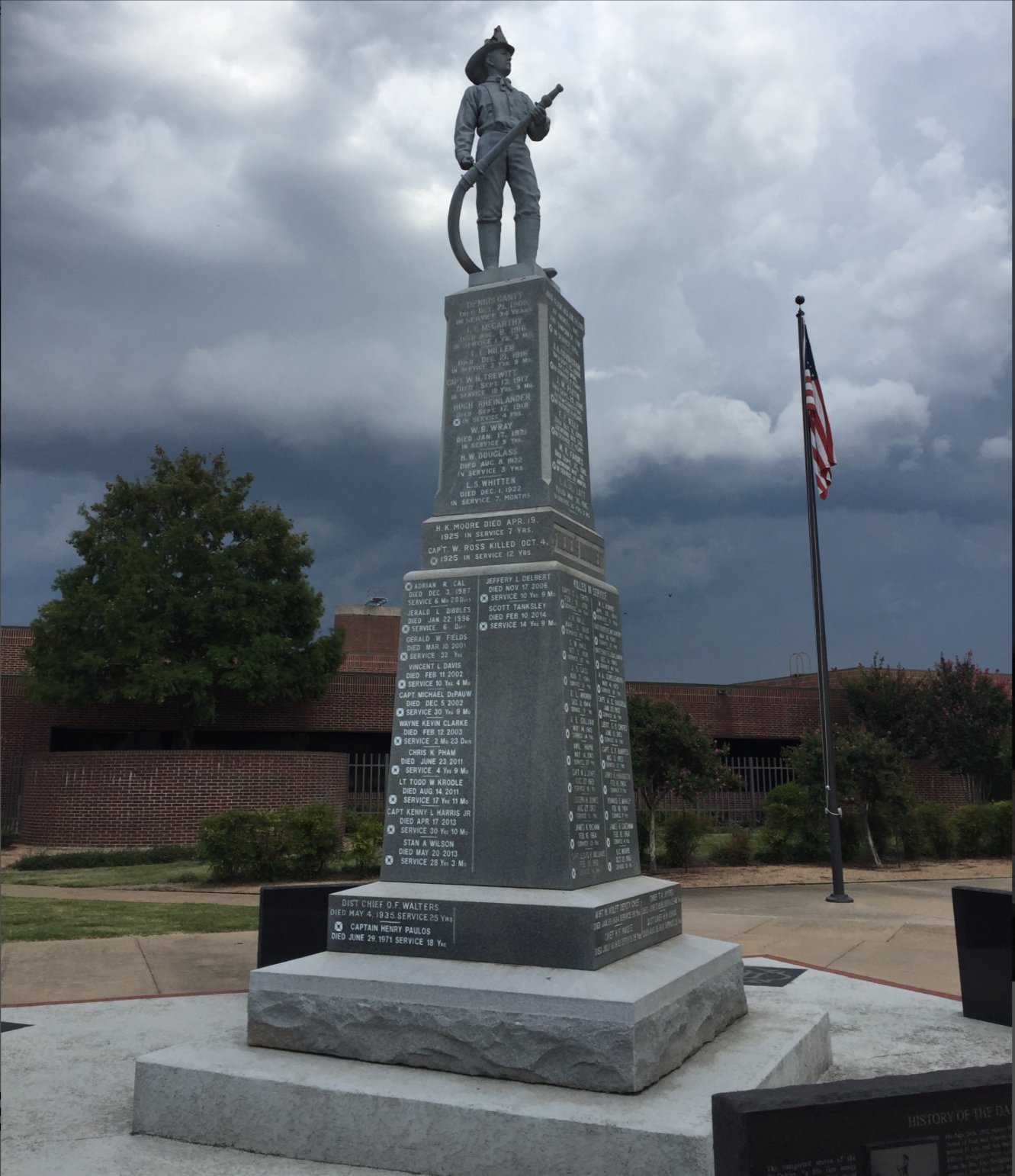
The names of First Assistant Chief Ernest Orland Jones and Captain Albert E. Burris have been inscribed on the Dallas Firefighter Monument located at the Fire Rescue Training Center on Dolphin Road. The monument was commissioned after the 1902 death of Fireman John Clark, the first member of the Department to die in the line duty. The monument consists of a 15-foot-high base with the names of all Dallas firefighters who have been killed in the line of duty. The statue atop the monument is carved in the likeness of Fireman Clark.
The site of the fatal fire is now occupied by an expressway serving downtown Dallas. There is no memorial marker at the site.
Commentary:
The risk assessment of a building during firefighting operations must be continuous with building intelligence and reconnaissance communicated on degrading conditions, fire extension and compromise, building integrity considerations, the effects of fire spread and suppression on the interior compartment, and the structural system and building envelope. Often during long duration incidents, firefighters tend to suffer from “mission creep” and begin to push the limits of established collapse zones in an effort to complete the extinguishment process as quickly as possible. This loss of situational awareness may lead to placing firefighters in compromising positions. Incident commanders should consider rotating companies at long duration incidents so that fresh firefighters are assigned to areas adjacent to collapse zones. Additional safety officers should also be assigned to maintain full-time vigilance over the established collapse areas and the structural integrity of the fire building.
There are no available photos or illustrations from the incident. We have attached a detail from the 1921 Sanborn fire insurance map showing the configuration of the fire building and the surrounding exposures.
We have also attached an article published in Firehouse magazine by group member Christopher Naum on predicting building performance and building collapse factors: https://www.firehouse.com/home/article/12069221/collapse-zones-building-characteristics-occupancy-risks?fbclid=IwZXh0bgNhZW0CMTAAAR0CiApoL7yvPwAb0M6UEfER79Jw_c_-lUvg4o3dRUjieQPRZE8p-1tNOtU_aem_AdPm1NiDvZdVshr62sZCzZ3lvywYvBTaF-wW82Hi4bif8z-ixMdKnw2hzUxdvp-454RlaPNWRy8-k4Bj4170gaqr
Thanks to multiple media resources for the content of this article.
Honor the service of Fire Captain Albert “Bert” E. Burris and First Assistant Chief Ernest Orland “Charles” Jones by reviewing the warning signs of impending building collapse in masonry structures with your crew members today.
Remember Fallen Brothers.
Get Out There And Know Your Local!!!

Detail from the 1922 Sanborn fire insurance map showing the configuration of the fire building (circled in red) and the surrounding exposures. The red X marks the area of collapse on Side Delta that trapped the firefighters and crushed the adjacent wood frame structure.