Three Firefighters and Three Civilians Killed in Explosion of Dynamite Cargo Truck– Marshalls Creek, Pennsylvania – June 26, 1964
On June 26, 1964, Marshalls Creek Volunteer Firemen Leonard Mosier, Francis Earl Miller, and Edward Franklin Hines were killed along with three civilians when a tractor trailer truck filled with an unlabeled cargo of 15 tons of nitro carbo nitrate, partially gelatin dynamite and blasting caps exploded along a highway in the rural community of Marshalls Creek, Pennsylvania. While the truck was passing through the area in route to deliver the cargo from an explosives factory in Pottsville to a construction site in New York, two tires on the trailer failed. The driver pulled the vehicle off the road in front of a reptile farm. He disconnected the tractor from the trailer and left it parked on the shoulder as he went to find a pay phone without realizing that the tires were smoldering. A passerby soon spotted the fire and local firefighters arrived to find the trailer and its contents on fire. As firefighters prepared to attack the fire, the cargo detonated in a massive explosion that killed three volunteer firemen along with a nearby resident, a passing motorist, and another truck driver who had spotted the fire. Thirteen others, including several firefighters, were injured and hundreds of snakes from the reptile farm, some of them poisonous, were freed by the explosion. The truck driver was later charged with six counts of involuntary manslaughter, but he was acquitted at trial. The event brought about major changes in regulations regarding the transportation of explosives and other hazardous cargos and led to the creation of the 1974 U.S. Transportation Safety Act, setting stricter federal regulations on the transport of hazardous materials.
Marshalls Creek is an unincorporated community in Monroe County in Northeast Pennsylvania. Located about seven miles northeast of Stroudsburg, the community is on Business U.S. Route 209 at the southern terminus of Route 402 in Smithfield Township. It is named after the creek that flows southward through it into the Delaware River. The area is protected by the Marshalls Creek Fire Company which provides fire, emergency medical, extrication, search and rescue, and hazardous materials response to a primarily rural area of 85 square miles with a population of 22,000. 45 active volunteer members operate 15 pieces of apparatus deployed from 2 stations. The fire company responds to over 800 calls for service each year.
The tragic occurrence unfolded at approximately 4:02 a.m. on Friday, June 26, 1964, when Fire Company Assistant Chief Richard McDonough received an alarm on the fire-reporting phone system employed by the Marshalls Creek Fire Department. The caller identified himself as a passing truck driver and reported a truck trailer on fire near Bushkill about three miles north of Marshalls Creek on Route 209. Due to the uncertainty of the location the truck driver, Joseph J. Horvath, Jr., stated he would return to the scene and illuminate it with the headlights of his vehicle so that the fire department would have no difficulty in responding to the site.
Chief McDonough then sounded the public alarm and proceeded to the nearby fire station where with four other volunteers, manning three pumpers, responded to the fire scene. McDonough drove Engine 2 with Engine 5 and Engine 1 preceding him. The night was clear with a moon, although there was some ground fog. He estimated it required four minutes to reach the scene. All the apparatus pulled up in line approximately 200 feet to the rear of the burning trailer.
Upon arrival he noted the vehicle on fire parked about 15 feet off the road in a clear spot. This was a portion of a parking area for the Pocono Reptile Farm, a tourist attraction. The tires at the right rear were burning and Chief McDonough decided to employ foam rather than plain water due to the difficulty of extinguishing a tire fire. He also noted the fire had extended to the base of the van body at the right rear and was burning brightly. He likened it to a tungsten light.
He stated there were no warning signs of any kind visible. He put his pump in gear and went to the rear to obtain a foam playpipe and assist Fireman Leonard Mosier, who was pulling off a 1.5-inch hoseline. He estimated this required about 30 seconds. As he passed between Engine 2 and Engine 1, he heard a loud blast as the truck blew up and could feel himself being propelled through the air. It was very difficult for him to breathe.
Chief McDonough didn’t remember hitting the ground but found himself lying on his back partially pinned by a ladder from one of the pumpers. He said debris of the explosion was falling like rain. Then other members of his department who had followed in cars were all around and he was taken to Monroe County General Hospital in Stroudsburg by ambulance.
When the explosion occurred three Marshalls Creek firefighters were killed: F. Earl Miller, former assistant chief and brother of Fire Chief Ralph Miller; Edward Hines, engineer; and Leonard Mosier, former assistant chief and past president of the company. In addition, the truck driver who reported the fire, Joseph Horvath Jr. of Scranton, passing motorist Lillian Paesch of Baltimore, and John Regina, a young man residing nearby were also killed. Thirteen others were injured, two seriously including Fireman Robert Heid, and Assistant Chief McDonough who required more than 70 stitches for cuts on his left arm, abdomen, right thigh and right ankle. He also had small cuts on the face, a tooth knocked out and suffered torn cartilage and muscle as well as a ruptured right eardrum.
Chief Miller was responding from his home, about three miles south of the fire station, when he heard the explosion. Without waiting for further word, he radioed for help from the Shawnee and Bushkill Fire Departments. Upon arrival he directed his men in caring for the injured and these departments extinguished the remaining fire in the wrecked vehicle of the truck driver, who had called in the alarm, and debris of the reptile farm.
The blast wrecked the three pumpers, demolished six houses in the immediate area, splintered and stripped trees for approximately 300 yards around, broke windows in buildings of the Pocono Mountain resort area for miles in all directions and left a crater in the ground approximately 60 feet long by 40 feet wide by 12 feet deep. The trailer van containing the explosives disintegrated. The approximate time of the explosion was set at 4:08 a.m. when lights went out in the area due to power line damage.
A small motel nearby was demolished, and the Middle Smithfield Elementary School was damaged. The Pocono Reptile farm was torn apart by the blast. By nightfall more than 100 snakes, including a cobra, boa constrictor and many rattlesnakes, had been accounted for—some torn to bits in the violent blast, others shot by the police. An emergency shipment of antivenin, the only antidote manufactured in the United States to counteract poison from rattlesnake bites, was rushed to the scene, although there were no reports of bites.
John Florio of Pleasantville, New York, said he was watching the firemen fight the truck blaze when “the next thing I knew the truck blew up and bodies were flying as high as 20 feet in the air.”
The trailer was owned by the American Cyanamid Company and operated out of its Port Carbon plant near Pottsville, Pennsylvania. It carried 520 fifty-pound bags of ammonium nitrate blasting agent, 80 fifty-pound cases of 60-percent gelatin dynamite and 99 blasting caps of various types. It was in route to Fosterdale, New York, for use at a New York Highway Route 17B construction site. The van was stated to have been placarded on each side and the rear with explosive signs before leaving the plant.
Paul K. Kenworthy, an Interstate Commerce Commission (ICC) safety inspector, testified at an ICC hearing that the driver of the explosives truck told him he had parked the trailer after the tires on the right rear had gone flat. He then returned south on Route 209 in the tractor to an all-night gas station where he telephoned his superiors to report his delay. While at the station the explosion occurred. Two explosive warning signs were found in the tractor cab by Mr. Kenworthy.
Albert Koda, age 51, of Port Carbon, the driver of the explosives truck, told state police he was driving along Route 209 when his two right tires blew. He said he pulled off the road and parked alongside a parking lot in front of the reptile farm. Koda was quoted by the police as saying he had unhitched the tractor and then fallen asleep. When he woke up, he went for help. Koda reportedly said that when he left there was no fire and was at a loss to say who called the fire department.
The ICC investigation focused on why three explosives warning placards that were supposedly on the truck the day before weren’t there when firefighters arrived. The truck driver said they had fallen off shortly before he pulled over to deal with two flat tires, which he said apparently started to burn after he left to seek help. Others have speculated the tires were already burning because a gas station attendant smelled burned rubber on Albert Koda after he unhitched the explosives trailer and left it off Route 209’s shoulder.
An American Cyanamid official said the signs falling off at almost exactly the same place, as Koda speculated, would be “highly unusual.” Koda said that he had disconnected his tractor from the trailer after two rear tires on the trailer went flat. He claimed he found the signs while driving to East Stroudsburg to call his employer to say he would be late in making his delivery. The placards were found under the seat in the cab of his tractor. A federal report on the blast said the signs showed no evidence of falling off the truck. The report also concluded that Koda improperly took the signs off the trailer before leaving the blast scene. He was later charged with six counts of involuntary manslaughter, but he was acquitted after a trial in Northampton County Court.
The event brought about major changes in regulations regarding the transportation of explosives and other hazardous cargos and led to the creation of the 1974 U.S. Transportation Safety Act, setting stricter federal regulations on the transport of hazardous materials.
Members of the Marshalls Creek Fire Company killed in the line of duty on June 26, 1964:
- Fireman Edward Hines, age 43, was a welder who had helped start the fire company in 1945. He was survived by his wife, Daisy; his mother, Etta Mae Hines; two brothers, John Jr. and George; and two sisters, Elfrieda Arnold and Muriel Ace. He was buried at Prospect Cemetery in East Stroudsburg.
- Fireman Leonard Raymond Mosier, age 38, worked as a carpenter, architect and was a local rod and gun club member. He was a veteran of the Second World War and a member of the Middle Smithfield Presbyterian Church. He was survived by his wife, Ruby; three daughters, Phyllis, Patricia, and Deborah; and his parents, Raymond and Nellie Mosier. He was buried at Middle Smithfield Presbyterian Burying Ground in Monroe County.
- Fireman Marshall Francis Miller, age 57, was a state highway department employee who also had helped start the fire company and whose brother Ralph was chief at the time of the incident. A native of Louisiana, he was survived by his wife, Katie; his son, Frank; and his brothers, Charles, Ralph, and Cecil, and his sisters, Merle and Shirley. He was buried at Prairieville Cemetery in Prairieville, Louisiana.
A memorial to the three fallen firefighters has been erected on the grounds of the main fire station of the Marshalls Creek Fire Company. The memorial was dedicated on the 50th anniversary of the incident.
On June 26, 2023, 59 years since the Marshalls Creek explosion that took six lives including the three firefighters and injured a dozen people, a historical marker was unveiled at the site of the explosion to honor those killed and injured in the tragedy.
Commentary:
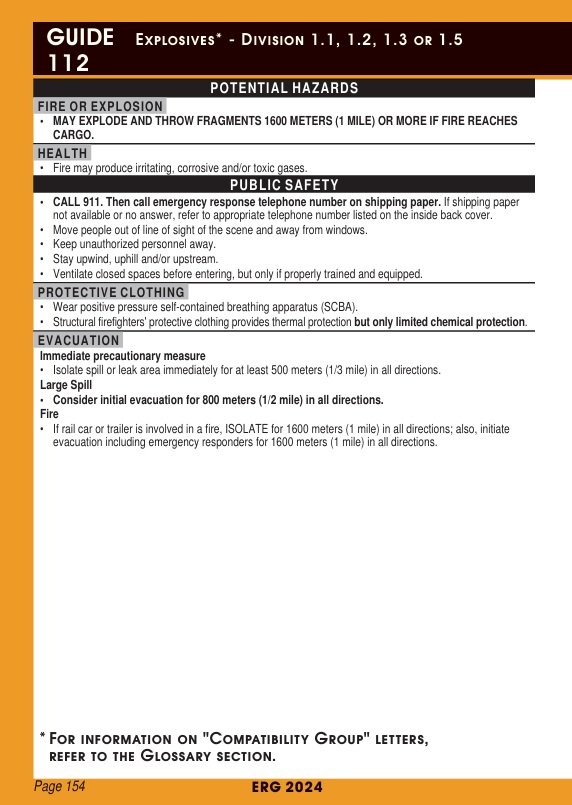
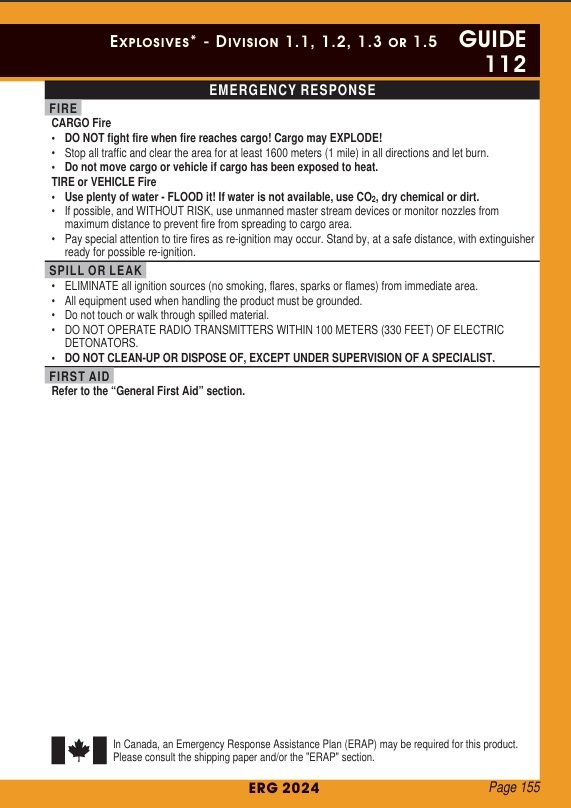
The Marshalls Creek blast led to significant changes in hazardous materials shipment policy both domestically and internationally. Explosive materials are now highly regulated in the way they are handled and transported. Requirements for packaging and how shipments are limited in quantity have been made. One of the greatest improvements to policy that has come out of the tragic event was the creation of the Emergency Response Guidebook (ERG), the ubiquitous orange manual found in many fire apparatus, which has become a Bible for many fire departments in handling hazardous materials situations and is used around the world.
Responses to hazardous materials that are involved in fire are a low frequency, high consequence incident for most fire agencies. This scenario could occur during a transportation accident, at a warehouse or manufacturing facility, or a construction site involving these types of hazardous materials in any of our local response areas. Firefighters must be trained to recognize the hazards of explosives and how to operate defensively at these types of incidents.
We have attached photos from the incident.
We have also included the link to an electronic app of the 2024 ERG that can be downloaded to any smartphone, tablet, or laptop computer so that the information contained in the guidebook is readily available to first responders in the field: https://www.phmsa.dot.gov/training/hazmat/erg/emergency-response-guidebook-erg
We have also included in the photos the pages from the 2024 ERG for Guide 112 – Explosives – Division 1.1, 1.2, 1.3 or 1.5.
Thanks to multiple media sources for the content of this article.
Honor the service of Firemen Leonard Mosier, Francis Earl Miller, and Edward Franklin Hines by reviewing the usage of the 2024 Emergency Response Guidebook with your crew members today.
Remember Fallen Brothers.
Get Out There And Know Your Local!!!

Photo: Aerial view of the blast site.

The blast wrecked the three pumpers, demolished six houses in the immediate area, splintered and stripped trees for approximately 300 yards around, broke windows in buildings of the Pocono Mountain resort area for miles in all directions and left a crater in the ground approximately 60 feet long by 40 feet wide by 12 feet deep. The trailer van containing the explosives disintegrated. The approximate time of the explosion was set at 4:08 a.m. when lights went out in the area due to power line damage.
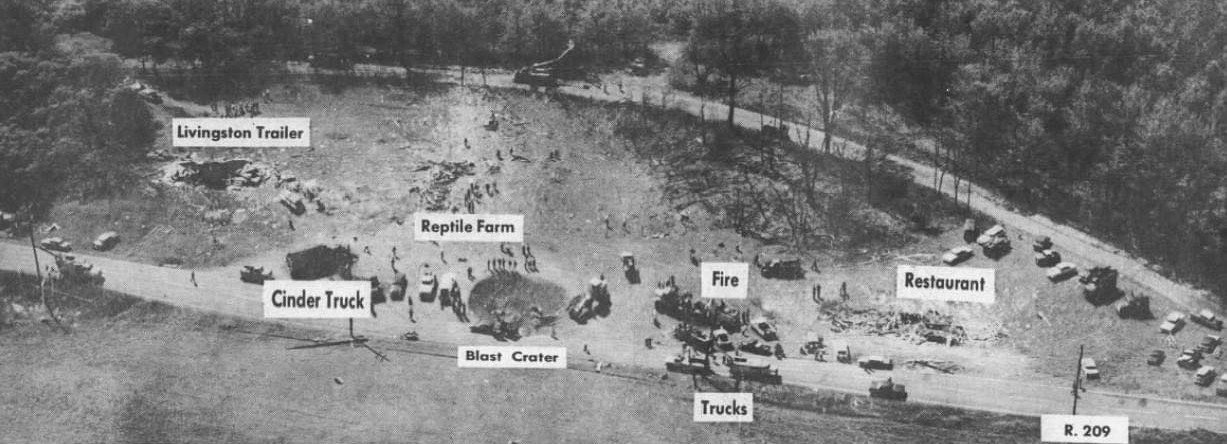
Overview of the blast site.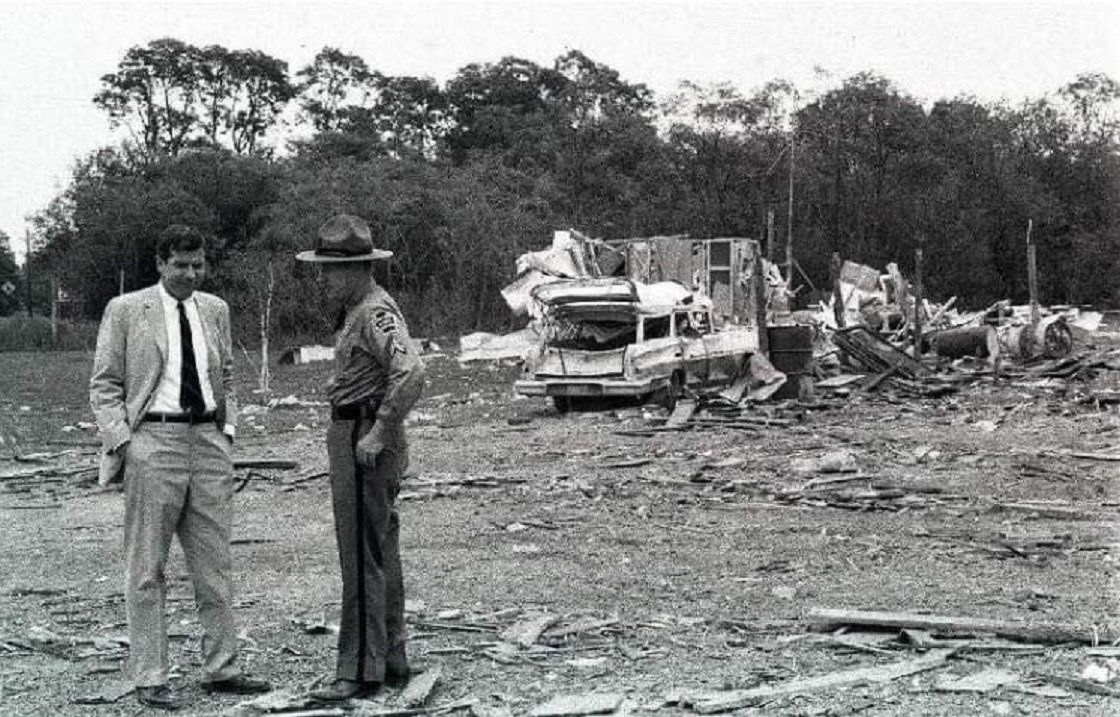
Investigators at the site of the blast. Note the demolished station wagon which was driven by a woman from Baltimore who died in the blast.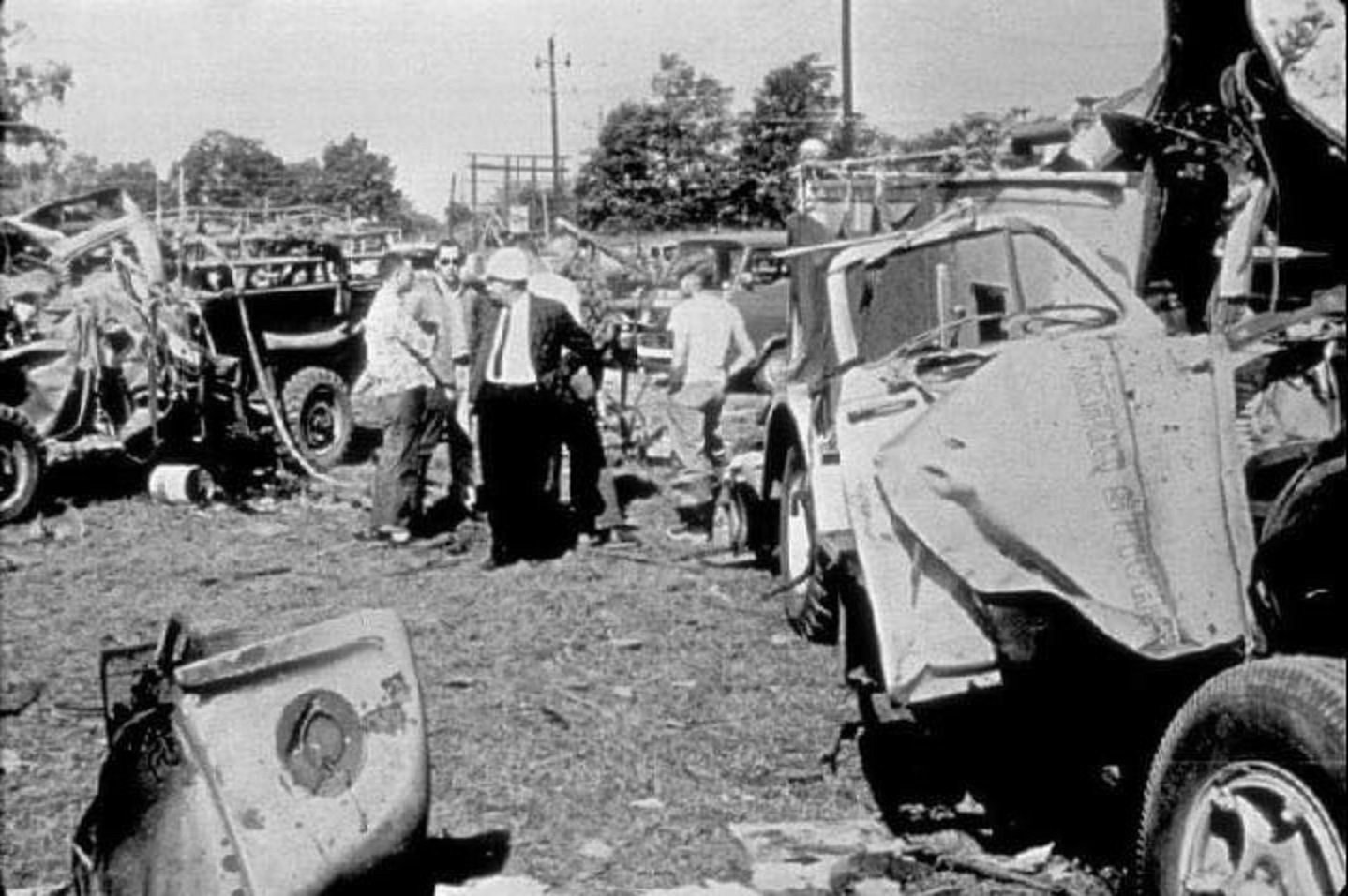
Investigators inspecting the ruined apparatus at the site.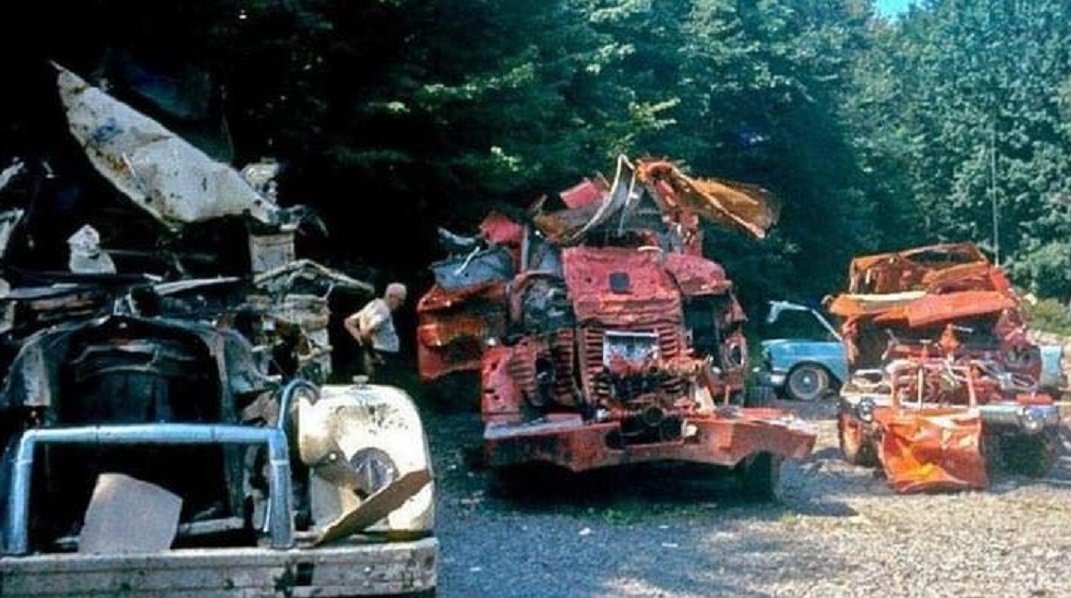
Three engines of the fire company were demolished in the explosion.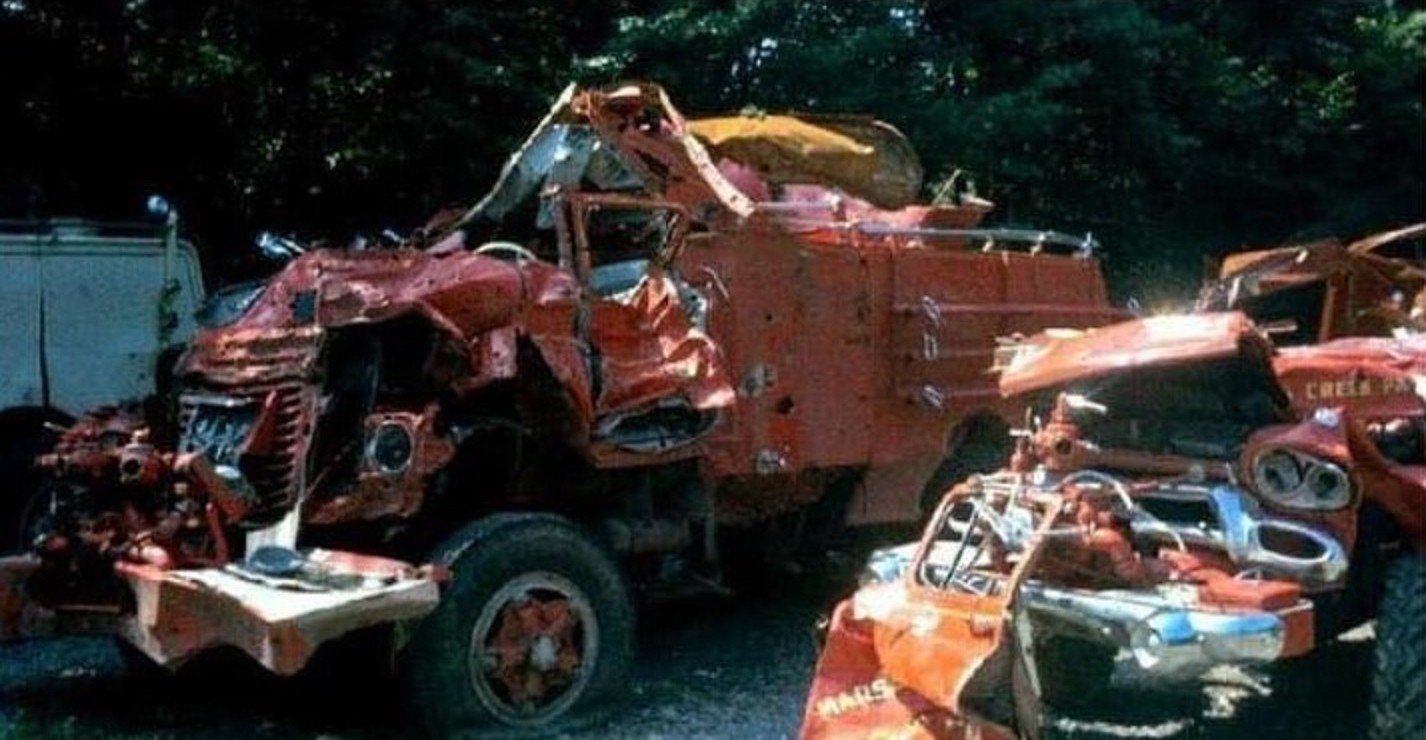
Another view of the ruined apparatus.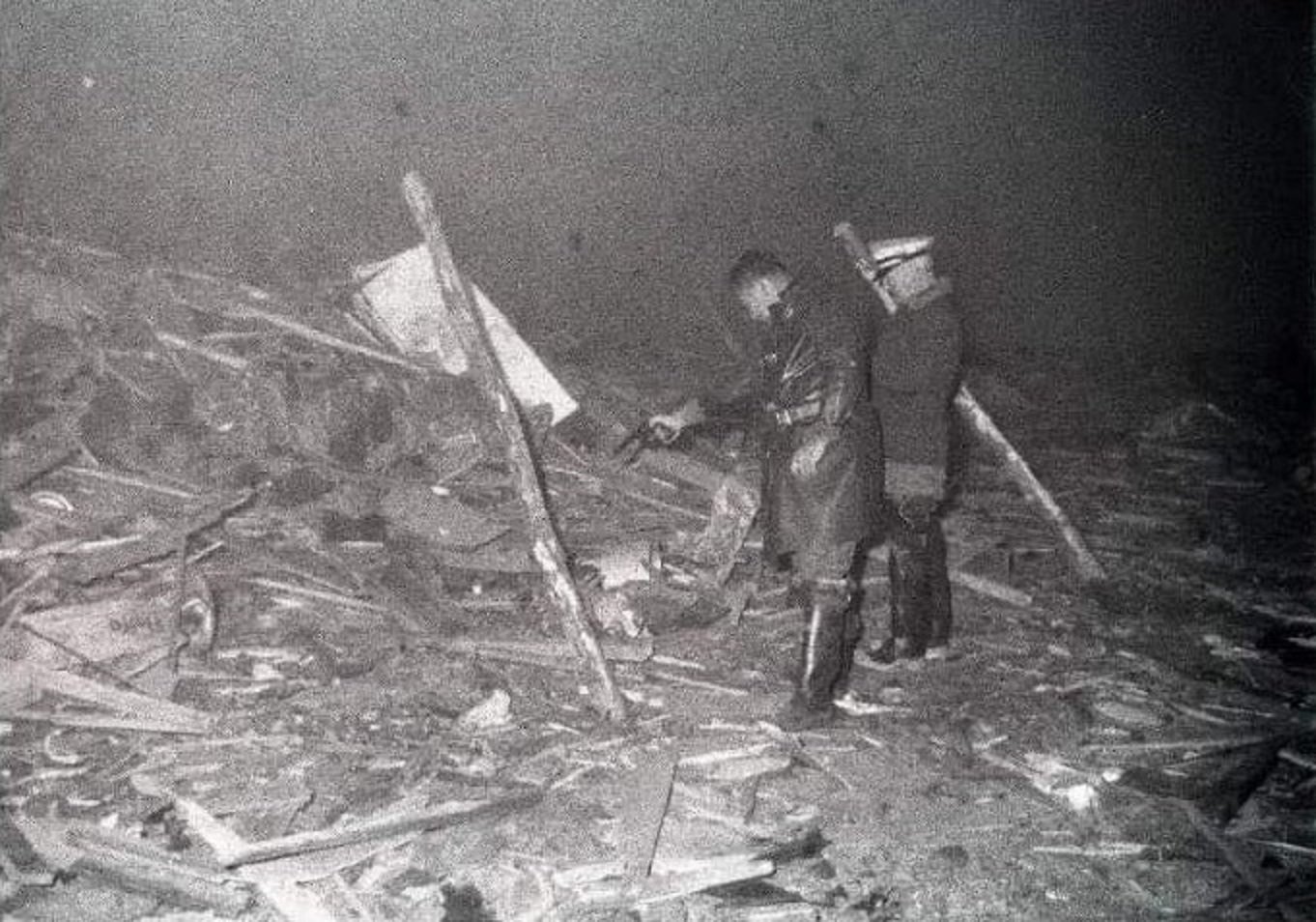
The nearby Pocono Reptile farm was torn apart by the blast. By nightfall more than 100 snakes, including a cobra, boa constrictor and many rattlesnakes, had been accounted for—some torn to bits in the violent blast, others shot by the police. An emergency shipment of antivenin, the only antidote manufactured in the United States to counteract poison from rattlesnake bites, was rushed to the scene, although there were no reports of bites.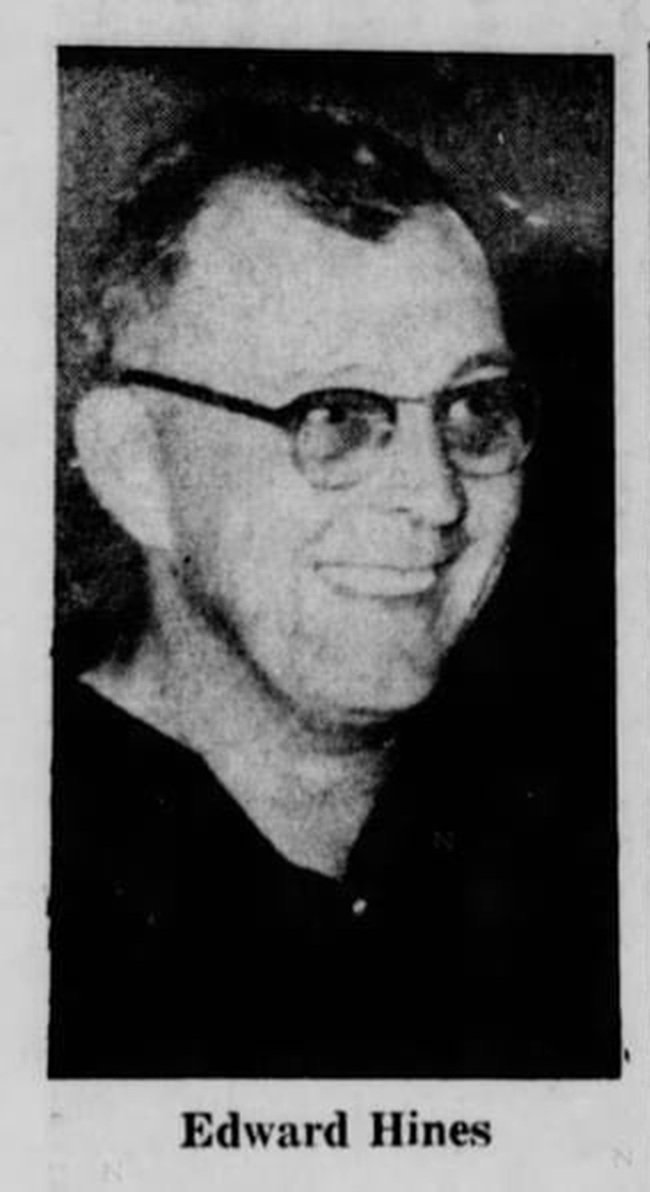
Fireman Edward Hines, age 43, was a welder who had helped start the fire company in 1945. He was survived by his wife, Daisy; his mother, Etta Mae Hines; two brothers, John Jr. and George; and two sisters, Elfrieda Arnold and Muriel Ace. He was buried at Prospect Cemetery in East Stroudsburg, Pennsylvania.
Fireman Leonard Raymond Mosier, age 38, worked as a carpenter, architect and was a local rod and gun club member. He was a veteran of the Second World War and a member of the Middle Smithfield Presbyterian Church. He was survived by his wife, Ruby; three daughters, Phyllis, Patricia, and Deborah; and his parents, Raymond and Nellie Mosier. He was buried at Middle Smithfield Presbyterian Burying Ground in Monroe County., Pennsylvania.
Fireman Marshall Francis Miller, age 57, was a state highway department employee who also had helped start the fire company and whose brother Ralph was chief at the time of the incident. A native of Louisiana, he was survived by his wife, Katie; his son, Frank; and his brothers, Charles, Ralph, and Cecil, and his sisters, Merle and Shirley. He was buried at Prairieville Cemetery in Prairieville, Louisiana.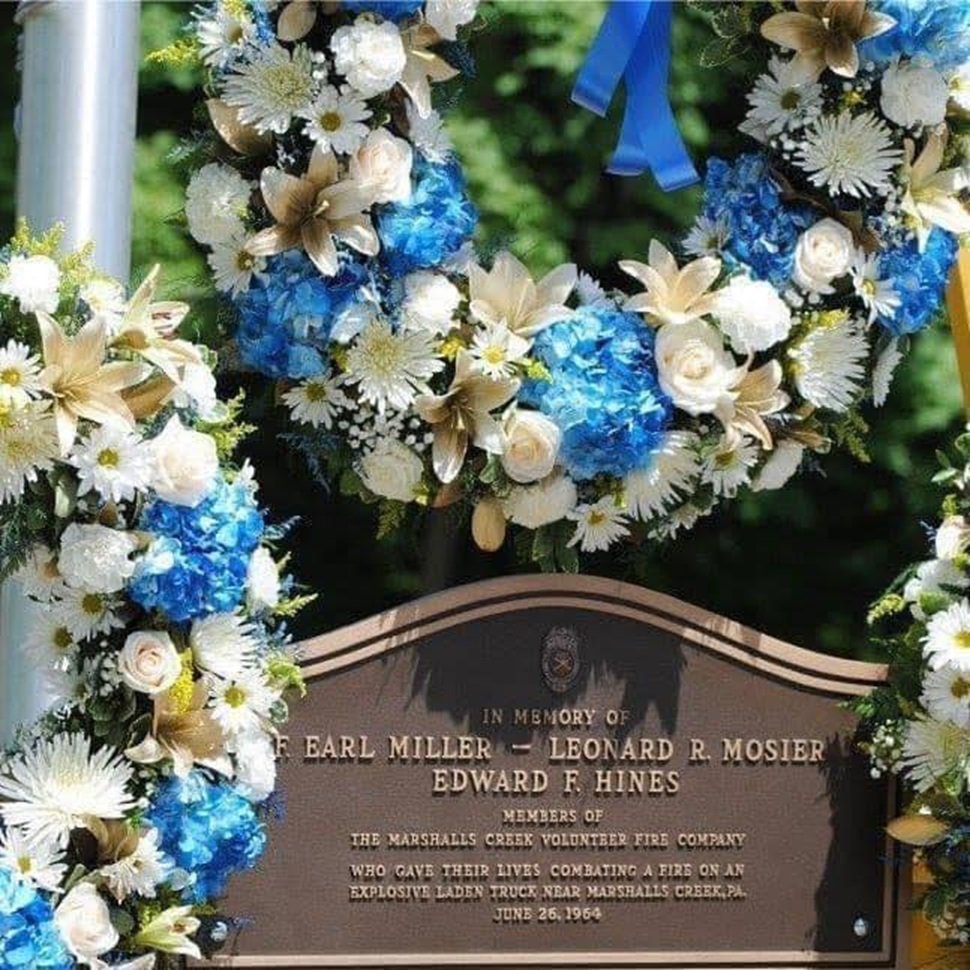
Memorial plaque honoring the three fallen firefighters.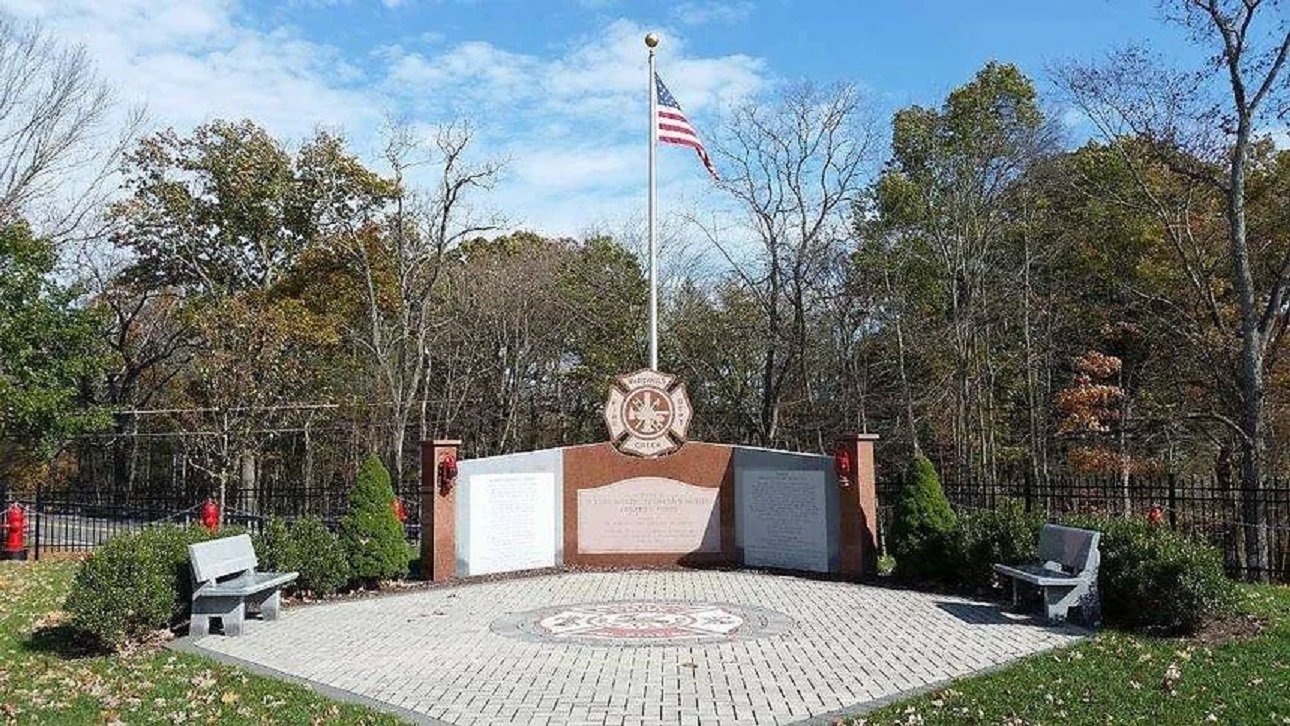
A memorial to the three fallen firefighters has been erected on the grounds of the main fire station of the Marshalls Creek Fire Company. The memorial was dedicated on the 50th anniversary of the incident.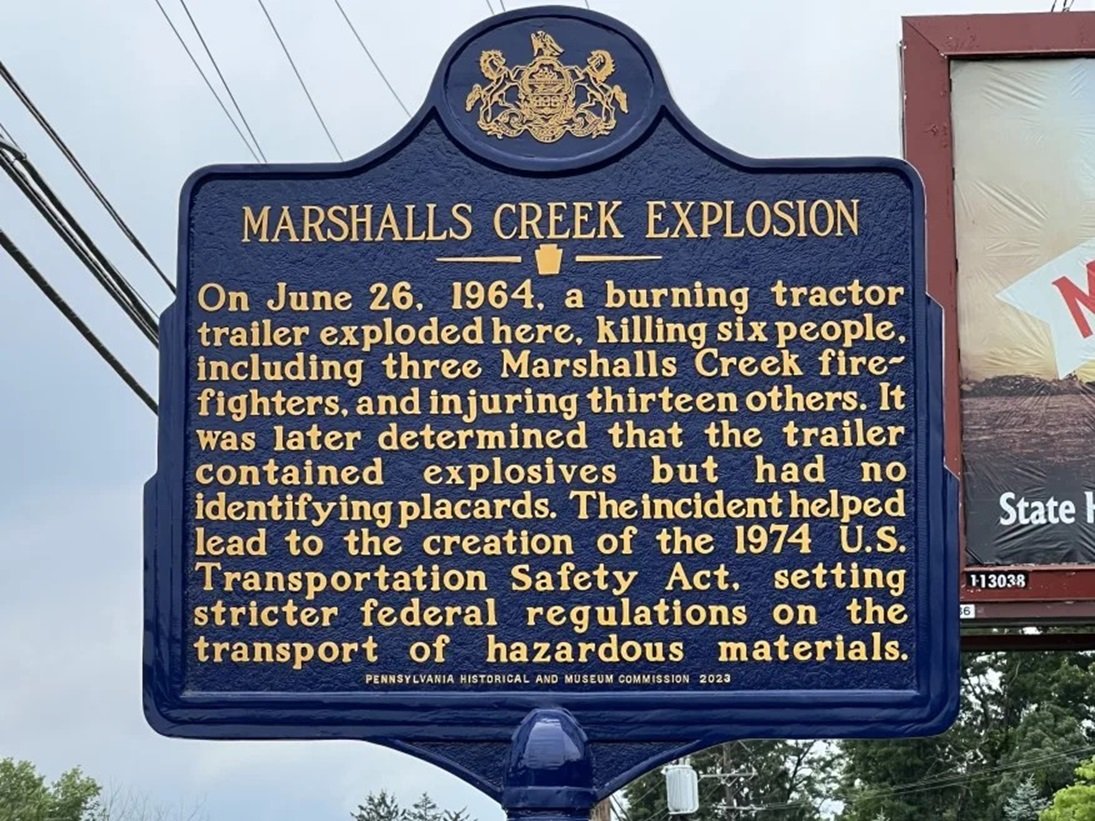
On June 26, 2023, 59 years since the Marshalls Creek Explosion that took six lives including the three firefighters and injured a dozen people, a historical marker was unveiled at the site of the explosion to honor those killed and injured in the tragedy.