
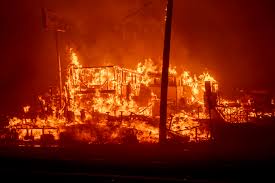
The Forest Service just days ago issued a PACIFIC SOUTHWEST “EXPOSURE” INFORMATION BULLETIN to instruct wildland firefighters who responded to the recent California fires to track their smoke exposure. Usually, wildland firefighters respond to fires burning organic materials in the forest, but these fires burned through entire neighborhoods, exposing them to toxic smoke from industrial materials that structure fire folks usually deal with.
Willand firefighters are not equipped like structure departments with breathing apparatus to shield them from the toxic smoke from building materials, lithium-ion batteries, and other substances that burned during the Eaton and Palisades fires. Due to the potential exposure to these chemicals, the Forest Service is encouraging firefighters to document the location, date/time, and duration of their possible exposure in case health issues arise in the future.
Regional Risk Management Officers put out this bulletin:
Issue: Recently, firefighters from the US Forest Service responded to the first phases of numerous wildfires in southern California, and specifically to the Palisades and Eaton Fires. As we are all aware, fires are inherently dangerous, and responders are subjected to numerous hazards. These hazards can be magnified significantly when responding to catastrophic urban interface wildfires, which have unique hazards not limited to toxic smoke from rubber, lithium-ion batteries, sealants, glues, solvents, paint, etc.
If you responded to these incidents, it is highly likely that you had some type of exposure.
Solution: I am encouraging everyone that was potentially exposed to these hazards to document the location, date/time, and duration- in case the need arises to file a claim related to this exposure in the future. This direction would also include all previous and future exposures.
Although we now fall under the same presumptive guidelines for illness that other firefighters do, good, thorough documentation is key to protecting your rights in a job-related illness and gives your doctor medical data that potentially could save your life and help connect your exposure with a future claim, increasing your odds of acceptance.
DOCUMENTATION METHODS:
• Log your potential exposure in eSafety, (A CA-1 will generate)
• Fill out form 214, (located usually on the back of your IAP).
• Personal documentation-Time/date, location, duration.
• Efforts are underway to develop additional tracking mechanisms for exposure.
• Additional information & Reporting Resources:
https://www.cpf.org
https://peronline.org
The Agency is asking folks to document and track this information if you were a wildland firefighter who responded to these fires. I recently interviewed the former head of the Fire Administration, Dr. Lori Moore-Merrell, about similar exposure that occurred during the Lahaina fire in Maui. The vast amount of lithium-ion batteries that burned from solar panels and electric cars was of great concern after that fire. Dr. Lori Moore-Merrell had similar warnings about potential exposure in our interview that the Forest Service is now expressing.
If you or your loved ones responded to these fires, it is greatly encouraged that this gets documented, even if you think there were no adverse effects from your exposure.
