Two Firefighters Killed in Wall Collapse Caused by Backdraft During Four-Alarm Tobacco Store Fire – Washington Tobacco Company Fire – Washington, District of Columbia – October 14, 1911
On October 14, 1911, District of Columbia Fire Captain Timothy J. Brown and Fireman Michael A. Downs of Engine 4 were killed while fighting a four-alarm fire in a mercantile building that housed the Washington Tobacco Company at 618 Pennsylvania Avenue Northwest in downtown Washington, D.C. On arrival, firefighters found heavy fire throughout the five-story brick and wood joist building that had a heavy fire load of tobacco products. An initial interior attack on the fire was repulsed by the volume of heavy smoke and flame. Members were withdrawn and an exterior attack was made on the fire from the front and rear of the building. Nine firefighters including members of Engine 4 had positioned themselves on the roof of an adjoining three-story building with their hoselines playing their fire streams into the windows of the rear of the fire building. Suddenly, an explosion, possibly a backdraft, occurred, pushing the entire rear wall of the fire building out onto the firefighters. Before the men could run, tons of brick, timber and mortar rained down upon them, smashing the roof of the exposure building down to the second floor and carrying men into the pit. Rescuers began to dig furiously in the wreckage and quickly found and removed several firefighters trapped in the debris. Captain Brown suffered severe head injuries and was killed instantly. Fireman Downs suffered grievous injuries including a broken back and died the next day in the hospital. Six other firefighters were injured in the collapse. The cause of the fire which was believed to have started in the basement near the base of the elevator shaft was unknown.
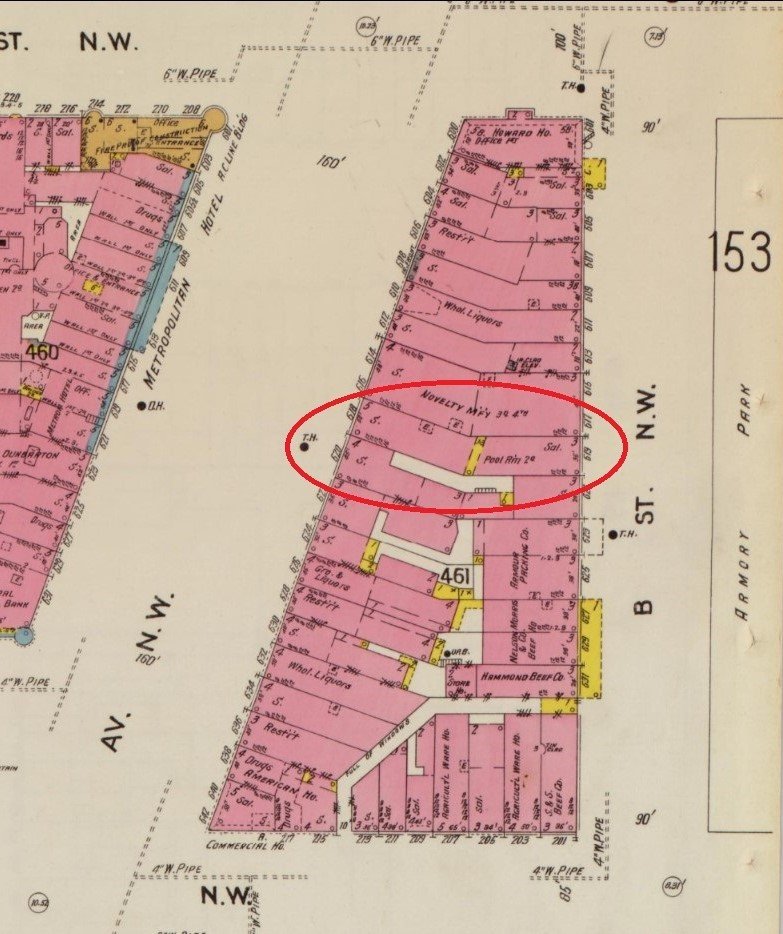
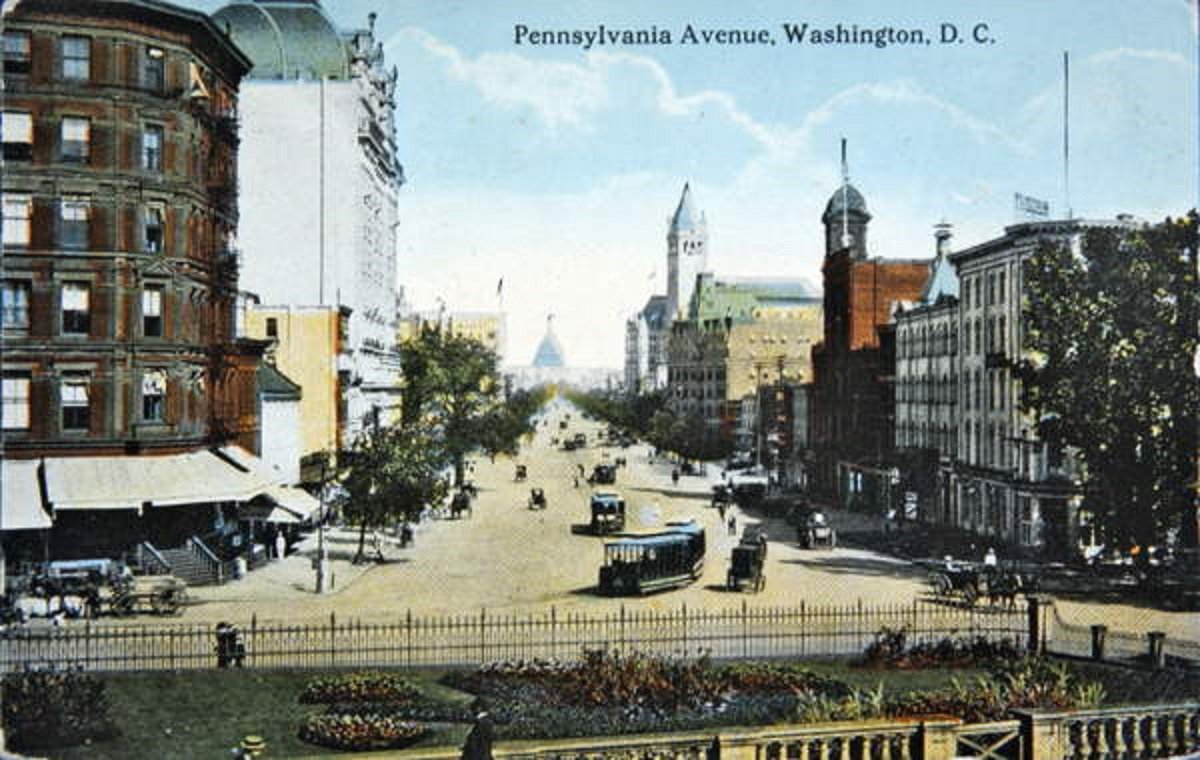
The structure involved in the incident was a five-story Type III Ordinary construction brick and wood joist mercantile building that was located in a row of similarly constructed mercantile buildings on Pennsylvania Avenue Northwest between Sixth Street and Seventh Street four blocks from the U.S. Capitol Building. The building measured about 20 feet wide by 80 feet deep with a flat roof and basement. A masonry cornice topping a one-foot-high parapet wall was on Side Alpha. The building had an elevator located midway inside the store at the Bravo sidewall. The business stored a large amount of combustible materials used in the manufacture of cigars and cigarettes. On Exposure Bravo was a four-story brick and joist housewares store with a novelty manufactory on the third and fourth floors. Exposure Delta was a four-story brick and joist building that housed the Toledo Café on the first floor and the Boston Hotel on the uppers floors. The fire building was attached on Side Charlie to a three-story brick and wood joist building that housed Jack Ryan’s restaurant at 619 B Street. A narrow enclosed courtyard was located in the rear between the fire building and the Delta exposure building. The tobacco store was not equipped with a fire alarm system or an automatic fire sprinkler system. Several fire hydrants fed by four- and six-inch water mains were located on the block. There were several fire alarm call boxes located at the nearby street corners.
Shortly before 5 a.m. on the morning of Saturday, October 14, 1911, Charles Dolphus was walking up Pennsylvania Avenue when he saw smoke coming from the windows of the Washington Tobacco Company store. He ran to Fire Box 16 at the corner of Sixth and B Streets and turned in the alarm. Four engine companies, and the water tower along with Battalion Chief Proctor and Acting Deputy Chief Carrington responded on the box alarm. Arriving firefighters found a rapidly growing fire in the tobacco store.
Battalion Chief Proctor initially thought that the blaze was an ordinary cellar fire but soon discovered the intensity of the fire spreading to the uppers floors. Chief Carrington quickly realized that the heavy fire load in the well-involved building required additional resources and he called in a second alarm at 5:09 a.m., which also brought out Fire Chief Wagner. The Chief sent in two more alarms himself calling out practically all the apparatus in the northwestern section of the city. Altogether 14 engine companies and 5 ladder companies were summoned to the fire.
The one million packages of cigarettes, which were received by the tobacco store the previous day, in addition to the large quantity of tobacco products including cigars and 30,000 pounds of smoking and chewing tobacco along with the cardboard and wooden packaging, made the building a veritable tinder box. The fire had apparently started in the basement and rapidly spread up the elevator shaft to all floors. The fire reached the top floors so quickly that it would have been dangerous to work inside the building because of the probability of falling floors. One company braved the smoke and started in on the first floor but was promptly ordered out of the building due to the volume of fire.
An exterior attack on the fire was mounted with firefighters stretching hoselines to the front of the store and to the rear of the building on B Street. Chief Wagner was directing operations in the front of the building, while Battalion Chief Proctor was directing the work of fighting the fire from the B Street side of the building. It seemed as if Pennsylvania Avenue was black with hose. Engines were hooked to hydrants and were pumping water with every ounce of steam. Some of them had to pump water nearly a quarter of a mile to the scene.
The shouts of company commanders, mingled with the hoarse orders from the captains of truck companies as they directed their men up the bending, swaying ladders which were thrown against windows and were scorched by the lapping flames which came through every opening. Inside the noise was that of roaring flame and wood being devoured by the heavy fire, while shrill whistle signals of the panting engines called for fuel as fast as it could be supplied.
Ordinarily the fire would have been fought from the inside, but the fire leaping from cellar to roof in almost no time at all had filled the building forcing the firefighters to the outside. To fight it from the outside, the front of the building became alive with men crawling up the ladders, each one trying to get a point of vantage from which to direct a stream of water into a window.
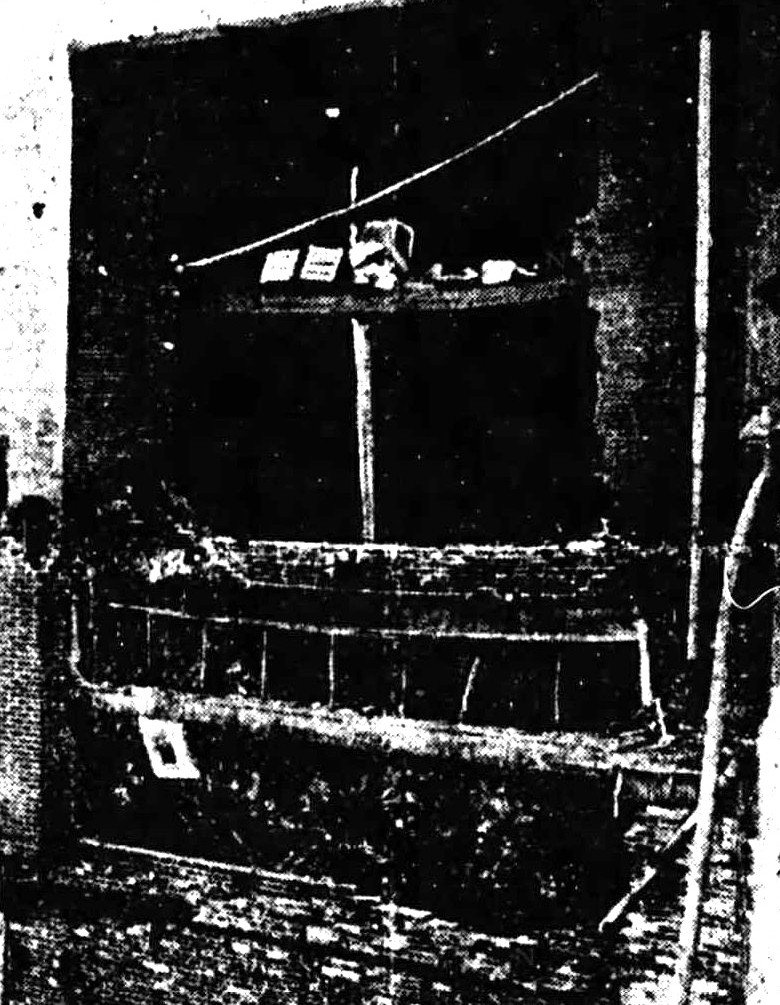
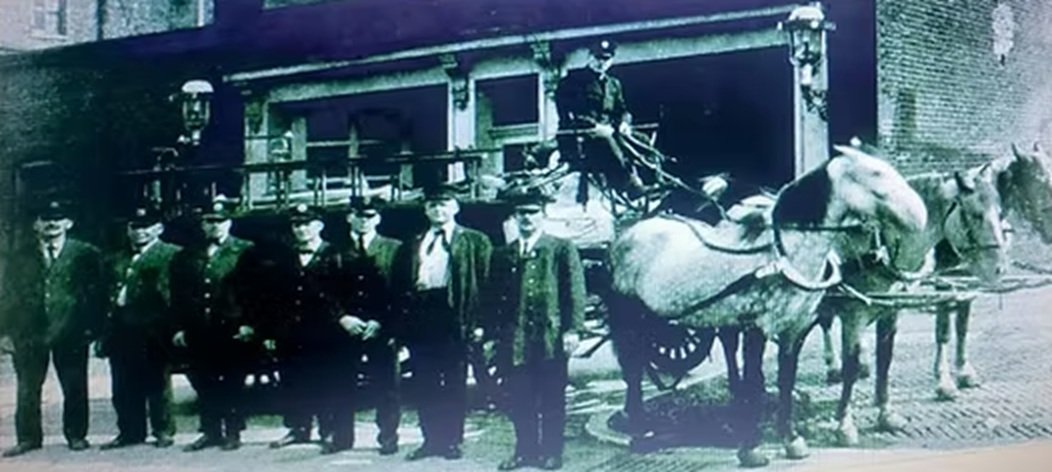
In the rear of the fire building, nine firefighters from three engine companies, including members of Engine 4 commanded by Captain Timothy Brown, climbed to the roof of a three-story building housing a restaurant at 619 B Street to better direct six hoselines at the burning tobacco store. The fire had not been burning for more than twenty minutes when there was an explosion. There had been no warning of the impending danger until the men were buried beneath the falling bricks, the weight carrying down the roof on which they were standing. The men were carried through the second floor of the exposure building. Fortunately, there was no fire in this part of the building at that time.
As soon as the explosion occurred, Battalion Chief Proctor ran around to the front of the building to inform the Chief. Chief Wagner rushed to the rear of the building, and regardless of the danger to himself, was hurrying to the aid of the men buried beneath the debris. As he was walking through a narrow passageway in the rear of the burning building, another portion of the wall fell. Hundreds of bricks narrowly missed striking the Chief on the head, and had he been a second or two later, it is probable that he would have been killed.
Additional personnel were summoned as rescuers plunged into the wreckage seeking their buried comrades. Not only had bricks fallen but large burning beams, loosened by the explosion, were toppled over on the men below, and increasing the danger of their being burned alive. Firemen, trained to stand in the face of every difficulty, grew faint with horror when they saw what had happened. The fire was forgotten, and many of the men turned their streams of hose immediately to the mass of burning wood and heavy masonry in the pit below the destroyed wall. Enormous clouds of dust arising from the debris made it impossible to see what had happened for a minute, but the streams of water quieted that in short order.
The rescuers rushed in from all sides, armed with axes, hooks, and hose. Those who were not so badly hurt went to the aid of the more seriously injured. Ladders were hastily put up on the B Street side to access the wreckage. Rescuers found men pinned under beams and partially buried, with arms and legs alone showing in the mass. With the aid of members from the other companies, the nine members who were operating on the roof of the adjacent building in the rear were extricated from the rubble.
Captain Brown, buried beneath a great mass of the wall, had likely been killed instantly. His skull had been crushed and he died before reaching the hospital. Fireman Michael Downs was terribly hurt. Rescuers saw he was in an extreme predicament and went to his assistance quickly. He was not able to move, and when the mass of wood and bricks had been cleared away from his bleeding body, he was carried by several firemen to the street. Downs was hurried away in an ambulance to Emergency Hospital where it was found his back had been broken and that he suffered with almost complete paralysis. He died the next day in the hospital. Six other injured firemen were treated and released. One firefighter miraculously escaped with no injuries.
“It seemed to me,” said Captain Reynolds, who was one of the men injured in the collapse in the rear of the building, “that there was no warning whatsoever of any danger. We were playing the water through the windows when there was a flash, a muffled noised, and then I knew I was falling through space. Bricks and everything else it seemed kept raining down on us, but most of us were not so badly hurt but that we could work our way out.” The first floor of the building on which the men were standing was occupied by Jack Ryan as a saloon. Only the rear of this building was damaged.
Gas formed by the fire is believed to have been the cause of the explosion which blew out the brick wall in the rear of the upper two stories of the tobacco building. It was the fear of just such an explosion that caused Chief Wagner to earlier order the men off the ladders that had been placed on the front of the building. When the explosion came, all the front windows were blown out and the flames licked the side of the building where firemen had been standing a few seconds before. Several ladders were destroyed by the flames. Some idea of the force of the blast may be gained by the fact that a heavy iron girder in the back of the building, used to support the brick wall above the third story, was bent and twisted as though it had been a piece of half-inch pipe.
It was not until 8 a.m. that the fire was finally put out. The beams that held the floors were burned, leaving nothing but the brick shell of the building. The ruins continued to smolder all day as firemen continued to playing their hoselines on the debris. A large crowd gathered at the height of the fire and necessitated calling out the police reserves of several precincts. The south side of Pennsylvania Avenue between Sixth and Seventh Streets was roped off until the fire was under control.
Aside from the loss of life and the heavy damage, the fire was one of the worst with which the firemen had to contend with in months. Chief Wagner said that he did not understand how the men did so well as they did. “When I arrived,” said the Chief,” the whole building was in flames. I had no idea that the blaze would be confined to the walls of the tobacco company.” Chief Wagner was especially pleased with the work by the water tower. He said there had never been a fire in the city where it was more effectively used. It afforded the only means of fighting the flames from the front of the building. By using two turrets and the main stand pipe, a quantity of water was thrown into the windows on the top floor.
Adjoining the tobacco company on the east was the wholesale establishment of E.B. Adams Company, dealers in hotel and household supplies, while on the west was the Toledo Café. The upper floors of the café were used as a lodging house and the rooms were filled with guests when the fire was discovered. No one experienced any trouble getting out, however.
Fire Marshall Nicholson said that the fire started in the basement near the base of the elevator shaft, but he had been unable to determine the cause. The elevator shaft formed a flue which drew the flames up to the top of the building. The nearby open stairway also acted as a means of sending the fire to the uppers floors. It was believed that unburned gases distilled from the tons of burning tobacco and other combustibles in the building accumulated on the upper floors resulting in a backdraft that collapsed the rear wall causing the deaths and injuries to the firefighters.
Estimates of the damages included $150,000 of stock completely destroyed in the tobacco store, $120,000 damage to the fire building, $10,000 damage to the rear of 619 B Street from the wall collapse, $1,200 to the contents of the saloon, and minor water and smoke damage to the adjacent occupancies and the lodging house.
Officials of the tobacco company said their business would go forward despite the fire. Displaying characteristic enterprise, that morning they established temporary quarters at the southwest corner of Eighth and D Streets Northwest where they attended to the wants of their customers.
Members of the District of Columbia Fire Department killed in the line of duty during the Washington Tobacco Company Fire on October 14, 1911:
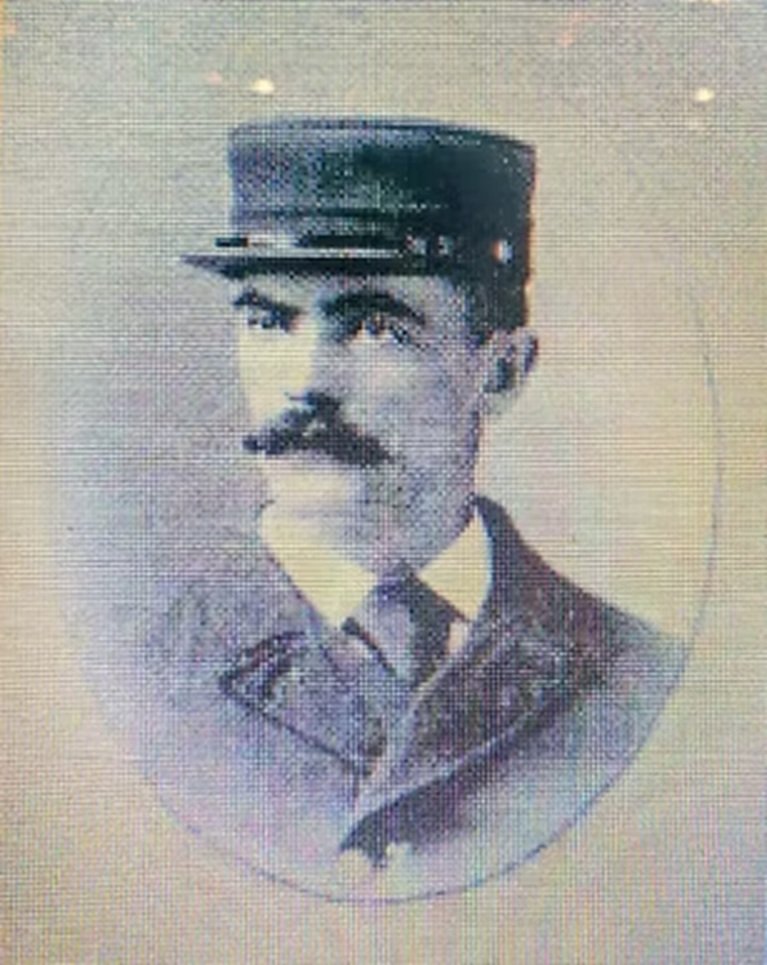
- Captain Timothy J. Brown, age 49, was a 19-year member of the District of Columbia Fire Department. He was appointed to the department on August 1, 1892. He was promoted to lieutenant on July 1, 1897, and in July of 1902, he was promoted to captain in charge of Engine 4. He also served with Engines 3 and 10, and Chemical 3 and 19. He was also captain of the fireboat for about two years. He was survived by his wife, Kathleen, and six children, Minnie, age 16, Timothy, age 15, Charlie, age 13, William, age 11, Robert, age 7, and James, age 3; and brothers James and John Brown.
- Fireman Michael A. Downs, age 37, was a six-year member of the District of Columbia Fire Department. He joined the department on July 1, 1905 and was stationed with the fireboat. He was transferred to Engine 4 on November 18, 1910. He was married and his wife, Katie, was at his bedside at the hospital when he died the night after the fire.
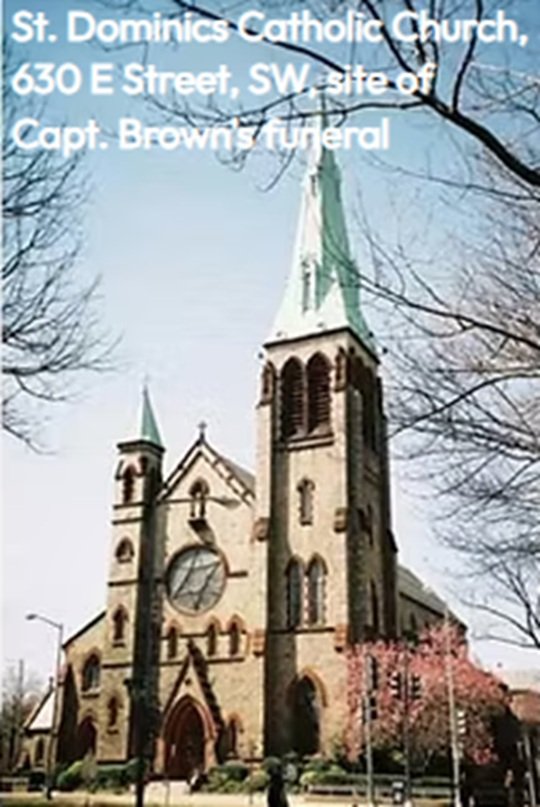
A double funeral was held honoring the two fallen firefighters on October 17 at St. Dominic’s Church. Escorted by eighty members of the fire department headed by Chief Wagner, six captains were the pallbearers for Captain Timothy Brown, while members of Engine 4 carried the casket of Fireman Michael Downs. Along the route of the funeral procession from the church to the cemetery, thousands of persons stood on the curbs with uncovered heads and paid a last tribute to the two men who met their deaths while performing their duties. Interment was at Mount Olivet Cemetery in Washington, District of Columbia.
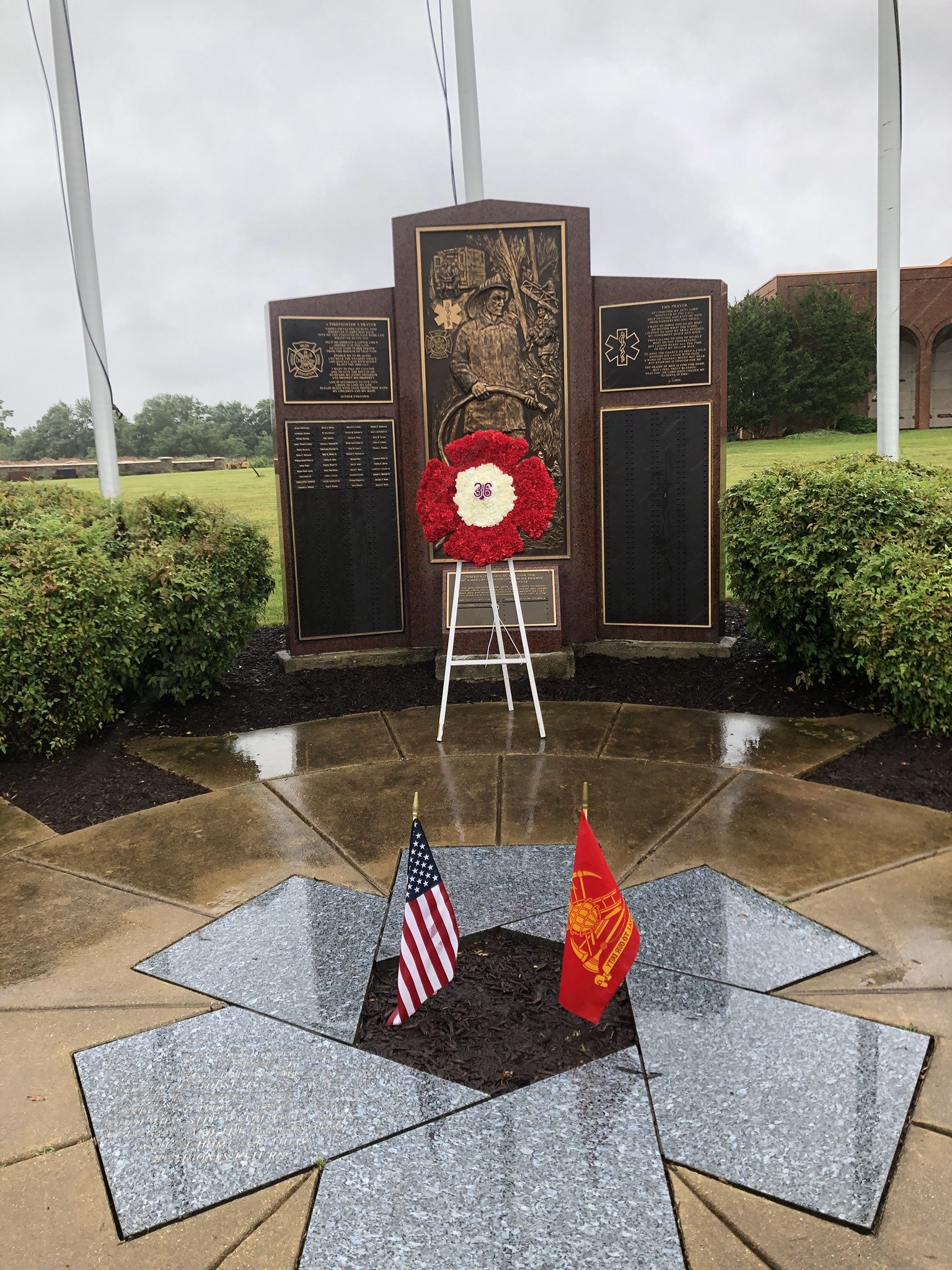
The names of Captain Timothy J. Brown and Fireman Michael A. Downs have been inscribed on the District of Columbia Fallen Firefighter & EMS Memorial in the Last Alarm Garden at the Fort Lincoln Cemetery at 3401 Bladensburg Road. The names of 102 District firefighters who have lost their lives in the line of duty have been inscribed on the Memorial.
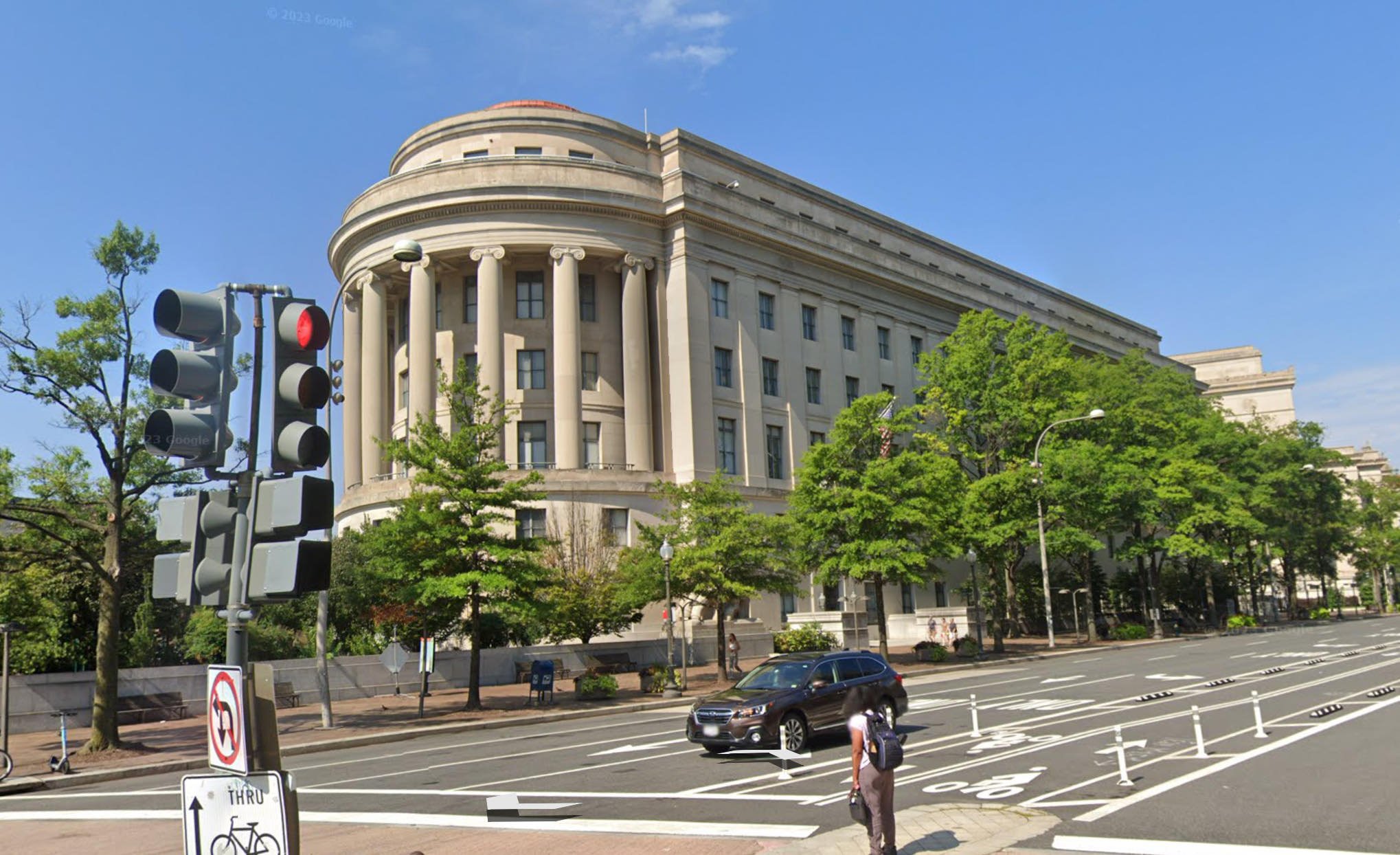
The block where the fire occurred is now occupied by a large government office building housing the Federal Trade Commission. There is no memorial marker at the site.
Commentary:
Legacy Type III Ordinary construction mercantile buildings are noted for often having combustible void spaces, particularly in the void created when a dropped ceiling has been installed during renovations. This may result in several layers of combustible void spaces over the heads of unsuspecting firefighters. During a fire, this hidden combustible space can accumulate large amounts of smoke, heat and unburned products of combustible that can suddenly ignite explosively. Firefighters operating along the front or rear facade walls of such structures may be in the direct path of the explosion and can be tossed into street or struck by building components as they are hurled from the structure with great force.
FDNY Deputy Chief (ret.) Vincent Dunn has likened entry into a mercantile building that has been closed up and burning for an extended period of time as entering into the barrel of a shotgun. Firefighters must be trained to recognize the warning signs of backdraft. These indicators may include a well-sealed building; little or no visible flame; black smoke becoming dense, greyish yellow without visible flames; smoke-stained windows with visible cracking and/or rattling; smoke leaving the building in puffs and then being drawn back in; smoke escaping from between cracks in brick and mortar walls; and the sudden rapid movement of air and smoke inward when an opening is made.
We have attached photos from the fire. We have also attached a detail from the 1909 Sanborn fire insurance map showing the configuration of the fire building and the surrounding exposure buildings.
We have attached a video of a backdraft occurring in a row of stores in Queens, New York in 2018 that injured seven firefighters and at least five other civilians:
We have also included an article from the Firehouse Tribune that discusses the warning signs of backdraft and how to prevent it: http://www.thefirehousetribune.com/blog/2015/9/25/understand-a-backdraft#:~:text=With%20this%20being%20said%20there%20are%20certain%20warning,and%20smoke%20inward%20when%20an%20opening%20is%20made
And we have attached the link to a free course produced by the FSRI on Fire Dynamics in Structures that examines how fire burns inside a compartment and explores the difference between fuel-limited and ventilation-limited fires: https://training.fsri.org/course/125/fire-dynamics-in-structures
Thanks to multiple media sources for the content of this article.
Remember the service of Captain Timothy Brown and Fireman Michael Downs by touring a legacy mercantile building in your local response district and by discussing the warning signs of backdraft with your crew members today.
Remember Fallen Brothers
Get Out There And Know Your Local!!!
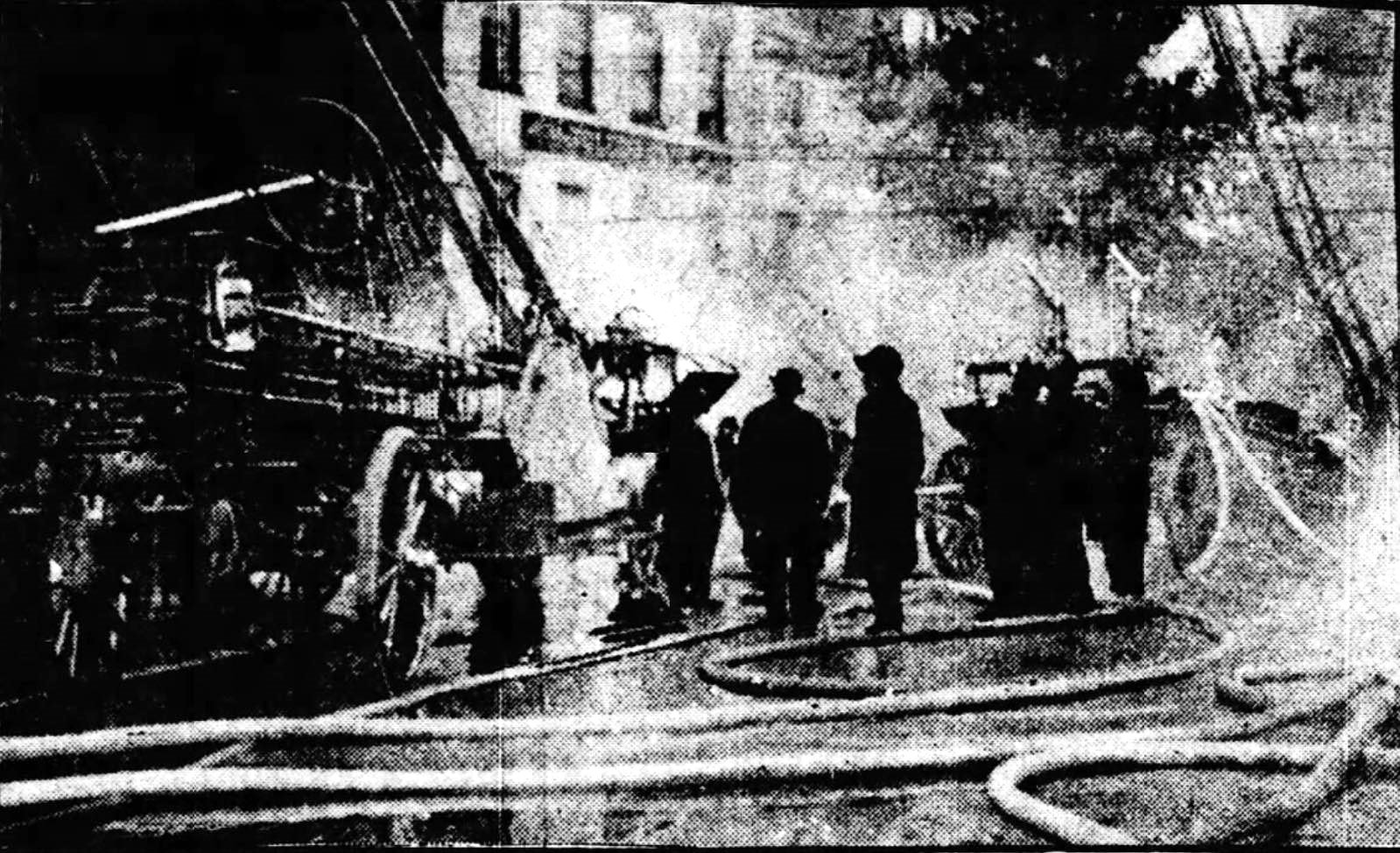
Photo: Firefighters working at the front of the fire building prior to the backdraft. The cause of the fire which was believed to have started in the basement near the base of the elevator shaft was unknown.