Liquefied Petroleum Gas Tank Explosion Kills Two Firefighters – Carthage, Illinois – October 2, 1997 – USFA Technical Report TR-120
On October 2, 1997, Carthage Clipper Fire Department Volunteer Firefighters Michael Mapes and Douglas Buckert died when a horizontal liquified petroleum gas tank exploded on a farm outside of Burnside, Illinois. The rocketing tank struck the firefighters as they prepared to advance hoselines from their engine about eight minutes after their arrival. The first fire company to arrive on the scene to a reported dryer fire found not only a fire involving an agricultural grain dryer but also 30 to 40-foot intermittent fire plumes from the safety relief valves on two 1,000-gallon liquid propane gas tanks, and a fully involved field tractor. Deciding on a direct attack, the first-in fire officer positioned the engine and firefighters behind a large grain silo 100 feet away from the burning tanks. But the engine’s tailboard extended beyond the silo’s vertical edge and was nearly in line with the end of one of the tanks. Three of the firefighters were advancing around the rear of the tailboard when a large tank section struck them. Firefighters Mapes and Buckert were killed, and two other firefighters were injured.
The incident occurred on a large farm located approximately 3/4 miles north of Burnside, Illinois and about ten miles north of the City of Carthage. The farm’s principal buildings consisted of an occupied single-family frame home, a large wood frame shed, two metal clad pole sheds used for farm equipment storage and repair, and two large circular metal silos. A small frame farm office building was located near the machine shop pole shed. The farm’s principal crop was corn and soybeans. No pressurized public water supply was immediately available at the site. The closest hydrant was located about 3/4 mile away in the town of Burnside and was supplied by a four-inch water main. A second public water supply was available seven miles away. The farm had two water ponds available for drafting operations.
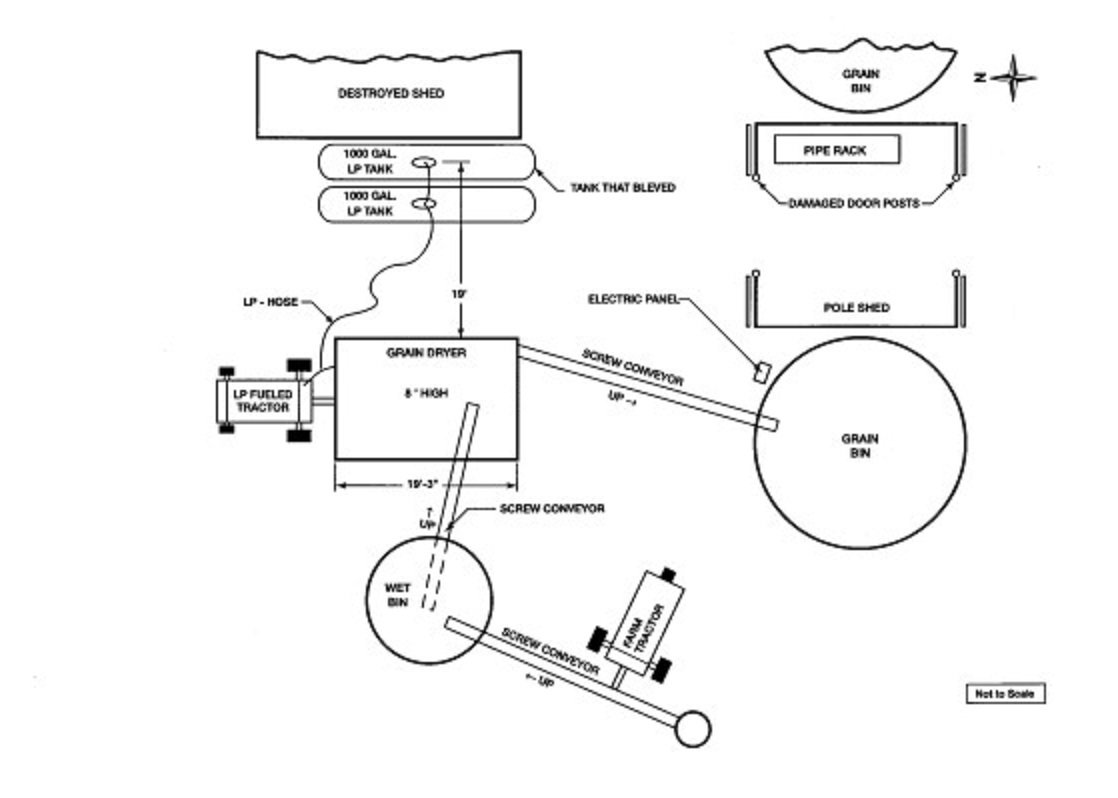
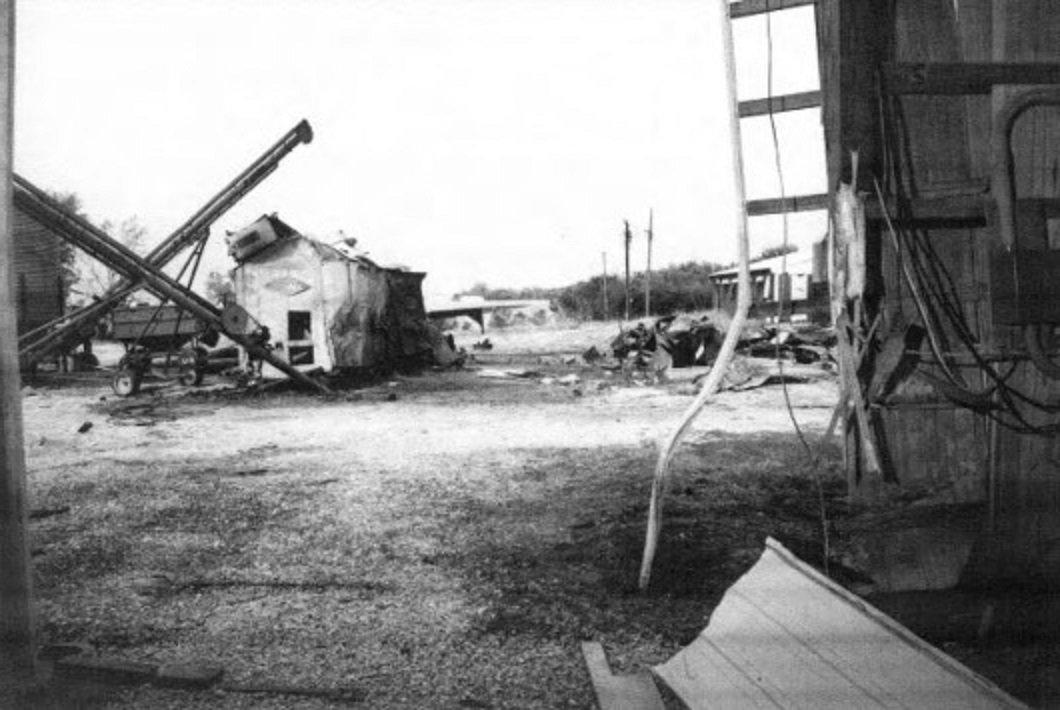
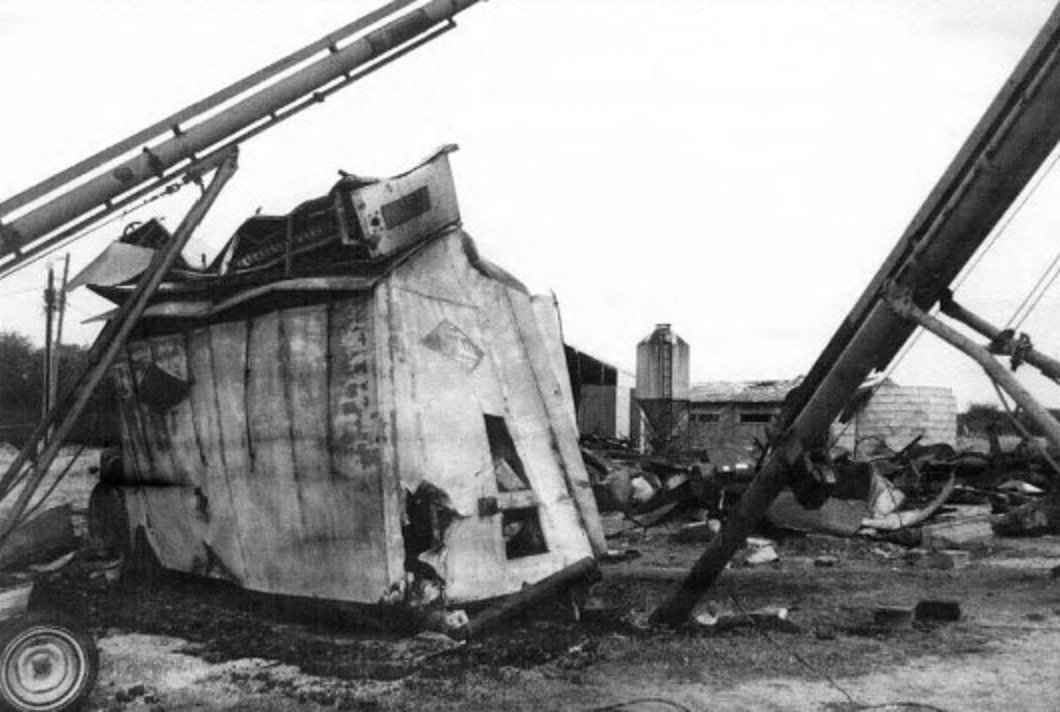
The fire and subsequent explosion involved the farm’s grain drying operation where harvested corn or soybeans were heated to reduce the moisture content before being stored. The grain dryer and supporting equipment was located to the west of the large wood frame shed and to the north of the west large metal grain silo. The dryer was principally constructed of metal with internal conveyors and passages that provide for fan forced heated air to dry the grain. The grain and the heating fuel were the primary combustibles in the dryer. Mechanical power for the dryer’s fans, conveyors, and grain movement equipment was provided by a power take off (PTO) from a field tractor at the front end of the dryer. Electric power for the dryer’s controls was from an outdoor panel located southeast of the dryer near the pole shed between the two grain silos.
The fuel supply for the dryer and the field tractor was provided from two, 1,000-gallon liquid propane gas fuel tanks located immediately adjacent to the west wall of the destroyed woodshed. Distance between the shed and the tank closest to it was less than three feet and the tanks were less than five feet apart. The distance from the dryer to the tank closest to it was about 15 feet. Both tanks had integral steel legs, which rested on concrete pads. The two liquid propane gas tanks, when full, provided about 36 hours of fuel for the dryer and tractor.
Liquid propane gas moved from the tanks to the dryer and tractor by means of a rubber liquid propane gas hose. The hose connected the west tank to a tee fitting located near the front of the dryer. From the tee, fuel split to the dryer and the tractor. The hose reportedly lay on top of the ground between the tank and dryer. The hose was used for both vapor and liquid fuel transfer through different valved connections to the west tank. The dryer was indicated to start with gas vapor and then switched to liquid when warmed and under load. The tractor always used liquid and it did have an integral fuel tank that should have allowed the tractor to operate while the hose contained vapor. At the west tank, the liquid propane gas hose was also connected to a tee. This fitting allowed the line to be attached to both the liquid withdrawal and vapor withdrawal connections on the tank. By means of manual valves, either vapor or liquid could be sent to the dryer and tractor.
When either liquid propane gas tank emptied, the hose and fittings would be disconnected from the empty tank and attached to the full one. The dryer would have to be restarted and potentially any trapped air removed from the fuel hose. About two weeks before the incident, the delivery driver for the gas supplier suggested a means to manifold the two tanks together and eliminate the hose transfer process. The driver suggested attaching a liquid transfer hose, used for filling liquid propane gas fueled field tractors, to the liquid withdrawal connection on the top of the east tank and to the liquid fill connection on the west tank. No similar vapor space interconnection between the two tanks was identified during investigation. The liquid transfer hose did have a manual valve at one end but there was no indication of check valves, relief valve, or excess flow valves in the hose. The tank manifold configuration worked satisfactorily, and the two tanks were filled several times during the two-week period.
Prior to the explosion, roughly 35,000 bushels of grain had been dried during the current harvest season without mishap. Both tanks had been filled in the morning of the incident and had been in operation for about seven hours without a problem. The grain drying process began with grain brought from the field and gravity discharged into a field tractor PTO driven auger that deposited the grain into the wet bin. The wet bin was a vertical metal storage unit with a conical shaped bottom that acted as a surge bin for the dryer. It provided a continuous feed to the dryer while grain trucks from the field were changed.
From the wet bin, the grain discharged from the bottom by gravity into an electric motor-driven auger, which discharged at the top front of the dryer. Once inside the dryer, grain movement was provided by the liquid propane gas fueled tractor, which mechanically powered the dryer. From the dryer, the grain discharged into another electric motor-powered auger, which elevated the grain into one of the two storage silos. The unloading of the trucks from the field and discharge of grain into the wet bin was supervised. Once running and adjusted, the dryer did not require constant supervision. The dryer was started each morning and was stopped in the evening.
Carthage is a city and the county seat of Hancock County in the west central portion of the state of Illinois about 12 miles east of the Mississippi River. The small agricultural community of 2,490 residents as of the U.S. 2020 census is located about 100 miles northwest of the state capitol of Springfield. The small community of Burnside where the incident occurred is located eight miles north of Carthage. At the time of the incident the area was protected by the Carthage Clipper Fire Department that was based from one station with 28 volunteer members operating one engine, one aerial ladder, one tanker, a high-pressure attack pumper with 1,000-gallon tank used primarily for rural fire attack operations, and a rescue/equipment vehicle. Reserve equipment included two engines with high-pressure capability. The department responded to approximately 50 fire incidents per year.
Weather conditions at the time of the incident were a temperature of about 80 to 85 degrees F and light southwest winds of 5 mph. The weather conditions did not appear to have been a significant factor in the outcome of the incident.
On Thursday afternoon of October 2, 1997, corn from the field harvest was being unloaded into the wet bin under supervision and the dryer was operating. A loud “poof” was heard from the dryer followed shortly by a noticeable change in operating sound. Farm personnel stopped the unloading of corn from the field truck and the tractor PTO powered auger into the wet bin was also shut down. Shortly after the “poof,” the liquid propane gas fueled tractor, which powered the dryer, sped up and fire was observed coming from the front, upper east half of the dryer.
The farm owner ran to the farm office and called the fire department via 9-1-1. At the same time, the person unloading the corn moved the field truck and then turned off the electric power to the dryer and auger conveyors. He reported seeing the fire burning at the two liquid propane gas tanks and venting from the tanks. He also reported that the fire had spread to the tractor at the front of the dryer. No one reported going to the liquid propane gas tanks to shut off the supply hose or the manifold hose.
Another witness indicated that the fire was burning on the front and east sides of the dryer and on top of the west liquid propane gas tank. He also believed that liquid propane gas was being discharged from the liquid connection on the west tank. The liquid was spraying onto the east side of the dryer. The witness moved to a position near the farm office and reported that the fire burned violently at times and then the intensity would reduce dramatically. However, the flames never ceased entirely while he watched. While he watched, a pressure relief valve began to operate intermittently producing a loud noise and flames 40 to 50 feet high.
The owner, after reporting the fire, returned to the machine shop and moved the combine from the building into the soybean field south of that building. Returning to a position near the farm office, he observed that the fire’s intensity had doubled or tripled in the time he moved the combine. He then decided to contact the Carthage Clipper Fire Department directly rather than through the county 9-1-1 center. His purpose was to convey the worsening fire conditions and to suggest a neighboring fire department be alerted to respond for assistance. After talking with someone at the Carthage fire station, he exited the office and observed that the east rear tire on the tractor powering the dryer was burning and that the tractor was still running. The owner ran to the electric power panel near the dryer and further shut down power in the area. The west tank vented as he was completing this task and the tractor north of the dryer was fully involved. The tanks vented several more times between then and the time when the first fire units arrived.
About 4:39 p.m., the county 9-1-1 dispatch center received a report of a “dryer fire” in the town of Burnside, Illinois. The Carthage Clipper Fire Department was dispatched shortly after. Their initial response was the department’s routine rural response assignment to what was thought to be a clothes dryer inside a house. The responding equipment was high-pressure fog Engine 11, Tanker 13 with 1,600 gallons of water, and Rescue 10. The personnel on Engine 11 consisted of Fire Chief Scott Carle, an apparatus operator, and a firefighter. Immediately following was Rescue 10 with three firefighters. Tanker 13 followed shortly after with three firefighters. While enroute, the firefighters received a radio report from dispatch that the fire involved LP-Gas tanks. The firefighters witnessed several openings of liquid propane gas tank pressure relief valves from several miles away. Mutual aid was requested at this time from Dallas City/Colusa Fire Department for their 3,000-gallon tanker and from the LaHarpe Fire Department for an engine and a tanker.
Arriving at 4:48 p.m., Engine 11 and Rescue 10 pulled into the farm entrance and parked next to the farm office. The farm’s owner met Chief Carle in the driveway and informed him that two 1,000-gallon liquid propane gas tanks that had been filled that morning were involved. The owner’s father also advised the firefighters that nothing involved in the fire was worth taking too big a risk and to not take any chances. Chief Carle reported that from this position, he was able to see the tank ends, the grain dryer, and field tractor. The dryer and tractor were fully involved, and the fire was burning at the two tanks. Chief Carle and the firefighters went to Rescue 10 and donned their protective turnout clothing.
A safety relief valve was operating intermittently, and the exposure fires ignited the discharged vapors. Before the fire department’s arrival, witnesses indicated that the west tank’s relief valve discharged several times. The burning plumes were igniting the side of a wood frame shed next to the tanks. Asked about the contents of the shed, the owner said that it only contained a few tires and some hay. The Chief walked closer to the fires to better view the situation and develop a plan of attack. Concerned that the west tank was angled towards their position, he noted the east silo would offer some protection from the tanks and would be a better operating position. He walked south of the west silo where he also noted the doors on both sides of the pole shed were open allowing a better view of the tanks and fires.
Returning to the engine, the Chief found the firefighters had already pulled and advanced a pre-connected high-pressure 1.25-inch hoseline toward the fires. He ordered Engine 11 to relocate to the south side of the east grain silo and for Tanker 13 to establish a water supply at that site. Satisfied with the new position, Chief Carle, who was walking at the left front of the engine, dropped the hoseline as the pump operator engaged the pump. Simultaneously, the two firefighters, who were walking the previously deployed hoseline behind the engine, continued to move toward the Chief. The rear of the engine was not completely behind the silo and the tailboard was almost in line with the long axis of the east tank. Because the burning dryer, tractor, and tanks were visible from the rear of the engine, the two firefighters, and another not involved with the movement of the engine, likely paused to observe the fire scene through the open doors of the pole shed just as the east tank exploded.
The tank separated at the weld seam where the north domed head was attached to the long cylinder-shaped body. The tank head was broken into two pieces (“clam shelled”) and the pieces traveled north and northeast into a brush and tree covered ravine area about 600 to 650 feet away. The balance of the tank rocketed to the south in a very shallow climb through the pole shed coming to rest nearly 1,000 feet away.
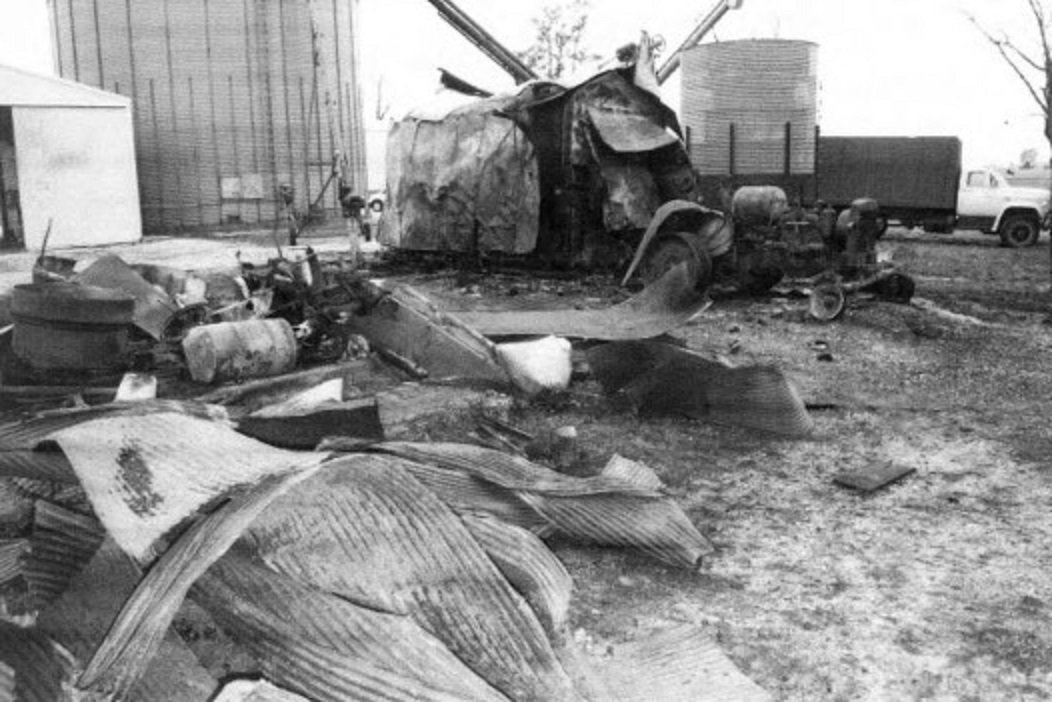
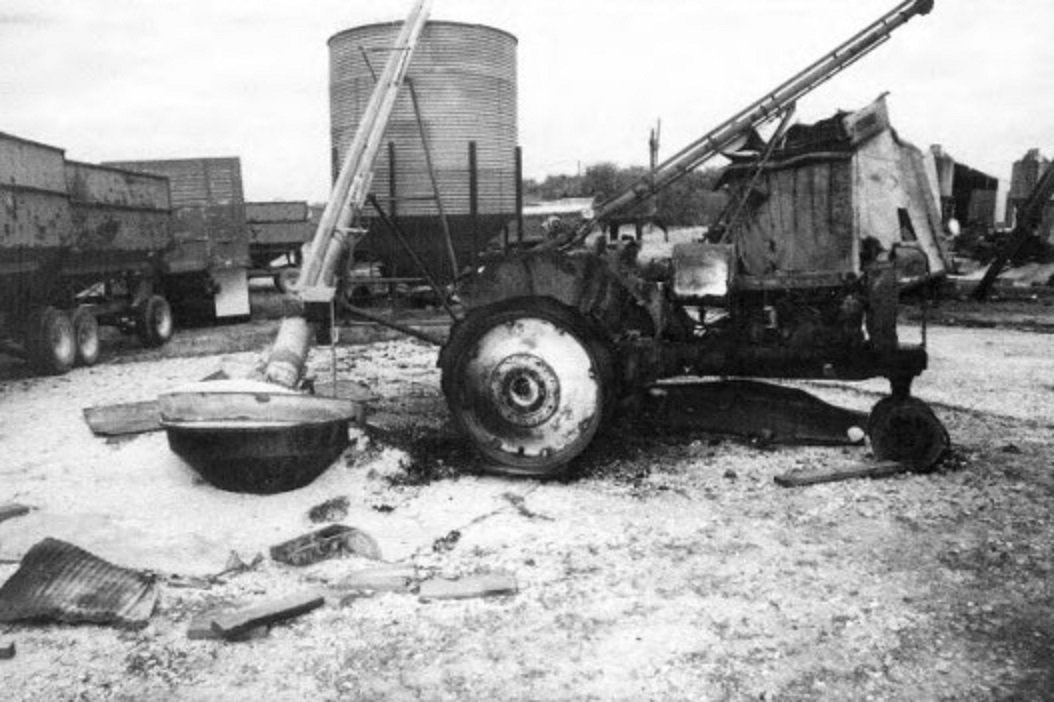
The tank struck several objects as it traveled south including three Carthage firefighters. The woodshed’s six-foot-high concrete foundation was shattered along the west side from the explosion and the structure was destroyed by the fire. The west liquid propane gas tank was thrown into the air passing over the grain dryer and wet grain bin, landing nearly upside down near the tractor which powered the auger that filled the wet bin from arriving trucks. The tank was discharging burning liquid propane gas and the tractor caught fire.
The rocketing tank traveled through the pole shed as it proceeded to the south striking two door posts and a pipe rack in the shed. The wood 6-inch by 6-inch northeast door post was torn out from about one foot above the ground to about five feet above the ground. The tank then struck a glancing blow to a large steel constructed pipe rack inside the shed. The pipe rack is believed to have slightly altered the direction of travel causing the tank to turn slightly and out the open door on the south side of the shed. The wood 6-inch by 6-inch southeast door post was splintered from approximately five feet above the ground to just under ten feet.
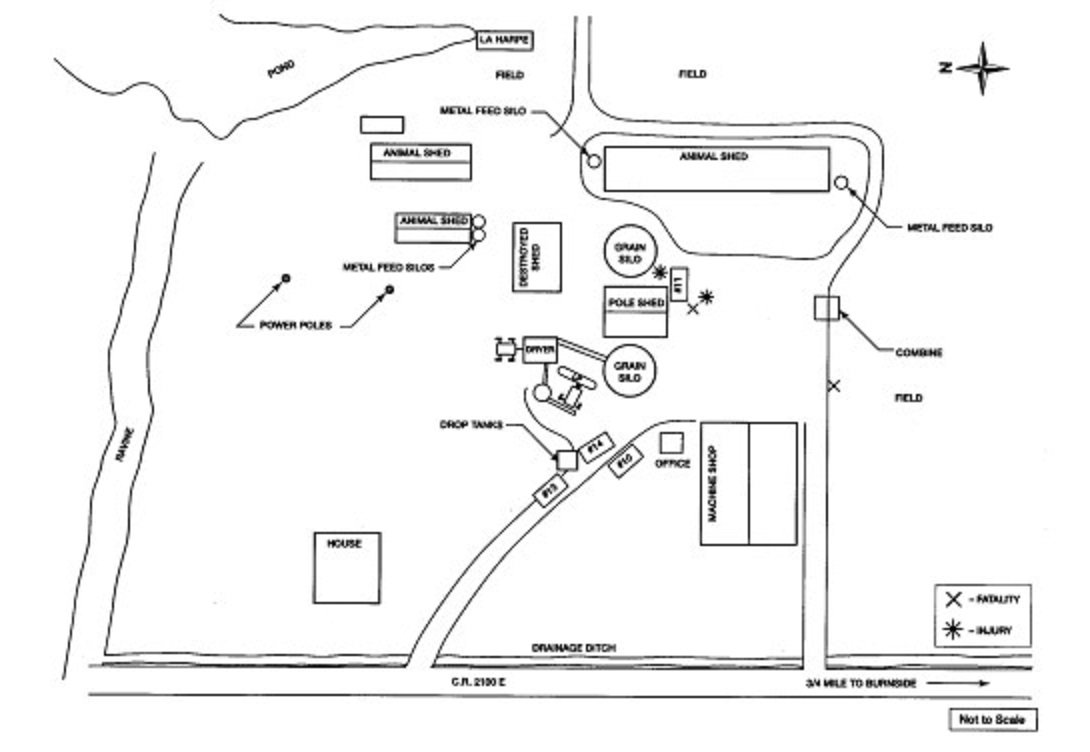
Immediately on the other side of the shed’s southeast doorpost stood the three firefighters at the rear of the Engine 11. Firefighter Michael Mapes was standing at the left corner of the tailboard and was knocked approximately 50 to 75 feet south. Firefighter Douglas Buckert, who had been standing to the left of Mapes, was knocked approximately 130 feet to the south and into the soybean field. Both firefighters received severe traumatic injuries and died immediately as a result. Firefighter Jason Livingston had been standing behind Firefighter Mapes and fell a few feet away. His injuries were serious, and he was airlifted from the scene to Blessing Hospital and admitted to intensive care.
The tank did not strike Engine 11 although the apparatus was physically damaged. The damage consisted of some equipment mounted on the tailboard and the lower sections of the driver’s side mounted ground ladders. After striking the firefighters, the tank continued south over the parked combine until it struck the ground the first time approximately 400 feet away. It continued to tumble and skip for another 600 feet through a soybean field, coming to rest approximately 1,000 feet away from its original position.
Chief Carle was thrown to the ground and injured by the force of the explosion or from being struck by a flying object. He was able to request additional mutual aid assistance from the Terre Haute Illinois Fire Department, the Crop Production Company, and for ambulances. After helping attend to the injured firefighters, he was also transported by ambulance to the hospital. The Assistant Chief arrived after the explosion and took Command of the incident. He immediately began an accountability check of the on-scene firefighters and farm workers. A telephone call to the Carthage fire station was made for names of responding firefighters. All firefighters and farm workers were accounted for at the end of the process. Chief Carle was taken to Memorial Hospital. Both injured firefighters were released from the hospital two days later.
On arrival, Tanker 13 set up its 3,000-gallon drop tank off the driveway north of the farm office. Engine 14 arrived and positioned to draft out of the drop tank and to direct its pre-connected deluge gun onto the still burning west tank’s position. The tank was discharging burning liquid and vapor from the connections at the top of the tank. In addition, the field tractor, which powered the auger, caught fire from being sprayed with the burning liquid propane gas.
Dallas City/Colusa’s 3,000-gallon tanker shuttled water to fill the dump tank. La Harpe sent an engine and a tanker. The engine led out to a pond located east of the farm buildings and attacked the well-involved wood frame shed. Their tanker assisted in the water shuttle operation. Terre Haute also sent an engine and tanker. Terre Haute firefighters assisted with the shed fire and the tanker participated in the water shuttle. Crop Production Company, a private business, supplied a field tanker with two 1,000-gallon tanks, normally used to fill farm equipment, to shuttle water. Hamilton Fire Department provide standby coverage at the Carthage fire station with an engine company.
The tanker shuttle provided Engine 14 with enough water to cool the LP-Gas tank allowing it to burn out, and to suppress the fire in the field tractor. Until La Harpe’s engine established a drafting operation from the pond, water supply was a problem on the east side of the fire scene. The fires were confined to the grain dryer, two tractors, and the wood frame shed. Engine 11 did not participate in the fire suppression operations.
In addition to the fires at the farm buildings, a large field fire occurred in a combined (harvested) soybean field about 700 to 800 feet north of the liquid propane gas tank position. Although the burned area was searched for an ignition source, nothing could be identified as a cause for the fire. The field was in line with the long axis of the exploded tank and on the opposite side of the ravine where the broken tank head was found. There was no fire in the ravine and the field fire did not occur until after the explosion.
The Carthage Clipper Fire Department report indicated that units returned from the incident at 9:12 p.m. that evening. However, the La Harpe Fire Department provided scene security overnight since the investigation of the incident had not concluded. Mutual aid departments provided coverage for Carthage Clipper Fire Department alarms from this point until after the funeral services for the fallen firefighters on the following Tuesday, October 7, 1997.
The Office of the Illinois State Fire Marshal contracted with an independent engineering consultant to assist with the identification of the cause of the original fire. The consultant’s report described two possible ignition sequences:
- Sequence 1: The noise from the dryer was caused by the failure of drive belts to the blower. The loss of the fan function allowed the dryer burners to flash out and consume the liquid propane lines and ignite the released propane vapors. The heat from the propane fire exposed the two 1,000-gallon liquid propane gas tanks with the closer tank receiving the most heat. The heat increased the vapor level, which forced liquid propane into the other tank.
- Sequence 2: Failure of the flexible liquid propane gas hoselines in the area of the tractor and dryer caused a flame roll-out from the dryer. The release of propane from the hoseline resulted in the exposure of the two 1,000-gallon tanks to excessive heat.
The USFA report offered several lessons learned:
- The position of firefighters and apparatus should avoid tank ends, which are in-line with the long axis of the tank. When liquid propane gas tanks BLEVE, the energy released will often propel parts of the tank in directions parallel with the long axis. Approach and firefighting positions should be perpendicular to the tank’s long axis to minimize the risk to firefighters. The Fire Chief’s plan was to position the engine behind the large grain silo to provide shielding and position hoselines between the grain silo and the animal shed to the east. However, Engine 11 was stopped before it was completely behind the silo, leaving the back of the engine exposed. Although the next step in the plan was not executed, the nozzle positions would have avoided the tank ends. Options for nozzle placement to wet the entire surface of both tanks were limited because of their location. The wood frame shed obstructed access to the entire east side of the liquid propane gas tanks. The burning grain dryer and tractor restricted access from the west.
- To effectively cool liquid propane gas tanks exposed to a fire and absorb the heat energy from flames impinging directly on the tank shell, a substantial water application rate is required. For exposure fires, the entire tank surface must be kept wet to absorb the radiant heat energy reaching the vessel. When flames are impinging on the tank, a water stream must be constantly applied at the contact point to prevent the metal from weakening and thinning out. Water flow rates of 250 to 500 gpm for the two 1,000-gallon tanks would be a recommended minimum. The high-pressure, low flow rate, pre-connected lines would not provide the necessary amount of water on the tank. Furthermore, hoselines that can be placed into operation and then left unattended are preferred over hoselines that need to be manned. It is unlikely that the pre-connected hoselines could be left operating unattended.
- The more time the liquid propane gas tank is exposed to fire conditions, especially to fire impinging on the metal shell, the greater the risk of BLEVE. The structural integrity – usually defined as the ability to carry the load – of anything (floor, roof, building, pressure tank, etc.) exposed to fire usually deteriorates in accordance with the length of exposure time. Long delays in beginning the application of water (cooling and suppression) from the start of fire exposure should raise warnings about possible structural failure. In this incident, the operating pressure relief valves are indications that the liquid propane gas tanks are under stress and thereby increasing the prospect of catastrophic failure (BLEVE). Long fire exposure times and operating pressure relief valves should indicate that the potential for tank failure is imminent. The incident commander should concentrate on evacuating the area parallel to the long axis of the tank and limiting exposure to firefighters and bystanders. The minimal life exposure should be a significant factor in the risk benefit analysis.
- Tactical plans should anticipate that “portable” and “temporary” installations are not in full compliance with fire and safety codes. Compliance with fire and safety codes cannot be assured for equipment installed on a “temporary” or “portable” basis. Plan review and inspection of these installations is often omitted even if officials are aware of their presence. Farms and construction sites are typical locations of “portable” and “temporary” equipment installations. Fireground operations and tactics should contemplate that fire and safety code compliance is likely to be incomplete. Fire conditions, spread, and reaction may be different than your experiences from drills and previous incidents. The long liquid propane gas hoses and the noncomplying tank manifold connection contributed to the failure of the east liquid propane gas tank.
- The incident commander should anticipate that not everything will occur in a predictable manner or in accordance with drill and training. The potentially defective weld was an invisible, unknown factor in the BLEVE. The liquid propane gas tank’s general condition will usually be an unknown to the incident commander. Deficiencies in the tank’s design, construction, age, or quality of maintenance will become evident under fire and emergency conditions. Aggressive actions to cool the tank should be tempered with caution when the area around the tank can be quickly evacuated (few occupied buildings nearby) and information about the tank’s condition (before and during the incident) is limited.
Members of the Carthage Clipper Fire Department killed in the line of duty on October 2, 1997:
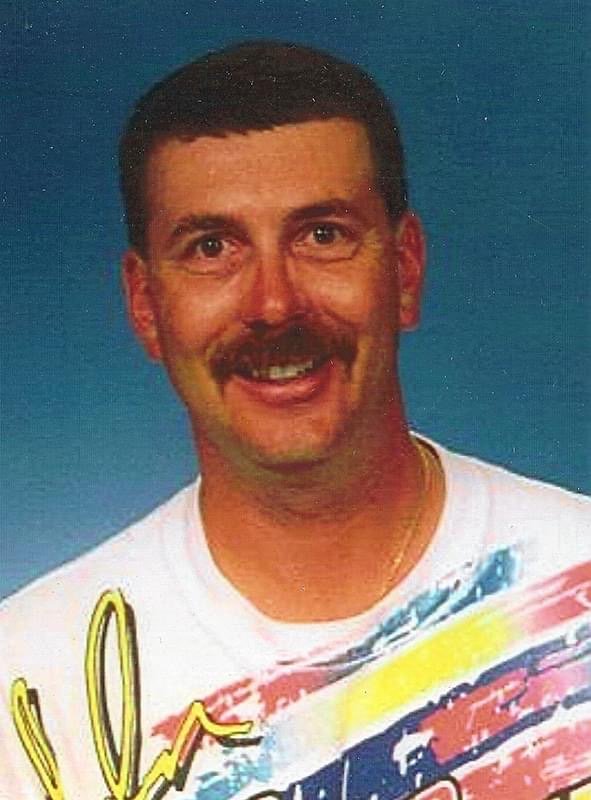
- Michael Dean Mapes, age 35, was a 10-year volunteer member of the Carthage Clipper Fire Department. A 1980 graduate of Carthage High School, Michael was an experienced contractor, carpenter, and electrician and was the owner/operator of Mapes Homes Improvement. He was survived by his wife, Theresa, his two sons, Michael “Devan” and Dillon James, his parents, Jack and Katherine Mapes, two brothers, Larry and Marty, and one sister, Teresa. His funeral was held on October 6, 1997, at the First Christian Church with interment following at Moss Ridge Cemetery in Carthage.
- Walter Douglas Buckert, age 22, had just completed his first year as a volunteer member of the Carthage Clipper Fire Department. He graduated in 1993 from Carthage High School and was an Eagle Scout. He was a graduate of Carl Sandburg College with a degree in mortuary science and worked for a local funeral home. He was survived by his parents, W. Eugene and Joyce Buckert and his sister‚ Carla. His funeral was held on October 6,1997, at First United Methodist Church of Carthage with interment following at Moss Ridge Cemetery in Carthage.
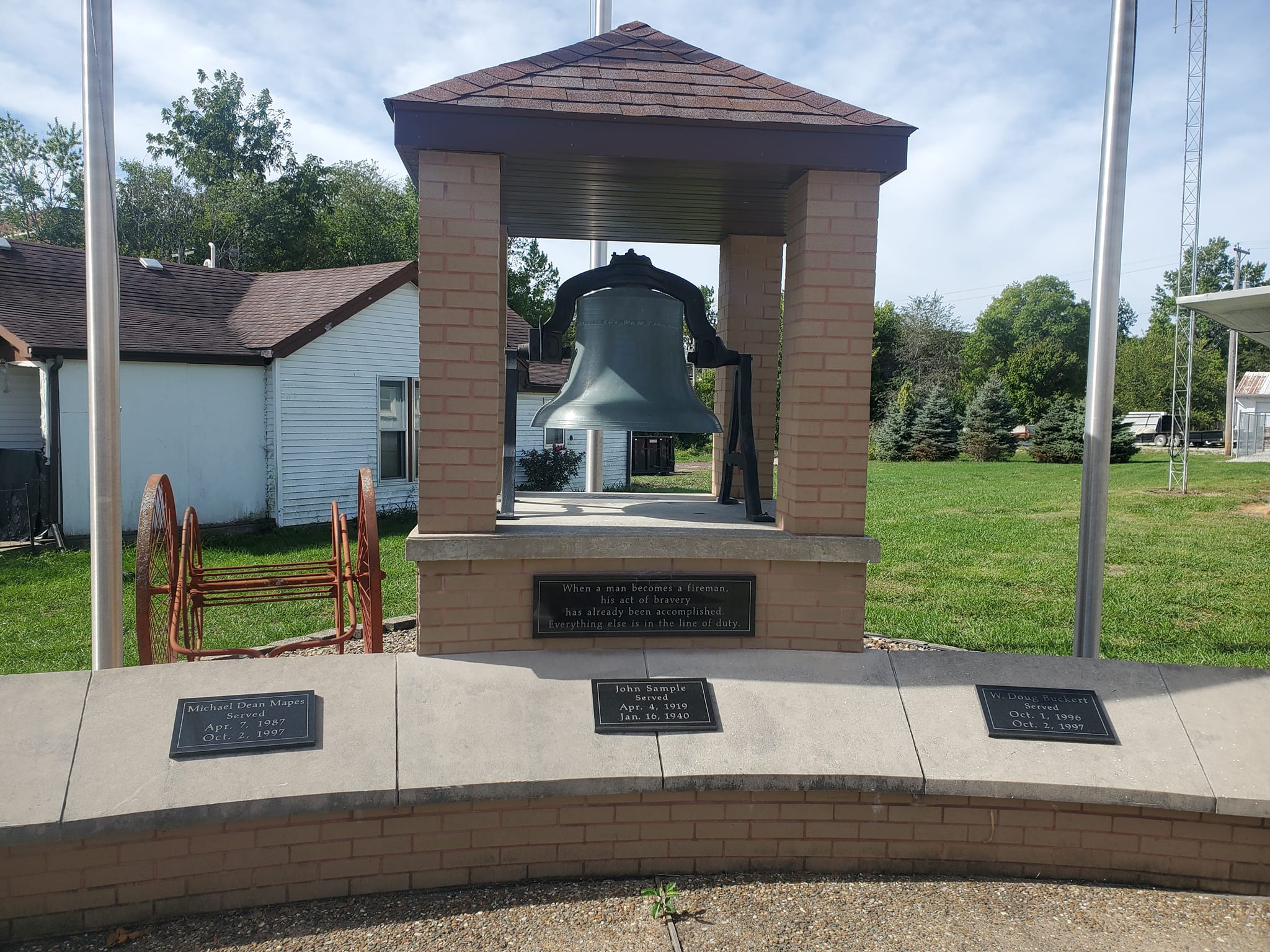
The Carthage Clipper Fire Department designed and built a memorial wall and bell tower at the Fire Department in recognition of fallen firefighters including Firefighters Mapes and Buckert.
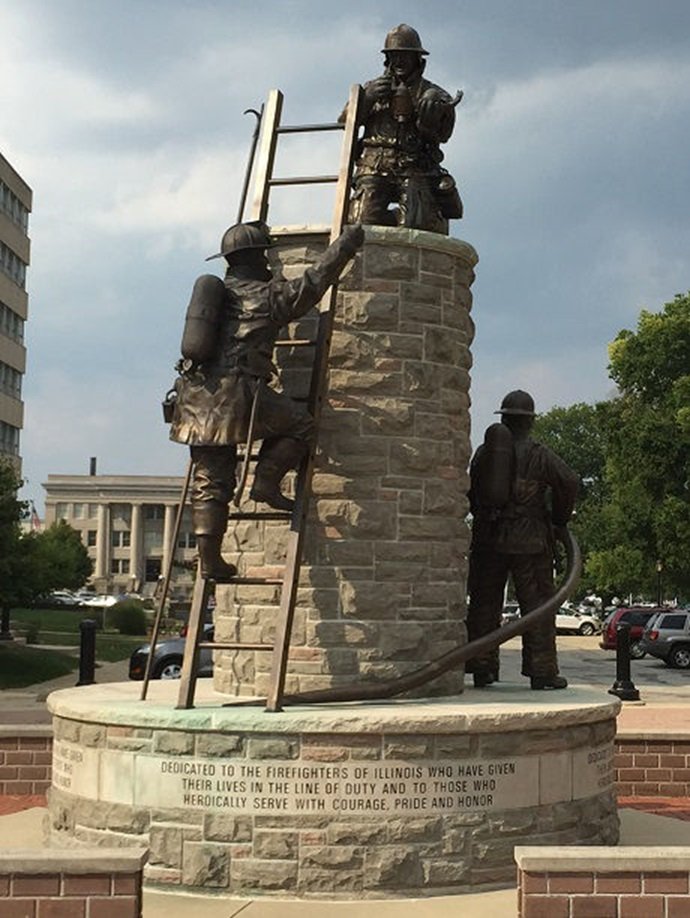
The names of Firefighters Michael Dean Mapes and Walter Douglas Buckert have been honored at the Illinois Fallen Firefighter Memorial located on the grounds adjacent to the State Capitol Building in Springfield, Illinois. The memorial features an original bronze work of art consisting of four life-size figures of firefighters in full gear, a child, a ladder, and hose. Each adult figure is approximately 6 feet 2 inches tall if in a standing position and represents the firefighters in full protective clothing, in action.
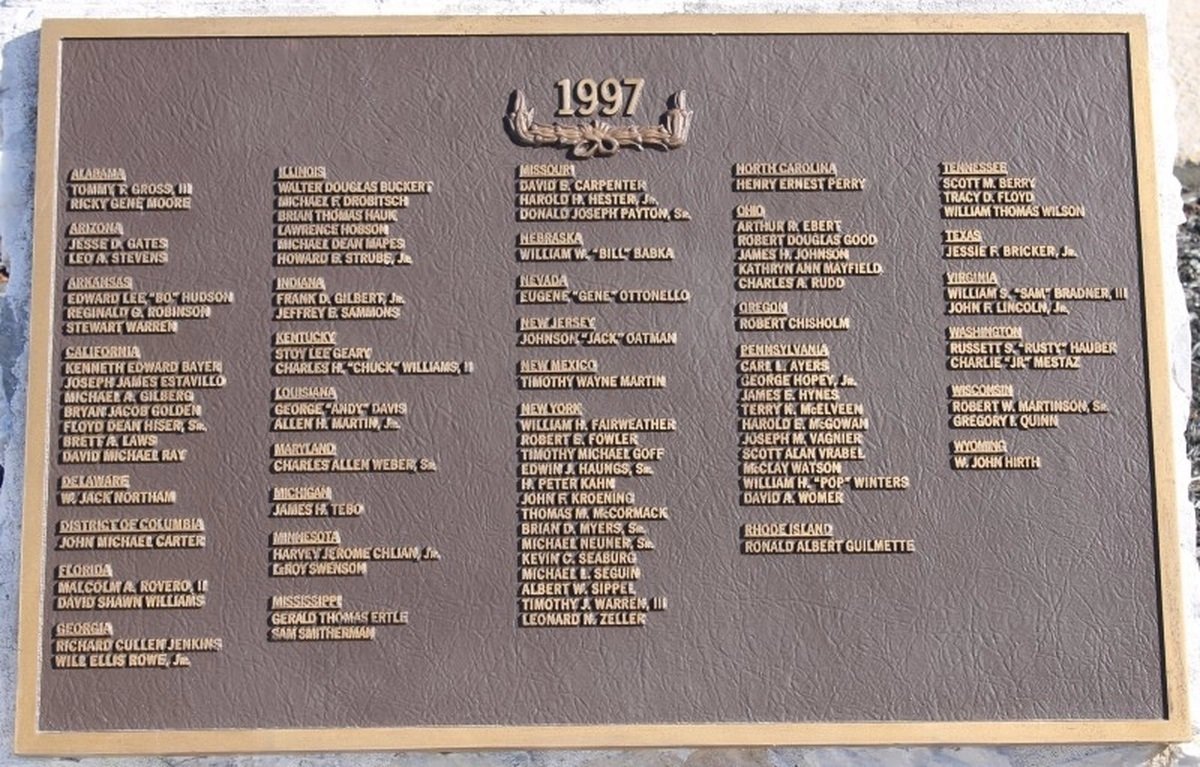
The names of Firefighters Michael Dean Mapes and Walter Douglas Buckert have been inscribed on the 1997 plaque displayed at the National Fallen Firefighters Memorial on the campus of the National Fire Academy in Emmitsburg, Maryland.
Commentary:
Liquid propane gas tank fires and explosions pose a high hazard to responding firefighters. When liquid propane gas tanks are impinged by fire, pressure builds up inside the tanks. When relief valves function and the venting gas catches fire, the burning gas shoots 30 feet or higher into the air like a flaming torch. The sound coming from the operating relief valve has been described as sounding like a jet engine. The higher the flames are shooting and the louder the noise, the greater the pressure is within the tank indicating a BLEVE (Boiling Liquid Expanding Vapor Explosion) may be imminent. Firefighters, seeing the operating relief valve and hearing the sound, should evacuate the area in anticipation of a tank failure rather than placing firefighters in position to try and prevent the failure. NFPA advises that a BLEVE will occur within 8 to 30 minutes of flame impingement on the vapor space of a tank. Further, if cooling the tank is determined to be a viable option, at a minimum of 500 gpm of uninterrupted water is required to be successful in cooling tanks. Liquid propane gas tank fires are historically killers. Evacuation according to the distances in the Emergency Response Guide Book and letting the tank burn is often the best and safest option.
We have attached photos and diagrams from the incident. The link to the USFA Technical report is here: https://www.agspecialtyservices.com/wp-content/uploads/2017/07/USFA-TR-120-LP-Gas-Tank-Explosion-Kills-Two-Volunteer-Fire.pdf
We have also included a link to a NIOSH advisory on firefighting hazards during propane tank fires: https://archive.cdc.gov/#/details?url=https://www.cdc.gov/niosh/docs/99-129/default.html
Thanks to several media sources for additional information for this article.
Honor the service of Firefighters Michael Dean Mapes and Walter Douglas Buckert by reviewing your department’s standard operating procedures for response to fires involving liquid propane gas tanks and by visiting a large liquid propane gas tank installation and reviewing the tank safety mechanisms with your crew members today.
Remember Fallen Brothers.
Get Out There And Know Your Local!!!
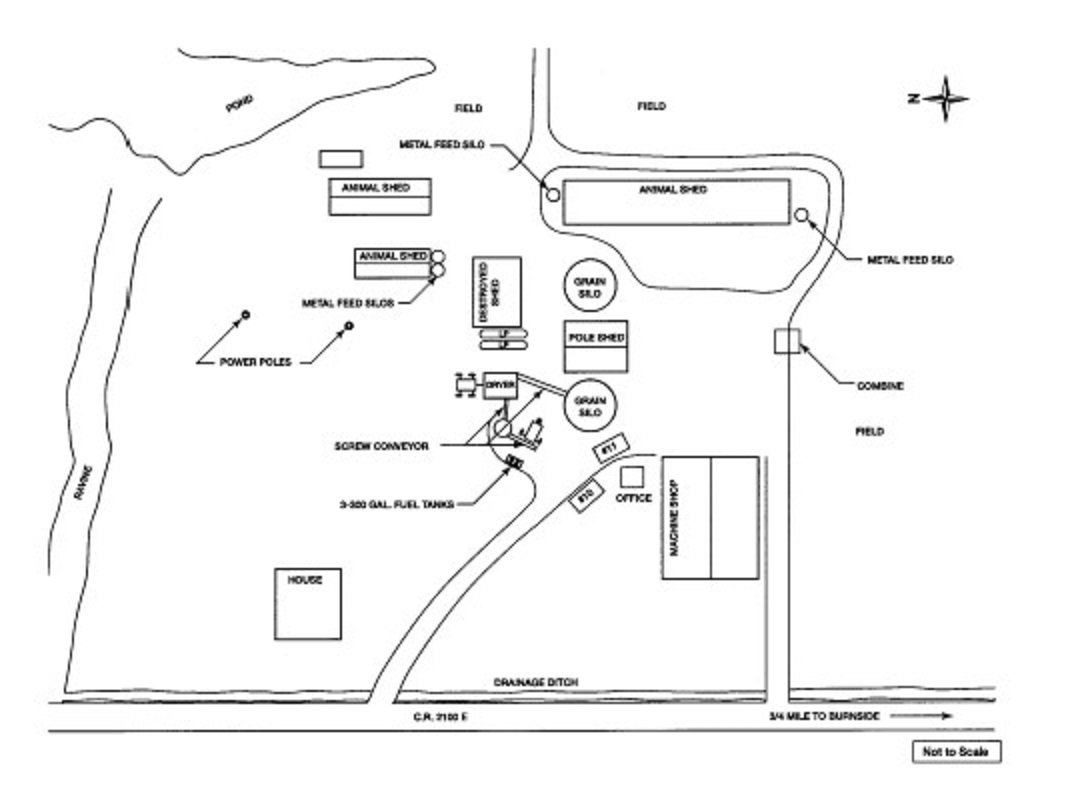
Diagram of the incident site showing the position of the fire units prior to the explosion.
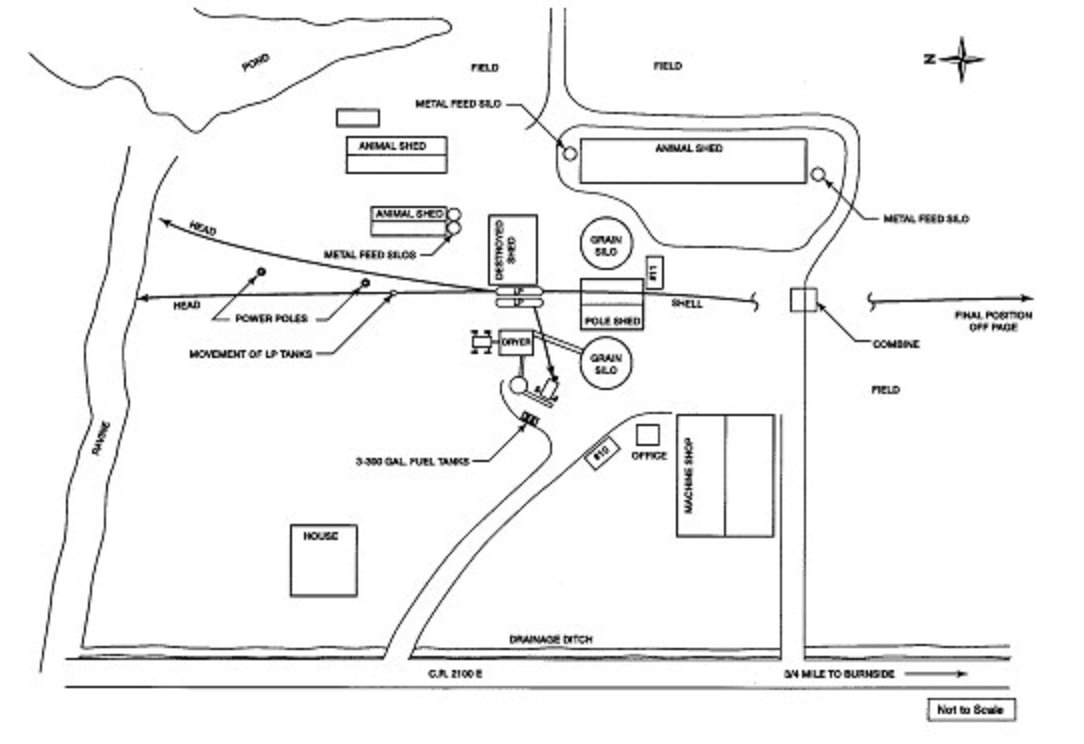
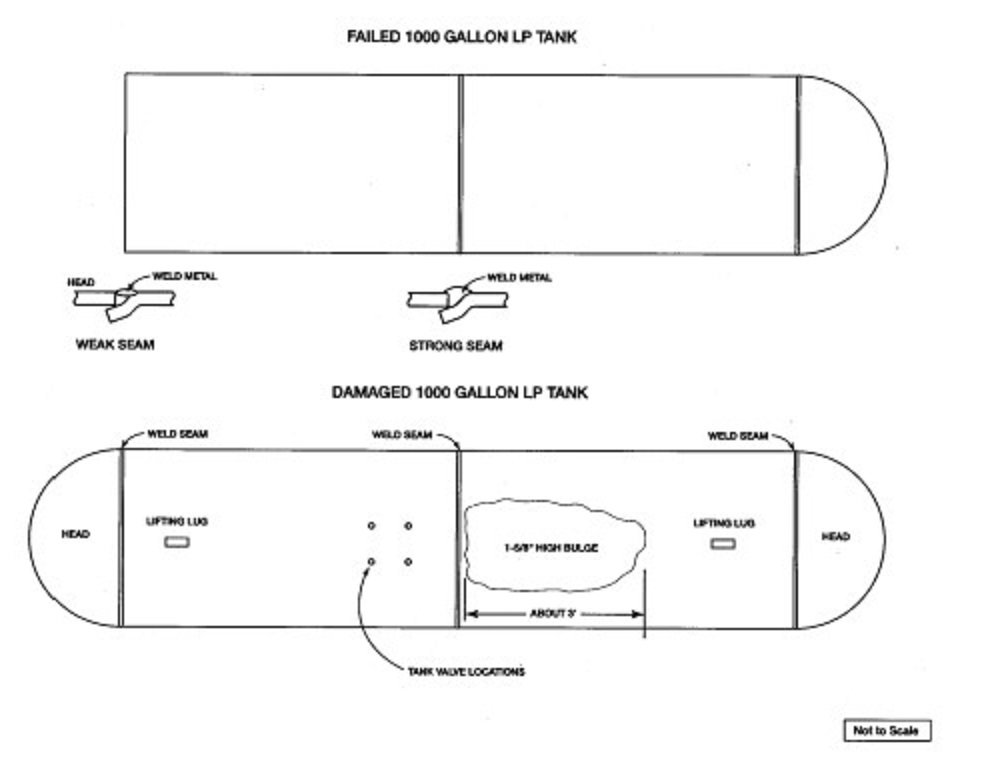
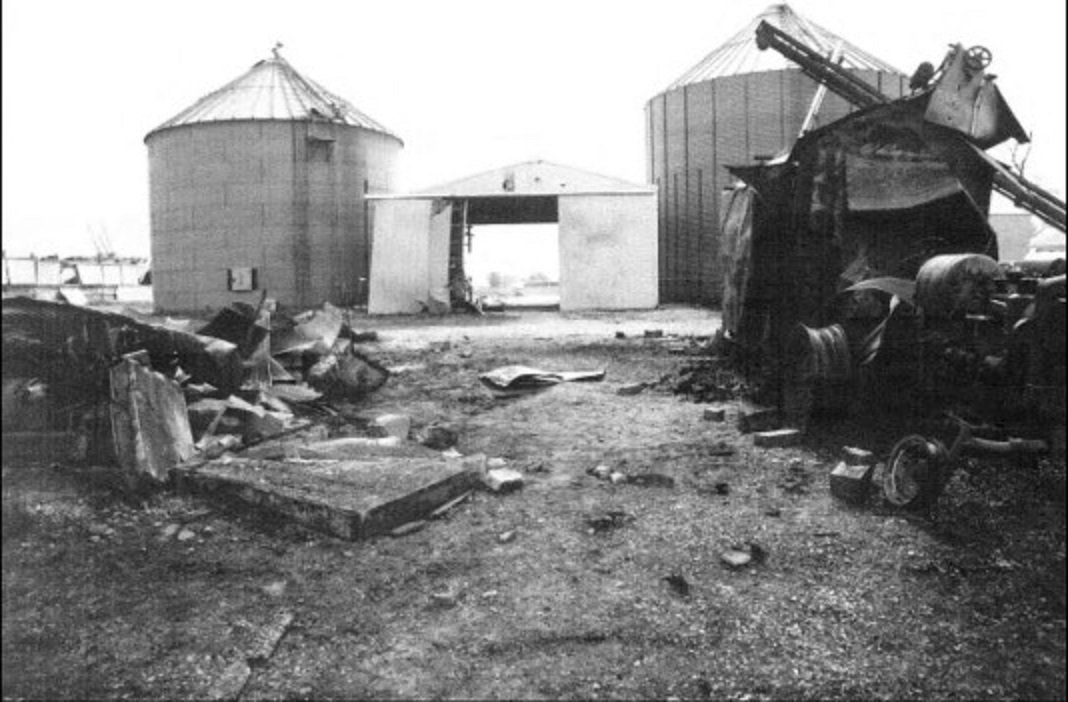
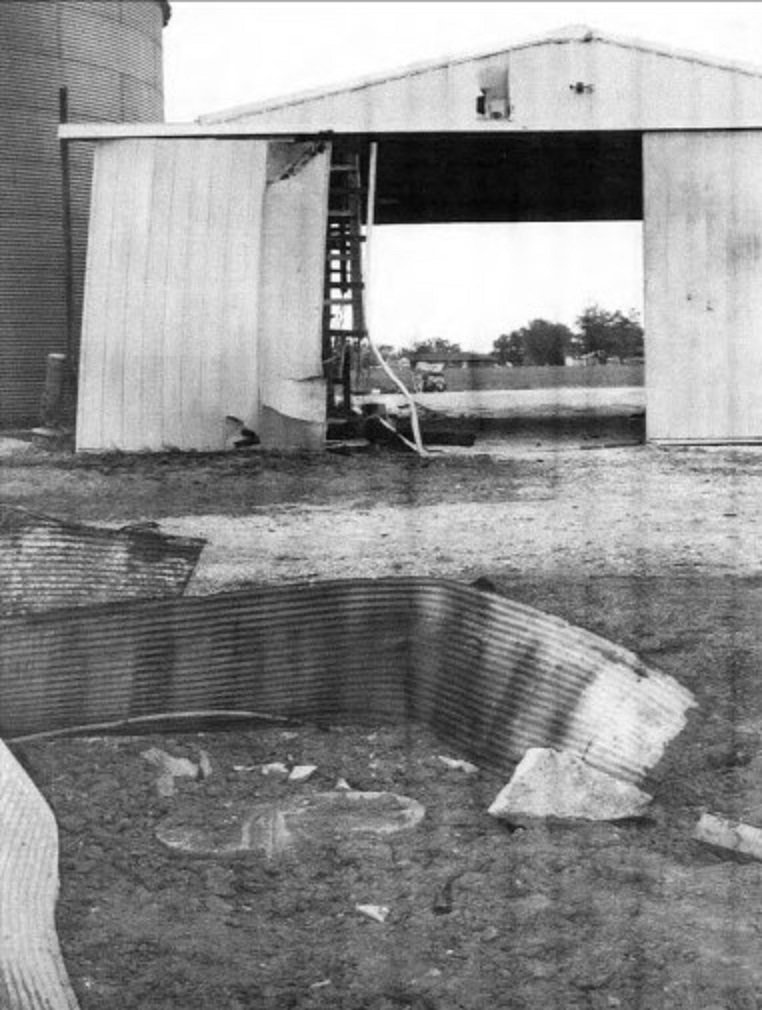
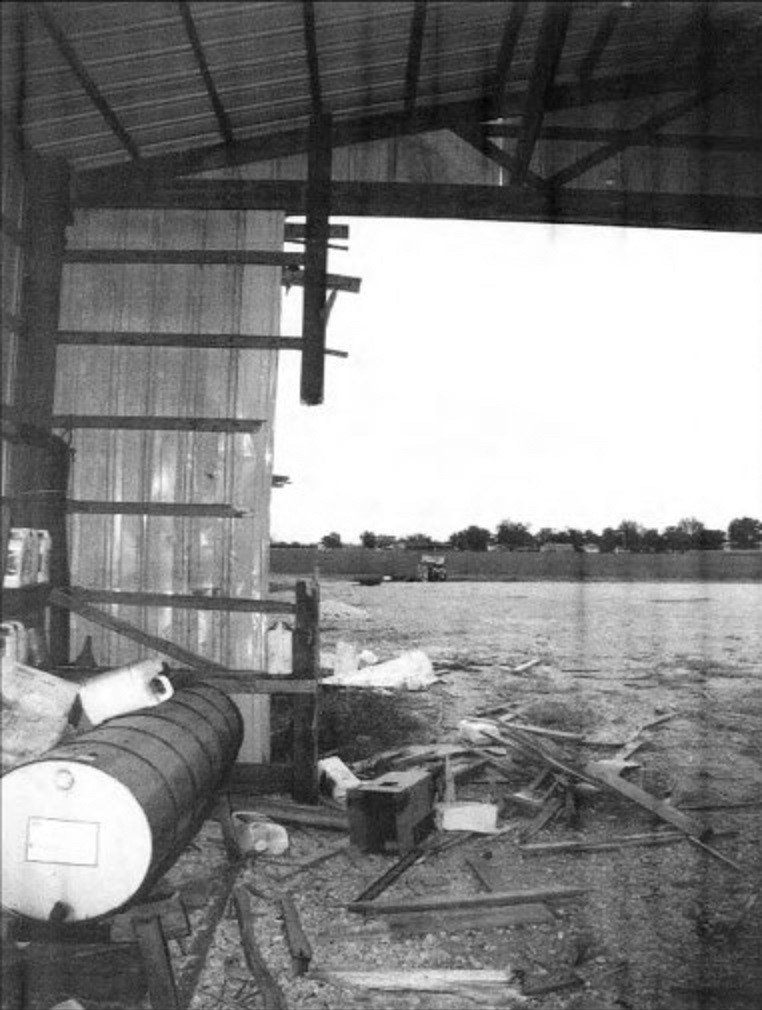
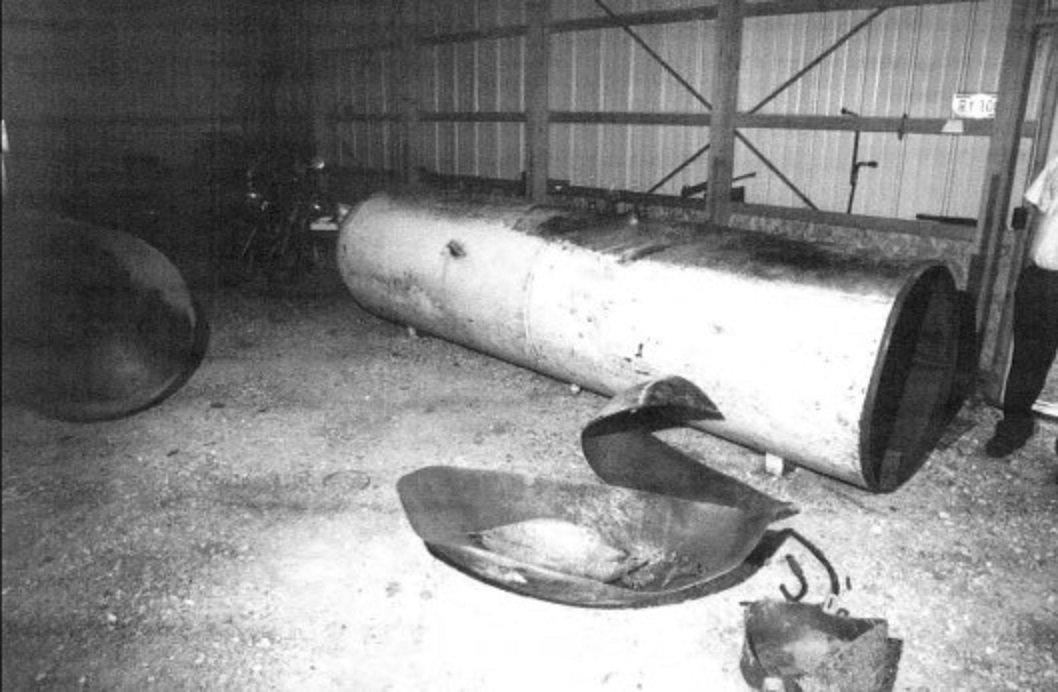
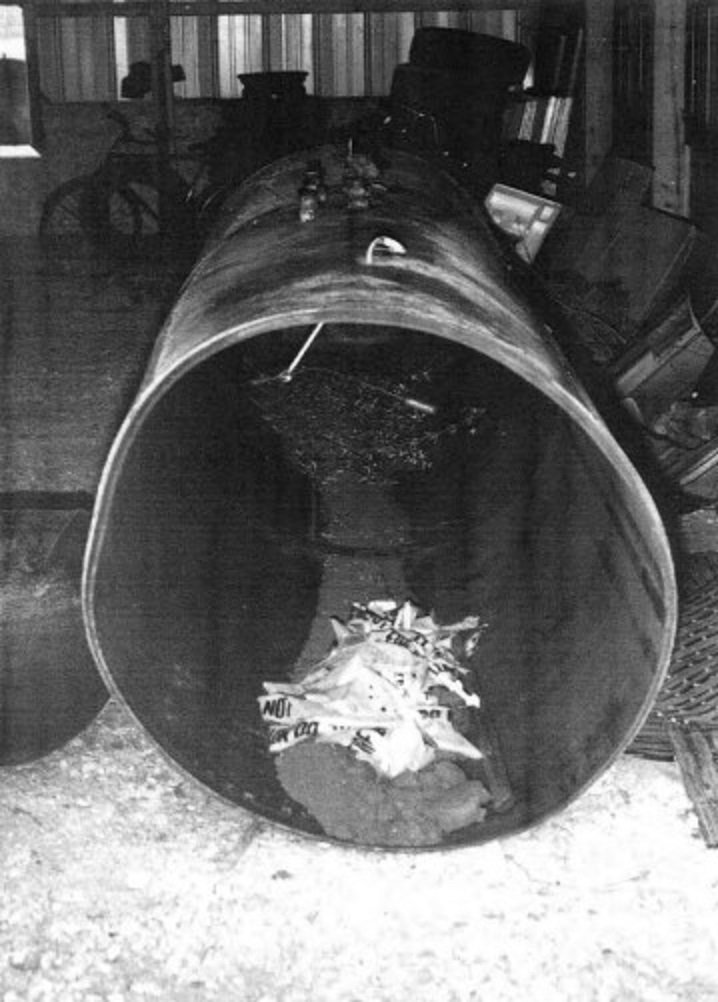
cylinder section and the head.