Five Firefighters Killed By Wall Collapse After Backdraft During Warehouse Fire – Minneapolis, Minnesota – June 27, 1895
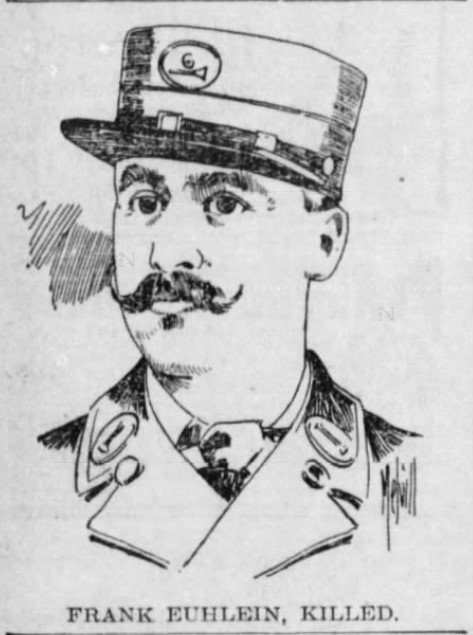
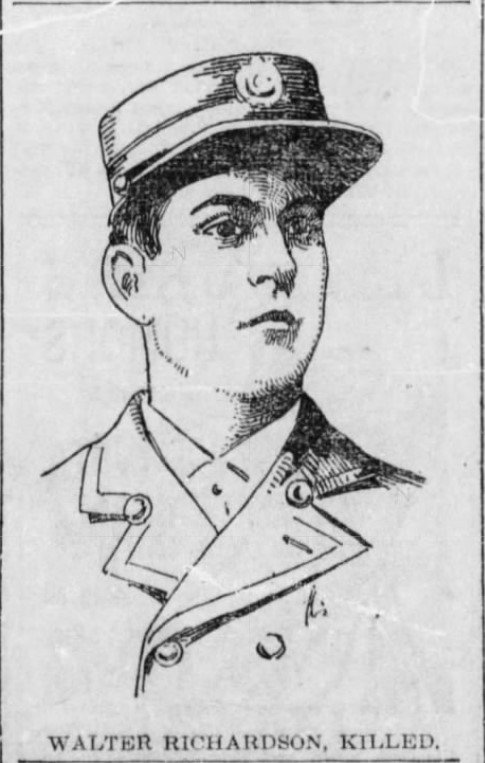
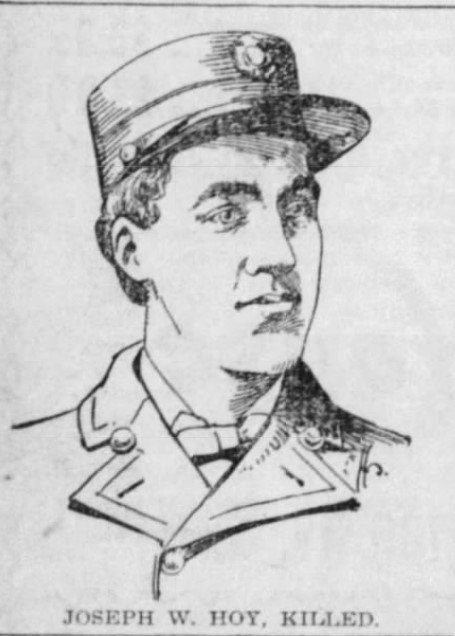
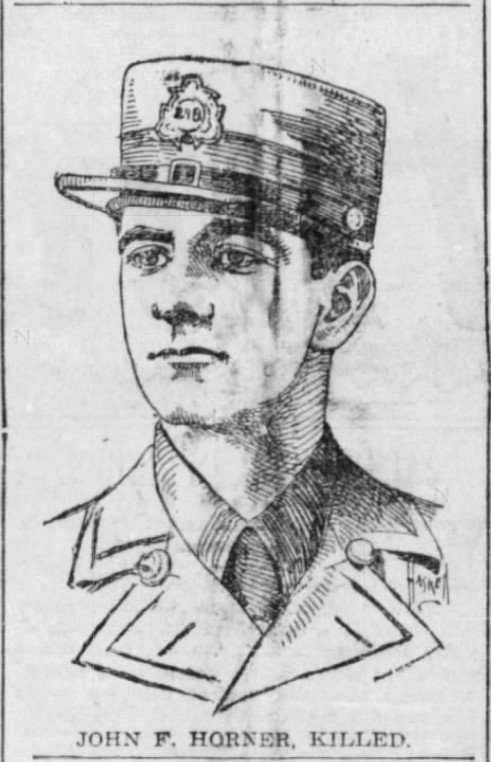
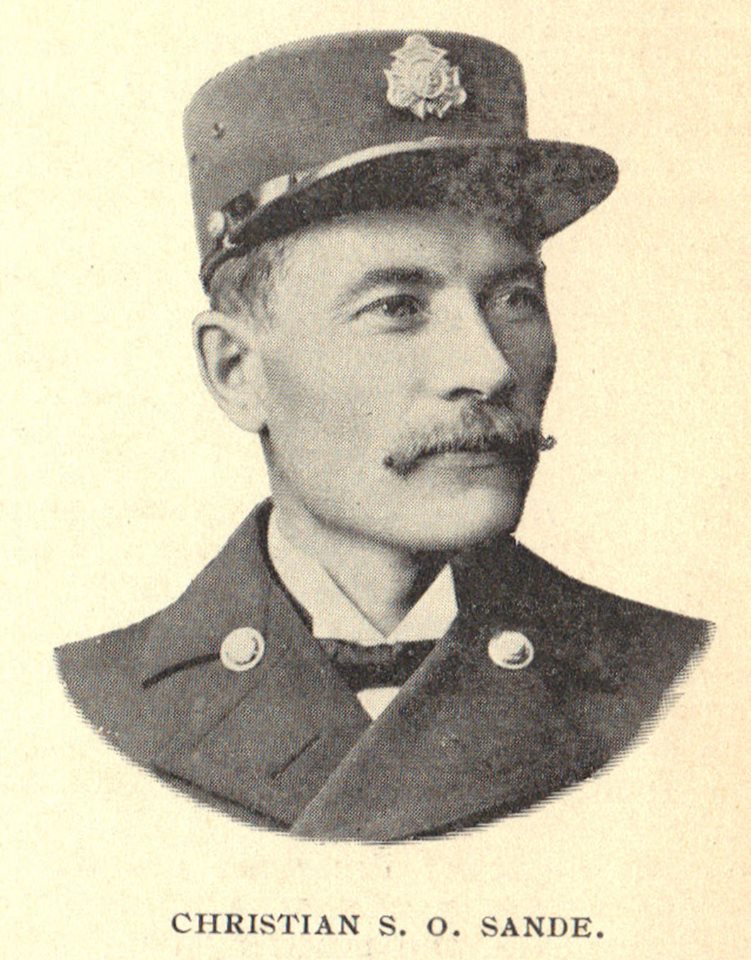
On June 27, 1895, five Minneapolis firefighters were killed after a backdraft collapsed an exterior wall of a burning crockery warehouse. The fire was spotted by alert firefighters at a nearby fire station and, after quickly sounding the alarm, arrived to find the warehouse heavily charged with high heat and smoke on all four floors. Firefighters were in an alley beside the building stretching hoselines and opening up iron fire shutters when, without warning, an immense backdraft blew out the sidewall and buried them in debris. Lieutenant Frank Uehlein and Pipeman Walter Richardson of Engine Company 6, Tillerman Joseph Hoy and Laddermen John Horner and Christian Sande of Truck Company 3 all died instantly, crushed by a mass of bricks in the south alley. Nine other firefighters were injured, five of them seriously. The deaths of the five firefighters remain the highest loss of life suffered by the members of the Minneapolis Fire Department at any single fire incident in the department’s history.
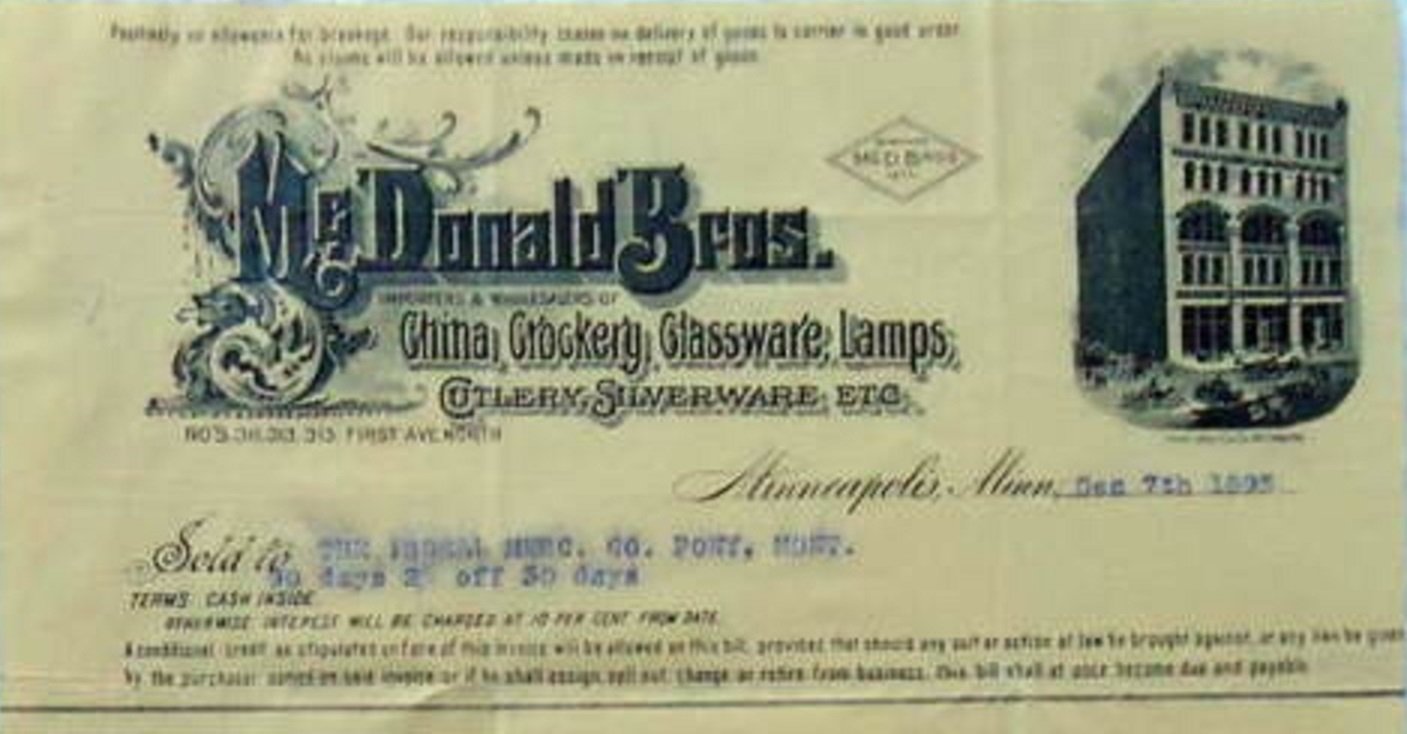
The structure involved in the incident was a four-story Type III Ordinary construction brick and wood joist loft warehouse occupied by the McDonald Brothers Crockery Company, a manufacturer of ceramic tableware and glassware. Erected in 1879, the building was located at 240-242 First (now Marquette) Avenue South mid-block between Washington Avenue and South Third Street in the Warehouse District of downtown Minneapolis. Side Alpha measured 50 feet wide and fronted on 80-foot-wide First Avenue South with a three-foot-high masonry parapet wall with a stone cornice at the roof edge. Side Bravo measured 145 feet long and faced a 20-foot-wide alley that separated the fire building from a row of several one-story brick and wood joist mercantile shops. Side Charlie faced a narrow 10-foot-wide alley that separated the building from a three-story brick and wood joist hotel with shops on the first floor. Side Delta also faced a narrow 10-foot-wide alley that separated the fire building from a four-story brick and wood joist hotel with shops on the first floor fronting Washington Avenue. Multiple fire hydrants fed by six-inch water mains were available on the block and surrounding streets. The nearest fire alarm call box was located a half block south at the corner of South Third Street. The warehouse was not equipped with fire sprinklers but had heavy iron fire shutters mounted on the windows on the exterior sidewalls on Sides Bravo, Charlie and Delta of the building. Note: Exterior iron fire shutters are heavy hinged iron panels that were designed to be closed to shield the window and door openings of a building in the event of a fire in an adjoining building. They were usually found on manufacturing lofts and warehouse buildings in congested urban areas. They were developed to prevent the spread of fire from adjacent buildings following several major conflagration fires that destroyed blocks of structures in many North American cities in the 1800s. Today the Minneapolis Warehouse District includes numerous restored and repurposed mills, warehouses, and loft buildings occupied by an eclectic mix of art galleries, trendy boutiques, award-winning restaurants, and bustling nightlife venues.
Minneapolis is a city in the state of Minnesota and the county seat of Hennepin County. As of the 2020 U.S. census the population was 429,954, making it the largest city in Minnesota. The 57.51 square mile city occupies both banks of the Mississippi River and adjoins Saint Paul, the state capital of Minnesota. The city has its origins as the 19th century lumber and flour milling capitals of the world. Minneapolis developed around Saint Anthony Falls, the only natural waterfall on the Mississippi, which was used as a source of energy. By 1871, the river’s west bank had businesses including flour mills, woolen mills, iron works, a railroad machine shop, and mills for cotton, paper, sashes and woodworking. The city is today protected by the Minneapolis Fire Department currently operating from 19 fire stations located throughout the city in 5 battalions, under the command of 5 battalion chiefs and 1 deputy chief each shift. 422 career members staff 19 engine companies, 8 ladder companies, 1 rescue company, 2 hazardous materials units, 7 rescue boats, and 1 light and air unit. The department is also home to the Minnesota Task Force One (MN-TF1) USAR Unit. The department responded to nearly 60,000 calls for service in 2023, with rescue and emergency medical calls making up 65.7% of calls.
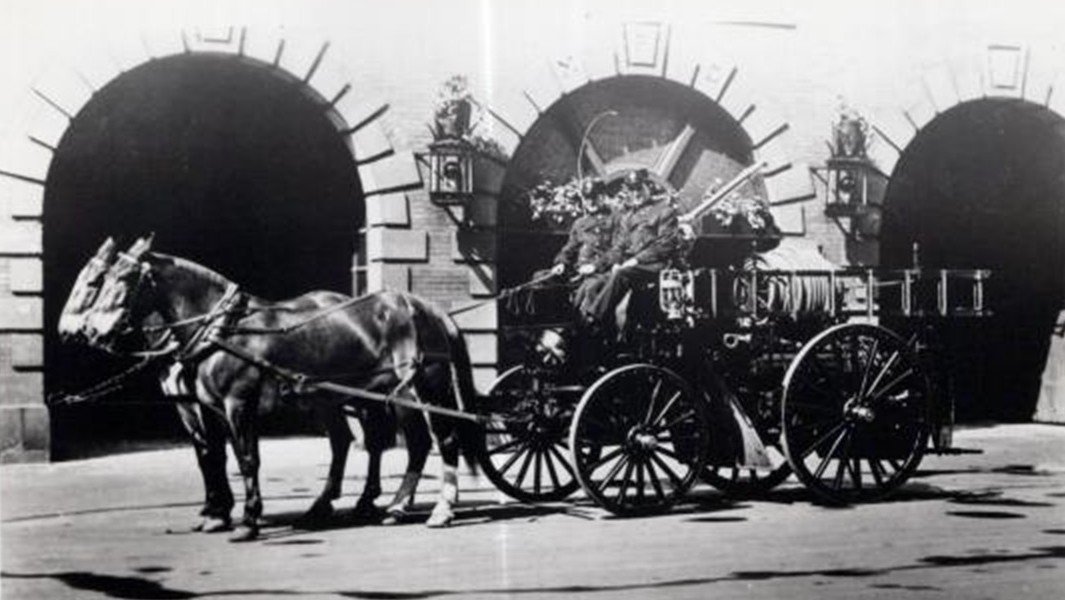
Long before the Minneapolis Fire Department was established in 1879, volunteer firefighters were in charge of quelling fires in the area. The nearby community of St. Anthony on the east side of the river established their volunteer force in 1847, and Minneapolis on the west side did the same in 1851. Six years after the communities of Minneapolis and St. Anthony merged to form the City of Minneapolis, the Washburn-Crosby Company A-Mill exploded in 1878, leveling the surrounding area. With the rise of lumber and flour milling and the dangerous consequences of both, the volunteer firefighters on both sides of the river joined forces. Just a year later, the volunteers requested that the City of Minneapolis replace them with paid professionals, and the Minneapolis Fire Department was created, led by Chief Winslow Brackett.
Starting as an on-call force with 2 horse-drawn steamers, 1 ladder truck, 6 hose companies, and 7 stations, the new department grew quickly. In the 1880s, Minneapolis expanded by over 22 square miles, and the lack of construction standards meant that the fire department had a lot of work on their hands. Mayor Ames and the City Council approved Minneapolis’ first building codes in 1884, which required new buildings to have non-combustible walls, cornices and roofs, and the position of building inspector was also created to ensure compliance.
On Thursday, June 27, 1895, at 10:40 p.m., crewmen at Chemical 1’s station on Third Street between Nicollet and First Avenue South spotted flames in the rear of a large loft warehouse half a block away. They struck Box 18 and responded to find the four-story brick MacDonald Brothers’ crockery warehouse at 240-242 First Avenue South very heavily charged with heat and smoke on all four floors. The shutters in the rear and on the sides of the loft building were closed and when first seen the entire interior in the rear of the building seemed almost a mass of flames. The fire appeared to have started in the rear portion of the building on a lower floor and the flames shot up like lightning through the elevator shaft and through the roof. A 1-11 (first alarm) was struck at 10:43 p.m. and a 3-11 (third alarm) at 10:52 p.m.
Some delay was experienced in getting several streams of water on the fire as crews had to contend with street construction which hindered stretching hoselines into the narrow alleys on each side of the rear of the warehouse from Nicolette Street. Others worked from ladders to pry open the heavy iron fire shutters covering its side windows, so streams could get at the flames. Despite the efforts of the members, the flames spread over the entire building, aided by the closed iron shutters, which served to make the four-story brick building a veritable chimney. The tightly shuttered warehouse held a heavy fire load from packing materials such as excelsior that built up a dangerous concentration of gaseous products of combustion, waiting for only enough oxygen to flash explosively into flame. Fire crews set up heavy streams in the street and alleys surrounding the building to try to quell the flames and prevent them from spreading to the nearby buildings. A large crowd had formed in the street to watch the progress of the firemen.
At about 11:10 p.m., the members working at the rear of the alley did not notice that the rear wall was slowly bulging out. The crowd shouted a warning but too late as suddenly an enormous backdraft ripped through the building, blowing out its walls onto crews in the alleys on each side and at the rear. Lieutenant Frank Uehlein and Pipeman Walter Richardson of Engine 6, Tillerman Joseph Hoy and Laddermen John Horner and Christian Sande of Ladder 3 were in the south alley setting up hoselines and working from ladders to force open the iron shutters when the blast came. All died instantly, crushed by a mass of bricks and debris that fell into the alley.
The explosion was followed by a general crashing of the two uppers floors and the falling of iron shutters. With a mighty roar, the flames shot up high in the night sky as firemen struggled to get hoselines in place. Tillerman Hoy of Truck Company 3 had just come down off the fire escape in the rear of the building and Lieutenant Uehlein was halfway up a ladder placed against the side of the building when the crash came, tearing off some 30 feet of wall. At the foot of the wall in the alley stood five more firemen and, in the alley, running through to Nicollet Street to First Avenue were several more.
The terrible sound of the falling wall could be heard by all about. Lieutenant Uehlein fell from the ladder, striking the pavement in the alley. His head was horribly crushed by falling debris. Firemen Hoy, Horner, Richardson and Sande were also crushed in the wreckage while several seriously injured members lay but a few feet away moaning in pain. Other firemen first stopped in horror and then without a thought to the impending danger of further falling walls, dragged out the bodies of the living and the dead. The dead men were laid out side by side in a vacant spot in the rear of the Creamery restaurant building, their heads and bodies mangled and unrecognizable. Only Tillerman Hoy escaped disfigurement. The coroner soon arrived at the scene and the bodies of the five dead firemen were transferred to the morgue.
Nine other firefighters suffered injuries, five of them hurt seriously. Captain Caldwell of Engine Company 6 was carried unconscious to a nearby drug store and was administer simulants. Ladderman John Gray of Truck Company 3 was at the foot of the ladder with the other members of his company when the collapse occurred and suffered a badly broken left leg and internal injuries. While doctors initially thought Gray would die, he survived his injuries. Fireman Henry Dow was bruised on his side and back and also thought to likely die but survived. Lieutenant Ed Thielsen of Truck Company 2 suffered internal and back injuries. Other injured members were carried upstairs to a doctor’s office above the drug store to be treated. Police patrol wagons and hospital ambulances hurried to the scene to convey the most seriously hurt to the City Hospital.
A like number of firefighters operating in the north alley narrowly escaped. Three civilians were badly cut by flying glass when plate glass windows at the North Star Clothing store across Third Street from the fire building shattered from the explosion. One man was blown 20 feet into the street by the blast but escaped serious injury.
The MacDonald building, now wrapped in flames, burned furiously. Uninjured firefighters at the scene performed wonders in preventing further flames from spreading to exposures while others tended to their dead and injured comrades. The explosion had ripped large holes in the walls which allowed fire streams to penetrate the burning interior and soon the fire was brought under control. Although the MacDonald building was a total loss, damage to the exposures were limited to minor smoke and water losses.
An inquest was held the next day on the deaths of the five firemen. Minneapolis Fire Chief Frank L. Stetson was grief-stricken by the loss of his men. Following the fire, rumors had circulated among the public that the building was known to be dangerous with weakened walls. The Chief received considerable criticism for the loss of the firemen, but he was steadfast in maintaining that the fire was well managed by his officers and men and was of the opinion that no one should be blamed for the unfortunate incident.
Captain Ed Thielen testified: “It seems foolish for people to blame the Chief for the death of the boys. No one was to blame. Why, the men went in the alley and around that building of their own accord. We do not answer (that address) on the first alarm, but when it came in from Box 16, I said to one of the boys: ‘Now just watch.” They never turn in an alarm from that corner unless there is something in it. I had hardly spoken the words when the second (alarm) came in. When we were going by the burning building with the truck, the windows in front blew out and we got a shower of glass. Still there was no great amount of fire visible from the front. We started around into the alley with a 65-foot ladder. There was not room for so large a ladder, so we got a 35-foot one. Before this smaller ladder was put up, Joe Hoy, the poor fellow, went up the fire escape and broke open an iron shutter. That was at the third story. I went up the fire escape and broke open the shutter on the second floor. That was the only thing to do at that time, that is, that is the way it looked at that time. It was very evident there was a good deal of fire on the inside, yet you could not tell how far up in the building the flames had reached. It was to determine in regard to that, and in order to get some of the larger streams playing in through the windows on the alley, that we wanted the shutters opened.”
Captain Thielsen continued, “Both Joe and myself burned our hands on the fire escape, and when Joe broke open the shutter on the third floor he got burned in the face. Then the 35-foot ladder was put up, and Joe went up. The ladder did not go close enough to open the shutter, and he came down. Then we turned the ladder over once so that it would be nearer the window, and I went up. It was my going up, no doubt, which saved my life. Up to that time we had not discussed the chances of harm at all. It happens that I had heard some of the boys say that that wall was not very good. That was some time ago. When I entered the alley with the rest of the boys, and went to work, I had no idea at all that we were in a dangerous place. I remember looking up and noticing that smoke was coming out of the brick wall. That is a bad sign, for it shows that the wall is not very good. Still, I did not fear anything. I had seen the same conditions, almost, before. Well, when we got the ladder up, I went up, and took the fire axe and had just got it under the shutter when suddenly there was a slight shock and an instant later the shutter flew open, and it seemed like a gust of wind at first, and I had time to take one step down the ladder when the wall seemed to go right over me. Of course, this did not take more than a second. I remember the bricks striking me on the head, and I remember feeling the pavement when I struck it. I was dazed for an instant. I was literally covered with brick. I could just breathe and that was all. I thought for a moment I would suffocate. The brick and air were hot, of course.”
“Jim Ryan of No. 1 truck was the first man to reach me, and then Billy O’Neill and others came to the rescue. I have no special recollection of a noise inside the building which would suggest an explosion or anything of that sort. When the smoke blew out with the shutter I had just time to take one step. My head went between two rounds of a portion of the ladder, which was broken. Joe Hoy and John Horner were at the bottom of the ladder when I was up there to break open the shutter. Horner asked me if there was not a chance for two to work up on the ladder, and I told him there was not. I heard someone say something about my position being dangerous, but I do not know whether it was Chief Kenny who called or not. It was a hard thing to tell how far up the building the fire had gone, with those iron shutters.”
Frank Egan of Hose Company 1 was one of the first men to enter the fatal alley. His company, stationed at Sixth Avenue South and Third Street, was the first hose company to arrive on the scene. This would perhaps not have been the case but for the fact that Hose Company No. 3, stationed at Headquarters, corner of Third Avenue North and Second Street, was interrupted it its run by the paving torn up on Nicollet Avenue. The injured fireman was very anxious to protest against Chief Stetson or any other officer or member of the department being blamed for the death of the men. Egan said: “The Chief is not to blame in the least. No one can be blamed. I had never heard a thing about that building or its walls. We went out of First, and we ran in a line of hose from First Avenue. That was the first line of hose laid. We went around to the rear of the building, going through the alley at the side, and broke open the rear door. The entire rear end of the building, from the ground floor to the top, seemed to be a mass of flames. Nobody, so far as I know, talked about the building being dangerous. It is all nonsense to talk about fighting the fire in any other way. It was a well-managed fire, considering the conditions. There certainly was no use in going out onto Washington Avenue and fighting the fire from there.”
Egan continued, “There was no special sign of danger so far as I could see. The Chief had passed in and out of that alley a number of times. The place to fight the fire was the place the fire was, it seems to me. The Chief did not tell us to go into that alley, but it was the place where almost any fireman in the world would have gone. There was no warning of any kind, so far as I remember. We were tending to our work, doing the best we could, when the thing suddenly came upon us. I think the iron shutter struck me, and I think it saved my life. Billy O’Neill was the first one to reach me. Yes, this is a very sad case, of course, but the element of danger in a firemen’s life is necessarily great, and it is not always possible to pick out the safe spots when you are acting in a hurry.”
The deaths of the five firefighters remain the highest loss of life suffered by the members of the Minneapolis Fire Department during a single fire incident in the department’s history.
Members of the Minneapolis Fire Department killed in the McDonald Brothers Crockery warehouse fire on June 27, 1895:
- Lieutenant Frank W. Uehlein, age 27, was a four-year member of the Minneapolis Fire Department assigned to Engine Company 6. He was survived by his fiancée and was buried at Lakewood Cemetery in Minneapolis.
- Pipeman Walter Albert Richardson, age 26, was a two-year member of the Minneapolis Fire Department assigned to Engine Company 6. He was survived by his wife, Mary Catherine and his one-year-old daughter Marian; and his widowed mother, Anna Richardson; and his sister Jennie Richardson Neisingh. He was buried at Lakewood Cemetery in Minneapolis.
- Tillerman Joseph W. Hoy Jr., age 24, was a three-year member of the Minneapolis Fire Department assigned to Truck Company 3. He was considered one of the best firemen in the company and had never been reprimanded by a superior officer during his service. Hoy was unmarried and was survived by his parents, Mr. and Mrs. Joseph Hoy Sr.; and four brothers, William, James, Patrick and Charles. He was buried at St. Anthony’s Cemetery in Minneapolis.
- Ladderman John F. Horner, age 28, was a four-year member of the Minneapolis Fire Department assigned to Truck Company 3. He was unmarried and survived by relatives in the city. He was buried at Lakewood Cemetery in Minneapolis.
- Ladderman Christian S. Sande, age 26-27, was a member of the Minneapolis Fire Department assigned to Truck Company 3. He was married with five small children. He was buried at Lakewood Cemetery in Minneapolis.
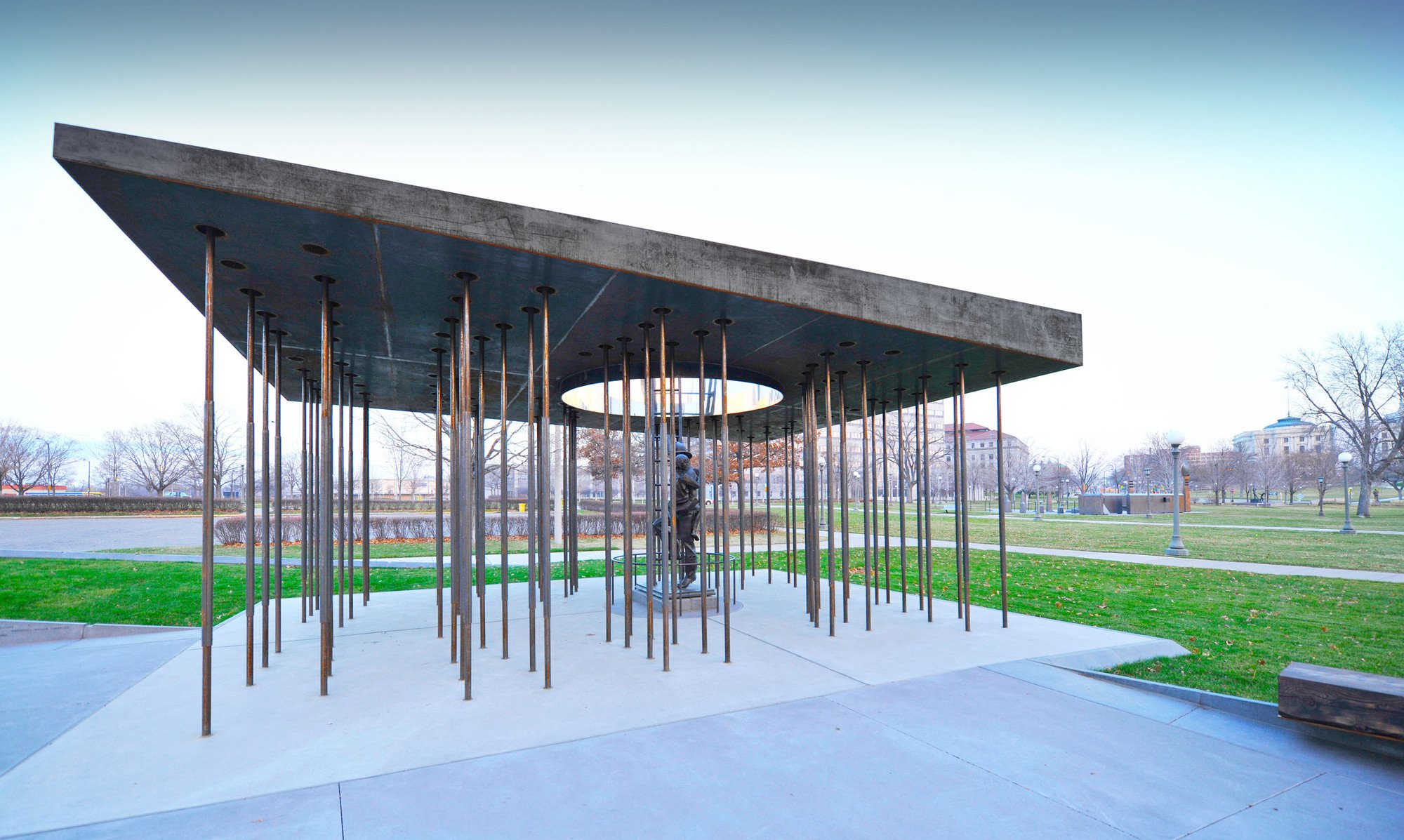
The names of Lieutenant Frank W. Uehlein, Pipeman Walter A. Richardson, Tillerman Joseph W. Hoy, and Laddermen John F. Horner and Christian S. Sande along with 207 other Minnesota firefighters who gave their lives in the line of duty are inscribed on the Minnesota Fallen Firefighters Memorial which is located on the south side of the State Capitol grounds in St. Paul. The Memorial features a large monolith that forms a ceiling above the statue of a firefighter rescuing a child. The monolith is supported by 86 columns on which the names of the 255 Minnesota firefighters who have given their lives in the line of duty since 1881 are inscribed. Every year, on the last Sunday of September, a solemn ceremony is held at the site to commemorate the fallen firefighters.
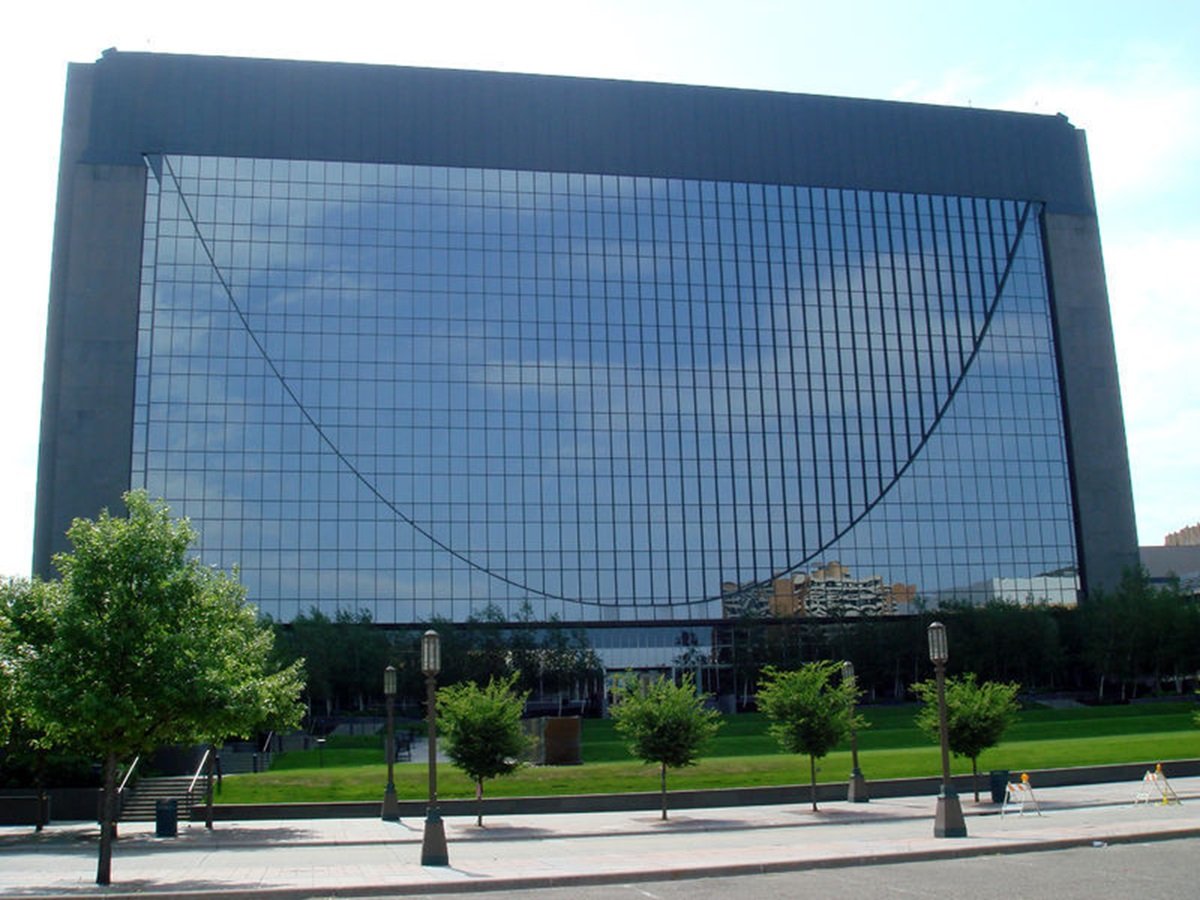
Today, the site of the fatal fire is occupied by the Marquette Plaza building in downtown Minneapolis, an architectural landmark in the city. Designed by Gunnar Birkerts, the building was originally constructed in 1972 as the headquarters for the Federal Reserve Bank of Minneapolis and features a groundbreaking support system which includes 16 catenary cables strung between two towers. These cables work much like the cables of a suspension bridge and give the property its signature U shape on the front of the building. There is no memorial plaque to honor the five firemen who died on the site on June 27, 1895.
Commentary:
Recognized the signs of impending flashovers, and backdrafts and smoke explosions are basic firefighter survival skills that need to be taught to all firefighters. In the more than 125 years since this incident, there has been considerable research, testing and field experience that can educate firefighters in these important skills. Each phenomena have specific warning signs that firefighters can identify and use to prevent being caught in one of these deadly rapid fire events. Flashovers are heat driven occurrences while smoke explosions and backdrafts are air driven events. Once firefighters understand the characteristics between the two quite different manifestations on the fireground, steps can be taken to protect personnel from being caught in a situation that is often not survivable.
We have been taught for decades that the proper method to minimize the potential for a backdraft is to ventilate the enclosed area, be it a basement or cellar, a room or an entire building, at the highest point. This permits the upward and outward flow of smoke, carbon monoxide, and the other heated combustion products, without allowing an influx of cooler air and, specifically, oxygen. You must be certain that these combustion products are venting to the outside and that the outward flow is not being blocked, perhaps by a suspended ceiling or interior partition, for example.
There is no doubt that these superheated, explosive gases will ignite when finding their needed air supply. Fire strategy demands that we choose where the fire triangle will be completed. If the gases are channeled vertically, the oxygen will be found in free space and the energy of combustion will be unleashed rather harmlessly in the air. However, it is when the necessary oxygen is “sucked” into an enclosed space that the same energy, now confined by the structure, causes the damaging backdraft phenomenon.
Fire streams can be introduced into the fire area once effective ventilation has begun. Water application must be very carefully coordinated with ventilation though, ensuring that ventilation at the highest point has been started first. But don’t wait too long to start the water after ventilating or you will suddenly have a large free-burning fire on your hands.
We have attached illustrations and photos from the incident. We have also included a detail from the 1915 Sanborn fire insurance map showing the configuration of the rebuilt structure and the surrounding exposures.
We have also included an article by Nicholas J. Higgins from Firehouse Tribune that discusses the warning signs of backdraft and how to prevent it: http://www.thefirehousetribune.com/blog/2015/9/25/understand-a-backdraft#:~:text=With%20this%20being%20said%20there%20are%20certain%20warning,and%20smoke%20inward%20when%20an%20opening%20is%20made
Thanks to multiple media sources for the content of this article.
Remember the service of Lieutenant Frank Uehlein, Pipeman Walter Richardson, Tillerman Joseph Hoy, and Laddermen John Horner and Christian Sande by studying the fire dynamics of backdrafts, smoke explosions, and flashovers with your crew members today.
Remember Fallen Brothers.
Get Out There And Know Your Local!!!

Newspaper illustration of the fire from Side Alpha.
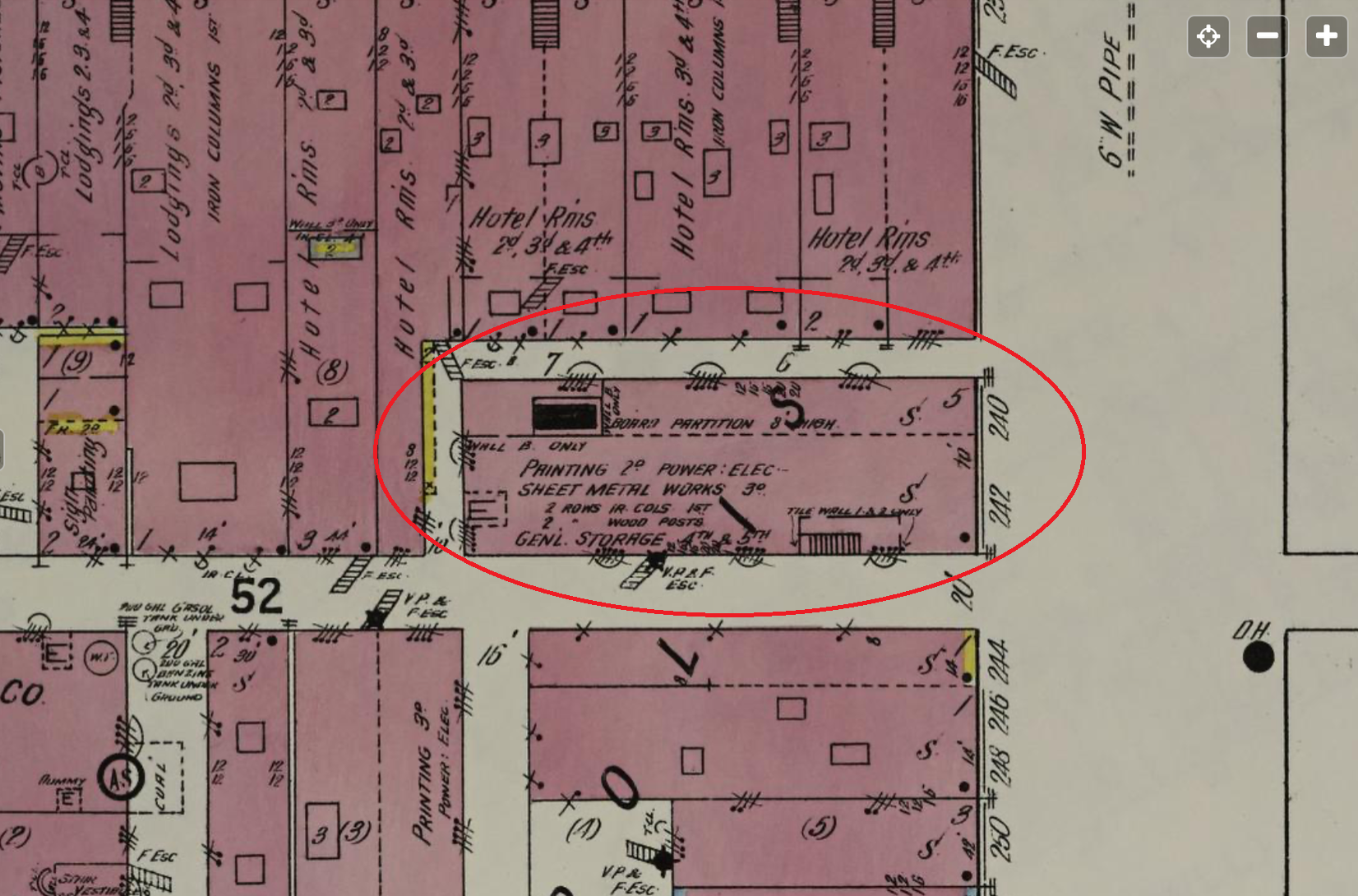
Detail from the 1915 Sanborn fire insurance map showing the configuration of the rebuilt fire building (circled in red), the narrow alley in the rear where the collapse occurred, and the surrounding exposures.