Firefighter Killed and Seventeen Others Injured in Wall Collapse During Multiple Alarm Fire in 19th Century Mill Building Converted into Artists’ Studios – Clipper Mill Industrial Park, Baltimore, Maryland – September 16, 1995.
On September 16, 1995, Baltimore City Firefighter Eric D. Schaefer of Rescue 1 was killed in the line of duty while operating at a fire in a 19th century iron foundry building which had been repurposed as artists’ studios at the Clipper Mill Industrial Park in the Woodberry section of North Baltimore. The building was heavily involved in fire as Firefighter Schaefer, along with fellow members of Rescue 1, were attempting to open an overhead door, when the roof caved in, pushing a two-story granite wall onto the firefighters. Firefighter Schaefer was killed instantly and 17 other firefighters were injured when the heavy timber truss supported roof failed causing the two-foot thick stone front facade of the building to fall outward. Several members were trapped in the rubble. Firefighter Schaefer was extricated from the debris pile but died from his grievous injuries. About 150 firefighters staffing 55 pieces of apparatus operated at the scene in what became the equivalent of a nine-alarm fire. Firefighter Eric D. Schaefer was an 18-month member of the department and had only recently been assigned to the heavy rescue unit. Fire investigators were unable to determine what caused the blaze and where it started in the building.
The structure involved in the incident was part of a sprawling complex of former industrial buildings located in the Woodberry neighborhood of North Baltimore. The complex was originally constructed in 1858 as the Poole and Hunt Foundry and Machine Works along the Northern Central Railway and nearby prospering textile mills in the neighborhood. At its peak in the late 19th century, the company employed over 700 people, making it one of the largest employers in the Jones Falls Valley after the textile mills. The company manufactured an impressive array of machinery: turbines, boilers and looms for the mills, screw-pile lighthouses, railroad machinery, locomotive parts, and transmission equipment for cable cars. Perhaps their greatest contribution was to the construction of the United States Capitol Building, to which the company manufactured the structural elements of the dome and cast the columns of its peristyle, made structural elements for the House and Senate wings, and built the derricks, steam engines, and lifting equipment that made the construction of the Capitol in 1859 possible.
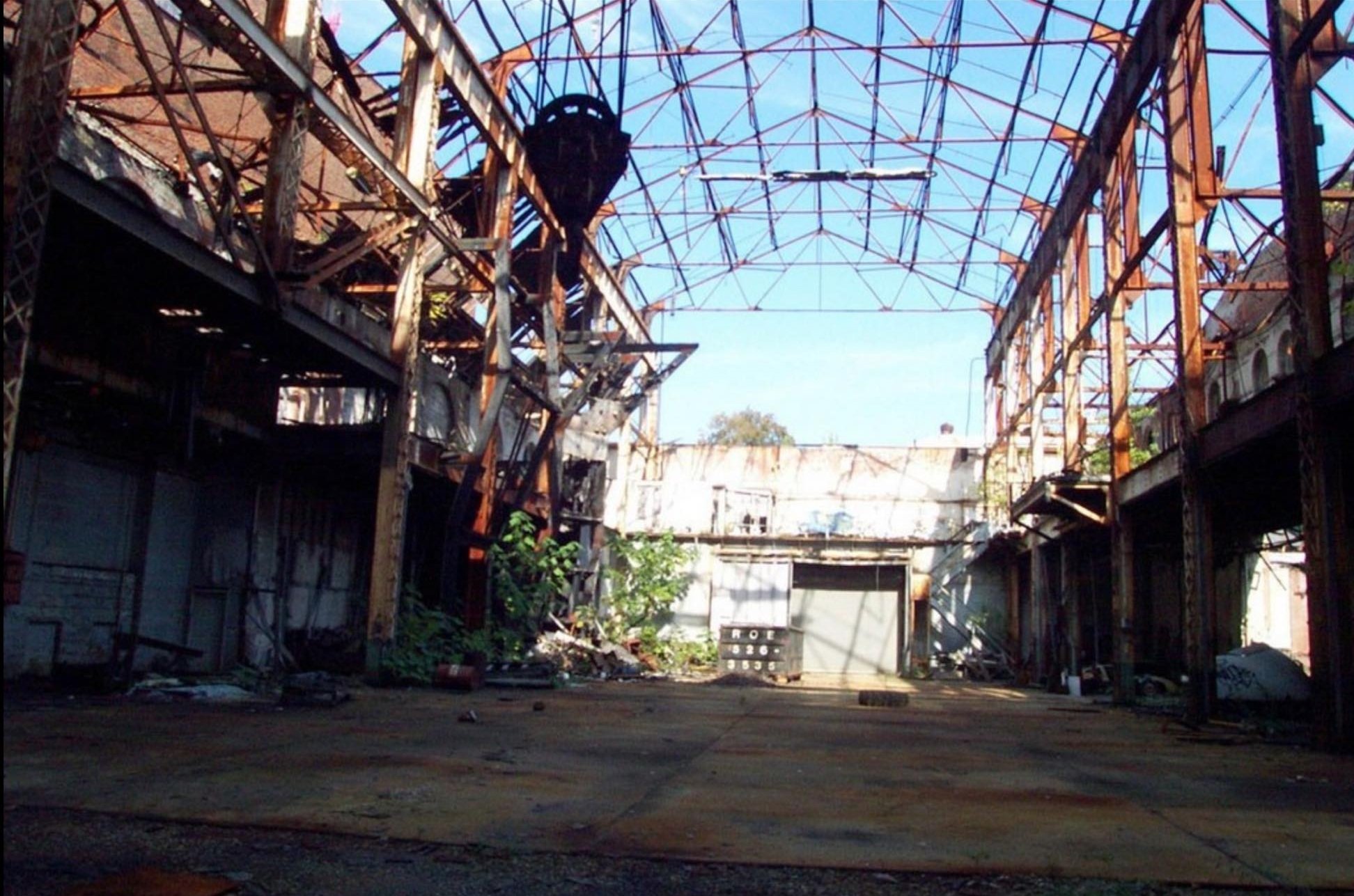
The complex consisted of a number of industrial buildings including the foundry and machine works, a massive 80-foot-high erecting shop, and numerous other foundry, millwright and blacksmith shops that covered a 14-acre site. The Poole Machine Works operated at the site until 1934 when, hard hit by the Depression, the company was forced to sell much of the original campus. Numerous other tenant manufacturers occupied the site including one that built components for the Manhattan Project’s atomic bomb and another that manufactured components for aircraft carriers during the Second World War. By 1972, a kitchen cabinet manufacturer had purchased the property and a rock climbing gym had taken over the massive erecting shop and artists set up studios in the former foundry and machine shop. The complex was part of the Clipper Mill Industrial Park, an enclave for artists and sculptors who took to its broad floor spaces and high ceilings.
The portion of the complex that was involved in the collapse was a one-story Type IV Heavy Timber former foundry and machine shop that measured about 70 feet wide, 350 feet long and about 40 feet high with stone perimeter walls 16 feet high. The building was on the National Register of Historic Places and was built in the 1850s. The pitched roof was supported by a series of long span heavy timber trusses and purlins. The rear half of the structure was equipped with a clerestory roof with glass windows and several skylights to give additional daylight to the foundry floor below. The main entrance on Side Alpha faced Railroad Avenue across from Union Avenue. The rails of the Central Light Rail system ran in the street in front of the complex leading to the nearby Woodberry station. On Side Bravo was the remains of a mill race that was once used to provide power for the complex. On Side Charlie was attached a two-story brick and wood joist machine shop that had been converted into office and artist spaces and the massive 80-foot-tall erecting shop that housed a rock-climbing gym. Side Delta faced Clipper Park Drive that bisected the complex from east to west. Several buildings across Clipper Park Drive had been converted to business and office uses. Large residential areas of wood frame dwellings were positioned north and south of the former industrial site. The complex had been equipped with automatic fire sprinkler systems in many of the buildings but the status of the systems at the time of the fire in 1995 are unknown. Fire hydrants fed by six- and ten-inch water mains were clustered around the complex and the nearest fire alarm call box was located across the street from the main entrance to the foundry and machine shop at Union Avenue.
Baltimore is the most populous city in Maryland, the fourth most populous city in the Mid-Atlantic, as well as the 30th most populous city in the United States, with a population of 585,708 according to the 2020 U.S. census. Baltimore is in the north-central portion of the state on the Patapsco River close to where it empties into the Chesapeake Bay. The city has a total area of 92.1 square miles, of which 80.9 square miles is land and 11.1 square miles is water. The city is almost surrounded by Baltimore County on the west, north, east and southwest. It is also bordered by Anne Arundel County to the south. The Woodberry section of the city was developed in the 1800s as an industrial area of factories and textile mills along the Jones Falls stream which originally provided water power for the numerous industries set up there. The neighborhood is about four miles northwest of downtown Baltimore and has numerous row houses that were originally built to house the workforce for the mills and factories.
The city is protected by the Baltimore City Fire Department which was established as a career department in 1859. Today, the Baltimore City Fire Department is an ISO Class 1 department that consists of 1800 career members responding from 38 fire stations operating 32 engine companies, 17 truck companies, 3 squad companies, 1 rescue company, 2 fireboats, 20 full-time advanced life support medic units, 7 full-time basic life support ambulances, 4 peak time basic life support ambulances, and numerous special, support, and reserve units. These companies and units are organized into 7 battalions; 6 fire and 1 EMS. The department responds to about 235,000 calls annually.
Area weather conditions on the night of the fire included an air temperature of 64 degrees F and a relative humidity of 96% with an east-southeast wind at 10 mph under cloudy and rainy skies (Weather Underground). Note: Research by the National Institute of Standards and Technology (NIST) has shown wind speeds on the order of 10 to 20 mph are sufficient to create wind-driven fire conditions in a structure with an uncontrolled flow path (Madrzykowski and Kerber 2009). The wind condition likely had an impact on fire development and the outcome of the incident.
On Saturday, September 16, 1995, at about 9:30 p.m., Clipper City Rock Gym owner Jim Ellis heard a loud pop and then the electricity went out. Smelling smoke, Ellis then dialed 911 and began evacuating the gym. Box No. 8623 was sounded for a warehouse fire in the 19th century iron foundry on Clipper Park Drive at Union Avenue in the Woodberry section of North Baltimore.
Firefighters began arriving within minutes to find an active fire in a section of the old building that housed artists’ studios and a furniture refinishing shop. By 9:48 p.m., three alarms had been sounded along with a request for the hazardous materials team as the sound of muffled explosions could be heard coming from the 350 foot long former iron foundry section of the complex. Multiple fire companies arrived on scene including Rescue 1 responding from their downtown station with Firefighter Eric Schaefer, who had recently transferred into the company.
The fire was rapidly spreading from the long one-story foundry section to an attached machine shop and then to the massive 80-foot-tall former erecting shop where the rock-climbing gym was located. Apparatus placement was hampered by the narrow and congested streets in the neighborhood. As firefighters were setting up hoselines and aerial ladders were being raised, a group of firefighters, including the members of Rescue 1, were using power saws to force open a locked overhead door at the front entrance of the foundry building that faced Union Avenue and the tracks of the light rail system that served the area.
Suddenly the roof assembly sagged with a loud crack and collapsed into the center of the building. The collapse then pushed the two-foot-thick stone and brick two-story front facade of the structure outward into the street falling onto the firefighters working at the overhead door. Some of the firefighters were able to avoid the collapse or were just lucky, but others vanished in the rain of stone and timber. “They were buried under tons of rubble,” said Fire Chief Herman Williams Jr.
Several firefighters were struck and trapped by the heavy granite and brick debris piled in the street in front of the main entrance. The force of the collapse pushed other firefighters under a fire apparatus parked in the street. Other firefighters quickly came to the rescue and began digging out their entrapped comrades from the wreckage. Firefighter Eric Schaefer was killed instantly and 17 other firefighters were injured in the collapse.
Resident Agnes Molloy had rushed to the fire scene from her home on nearby Seneca Street before the wall fell. “The firemen were standing at the front of the building trying to get the door open. Then the center of the roof went and something happened, like an explosion. It blew ten guys to the ground,” she said. “It was like a war zone. It was a fight for the firemen to get the injured out and put them on stretchers.”
Hamstrung by the inability to get ambulances into the congested scene, firefighters commandeered light rail cars at the adjacent Woodberry transit station. “We used the train as a shuttle to the North Avenue rail station where ambulances were waiting,” said Chief Williams. The most seriously injured went to the Maryland Shock Trauma Center while others were transferred to Mercy Hospital. Firefighter Schaefer was pronounced dead from his injuries. He had transferred to the rescue unit at his request on July 28.
The fire raged through the complex sending flaming brands into the sky, raining down and threatening the nearby neighborhood of wood frame dwellings. Chief Williams said explosions of volatile furniture refinishing chemicals and electrical transformers likely caused a gas line to rupture, fueling the blaze and complicating the job of controlling it. Neighbors said flames were shooting above treetops amid the loud popping sounds. Embers flew onto rooftops of homes two blocks away, leading to fears the blaze would spread. Several residents manned garden hoses to tackle any small fires that broke out.
About 150 firefighters staffing 55 pieces of apparatus responded to the scene in what became the equivalent of a nine-alarm fire. Complicating their work was not only the age of the 140-year-old building, but the area’s limited road network of narrow streets, said officials. It took four hours to bring the fire under control, said Battalion Chief Hector L. Torres, department spokesperson. Fourteen fire units remained on the scene the next morning to douse hot spots and assist fire investigators in sifting through the embers and rubble. Officials were unable to determine what caused the blaze or where it started in the building.
The night of the accident, while family members sat in shock at the Maryland Shock Trauma Center, Schaefer’s mother asked Captain Joseph V. Brocato, who led Rescue 1, if her son died while saving someone from the fire. “No, he didn’t die saving a life,” the captain recalled saying, “He gave his life saving a community of lives.”
Firefighter Eric Dorian Schaefer, age 25, was a 19-month member of the Baltimore City Fire Department assigned to Rescue 1. He graduated from Overlea High School in 1989 and worked as a picture framer until 1992 when he joined the Army Airborne Reserve serving as a paratrooper. Eric had recently wed his high school sweetheart, Tina Robinson, just three months prior to his death. They had first met in grade school. He enjoyed camping and fishing and maintained an aquarium with fish and was fascinated by snakes, keeping 15 of them as pets. Stories of firefighting from Tina’s grandfather, who was a retired Baltimore fire captain, inspired him to join the fire service. Besides his wife, Tina, he was survived by his parents, Dorian and Suellyn Schaefer; his grandmother, Eva Schaefer; and two brothers, Todd and Chad.
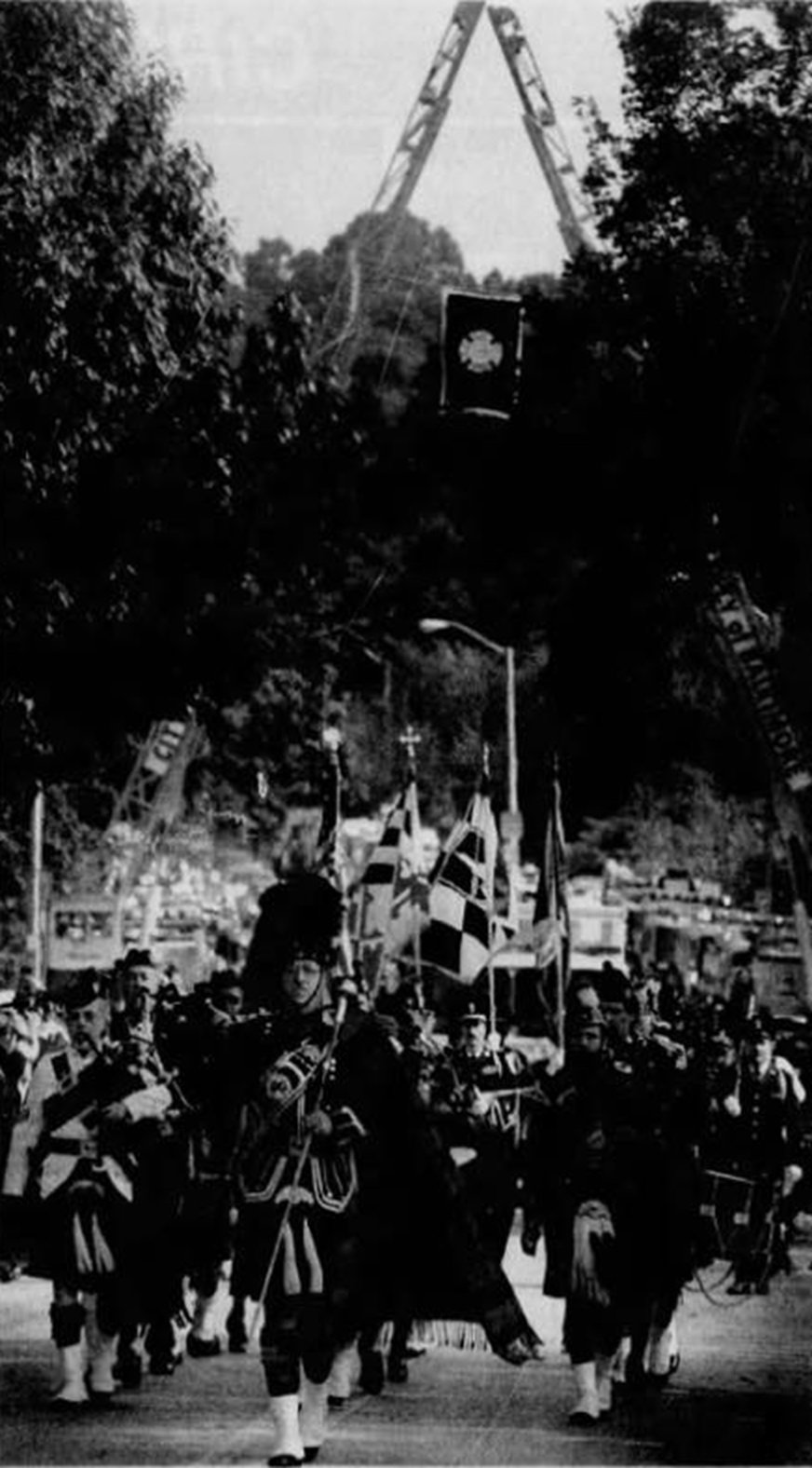
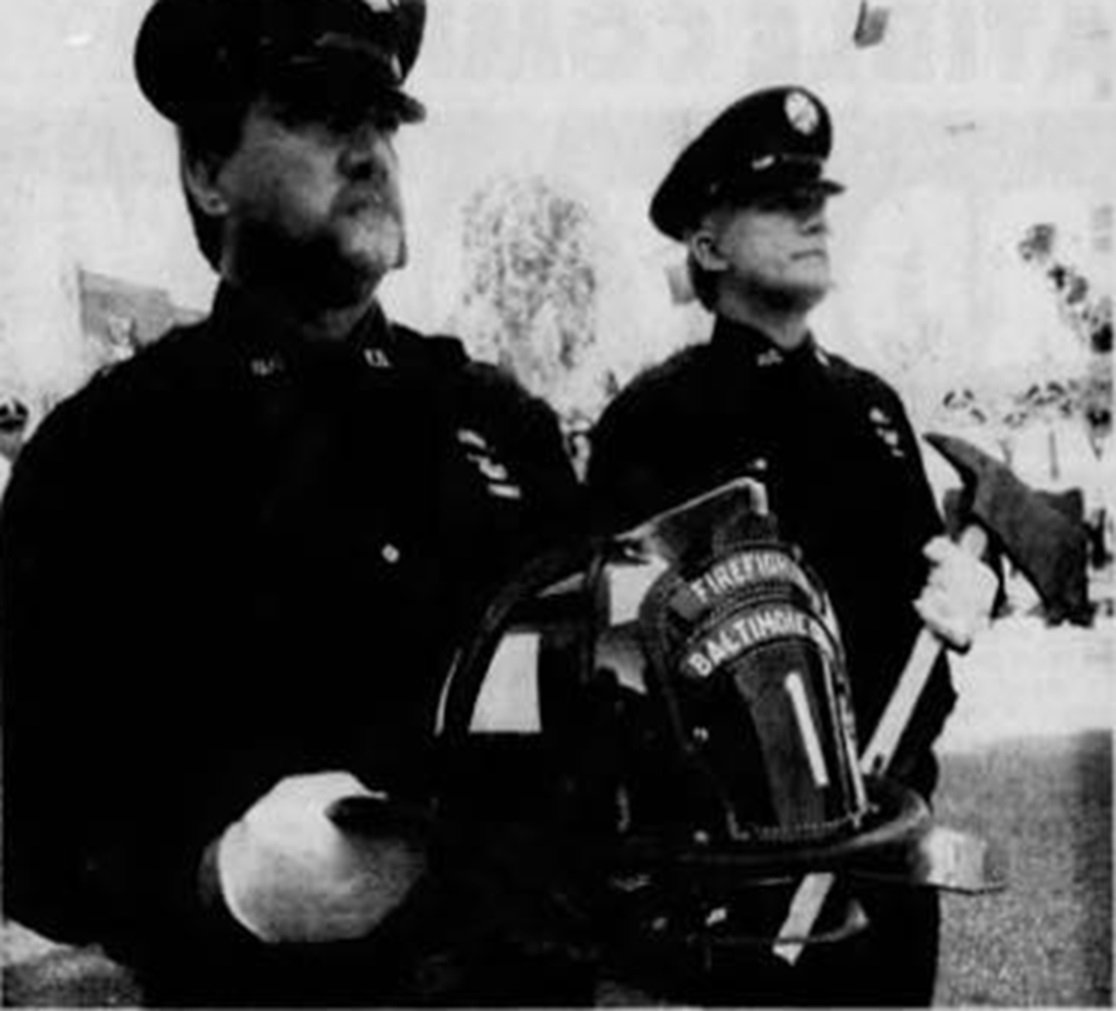
His funeral service was held at St. Francis Assisi Church on September 21, the same church where he had been wed just three months earlier. More than one thousand mourners including hundreds of firefighters from the Baltimore area and more than a dozen states and Canada paid homage as 50 pieces of fire apparatus proceeded down Harford Road to the church as bagpipers played. The flag-draped casket of the fallen firefighter was carried upon the hose bed of Engine 23 as the apparatus of Rescue 1 led the procession. After the service, a two-block line of firefighters, four deep, walked to the head of the church to touch the casket and pay their respects to the family, a tribute that took 45 minutes to complete. Interment services were private at Dulaney Valley Memorial Gardens in Timonium, Maryland.
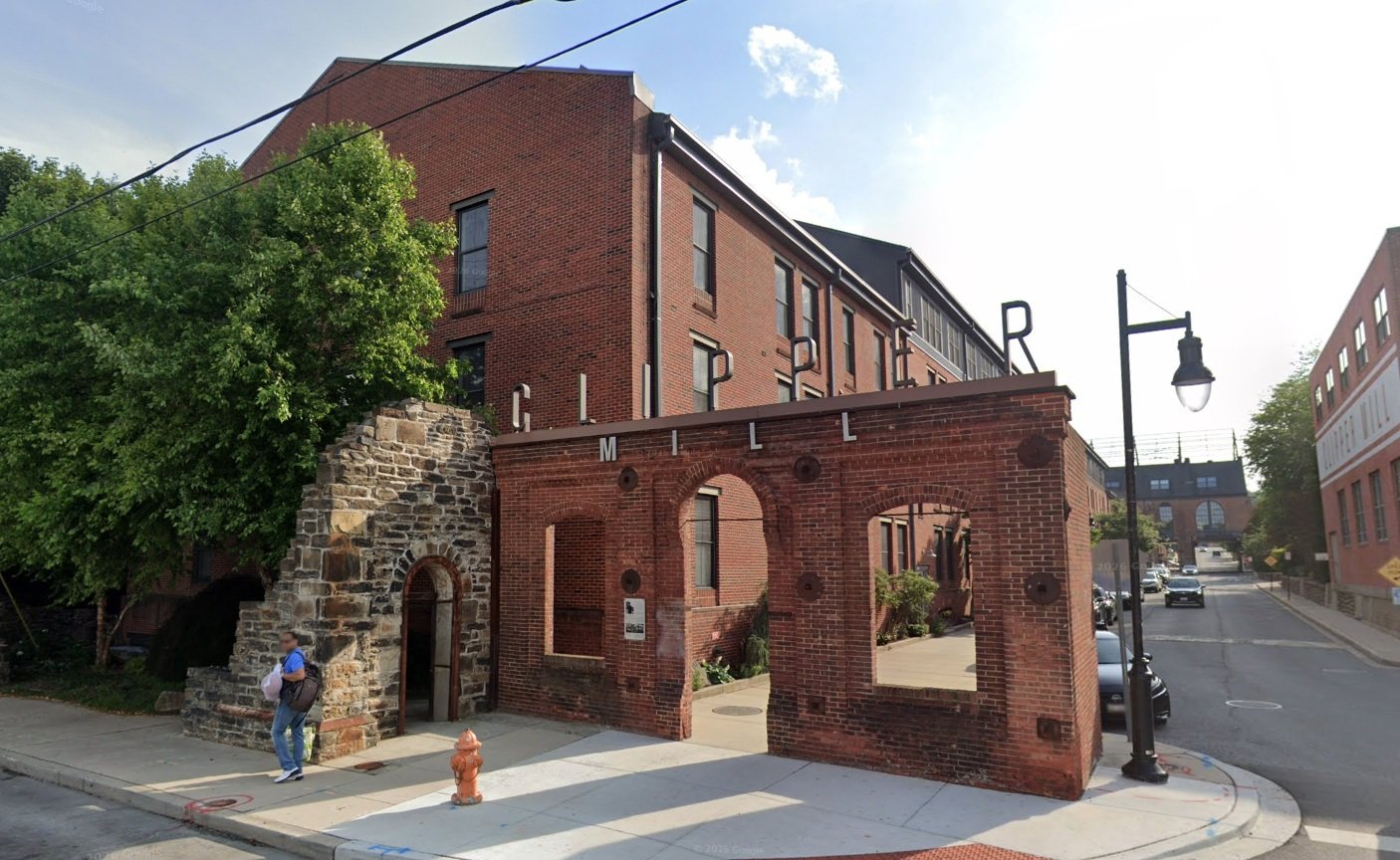
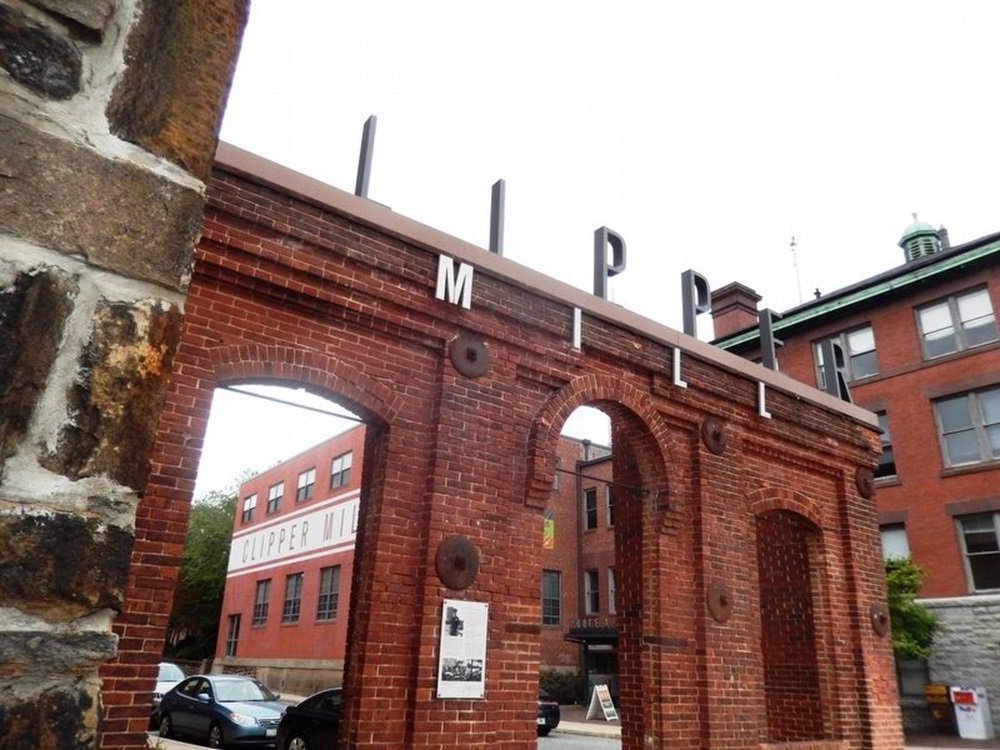
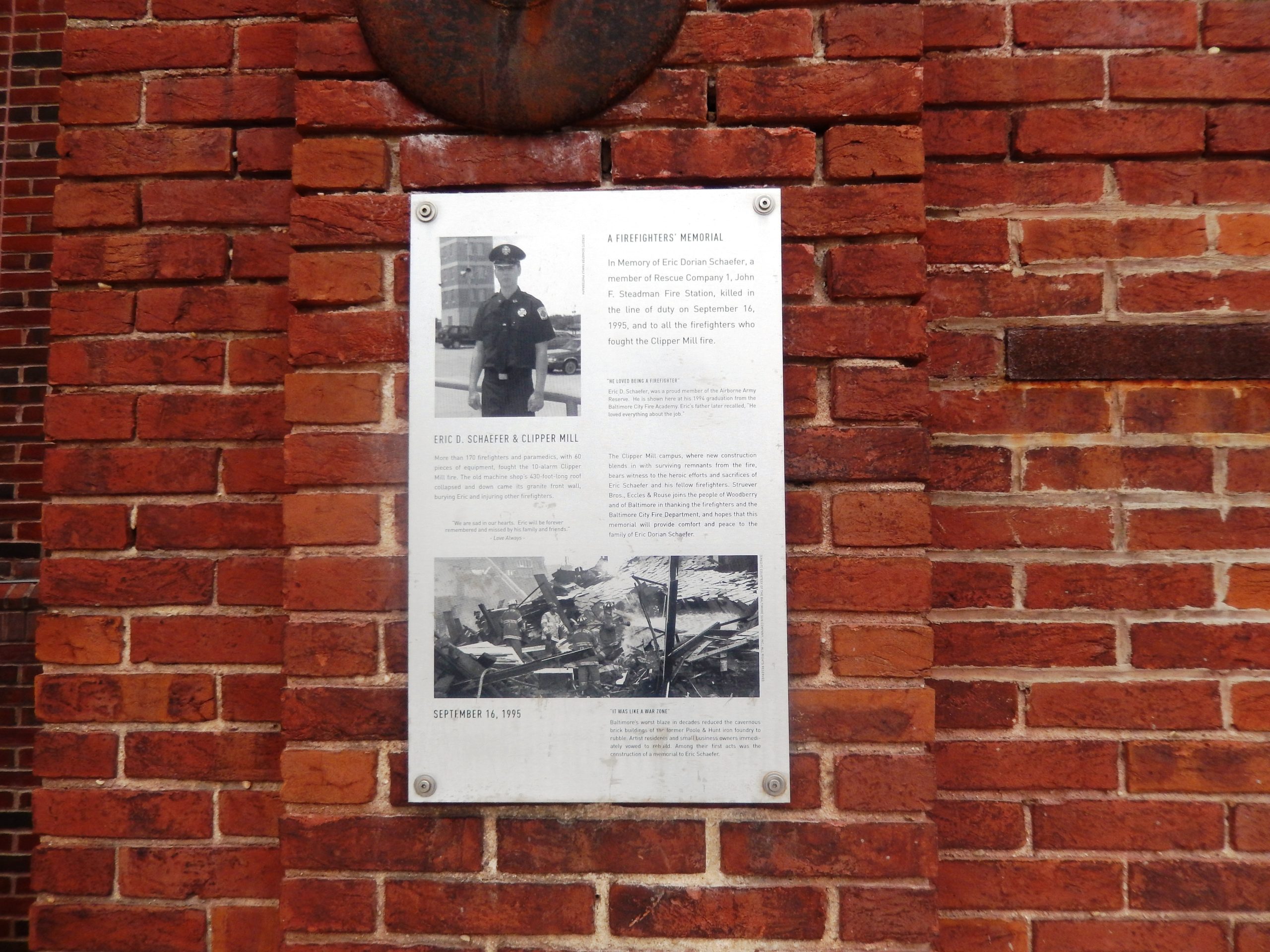
Following the fire, the Clipper Mill complex was redeveloped into a contemporary mixed-use community that incorporates five historic buildings along with new construction sections to create more than 60,000 square feet of office space, 47,500 square feet of studio space, 34 townhomes, 38 semi-detached homes, 62 condos, and 36 rental apartment units. A memorial marker honoring Firefighter Eric Dorian Schaefer has been placed on the face of the rebuilt foundry building and reads “In Memory of Eric Dorian Schaefer, a member of Rescue Company 1, John F. Steadman Fire Station, killed in the line of duty on September 16, 1995, and to all the firefighters who fought the Clipper Mill fire.”
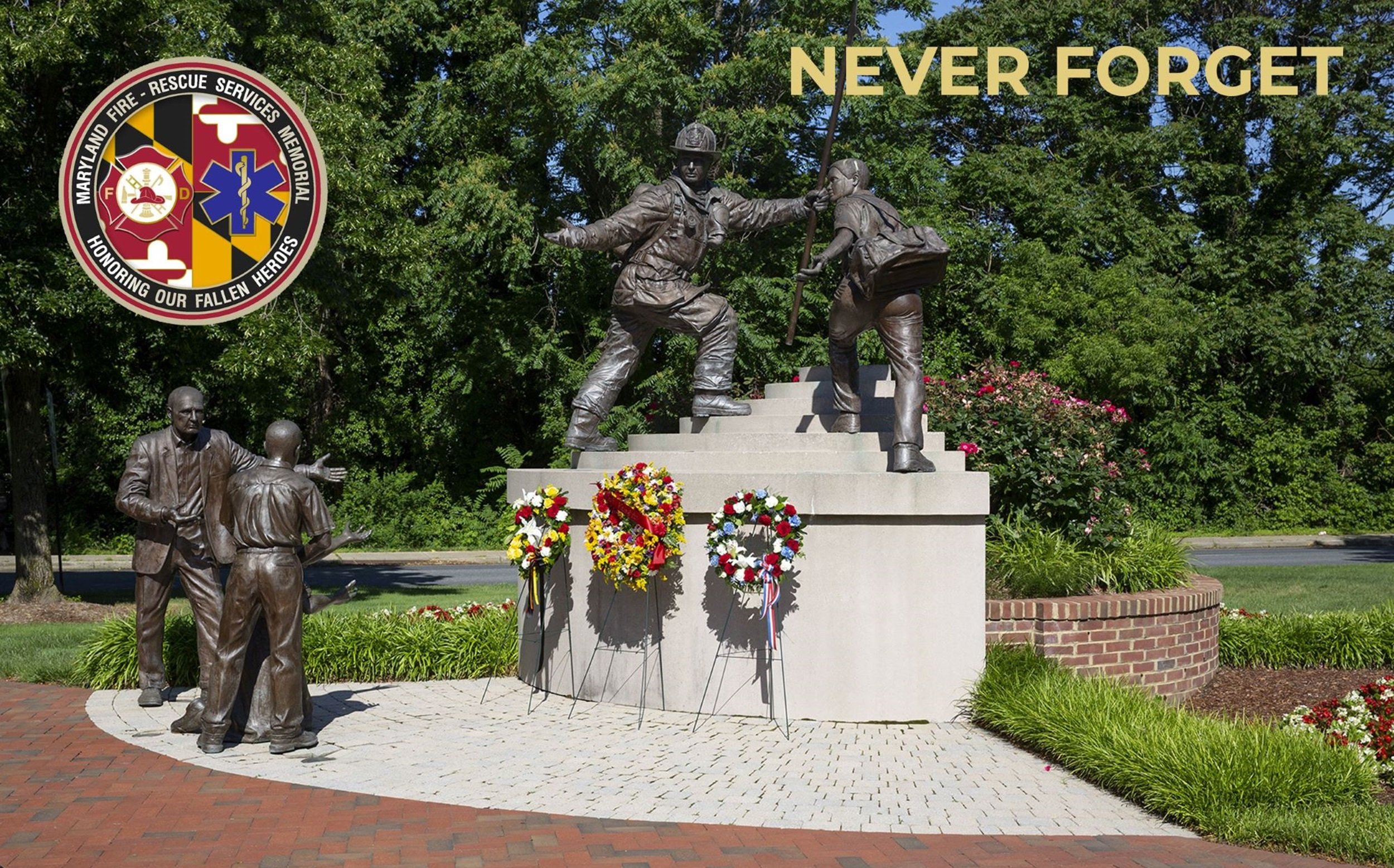
The name of Firefighter Eric Dorian Schaefer is inscribed at the Maryland Fire-Rescue Services Memorial in Annapolis, Maryland. The memorial’s centerpiece features bronze statues of a firefighter and an EMS provider ascending from this world as they answer their call to serve with strength, determination, and sacrifice. In their final moment, they turn to say farewell to their loved ones. Below them, a kneeling mother, a child, and an elderly man represent family and community. Brick walls flank the memorial, bearing bronze plaques with the names of fallen fire and EMS members from across the state who gave their lives in service to their communities.
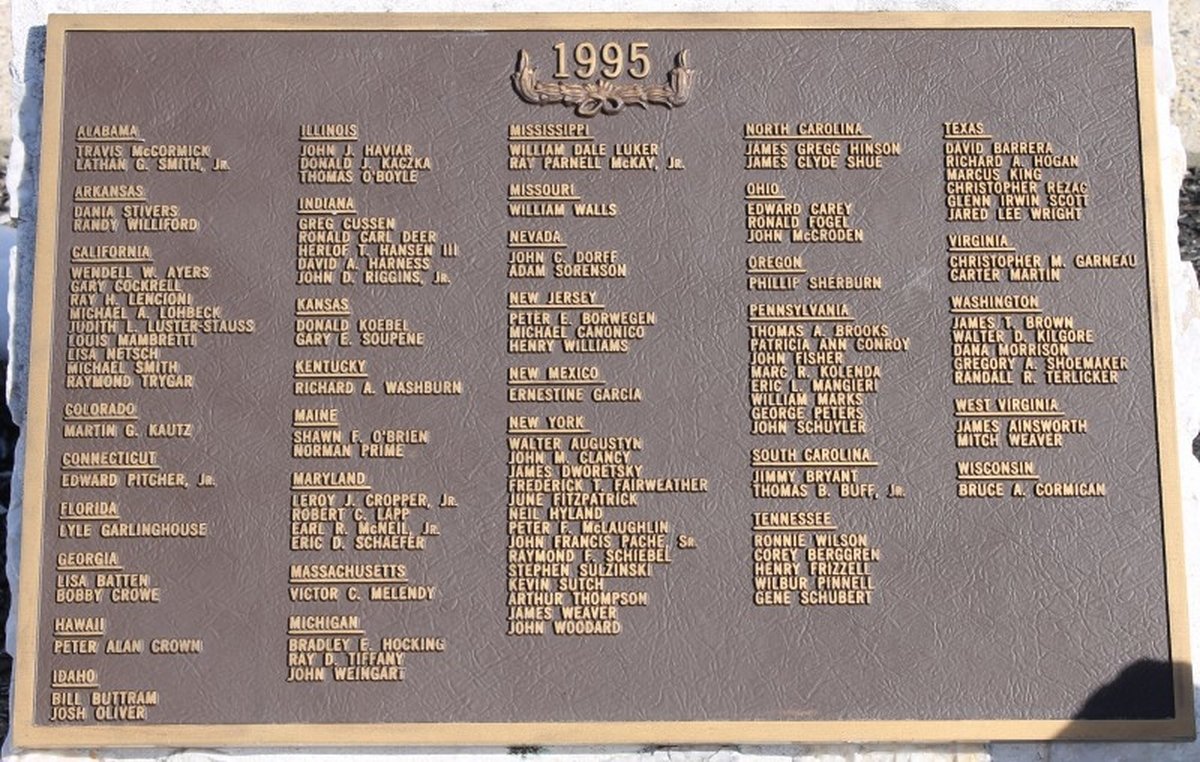
The name of Firefighter Eric Dorian Schaefer has been inscribed on the 1995 plaque displayed at the National Fallen Firefighters Memorial on the campus of the National Fire Academy in Emmitsburg, Maryland.
Commentary:
Heavy timber truss roof assemblies have a long and tragic history of killing and injuring firefighters. Numerous line of duty death incidents have occurred where collapsing timber truss roofs have taken the lives of firefighters operating both in the interior and on the exterior of fire involved buildings. Incidents include five firefighters killed in the collapse of an exterior wall of a bowling alley in Cliffside Park, New Jersey in 1963; the deaths of six firefighters in the collapse of a supermarket roof in Brooklyn, New York in 1978; the deaths of five Hackensack, New Jersey firefighters in the roof collapse of an auto dealership in 1988; the deaths of two firefighters in a backdraft and roof collapse of an automotive tire shop in Chicago, Illinois in 1998; the death of one firefighter in the roof collapse in Lyndonville, Vermont in 1998; the deaths of two firefighters in the collapse of the roof of an abandoned commercial laundry building in Chicago, Illinois in 2000; and the death of one firefighter in the roof collapse of a theater in Abbotsford, Wisconsin in 2012. There have also been numerous firefighter injury and near-miss incidents involving timber truss roof buildings.
Timber truss roof assemblies tend to topple the masonry walls that they are supported on and may cause the collapse of parapet and perimeter walls. Some configurations of timber truss roofs that feature purlins that span the distance from the end trusses to the front and rear walls of the structure tend to lever and topple the end walls when the timber trusses fail. In many cases, the failure of one timber truss may precipitate the failure and collapse of multiple adjacent trusses as the assemblies are usually connected by roof joists or purlins spanning the distance between trusses.
The early identification of the presence of such roof assemblies must be a priority for all firefighters and strategy and tactics at fires in such buildings need to be adjusted to account for the sudden and catastrophic collapse that often occurs in these occupancies. Fire agencies should conduct building surveys in their local response districts to determine where heavy timber truss roof structures are located and develop methods and systems where this information and other building hazards are readily available to firefighters in the field.
We have attached photos from the incident. We have also attached a detail from the 1915 Sanborn fire insurance map showing the configuration of the former iron foundry structures and the surrounding exposures.
We have also attached the link to a local newsclip on the fire with actual footage of the wall falling and injuring several firefighters and killing Firefighter Schaefer: https://foxbaltimore.com/news/local/flashback-to-fatal-clipper-mill-fire-in-1995
We have attached the link to an article published by group member Sal Ancona in Fire Engineering magazine on the dangers of timber truss roof assemblies: https://www.fireengineering.com/fire-prevention-protection/firefighters-and-construction-bowstring-arched-rib-truss-roof-systems/
We have also attached a video on timber truss roofs produced by Fire Engineering with group members Paul Dansbach and Steve Kalman: https://youtu.be/4dpou439s0g
Thanks to several media sources for the content for this article. Also, thanks to Captain Paul Novak Jr. of Baltimore FD Communications for the link to the collapse video; his father, Lieutenant Paul Novak, Sr. of Engine 13 was caught in the collapse but fortunately survived.
Honor the service of Firefighter Eric Schaefer by reviewing the hazards of heavy timber truss construction and by conducting a building tour in a structure that contains a long span heavy timber truss roof assembly in your local response district with your crew members today.
Remember Fallen Brothers.
Get Out There And Know Your Local!!!
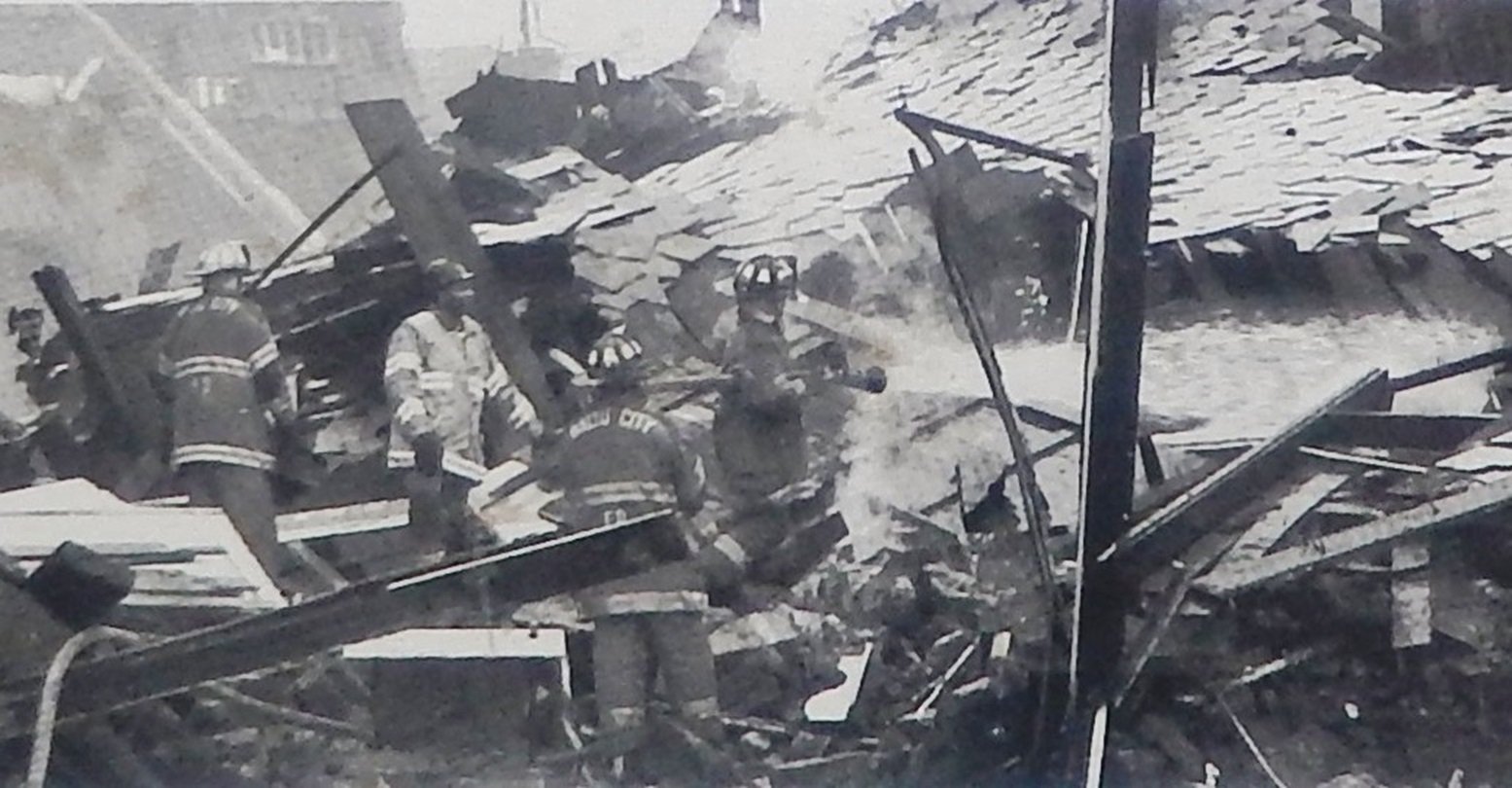
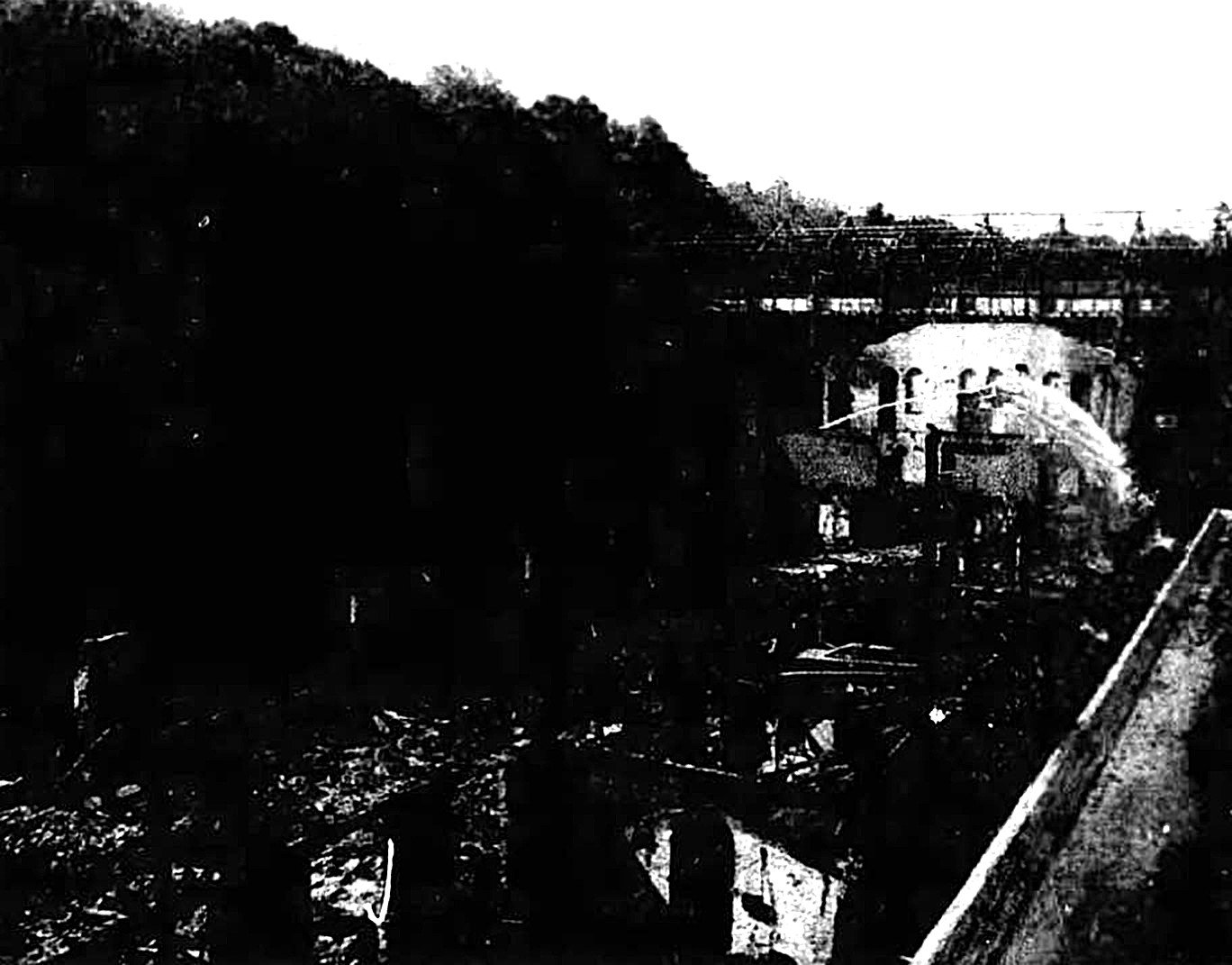
Photo: Firefighters douse hot spots as fire investigators comb through debris of the collapse roof looking for the origin and cause of the fire. Note the remains of a timber truss on the right edge of the photo.
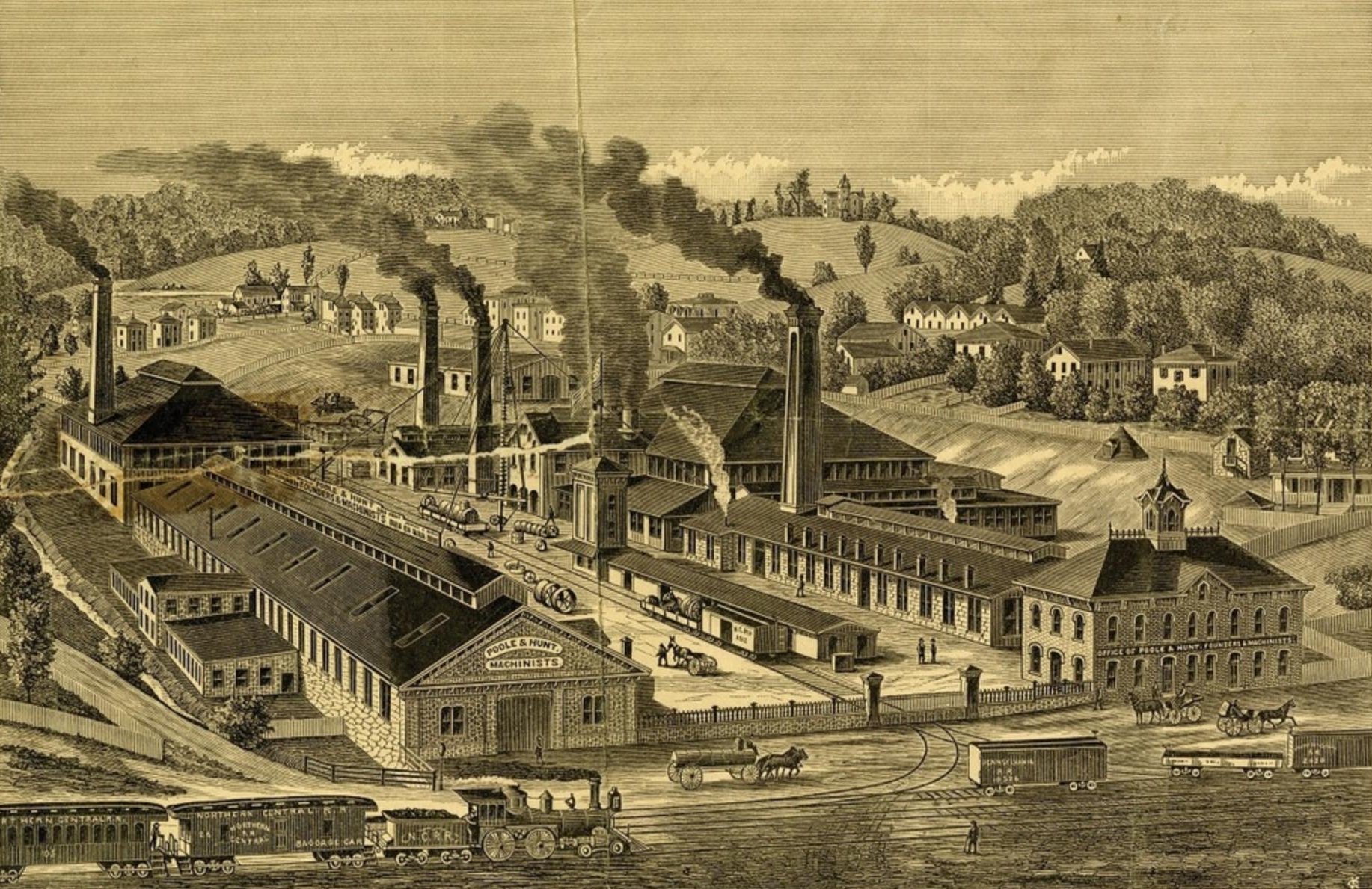
Lithograph of the complex in the late 1800s. The area of the collapse is in the foreground above the locomotive.
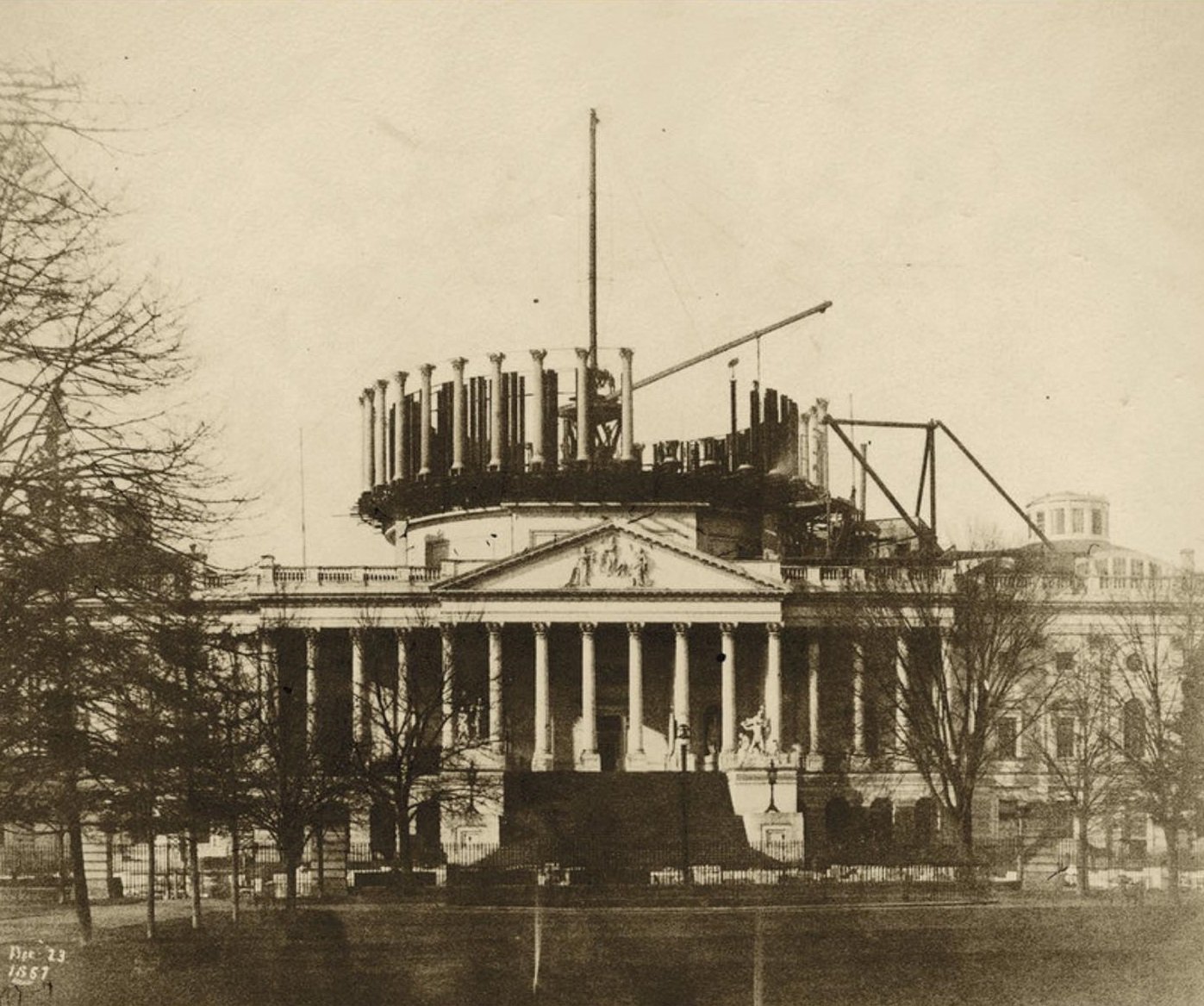
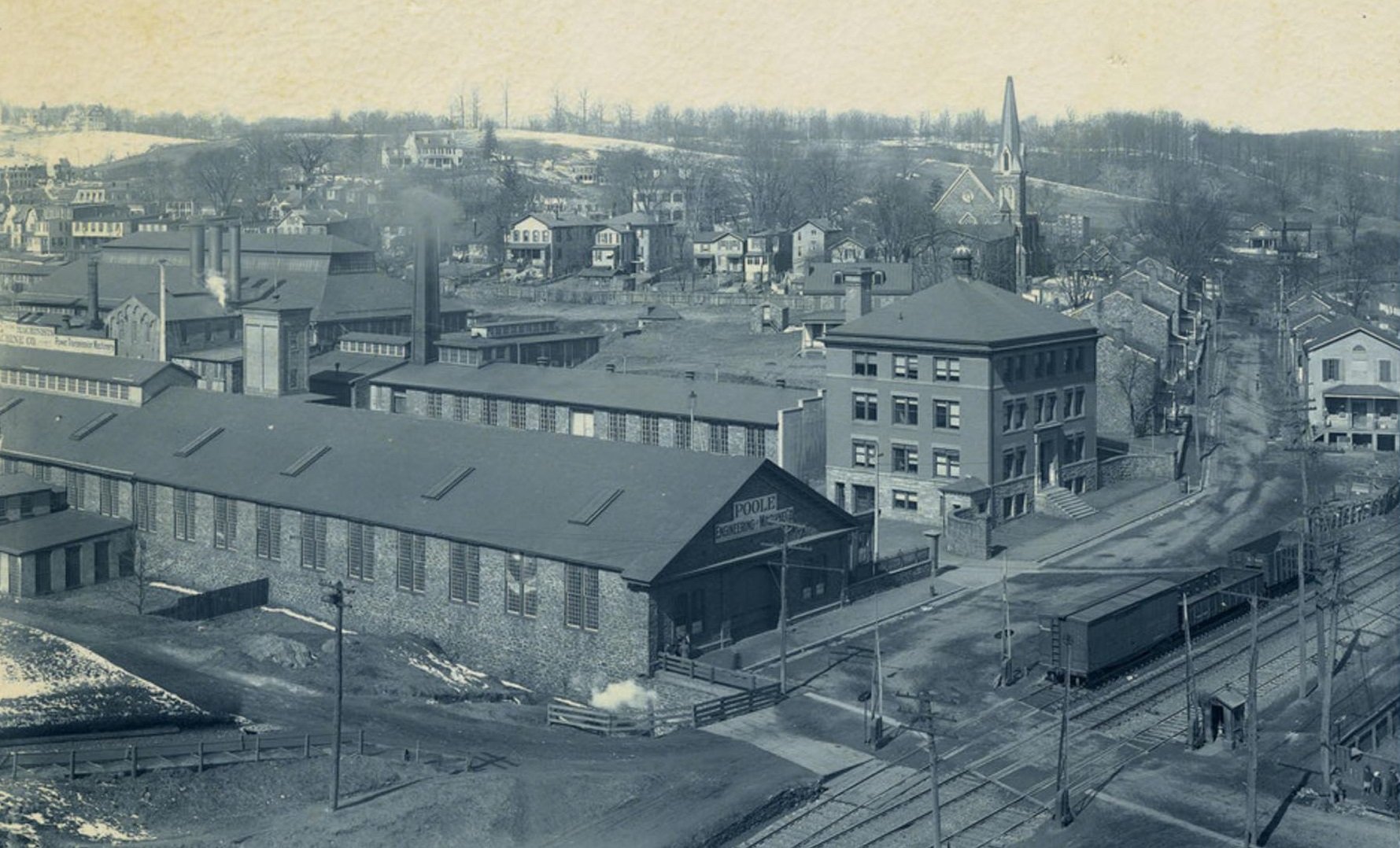
Photo of the complex in the early 1900s. The one-story building in the center foreground is where the collapse occurred.
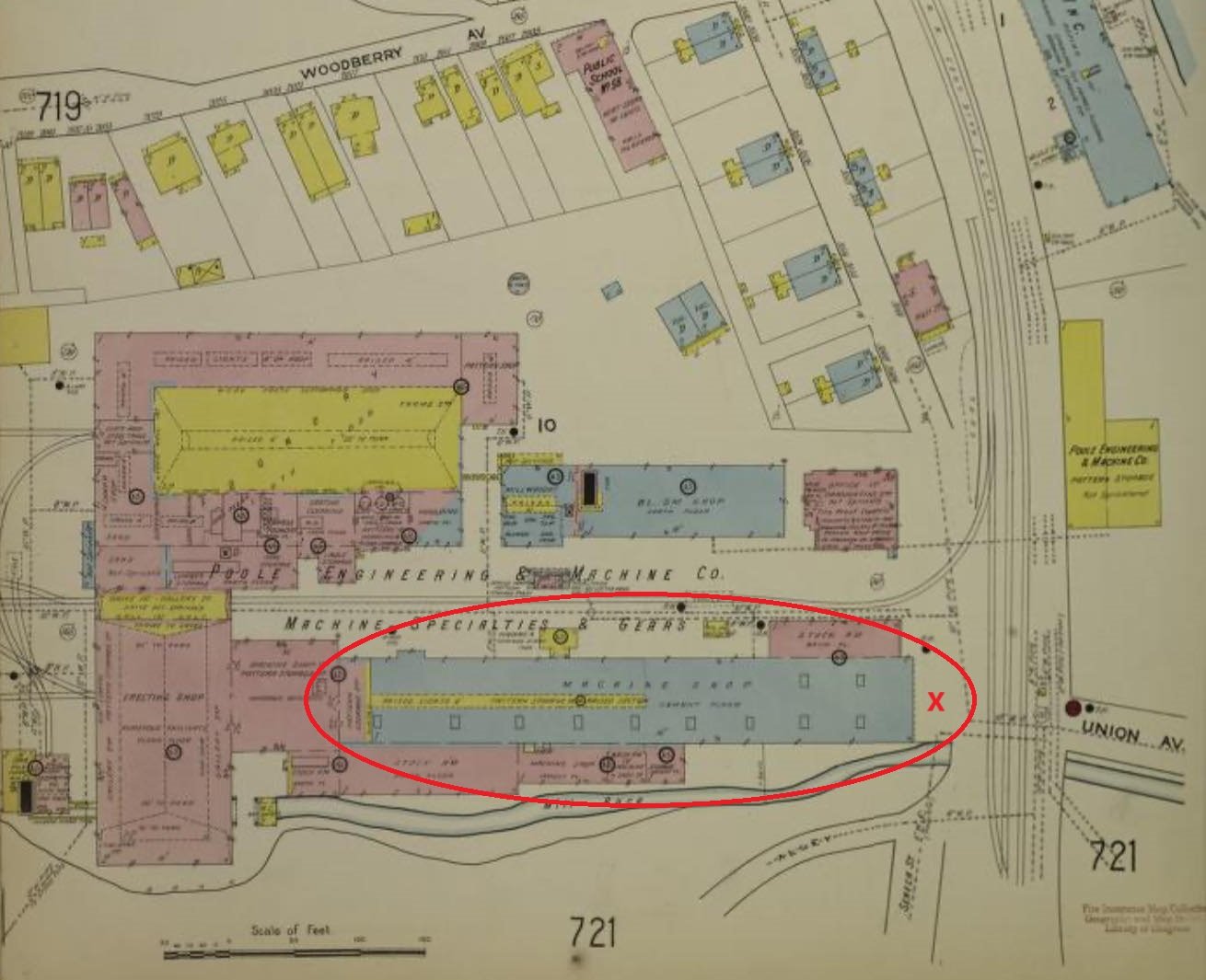
Detail from the 1915 Sanborn fire insurance map showing the configuration of the former iron foundry structure (circled in red) and the surrounding exposures. The red X marks the area of the fatal collapse.
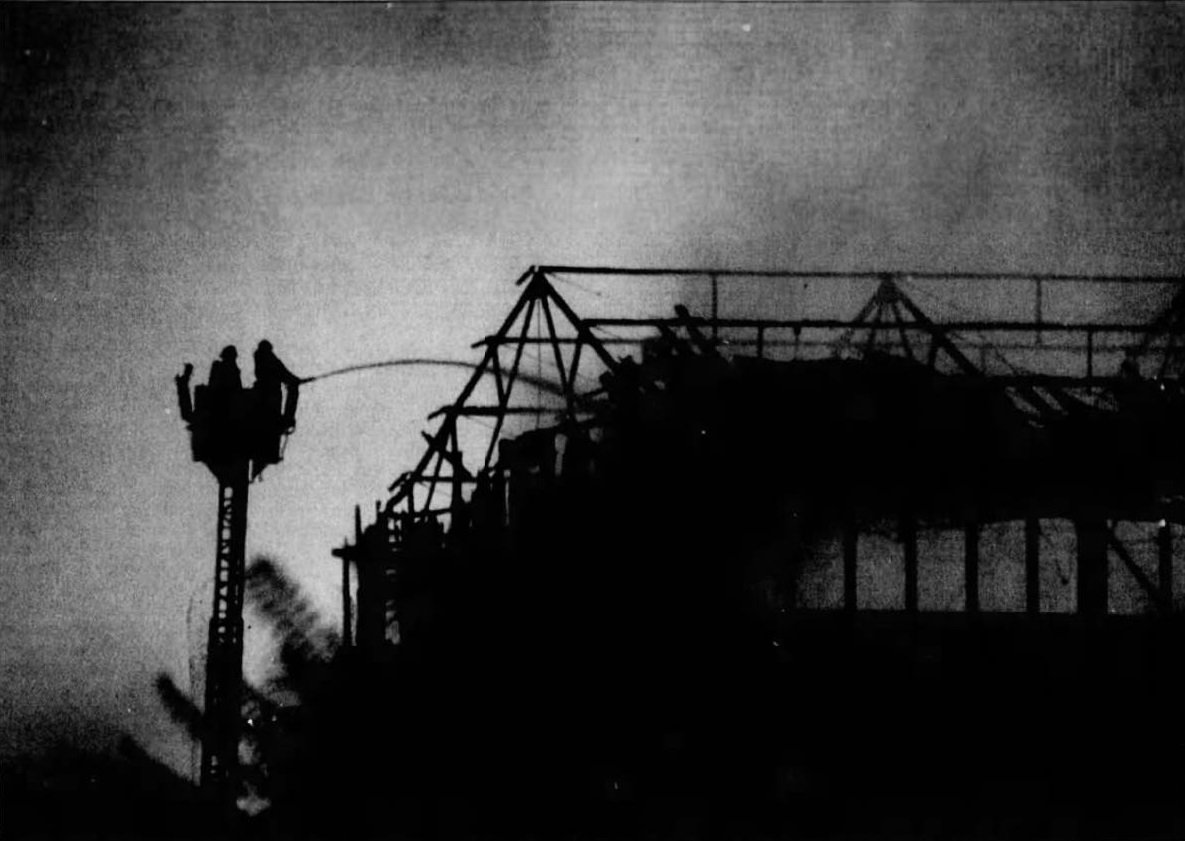
Suddenly the roof assembly sagged with a loud crack and collapsed into the center of the building. The collapse then pushed the two-foot-thick stone and brick two-story front facade of the structure outward into the street falling on the firefighters working at the overhead door. Some of the firefighters were able to avoid the collapse or were just lucky, but others vanished in the rain of stone and timber. “They were buried under tons of rubble,” said Fire Chief Herman Williams Jr.
Photo of the gutted erecting shop where the rock-climbing gym was located.
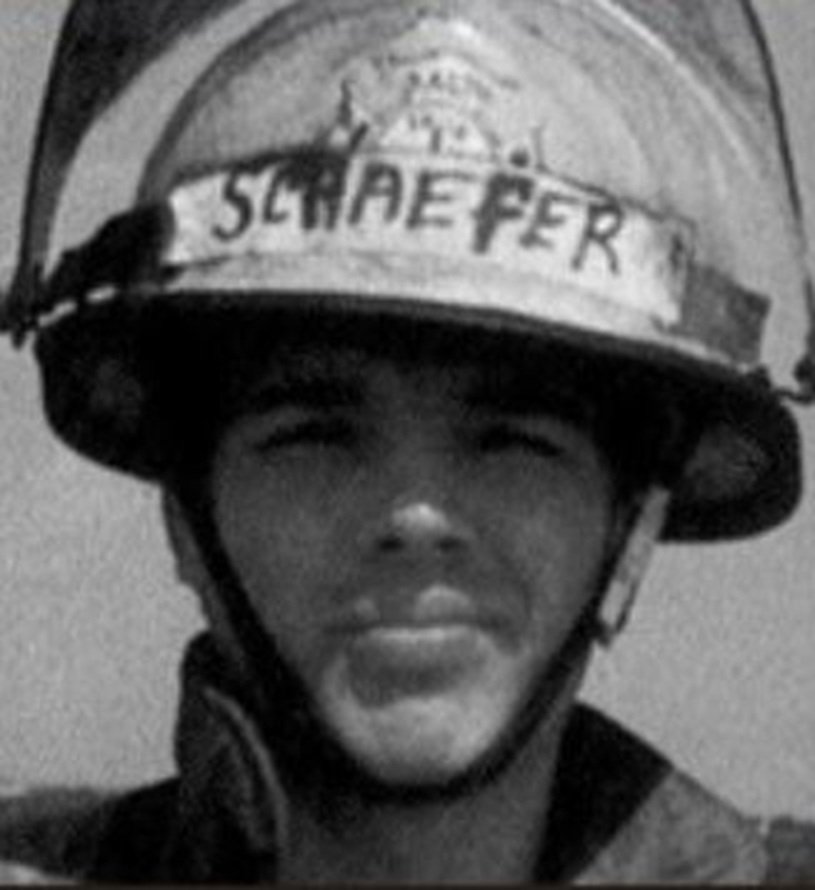
The night of the accident, while family members sat in shock at the Maryland Shock Trauma Center, Schaefer’s mother asked Captain Joseph V. Brocato, who led Rescue 1, if her son died while saving someone from the fire. “No, he didn’t die saving a life,” the captain recalled saying, “He gave his life saving a community of lives.”