
Fire Lieutenant and Firefighter Die in Flashover During Live-Fire Training Evolution – Kissimmee, Florida – July 30, 2002 – NIOSH Firefighter Fatality Report F2002-34
On July 30, 2002, Osceola County Fire Rescue Lieutenant John Mickel and Firefighter Dallas Begg died while participating in a live-fire training evolution in an acquired structure. A flashover occurred several minutes after the fire had been ignited in the vacant residential structure while both of the firefighters were performing a simulated search and rescue. Lieutenant Mickel and Firefighter Begg were both transported by ambulances to a local hospital where they were pronounced dead.
The acquired structure was a vacant single-family, single-story, Type III Ordinary construction concrete block dwelling of 1,600 square feet with a pitched-style wooden roof covered with asphalt shingles. Several years earlier an attached garage or carport had been converted into a bedroom. The structure contained three bedrooms, two bathrooms, a living room, and a kitchen. The structure had a total of ten windows, four on the Side Alpha and three each on Sides Bravo and Charlie.
The converted bedroom measuring 24 feet by 15 feet was used as the burn room during the live-fire training. The floor in the burn room was covered with an indoor/outdoor-type carpeting with a urethane foam padding, and a scuttle hole in the ceiling had been covered to prevent fire extension. According to the Office of the State Fire Marshal, several of the rooms in the structure had some furnishings including a television set, an easy chair, and a set of twin beds. The floor was carpeted throughout the structure.
The fuel used to generate the live fire for the training consisted of five wooden pallets, a bale of straw, and a twin-size urethane foam mattress. Other fuels in the burn room included carpeting, foam urethane padding, hollow core closet doors, wood molding, wall-mounted headboards, and painted gypsum board on the walls and ceiling.
Kissimmee is the largest city and county seat of Osceola County, Florida and is located about 20 miles south of Orlando. As of the 2020 U.S. census, the city population was 79,226. At the time of the incident, Osceola County Fire Rescue was a combination department comprised of 135 career and 93 volunteer firefighters operating from 12 fire stations serving a population of approximately 100,000 in an area of about 1,450 square miles. Today, Osceola County Fire Rescue provides structural and wildland fire suppression, fire prevention, EMS-ALS, Hazmat, and urban search and rescue operational response services to the 388,000 residents and million-plus visitors to unincorporated Osceola County, Florida and through mutual aid to Osceola County’s incorporated areas and neighboring counties while operating from 15 fire stations. The goal is to have a total of 32 fire stations in the fast-growing area in the next few years. In 2024 the agency responded to 37,233 total calls for service including 27,136 (72.9%) EMS calls and 9,356 (25.1%) other calls including 741 (2%) fire calls.
At the time of the incident the department required all personnel to meet the State firefighter requirements and have a minimum of National Fire Protection Association (NFPA) Firefighter Level I and II (480 hours) certification, and Emergency Medical Technician (EMT) I certification. The department also required 40 hours of refresher training annually. Lieutenant Mickel had nine years of firefighting experience, including five years as a Lieutenant, and had met the state and department requirements and had approximately 1,000 hours of firefighter training. Firefighter Begg met the state and department requirements, which he had completed on April 24, 2002. He began serving as a career firefighter with the department on July 22, 2002, and had completed two tours of duty with the department before the incident.
Area weather condition on the morning of the incident included an air temperature of 84 degrees F and a relative humidity of 74% with calm winds under fair skies. Weather conditions did not appear to be a significant factor in fire development or the outcome of this incident.
On Tuesday, July 30, 2002, Lieutenant John Mickel and Firefighter Dallas Begg were participating in a live-fire training exercise in an acquired structure on the site of a former college. The county department was leading the training with personnel from the Orlando Fire Department also participating. At approximately 0900 hours, 17 personnel arrived at the training site, and the Instructor-in-Charge/Incident Commander (Command) gave them their assignments. The following personnel, listed according to their assignments, participated in the live-fire training exercise:
- Instructor-in-Charge/Incident Commander (Command).
- Search and Rescue Team (Lieutenant John Mickel and Firefighter Dallas Begg).
- Ignition Officer/Interior Safety (1 Firefighter).
- Interior Safety (3 Firefighters).
- Rapid Intervention Team (RIT) (2 Firefighters).
- Attack Line 1 (Officer and 2 Firefighters).
- Attack Line 2 (Officer and 1 Firefighter).
- Exterior Ventilation (1 Firefighter).
- Pump Operator (1 Firefighter).
Before the start of the training, Command and the participants walked through the structure so that Command could give them a pre-burn briefing. Command pointed out the ingress and egress routes, and he told them that a mannequin dressed in firefighter bunker gear would serve as a simulated rescue victim in the training exercise. He did not tell the participants that the mannequin would be located in the kitchen area. Command told the participants that the live fire would be built inside a closet on the northwest corner of the burn room. The participants helped put the fuel-wooden pallets and straw inside and outside of the closet.
At approximately 1010 hours, the Ignition Officer/Interior Safety used a road flare to ignite the items in the closet and radioed Command that the fire had been lit. When the Ignition Officer/Interior Safety left the burn room, the live fire was producing some flames, and the smoke had diminished visibility in the room. To produce a larger fire, some of the firefighters retrieved a twin-size mattress from another bedroom and put it on the live fire in the burn room.
The Ignition Officer/Interior Safety and one of the participants who was acting as Interior Safety assumed their position in the hallway outside the burn room while the other two Interior Safety firefighters staged in the living room. At approximately 1011 hours, the Ignition Officer/Interior Safety radioed Command that they were ready to begin the first training evolution. Command ordered the search and rescue team, Lieutenant John Mickel and Firefighter Dallas Begg, to enter the structure.
The search and rescue team crawled through the front door on Side Alpha and performed a right-hand search to look for the simulated victim. A very brief time later, after receiving orders from Command, the crew on Attack Line #1 entered the structure through the front door on Side Alpha with a charged 1.75-inch hoseline.
While Lieutenant John Mickel and Firefighter Dallas Begg were conducting a search of the living room where two of the Interior Safety firefighters were positioned, Mickel was overheard giving instructions on searching techniques to Begg. After both of the team members performed their search in the living room, they crawled down the hallway to the burn room, followed by one of the Interior Safety firefighters from the living room. Note: Conditions in the structure at this time were heavy smoke with very little visibility.
As Mickel and Begg were conducting their search, one of the search and rescue team members collided with one of the Interior Safety firefighters in the hallway outside the burn room. The Interior Safety firefighter in the hallway identified himself to the team members as one of the Interior Safety personnel and instructed them to continue their search. The Interior Safety firefighter that had followed both of the members from the living room into the hallway told one of the other Interior Safety firefighters in the hallway outside the burn room that he was going to look for the crew with the first attack line. Lieutenant Mickel was overheard in the burn room asking Firefighter Begg if the entire room had been searched and receiving an affirmative response.
As the Interior Safety firefighter went back down the hallway to look for the first attack line crew, he encountered them entering the hallway, and he told them to put some water on the fire. He then headed back toward the burn room followed by the crew from Attack Line #1. Once he reached the section of hallway outside the burn room, he asked one of the Interior Safety firefighters in that area for the location of both search team members. Receiving a reply that they were out, he then asked a second time if the team was out of the burn room and received an affirmative response. He left to search for the team members in the bedrooms on Side Bravo and the kitchen on Side Charlie.
At approximately 1013 hours, Command radioed Attack Line #1 that the window in the burn room was going to be vented, and the Exterior Ventilation person broke out the window. When the window (56 inches in height by 42 ½ inches in width and made of ¼-inch-thick plate glass) was vented, it emitted very heavy black smoke followed a few seconds later by intense flames. According to the Office of the State Fire Marshal, and the fire analysis performed by NIST, a flashover is believed to have occurred in the burn room after the window was broken. Note: According to NIST, the fire analysis of the incident indicates that the gases were so fuel rich in the burn room that it took the fire seconds to mix with the oxygen and flashover. Attack Line #1, positioned at the doorway of the burn room, began applying water in short flow increments into the room. At approximately 1014 hours, Command ordered the crew of Attack Line #2 to enter the structure with the second 1.75-inch hoseline. He then attempted to make radio contact with Lieutenant Mickel and Firefighter Begg.
At approximately 1015 hours, Attack Line #1 radioed Command that water was being applied to the fire. One of the Interior Safety firefighters that was positioned in the hallway outside the burn room began to feel like he was getting steamed as a result of the water being applied to the fire. As he crawled down the hallway, he told the Ignition Officer/Interior Safety in that area that he needed to leave. When he entered the living room, visibility improved, and he was able to stand and walk out of the structure. As he exited on Side Alpha, he told Command that he had gotten hot and steamed. At 1016 hours, Command radioed the crews inside and told them to let him know if the roof needed to be vented. Meanwhile, the Exterior Ventilation person went to remove a gable vent on Side Delta.
After completing his search for Lieutenant Mickel and Firefighter Begg in the bedrooms on Side Bravo and the kitchen on Side Charlie, the Interior Safety firefighter discovered the simulated rescue mannequin in the kitchen. Realizing that the search and rescue team had not performed a search in that area, he left the structure and asked Command if the team had come out. Receiving a negative response, he reentered the structure to perform another search for the team members. At 1017 hours, Command radioed Lieutenant Mickel and Firefighter Begg to report in for accountability, with no response. At 1018 hours, Command attempted to contact the missing firefighters again on the radio.
Returning from ventilating the gable on Side Delta, the Exterior Ventilation firefighter looked into the burn room window and saw a white helmet lying on the floor. The conditions in the burn room were reported as heavy fire and smoke. He reached into the window and retrieved the helmet, which was within arm’s reach, and gave it to Command. Note: The white helmet caused some confusion because all the participants were wearing yellow helmets. The helmet was yellow, but exposure to the heat had turned it white. After experiencing a lot of heat and getting steamed, the Ignition Officer/Interior Safety assigned to the hallway outside the burn room exited the structure. He informed Command of the intense heat, told Command that he did not know the location of Lieutenant Mickel and Firefighter Begg, and advised that a Personnel Accountability Report (PAR) needed to be done.
At 1019 hours, Command called on the radio to ask who was missing a helmet. An Interior Safety firefighter assigned to the living room radioed a request to Command for Side Delta to be ventilated. Command directed ventilation to be performed by the Exterior Ventilation firefighter, who interpreted the request as Side Charlie and ventilated that side. Command radioed a request for status reports from Attack Lines #1 and #2 and the missing search team members. At 1020 hours, Attack Line #2 entered the burn room and radioed that they were applying water on the fire. Command called by radio for a PAR and sent in the RIT to search for both missing firefighters. The RIT entered the structure with the third 1.75-inch hoseline and went to the hallway outside the burn room.
At 1021 hours, Command received a PAR from Attack Lines #1 and #2, but he did not receive any response from the search team. Attack Line #2 radioed Command that they had knocked down the fire in the burn room and that they did not find any fire extension in the ceiling. Command radioed Attack Line #2 to ask if they had seen the missing firefighters, and they said no. In the hallway the RIT met some firefighters who informed them that the fire was under control and that the burn room was clear. The number of firefighters in the hallway made it difficult to move, so one of the RIT members went to the bedrooms on Side Bravo and the kitchen area on the Side Charlie to search for the missing members.
At 1023 hours, Command radioed orders to evacuate the structure and commanded the air-horn blasts to be sounded. After hearing the evacuation air horns, the Attack Line #2 crew began to leave the burn room when they saw what they thought was the simulated mannequin lying face down on the floor next to the closet where the fire had been ignited. As they attempted to move the mannequin, they realized that it was actually Lieutenant Mickel. The Ignition Officer/Interior Safety walked over to Side Alpha and climbed through the window into the burn room. Note: Conditions in the burn room were reported as white smoke or steam emitting from the floor area.
At 1024 hours, a call was radioed from the burn room to report that a firefighter was down. The Ignition Officer/Interior Safety, a firefighter from the RIT, and the crew from Attack Line #2 removed Lieutenant Mickel through the window in the burn room. Command radioed a request for two ambulances to respond to the scene. After inquiring about the location of the other missing firefighter, one of the Interior Safety firefighters reentered to perform a search. After searching the kitchen and bathroom areas on Side Charlie, he entered the burn room and shone his flashlight around the room. Observing a helmet lying in the middle of the floor, he went to it and discovered Firefighter Begg lying on the floor next to the window on Side Alpha. To get the attention of firefighters outside, he threw his helmet out the window. Firefighters outside the structure helped remove Firefighter Begg through the window. At 1027 hours, Command radioed to Dispatch that they had one firefighter with burns and another firefighter being removed from the building. Both of the injured firefighters were transported via ambulances to a local hospital where they were pronounced dead.
The death certificates listed the cause of death for both firefighters as smoke inhalation and thermal injuries.
NIOSH investigators concluded that, to minimize the risk of similar occurrences, fire departments should:
- ensure that the fuels used in live-fire training have known burning characteristics and the structure is inspected for possible hazards prior to the training.
- ensure that ventilation is closely coordinated with interior operations.
- ensure that fires are not located in designated exit paths.
- ensure that a method of fireground communication is established to enable coordination among the Incident Commander and firefighters.
- ensure that Standard Operating Guidelines (SOGs) specific to live-fire training are developed and followed.
- consider using a thermal imaging camera during live-fire training.
Additionally, states should consider:
- developing a permitting procedure for live-fire training to be conducted at acquired structures. States should ensure that all the requirements of NFPA 1403 have been met before issuing the permit.
In an effort to avoid a similar tragedy in the future, the Florida State Fire Marshal’s Office recommended that the current edition of NFPA 1403 be adopted as state law. Osceola County Fire Rescue adopted it in December 2002. The recommendations also include certification for instructors conducting live-fire training, and further training for firefighters on recognizing the signs of a flashover and using proper ventilation techniques and water application to reduce the chance of a flashover. The report also recommends using a thermal imaging camera to monitor fire conditions and the location of firefighters.
On June 1, 2005, Governor Jeb Bush signed into law HB 69, the Lieutenant John Mickel and Firefighter Dallas Begg Act, effective January 1, 2007. The act mandates that NFPA 1403, Standard on Live Fire Training Evolutions, must be complied with at all live fire exercises in the state.
Members of Osceola County Fire Rescue killed in the line of duty on July 30, 2002:
- Lieutenant John K. Mickel, age 32, was a nine-year member of the Osceola County Fire Rescue and was promoted to Lieutenant in 1997. He leaves behind his wife of nearly eight years‚ Carlotta‚ and their two young children‚ Dillon, age 3, and Mallory, age 19 months, his parents, Catherine and John Mickel, and his sister, Meredith. His funeral was held on August 3 at Holy Redeemer Church in Kissimmee with hundreds of area firefighters attending. He was buried at Osceola Memory Gardens in Kissimmee, Florida.
- Firefighter Dallas Brandon Begg‚ age 20‚ was a rookie firefighter with Osceola County Fire Rescue. He completed the Emergency Medical Technology course at Valencia Community College and 450 hours of training at the Central Florida Fire Academy. He had been on the job with Osceola County for only eight days. He is survived by his wife of four months, Rachel, who later became a firefighter. His funeral was held on August 5 with hundreds of area firefighters attending the service at the Tupperware Auditorium. Members of his training class served as pallbearers. He was buried at Osceola Memory Gardens in Kissimmee, Florida.
A memorial statue honoring fallen firefighters in Osceola County, Florida was unveiled in 2021 on the grounds of the county fire academy. The memorial honors the lives of firefighters including Lieutenant John Mickel and Firefighter Dallas Begg who died while participating in a live-fire training exercise in an acquired structure in Kissimmee on July 30, 2002.
The names of Lieutenant John K. Mickel and Firefighter Dallas B. Begg have been inscribed on the 2002 plaque displayed at the National Fallen Firefighter Memorial on the campus of the National Fire Academy in Emmitsburg, Maryland.
Commentary:
Strict adherence to the NFPA 1403 standard is crucial to firefighter safety during live-burn evolutions, especially while training in acquired structures. Limiting the size of the fuel package to the minimum amount of combustible materials will keep fire development controllable. In this incident, for reasons unknown, firefighters elected to add a twin-size urethane foam mattress to the fuel package. According to NIST, the fire analysis of the incident indicates that the carpet, the foam padding, the hollow core wood doors and the mattress added to the fuel load and the speed of the fire development. This resulted in a rapid uncontrolled fire event that enveloped the searching firefighters and likely caused their deaths.
We have attached photos and a floor plan from the incident. The link to the NIOSH report is here:
https://stacks.cdc.gov/view/cdc/163830
We have also attached the link to an article by Mark van der Feyst published in Fire Engineering magazine on conducting safe live-fire training evolutions: https://www.fireengineering.com/firefighting/life-fire-training-much-preparation-for-safety/
Remember Lieutenant John K. Mickel and Firefighter Dallas B. Begg by reviewing the acquired structure recommendations in NFPA 1403 and by ensuring that all live-burn exercises conducted by your department adhere to the standard with your crew members today.
Remember Fallen Brothers.
Get Out There And Know Your Local!!!
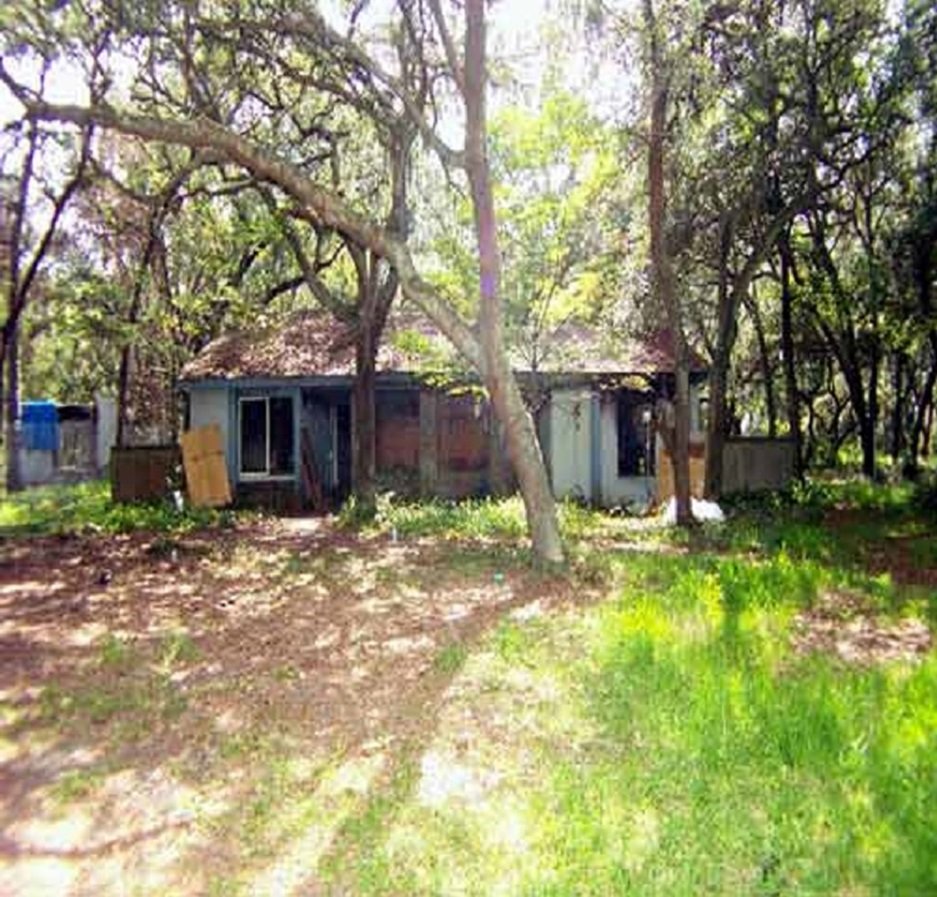
Photo: View of the one-story concrete block former residence used in the live-burn exercise.

The converted bedroom measuring 24 feet by 15 feet was used as the burn room during the live-fire training. The floor in the burn room was covered with an indoor/outdoor-type carpeting with a urethane foam padding, and a scuttle hole in the ceiling had been covered to prevent fire extension. According to the Office of the State Fire Marshal, several of the rooms in the structure had some furnishings including a television set, an easy chair, and a set of twin beds. The floor was carpeted throughout the structure.
Floor plan of the acquired structure showing the location where both firefighters were discovered after being overcome by flashover conditions.


