
A multi-year radio replacement project is finally nearing its conclusion as radio repeaters are installed on Nov. 16.
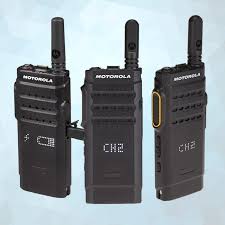
With the help of grants and a loan, firefighters and first responders have received new very high frequency (VHF) radios that will make inter-agency communications much easier, according to local firefighters.
The about $85,000 project includes 127 new radios for firefighters, storm spotters, dive team and ambulance in the county, as well as two new radio repeaters, which allows radio signals to cover longer distances. The repeaters go up Nov. 16, and the VHF radios were programmed for the appropriate channels by Vantek Communications in the two weeks prior. The equipment costs are around $68,000, with additional costs coming from programming and installation.
The radio repeaters by Lake Herman and Ramona Fire Department required replacement as part of the project. During the installation on Nov. 16, communication through typical channels for Lake County would be disrupted, so Robbi Boettcher of the Ramona Fire Department led a meeting on Nov. 15 to inform other agencies of the plan.
“That was the purpose of getting all this programming done prior so we have channels we can use,” Boettcher stated in an interview.
He continued, “The public is going to be very well taken care of. That’s not going to lapse.”
The meeting, attended by representatives from various first responder agencies, including law enforcement, EMS, dispatch and more, went through available channels and modes of communication to ensure each department knew how to communicate during an emergency.
Boettcher, who spearheaded the radio project, said the move to replace the departments’ previous ultra high frequency (UHF) radios with the VHF radios will allow firefighters to do their jobs without juggling several radios to communicate with other departments.
Communication saves lives by allowing first responders to keep each other out of harms’ way, get people out of dangerous situations and analyze ongoing incidents, said Lake County Emergency Manager Kody Keefer.
“Missing key pieces of information that are said or communicated between different departments or agencies (is dangerous), so safety is the number one priority goal of this project and with communication,” he told the Daily Leader.
Most first responders in the state use VHF radios, with Lake County fire departments lagging behind. While some radios can use both UHF and VHF, most cannot. Those that can are often prohibitively expensive for local fire departments, Boettcher explained. Lake County departments could still communicate with other departments, but only if Lake County firefighters carried separate radios for internal and external communication. This meant that the Lake County fire departments needed multiple radios to speak with their county fire departments as well as other county first responders and out-of-county fire departments.
“Just recently, we’re at a rollover with extrication, and I had to leave the patient there because I wanted to know where the ambulance was, so now I have to go run out of the ditch and get another radio out of the vehicle to talk to the ambulance,” Boettcher said at a January meeting. “This doesn’t need to happen.”
The change has immediate safety and communication benefits, but just replacing the old UHF radios will be a boon, Keefer added.
“All of the fire departments’ as well as the repeater equipment that is stationary out in the county will be replaced. So as far as the replacement schedule, it’s starting a new life cycle, so to speak,” Keefer elaborated. “At a minimum, we’re starting out with brand new equipment. It’s up-to-date, it’s modern.”
Aiden Schramm and Brian Soehl of VanTek were at the Madison Fire Department on Nov. 7 to program the 127 new radios and other radios previously purchased with a Homeland Security grant. These Homeland Security-funded radios could communicate digitally and by VHF, but there were not enough for the volunteer firefighters. They programmed in channels used by state agencies and fire departments across the region, including some across the state. The men joked about this “hopefully” making communication easier.
“There’s no ‘hopefully’ about it. This is my life,” Soehl commented. “(We’re programming) out-of-the-county channels for the fire guys. They do mutual aid across county lines. So, they’re getting Kingsbury County, McCook County, all the ones you work with, plus some other ones.”
Boettcher was at the department with the technicians, Lake County Emergency Manager Kody Keefer and Madison Fire Chief Randy Minnaert to get the radios ready to roll.
“We’re finding the kinks now before someone is working in the ditch at 2 in the morning and then has an issue,” Keefer said during the programming session. “It’s a lot easier to figure it out now.”
After Nov. 7, Boettcher took several days to test the various channels at different locations in the county to catch any issues. He planned to do the same after the repeaters were installed.
He expected some problems to pop up, but nothing that couldn’t be fixed. Once the testing is done, the project will be wrapped up, with the exception of paying back the loan.
The project received funding from various sources, including a loan with Heartland Energy, donations from businesses and individuals, large anonymous contributions and a Sioux Valley Energy grant. Boettcher thanked Kelly Dybdahl, a firefighter and Madison city commissioner, for his work in securing the loans and grants.
Financially, the departments only need about $15,000 more to pay off the loan. Boettcher hopes the departments can solicit more donations and get more grants so the fire departments can put their other funds into upgrades and maintenance and not have to hold additional fundraisers, which takes up more time from the volunteer firefighters.
“I was hoping the departments wouldn’t have to pay anything,” he said. “The firefighters are all volunteers, and it’s hard to recruit.”
For now, the plan is to train local first responders for the new radios, work out any issues the team spots and hopefully find ways to raise $15,000 and take the burden off the firefighters.
https://www.madisondailyleader.com/news/local/article_c83561ba-a397-11ef-b15c-3783fe12f8a1.html
