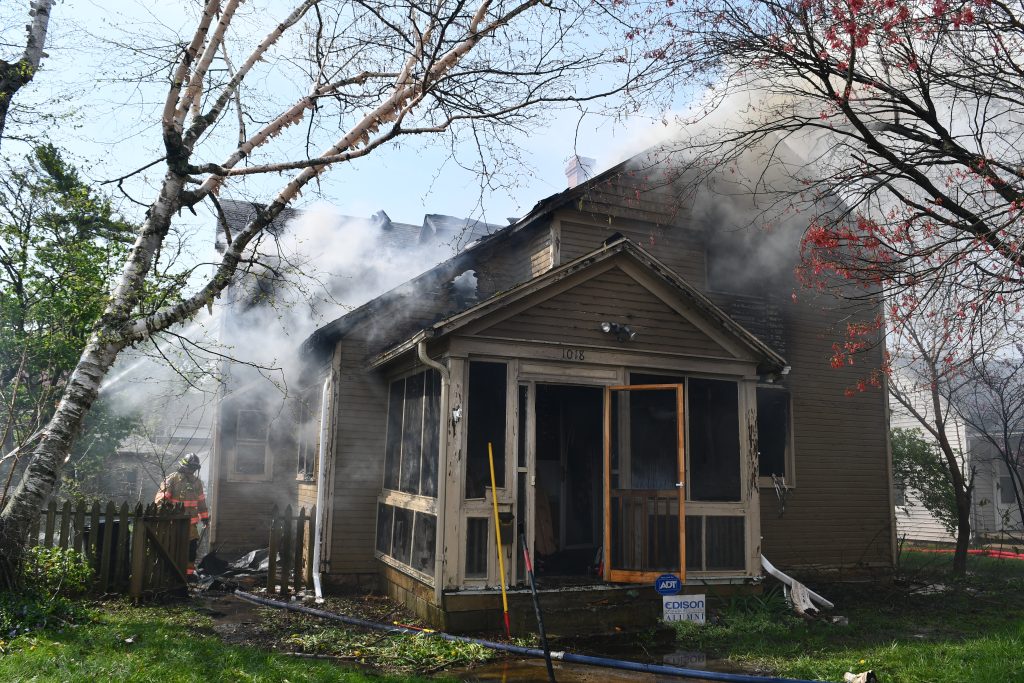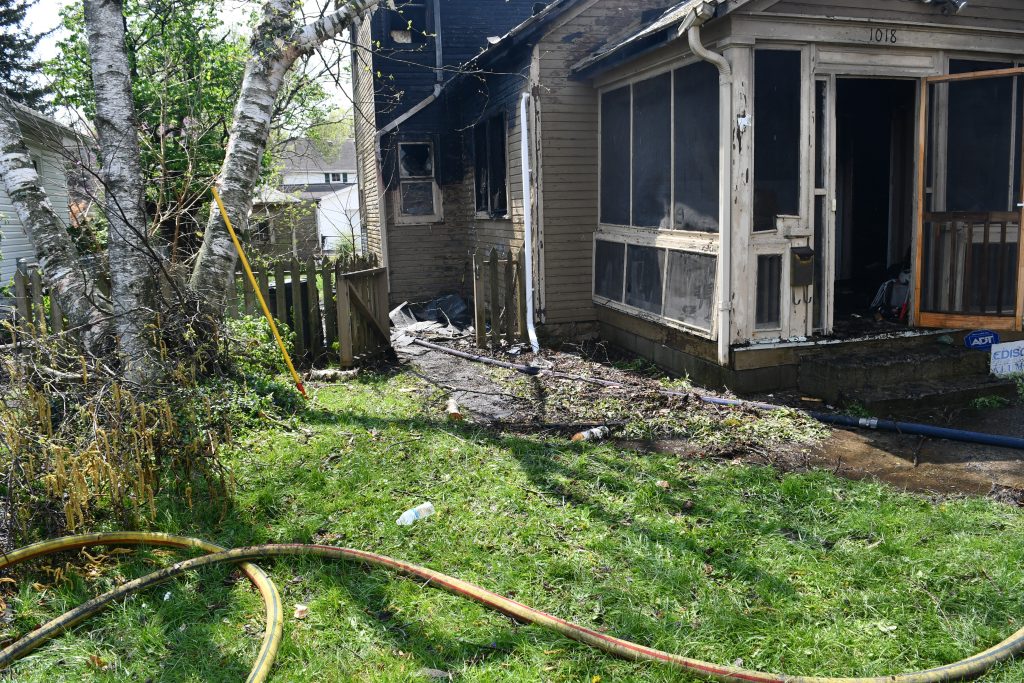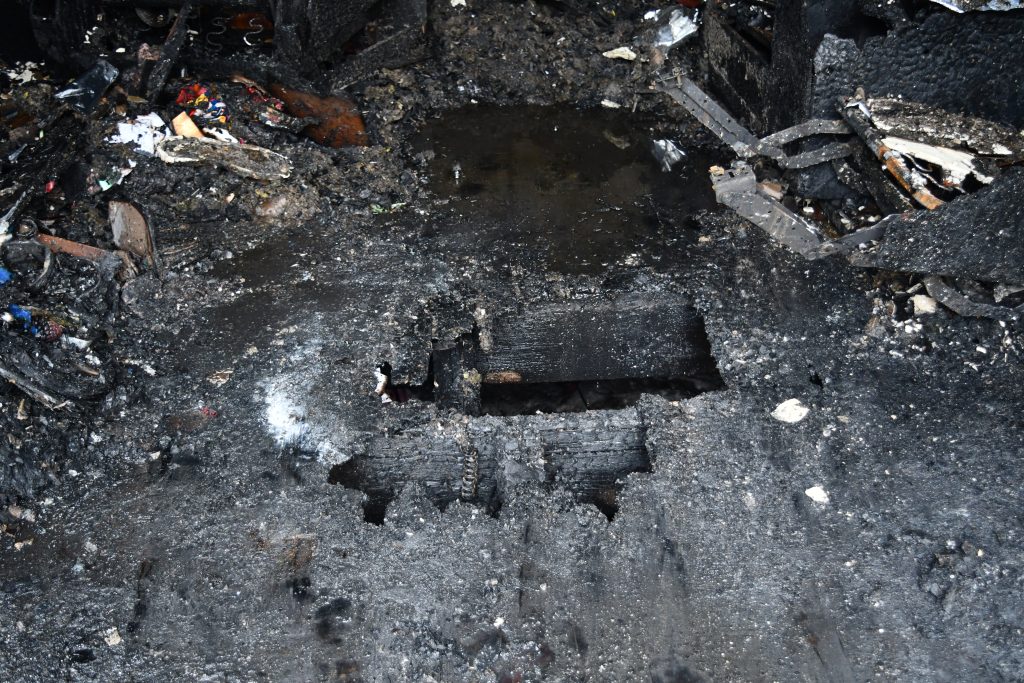
For this incident, the initial arriving officer took command. That was later transferred to the first arriving, off duty chief. The engine company officer then became operations while the chief maintained command and accountability. A safety officer was later designated as additional resources arrived, and a dedicated RIT crew was assigned.
LESSONS LEARNED:
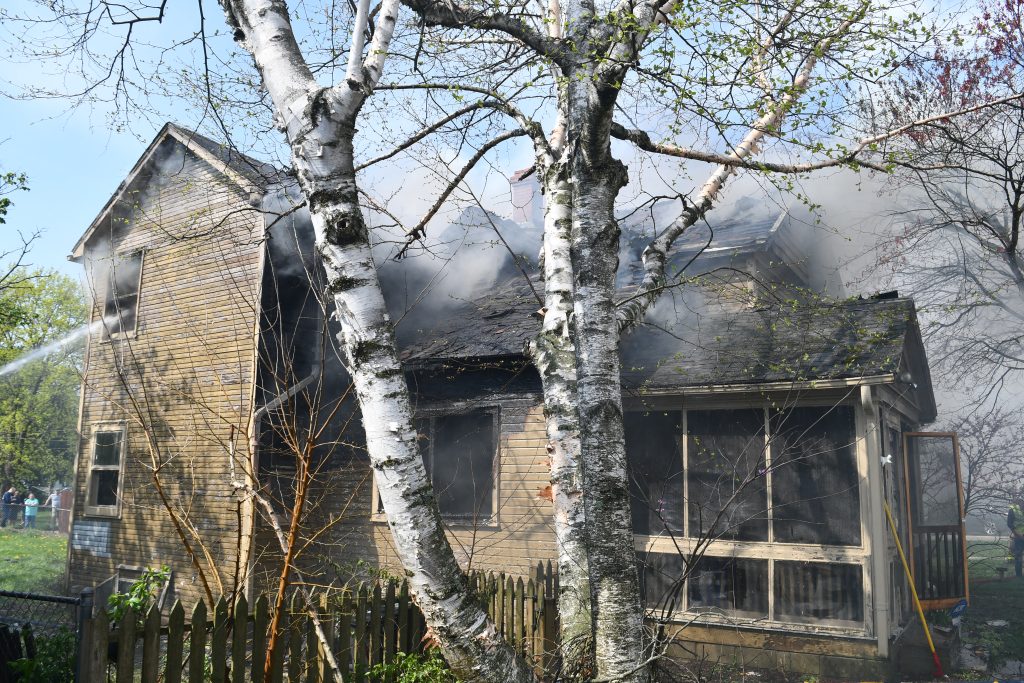
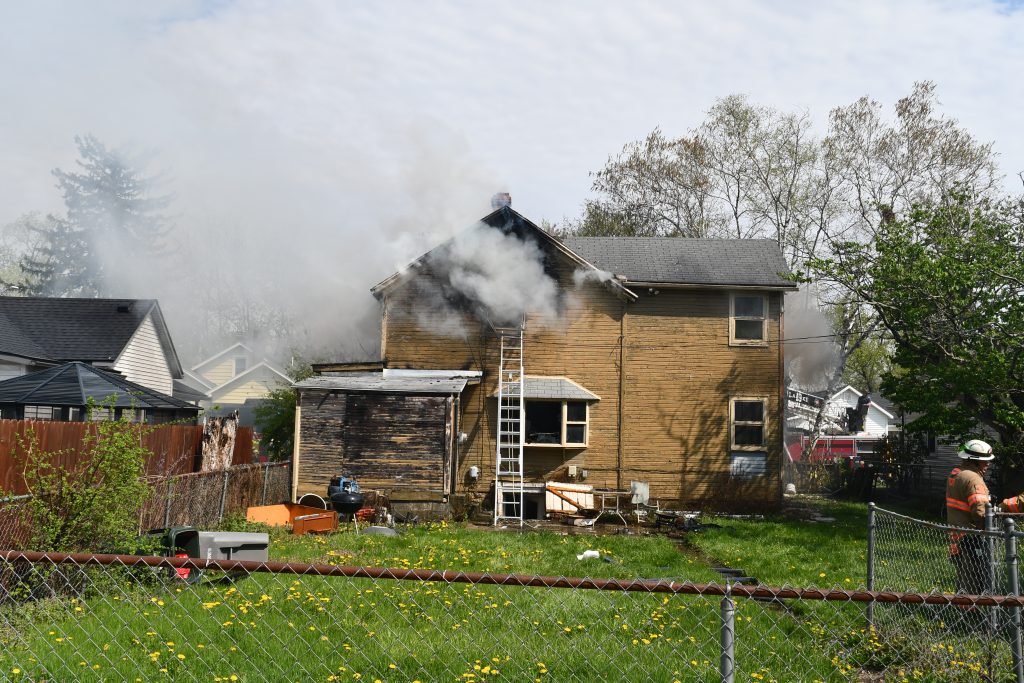
The first lesson learned was the location of the command post. Command was located too close to the structure. This inhibited the ability to visualize the changing smoke conditions on the C side of the structure. There should have also been a designated C side sector command that would have been able to relay the changing conditions to the command. Additionally, all members on scene should be trained to say something when you see something. Further evaluation of footage from the incident shows that smoke conditions on the 2nd story and roof line significantly changed approximately 4 minutes prior to the evacuation order. Command was unable to see this because of the wind speeds and direction. A sector command on the C side would have been able to observe the changes.
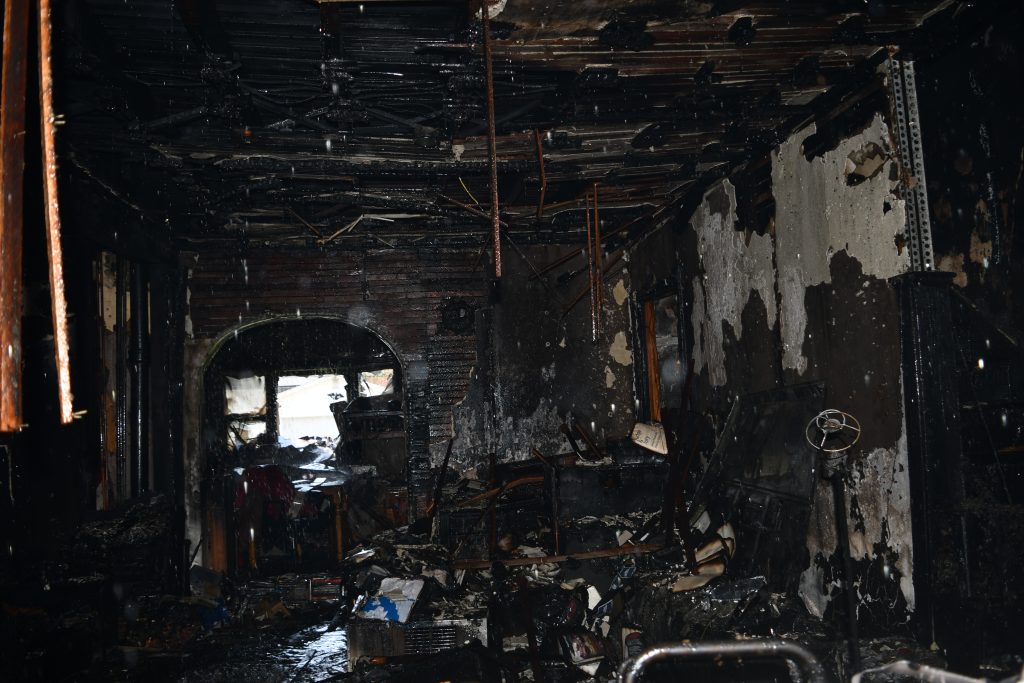
Several crews had rotated through the second story during the operations. None of the crew had advanced the hose line to the second story. Crews initially felt they were only doing overhaul. One crew was specifically assigned to advance the line upstairs and assist with the operations. This crew did not, or could not, complete the assignment and never conveyed that information to operations. Multiple hose lines were placed around the structure, but only 1 was interior on the first floor.
Horizontal ventilation was initiated by interior crews. This was not coordinated through operations nor coordinated with fire attack and a hose line. This was completed on the windward side of the structure and further intensified the oxygenation of the fire.
Radio communication was limited and a lot of face-to-face communication was done. This was because of the proximity of the command post. Had the command post been located more remote, then radio communications would have been enhanced, and crews would have been forced to use the radios. Along with that, interior crews should have notified command of their locations as they advanced through the structure. At the time of the evacuation order, command knew that 6 members should have been operating on the second floor. The reality was that only 4 were on the 2nd floor. The crew that was unable to advance the hose line never made it to the second floor as directed.
Initial crews focused on their foundational training. Ground ladders were placed on all sides of the structure without a single order being given. This further enhanced the safety of the fireground and ensured the evacuation of the members that were trapped in deteriorating conditions.