Firefighter Dies After Falling Down Elevator Shaft While Conducting Roof Ventilation During Fire in Former Cold Storage Building Under Renovation – Manhattan, New York – October 17, 1970
Submitted by Rick DeGroot
On October 17, 1970, FDNY Rescue 1 Firefighter Edward J. Tuite was killed when he stepped onto a boarded over area and fell more than 75 feet down an elevator shaft while operating on the roof of a building under renovation at a single-alarm fire in Manhattan. Firefighter Tuite died instantly when he landed at the base of the elevator shaft. The incident occurred in a six-story former cold storage building that was being renovated into a television studio in the Chelsea section of the city. The fire was sparked by a worker using an acetylene torch to cut through steel beams in the structure when the roof began to burn. There appeared to be a delay in reporting the fire to the fire department as the call from one of the workers reporting the fire was routed through the police 9-1-1 system which fire dispatchers claimed caused a hindrance in the timely response of firefighters. Firefighter Edward J. Tuite was the third member of Rescue 1 to die in the line of duty.
The structure involved in the incident was a six-story Type I Fire-Resistive masonry and steel construction commercial building that was built in 1946 as a cold storage facility for a nearby brewery. Located at 512 West 19th Street, the building measured 50 feet wide by 90 feet deep with a flat roof and fronted on 60-foot-wide West 19th Street midblock between Tenth and Eleventh Avenues. The building was equipped with a freight elevator that served all the upper floors. A pair of five-story brick and wood joist tenement houses adjoined the building on Exposure Bravo. On Exposure Charlie was an automobile repair garage and on Exposure Delta was coal storage building. The building was not equipped with a fire alarm or an automatic fire sprinkler system. There were numerous fire hydrants in the area fed from 12-inch water mains. The nearest fire alarm call box was located one half box east at Tenth Avenue.
The Borough of Manhattan is one of the five boroughs that make up the City of New York. Manhattan is the most densely populated and, at 22.82 square miles in area, the smallest geographically of the five boroughs and is considered by many to be the cultural, financial, media, and entertainment capital of the world. The borough consists mostly of Manhattan Island, bounded by the Hudson, East, and Harlem Rivers.
Chelsea is a neighborhood on the West Side of Manhattan along the Hudson River. The area’s boundaries are roughly 14th Street to the south, the Hudson River and West Street to the west, and Sixth Avenue to the east, with its northern boundary at 34th Street. Northwest of Chelsea is the neighborhood of Hell’s Kitchen, as well as Hudson Yards; to the northeast are the Garment District and the remainder of Midtown South; to the east are NoMad and the Flatiron District; to the southwest is the Meatpacking District; and to the south and southeast are the West Village and the remainder of Greenwich Village. The neighborhood is primarily residential, with a mix of tenements, apartment blocks, city housing projects, townhouses, and renovated rowhouses. There is some commercial development along the river. Chelsea is also known as one of the centers of the city’s art world, with over 200 galleries in the neighborhood. In the early 2000s, the area underwent significant gentrification and is now known for its many restored brownstones and townhouses along the area’s side streets.
The borough is protected by the New York City Fire Department (FDNY) which consists of 17,321 career firefighters, EMS personnel and support staff that serve a population of about 8,000,000 residents in the city of approximately 321 square miles. The department staffs 254 fire stations within 14 divisions in 53 battalions operating 197 engine companies, 143 ladder companies, 8 squad companies, 5 rescue companies, 450 ambulances, 1 HazMat company, 1 USAR company, 10 wildland units and 3 fireboats. The FDNY is the largest municipal fire department in the United States, and the second largest in the world after the Tokyo Fire Department. Call volume in fiscal year 2023 was more than 1.8 million calls for service including 23,901 structural fires, 12,594 non-structural fires, 233,320 non-fire emergencies, and 1.6 million emergency medical calls including 605,140 life-threatening medical emergencies.
The Chelsea neighborhood is protected by FDNY units from the First Division:
- Engine 3, Ladder Company 12, Battalion 7 – 146 West 19th Street – 0.9 miles from the fire building.
- Squad 18 – 132 10th Street – 1.2 miles from the fire building.
- Engine 1, Ladder Company 24 – 142 West 31st Street – 1.5 miles from the fire building.
- Rescue 1 – 530 West 43rd Street – 1.9 miles from the fire building.
- EMS Station 7 – 512 West 23rd Street – 0.5 miles from the fire building.
At about 11:00 a.m. on Saturday, October 17, 1970, workers were renovating a cold storage building at 512 West 19th Street in the Chelsea area of Manhattan. One of the workers was using an acetylene torch to cut through steel beams in the structure that was being converted into a television studio. One of the other workers noticed that the roof had caught fire and was beginning to burn. After attempting to douse the fire, one of the workers used a payphone in the building to contact emergency services.
FDNY fire units of the Seventh Battalion responded to the scene and the Signal 10-75 was transmitted for a working fire in the six-story building that was undergoing renovation. Members of Rescue 1, including Firefighter Edward Tuite, responded to the scene on the working fire signal.
On arrival, Firefighter Tuite’s assignment was to climb to the roof and assist the ladder company members with roof ventilation. He carried with him a rotary power saw and hand tools. Tuite was using the power saw to cut a ventilation hole in the roof surface when he stepped on a boarded-over section covering a newly built elevator shaft in the refurbished building. Tuite crashed through the roof and fell more than 75 feet to the base of the open elevator shaft. The grievously injured firefighter was found deceased at the bottom of the shaft. The fire was moments from being brought under control when the firefighter fell to his death.
Firefighter Tuite’s death in the line of duty occurred at the same hour that Mayor John Lindsay and Fire Commissioner Robert Lowery were paying tribute to the 668 firefighters who had lost their lives since the modern fire department was organized in 1865. Lowery, informed of the tragedy while attending the memorial service at the Firemen’s Monument at Riverside Drive and 100th Street, went immediately to the scene. The day also marked the fourth anniversary of the tragic 23rd Street Fire that claimed the lives of a dozen city firefighters. “I knew something was gravely wrong when they asked that the department chaplain report to the fire,” said Lowery from the scene.
According to Chief Fire Marshal Vincent Canty, the fire broke out when a construction worker, Harry Olson, lit an acetylene torch to cut through beams of the old but sturdy building near Tenth Avenue. Three workers inside the structure were converting the former cold storage building into a television studio when the roof began to burn. The Fire Marshal said that workmen did not have a permit to use torches inside the building.
Bernard West, another laborer, called 9-1-1 (the police emergency number at the time) from a pay phone inside the building. “The Fire Department called back to confirm the fire,” West said. “I guess it took them about ten minutes to get here. If I had known that there was an alarm box on the corner, I’d have used that instead.”
The Fire Alarm Dispatchers Union had recently sent a letter of protest to Mayor Lindsay, claiming that channeling fire reports through the police number causes unnecessary and dangerous delays. Fire officials at the scene denied that there was any delay because of the telephone call, adding that the loss of time was not a factor in Tuite’s death.
Uniformed Firefighters Association President Michael Maye expressed deep concern over Tuite’s death and warned that the high incidence of fire alarms at abandoned buildings presented a threat of death and disaster to the union membership. Two firefighters were hospitalized earlier in that day after battling a fire in an abandoned Brooklyn tenement.
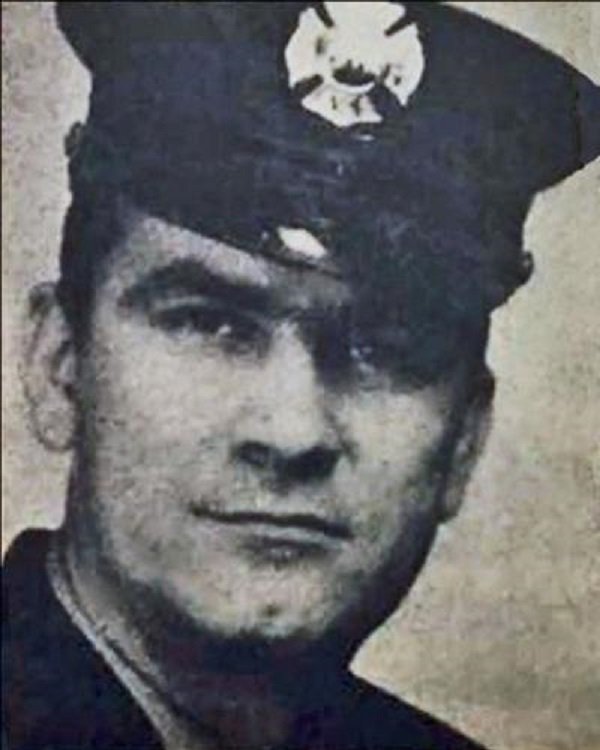
Firefighter Edward J. Tuite, age 34, was a seven-year veteran of the FDNY and had been assigned to Rescue Company 1. He was survived by his wife, Dolores, and his infant son, Edward Paul, his brothers, John and Raymond, and his sister, Katherine Donovan. His funeral with full fire department honors was held on October 21 at the Epiphany Roman Catholic Church in Manhattan with internet following at St. Peter’s Cemetery in Staten Island, New York.
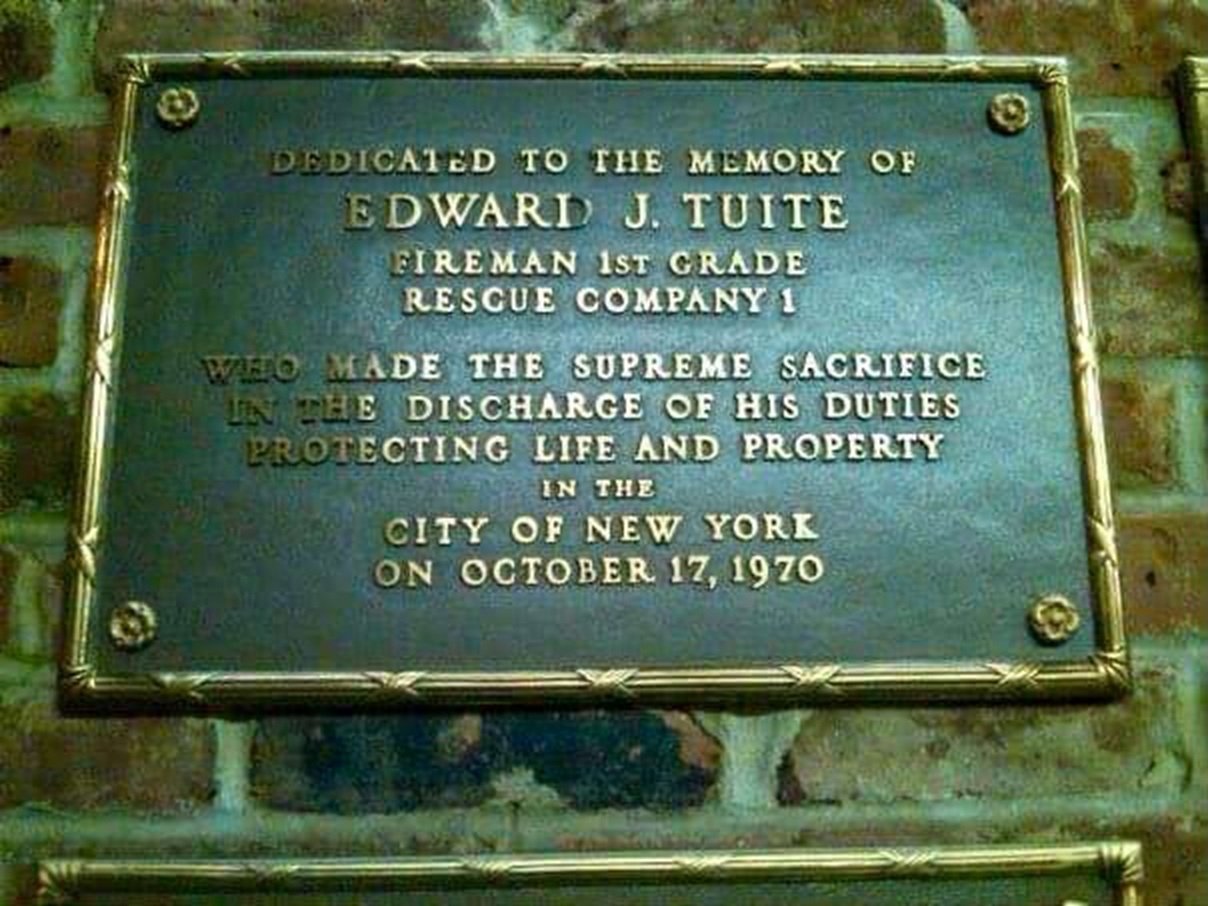
A bronze plaque honoring the service of Firefighter Edward J. Tuite is displayed on the wall in the quarters of Rescue 1.
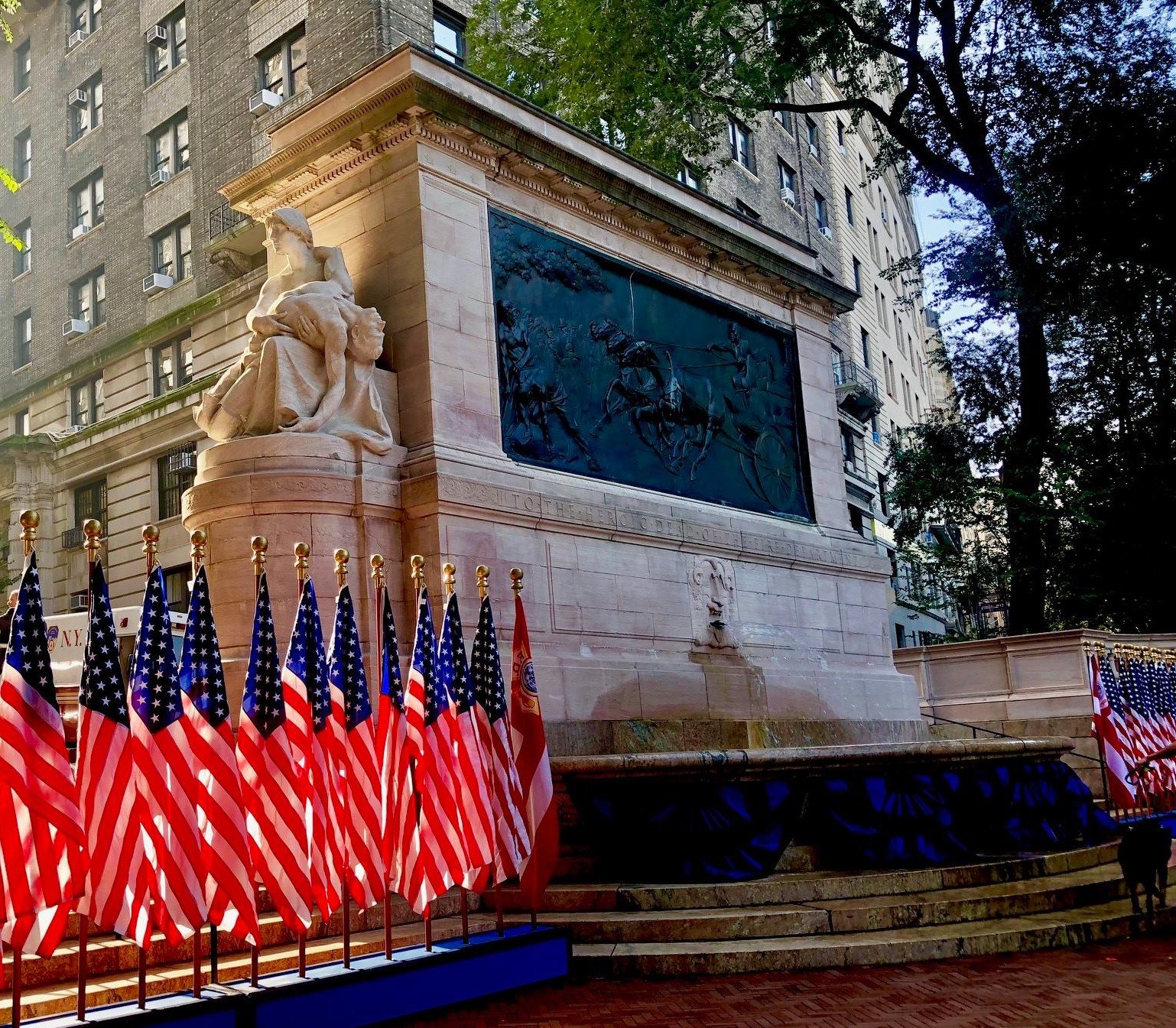
The name of Firefighter Edward J. Tuite has been honored at the New York Firemen’s Memorial on Riverside Drive at 100th Street in Manhattan, New York. The memorial honors the members of the NYFD and the FDNY who have made the ultimate sacrifice in the line of duty. Built in 1913 on a hillside facing the Hudson River, the memorial comprises a grand staircase, a balustraded plaza, a fountain basin, and the central monument. Made of Knoxville marble, the monument is a sarcophagus-like structure with a massive bronze bas-relief of horses drawing an engine to a fire. To the south and north are allegorical sculpture groups representing “Duty” and “Sacrifice.” More than 1,150 fallen members of the FDNY have been honored at the memorial since the paid municipal fire department was founded in 1865. The members of the FDNY hold an annual remembrance ceremony each Fall at the Memorial to honor their fallen members.
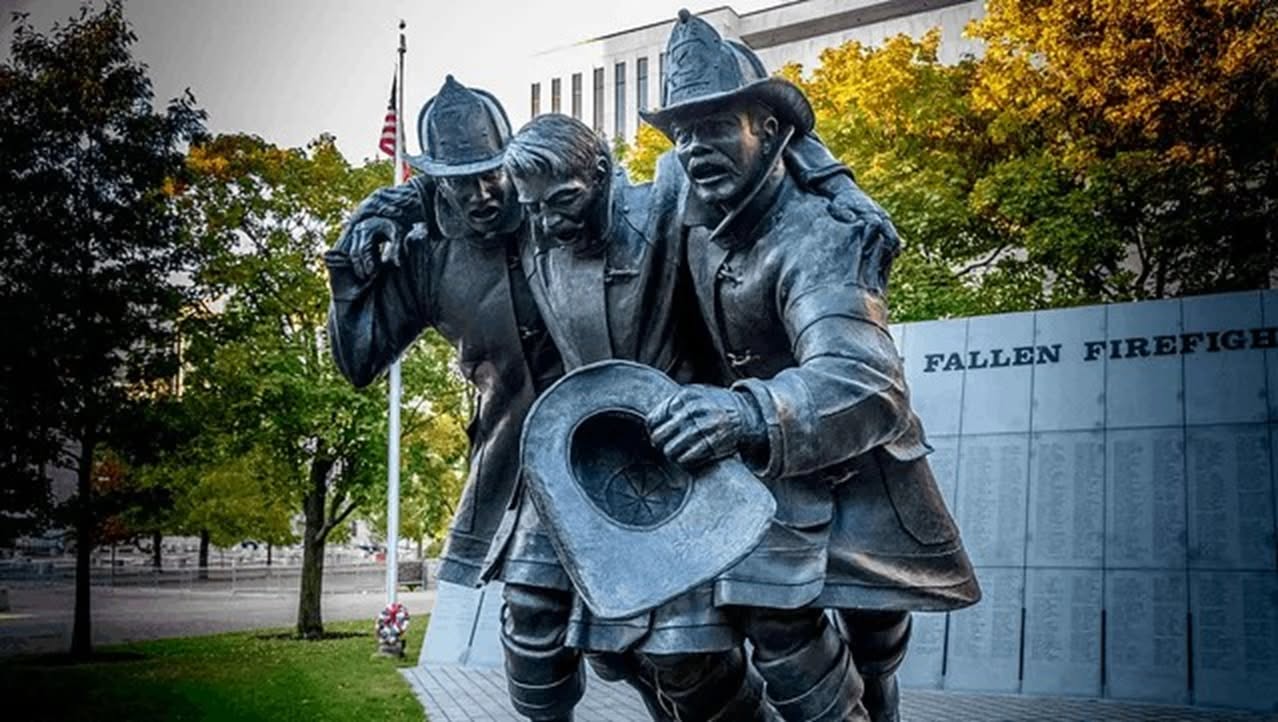
The name of Firefighter Edward J. Tuite has been inscribed at the New York State Fallen Firefighters Memorial on the grounds of the New York State Capitol in Albany. The memorial honors the men and women of the fire service who have perished in the line of duty in the Empire State. The memorial is located between the Justice Building and The Egg in a park-like area bordered by Norway maple trees. Dedicated in 1998, it consists of a ten-foot-high bronze statue of two firefighters rescuing an injured comrade backed by a granite wall fifty-four feet long and fifteen feet high inscribed with the names of New York state firefighters who gave their lives to save others. The memorial is placed on a plaza of charcoal and red brick pavers forming a Maltese Cross. As of October 2025, there are 2,818 names on the wall. The earliest name on the wall is from the year 1811.
The building at the site of the fatal fire now houses a theater group. There is no memorial marker at the site.
Commentary from the FDNY Remembrance Bulletins – 2022 issued by the Bureau of Training on roof operations:
- Skylights, scuttles and shafts are often improperly sealed. Patches of roofing material may indicate sealed over areas. Sound these areas with a tool. Note: Sounding does not ensure the stability of a roof, the impact load applied by a firefighter stepping on a roof may be greater than the force applied by a hand tool.
- In order to alert members to the presence of openings, roof level skylights and/or scuttle covers, if removed, should be placed upside down on the roof. A firefighter encountering an inverted skylight or scuttle must anticipate the opening it previously covered. Consider placing cutout sections of roof decking in the path of travel to serve as a warning.
- Before walking or moving on a roof when visibility is poor or a heavy smoke condition exists, firefighters should crouch to a kneeling position. Members should probe the roof surface by either swinging a tool or leg in the direction of movement. This is done to note the stability of the roof surface and determine the presence of holes, shafts and other unobstructed openings.
- Members operating on the roof should not step over a parapet or wall without first feeling the adjoining surface with a tool. When momentarily blinded by smoke or darkness, and there is no immediate danger to the firefighter, it may be best for the member to remain in place until visibility is restored.
- The fronts of buildings are aligned, but building depths may vary, and shafts are generally located toward the rear. So, if possible, move from one roof to another near the front wall.
- When unguarded shafts, holes in the roof or other dangerous conditions are encountered, make an announcement over the HT (portable radio). Later arriving units should be made aware of dangers by the incident commander.
Commentary:
Fire control operations in buildings that are under demolition or heavy renovation present a unique set of challenges for firefighters. Often these buildings may be in poor condition with rotted, weakened floors and unprotected openings prior to renovation operations being started. As construction progresses, many unenclosed voids and the lack of basic fire protection features such as drywall on the interior walls and disabled fire standpipe and sprinkler systems make for very difficult and sometimes dangerous firefighting and search operations. Regardless of which agency is responsible for oversight of demolition or renovation sites in your area, the local fire department should be notified of any such building activities going on in their jurisdiction. While the fire agency may not be directly responsible for issuing demolition permits or inspecting renovations at the sites, local firefighters should be aware of the activities and periodically visit the sites to gauge the progress and safety of the work. Several firefighter deaths and high-profile events involving fire and rescue operations in buildings under demolition or renovation include:
- On August 18, 2007, FDNY Firefighters Robert Beddia and Joseph Graffagnino became trapped in the maze-like conditions of a high-rise building undergoing deconstruction. The building’s standpipe system had been disconnected during the deconstruction and partitions constructed for asbestos abatement prohibited firefighters from getting water to the seat of the fire. An hour into the incident, the fire department was able to supply water by running an external hoseline up the side of the structure. Soon after Firefighters Beddia and Graffagnino began to operate their hoseline, they ran out of air. Both firefighters suffered severe smoke inhalation and were transported to a metropolitan hospital in cardiac arrest where they succumbed to their injuries. By the time the fire was extinguished, 115 firefighters had suffered a variety of injuries: https://www.facebook.com/groups/192218352449074/permalink/1616313620039533/
- On June 5, 2013, a building undergoing demolition collapsed onto the neighboring Salvation Army Thrift Store at the southeast corner of 22nd and Market Streets in Center City, Philadelphia, Pennsylvania trapping a number of people under the rubble. The store was open and full of shoppers and staff. Six people died and fourteen others were injured. The construction contractor and an excavator operator were charged with involuntary manslaughter and other charges: https://www.facebook.com/groups/192218352449074/permalink/1553605062977056/
- On March 22, 2018, York Pennsylvania Firefighters Ivan Flanscha and Zachary Anthony died following a structural collapse while working to extinguish hot spots following a structure fire in a 140-year-old mill building being renovated into residential apartments. The previous day, March 21, 2018, the local fire department was dispatched at 1616 hours, for a report of a structure fire with possible entrapment. Firefighters mounted an interior attack on the fire but were later withdrawn from the building due to deteriorating conditions. A large section of the rear of the building later collapsed during defensive operations. The next day an overhaul crew was working to extinguish a deep-seated smoldering fire in roofing materials and debris on the upper floors when the building suffered another partial collapse that took the lives of two firefighters and seriously injured two others: https://www.facebook.com/groups/192218352449074/permalink/1484389289898634/
We have attached photos from the incident including a detail from the 1955 New York City building atlas showing the configuration of the fire building and the surrounding exposures.
We have also attached the link to an article by Robert Avsec published on FireRescue1 on firefighting operations in buildings under construction: https://www.firerescue1.com/building-construction/articles/fire-safety-on-construction-sites-what-firefighters-need-to-know-IK5Tyjkf6BU0Fly3/
And the link to a NFPA document on fires in structures under construction: https://www.nfpa.org/education-and-research/research/nfpa-research/fire-statistical-reports/fires-in-structures-under-construction
Honor the service of Firefighter Edward J. Tuite by touring a building under demolition or heavy renovation in your local response district and note any hazardous conditions with your crew members today.
Remember Fallen Brothers.
Get Out There And Know Your Local!!!
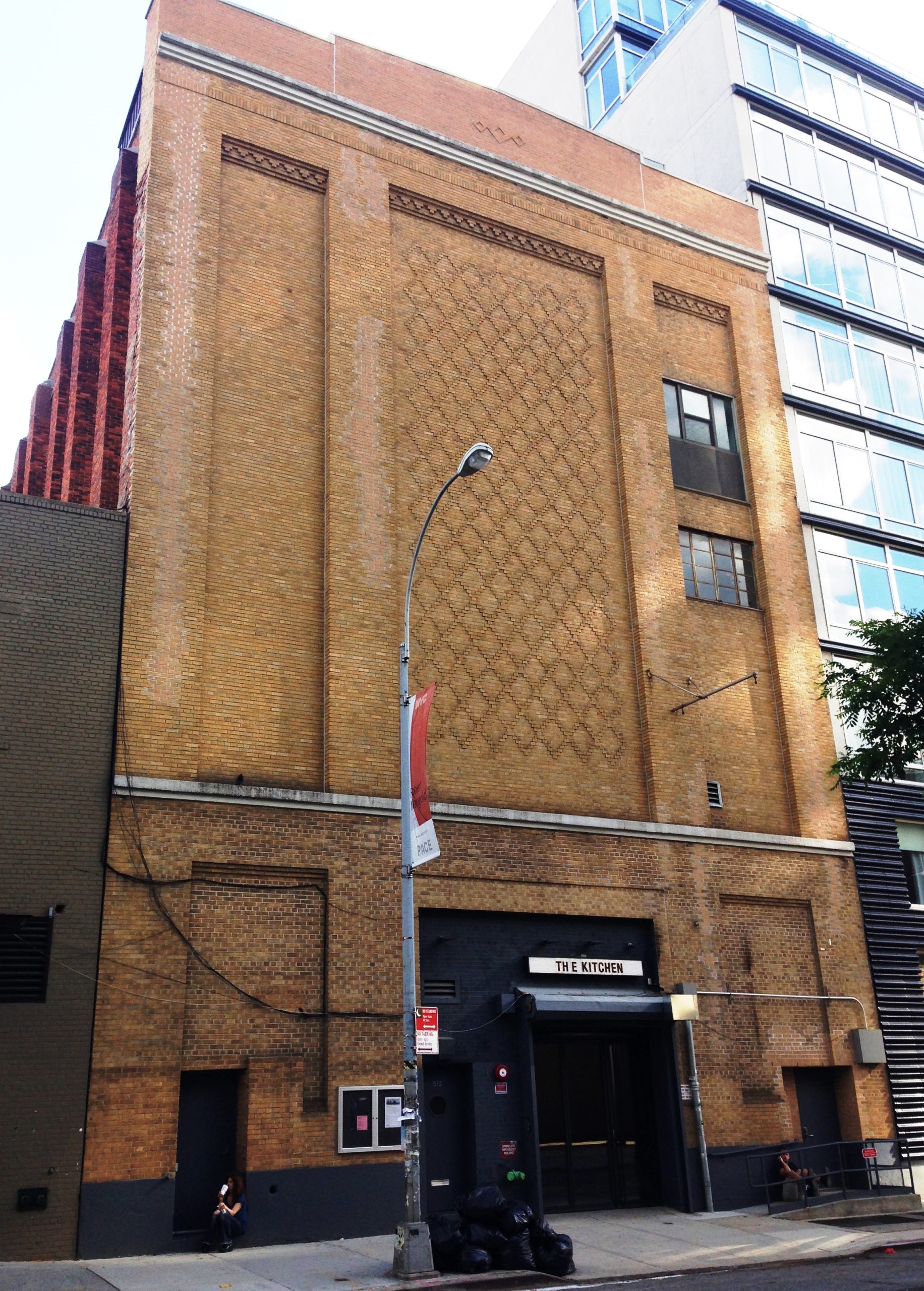
Photo of the building as it appears today. It is now occupied by a theater group. There is no memorial marker at the site.
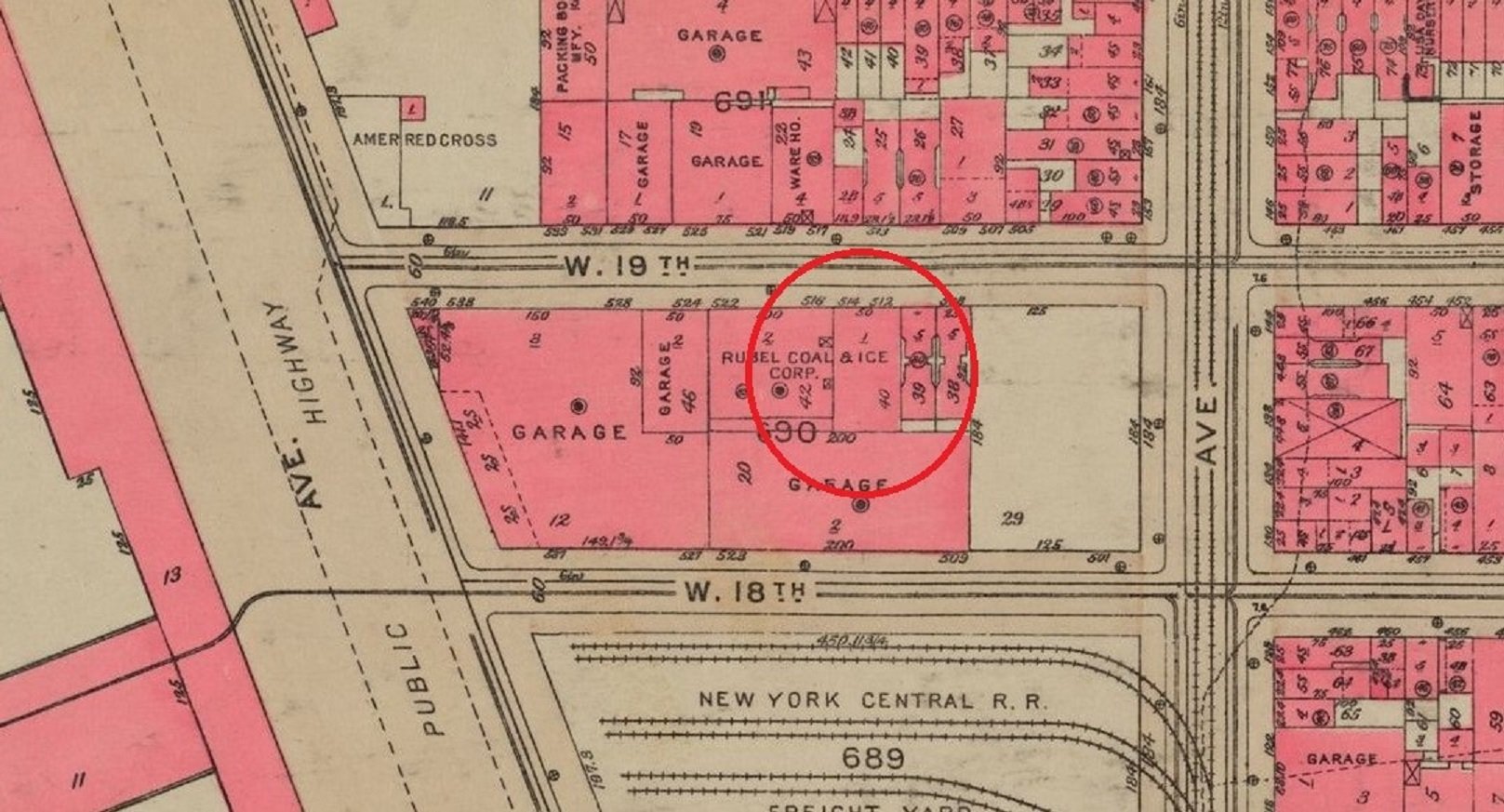
Detail from the 1955 New York City building atlas showing the configuration of the fire building (circled in red) and the surrounding exposures