Two Fire Patrol Members Killed in Fire Collapse While Conducting Salvage Operations During Building Fire – 21 West 17th Street, Manhattan, New York – October 16, 1949
Submitted by Rick DeGroot
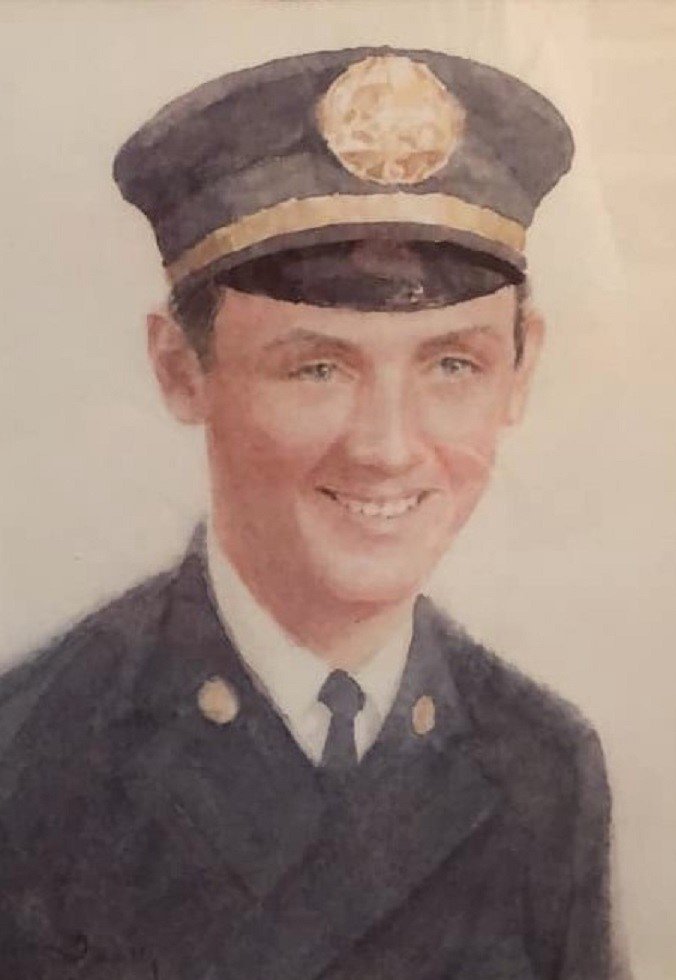
On October 16, 1949, New York City Fire Patrolmen Frederick C. Lehman and Daniel P. Shea of Fire Patrol 3 were killed while conducting salvage operations in a ground floor restaurant when the upper floors of the fire-damaged five-story loft-style building collapsed during a two-alarm fire in the Flatiron District of Lower Manhattan. Firefighters had responded to a late-night blaze in the building and found a well-involved fire on the upper floors. As firefighters mounted an interior attack, the fire intensified requiring a withdrawal of all personnel from the interior of the building. As firefighters were backing out of the burning building, the roof, the upper three floors and three walls suddenly collapsed. The two members of Fire Patrol 3, who were spreading salvage covers over the lunch counter in the ground floor restaurant, were trapped under tons of hot bricks and smoking timber. It took firefighters over 15 hours to find the body of Lehman, and 22 hours to reach Shea’s body. Seven other firefighters were hurt in the fire and subsequent collapse. The fire was determined to have started in a third-floor studio of a plastics fabrication company but the cause remained unknown. Fire Patrolmen Frederick C. Lehman and Daniel P. Shea were 24th and 25th members among the 32 fire patrolmen who have died in the line of duty in the 167-year history of the New York Fire Patrol.
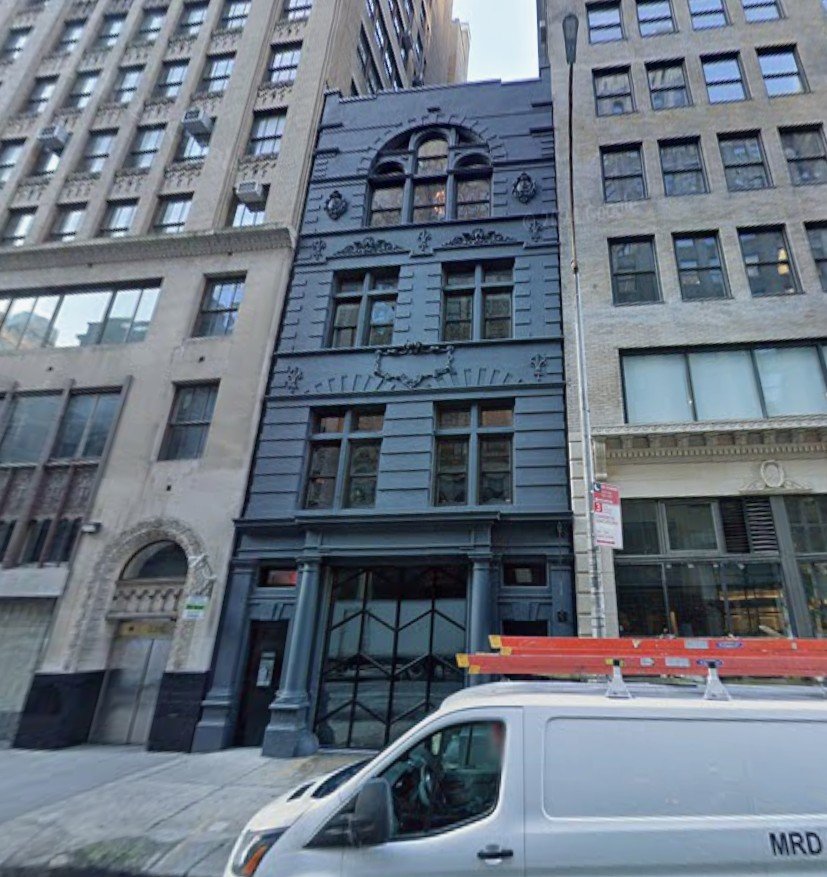
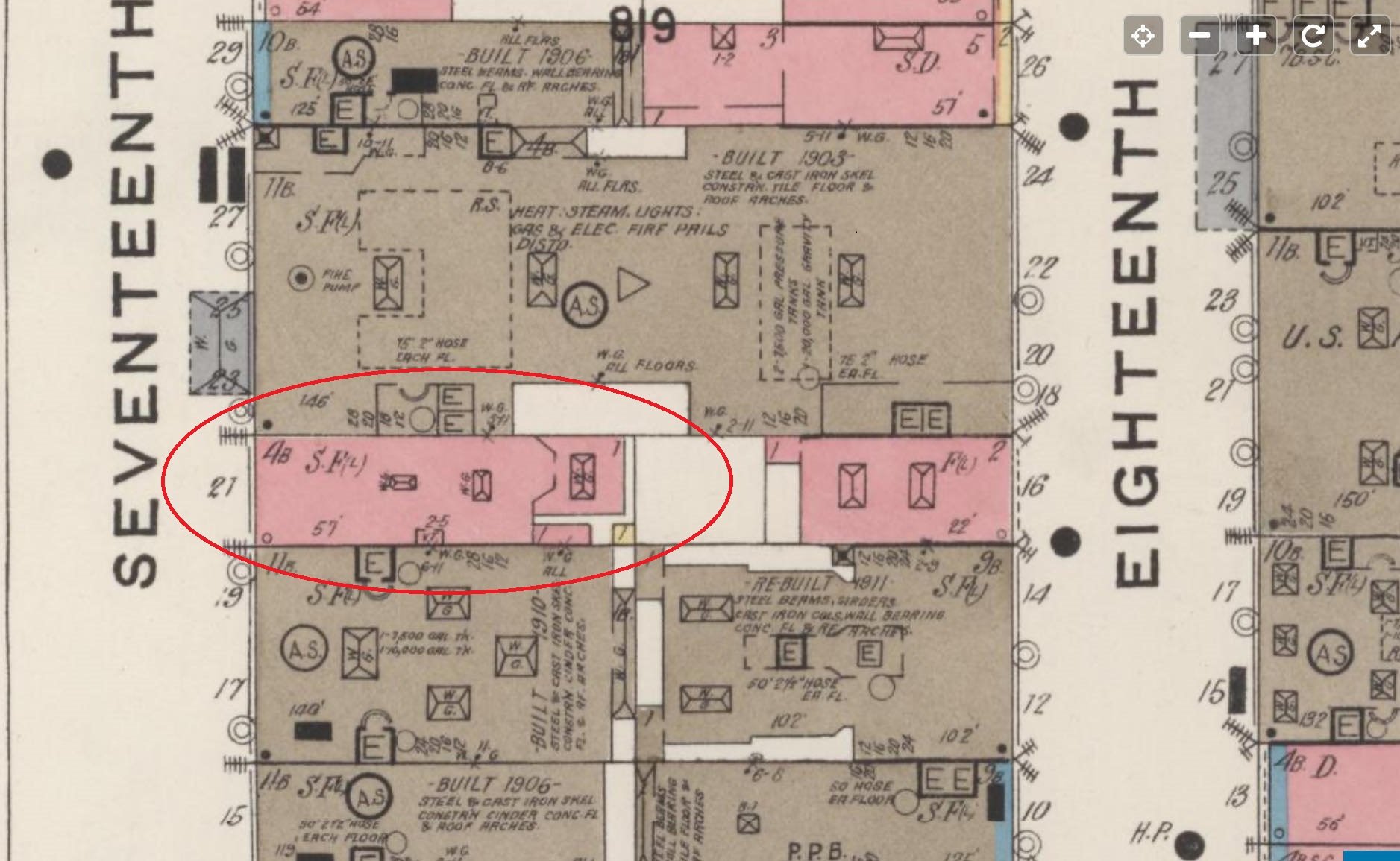
The structure involved in the incident was a four-story with basement Type III Ordinary construction brick and wood joist mercantile loft-style building that housed a lunch counter restaurant on the ground floor and manufacturing spaces on the upper floors. The building was located midblock at 21 West 17th Street between Fifth and Sixth Avenues and measured 25 feet wide by 90 feet deep. The loft building had several wired-glass skylights on a flat roof and a small one-story setback at the rear. The structure was flanked on Sides Bravo and Delta by 11-story Type I Fire Resistive construction manufacturing buildings that were equipped with automatic fire sprinklers. Side Alpha of the fire building had a masonry cornice at the roof line facing 50-foot-wide West 17th Street. On Side Charlie, a small rear yard backed up to a two-story Type III mercantile building at 16 West 18th Street. The building was not equipped with a fire alarm system or an automatic fire sprinkler system. Several fire hydrants were located on the block that were fed by a 12-inch water main. The nearest fire alarm call box was located one-half block away at the corner of West 17th Street and Sixth Avenue.
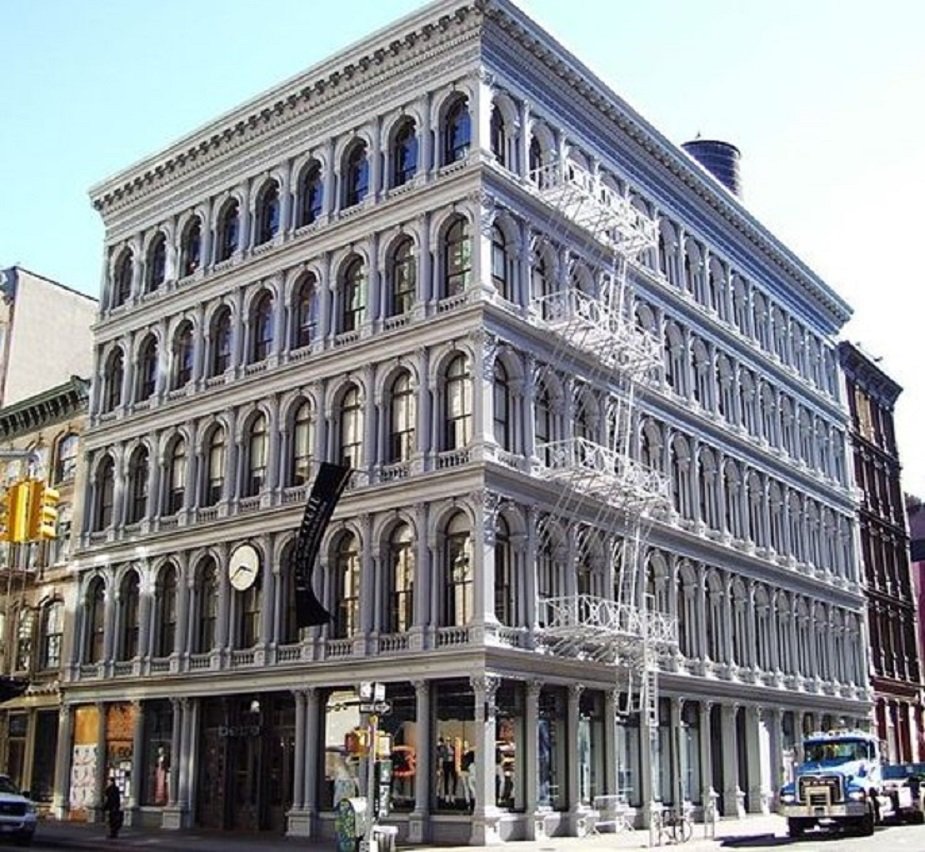
Note: A mercantile loft-style building is a structure that was originally built for commercial purposes such as warehouses, garment factories and other manufacturing uses. The first floor was usually occupied by a mercantile use while the upper floors contained manufacturing and light industrial uses. In New York City, they were often built using cast iron structural elements including cast iron columns to support the upper floors and cast-iron decorative front facades that provided large arched windows to display merchandise at street level. Built with high ceilings and supported by large wooden beams with cast iron columns, loft buildings provided ample floor space for machinery and materials in manufacturing occupancies, and the display of merchandise in mercantile shops. In recent years, many loft buildings have been repurposed into residential apartments and condominiums. They are usually renovated leaving much of the interior brick walls exposed, and the cast iron columns, cast iron facades, and high ceilings retained for aesthetic purposes.
Manhattan is geographically the smallest and most densely populated of the five boroughs that make up the City of New York. The borough of 22.83 square miles of land area had a population of 1,694,251 according to the 2020 U.S. Census. Manhattan has been described as the cultural, financial, media, and entertainment capital of the world.
Today the Borough of Manhattan is protected by the New York City Fire Department (FDNY) which consists of 17,321 career firefighters, EMS personnel and support staff that serve a population of about 8 million residents in the city of approximately 321 square miles. The department staffs 254 fire stations within 14 divisions in 53 battalions operating 197 engine companies, 143 ladder companies, 8 squad companies, 5 rescue companies, 450 ambulances, 1 HazMat company, 1 USAR company, 10 wildland units and 3 fireboats. The FDNY is the largest municipal fire department in the United States, and the second largest in the world after the Tokyo Fire Department. Call volume in fiscal year 2023 was more than 1.8 million calls for service including 23,901 structural fires, 12,594 non-structural fires, 233,320 non-fire emergencies, and 1.6 million emergency medical calls including 605,140 life-threatening medical emergencies.
The New York Fire Patrol was a salvage corps created by the New York Board of Fire Underwriters which operated from 1839 until October 15, 2006. Their original mission was two-fold: to discover fires and to prevent losses to insured properties. The Patrol responded primarily to fires at commercial structures, however they would respond to high loss residential fires at times. During a fire, patrolmen would spread canvas salvage covers, remove water, operate elevators, and secure utilities. While the Patrol’s primary purpose was to reduce fire and water damage, patrolmen were also credited with saving hundreds of lives from burning buildings throughout the five boroughs over the course of two hundred years. At the height of their service, there were 10 Patrol Houses placed throughout the city with a roster of 400 patrolmen. After the Great Depression, support for the Fire Patrol by the insurance industry had waned. By the late 20th century, the Patrol had been reduced to three Patrol Houses, one each in Midtown and Downtown Manhattan and one in Cobble Hill, Brooklyn, which was responsible for Brooklyn, Queens and Staten Island. Throughout their history, 32 patrolmen died in the line of duty, including Fire Patrolman Keith M. Roma, Badge 120, on September 11, 2001. The New York Fire Patrol was the last of all the insurance company supported salvage corps to operate in the United States. It ceased operations in October 2006.
The Flatiron District of Lower Manhattan is protected by fire units from the First Division and the First and Second Battalions:
- Engine 14 – 14 East 18th Street – 0.3 miles from the fire building.
- Ladder 3 & Battalion 6 – 108 East 13th Street – 0.5 miles from the fire building.
- Engine 3, Ladder12, Battalion 7 & High Rise Unit 1 – 146 West 19th Street – 0.6 miles from the fire building.
- Squad 18 – 132 West 10th Street – 0.8 miles from the fire building.
- Engine 16, Ladder 7 & FDR 1 – 234 East 24th Street – 1 mile from the fire building.
Weather conditions on the night of the fire included an air temperature of 58 degrees and a relative humidity of 72% with strong north-northeast winds at 20 mph under fair skies (Weather Underground). Note: Research by the National Institute of Standards and Technology (NIST) has shown wind speeds on the order of 10 to 20 mph are sufficient to create wind-driven fire conditions in a structure with an uncontrolled flow path (Madrzykowski and Kerber 2009). It is likely that the strong windy conditions on the night of the fire were a significant factor in fire development during the incident.
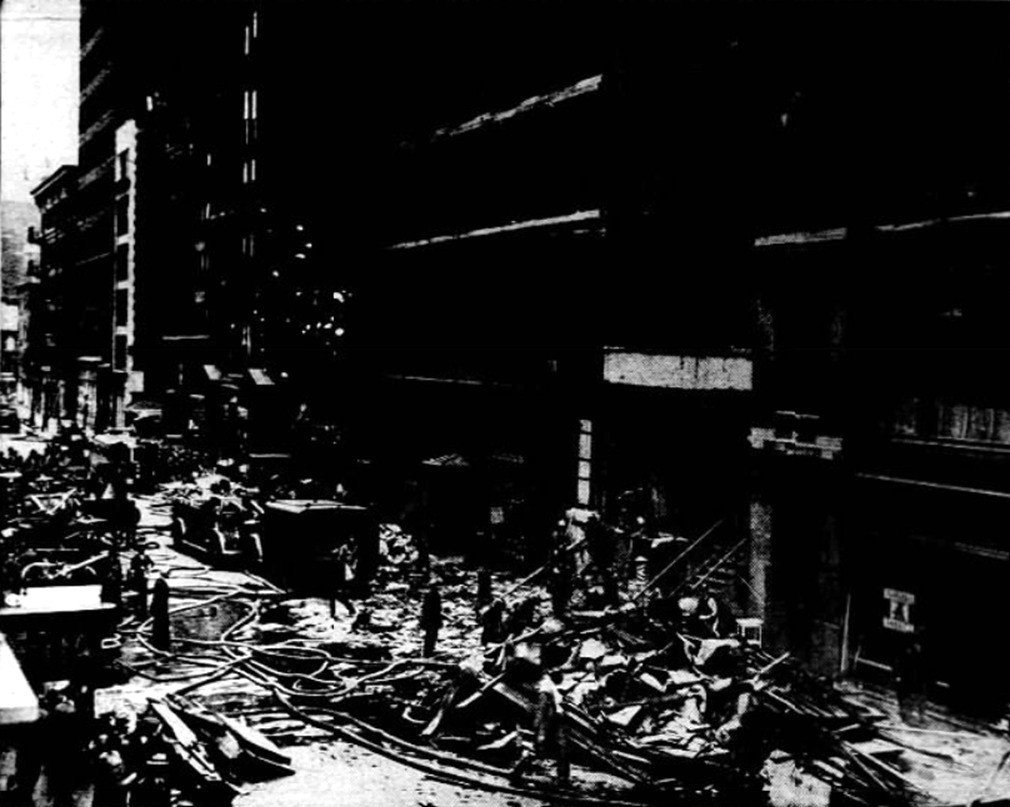
Shortly before 12 a.m. on Sunday, October 15, 1949, FDNY fire units were alerted to a fire in a four-story loft building at 21 West 17th Street between Fifth and Sixth Avenues in the Flatiron District of Lower Manhattan. Responding along with the city fire units were the members of Fire Patrol 3 from their station at 240 West 30th Street in Lower Manhattan. Firefighters arrived on location and found a well-involved fire on the upper floors of the structure. Engine companies went about their business stretching hoselines into the building while ladder crews began conducting searches and opening up the building. A second alarm was transmitted as the fire intensified, and members were being withdrawn from the inside of the building. At about 1 a.m., as firefighters were backing out of the burning building, the roof, the upper three floors and three exterior brick walls suddenly collapsed into the structure. Several firefighters and patrolmen were narrowly able to escape being caught in the wreckage.
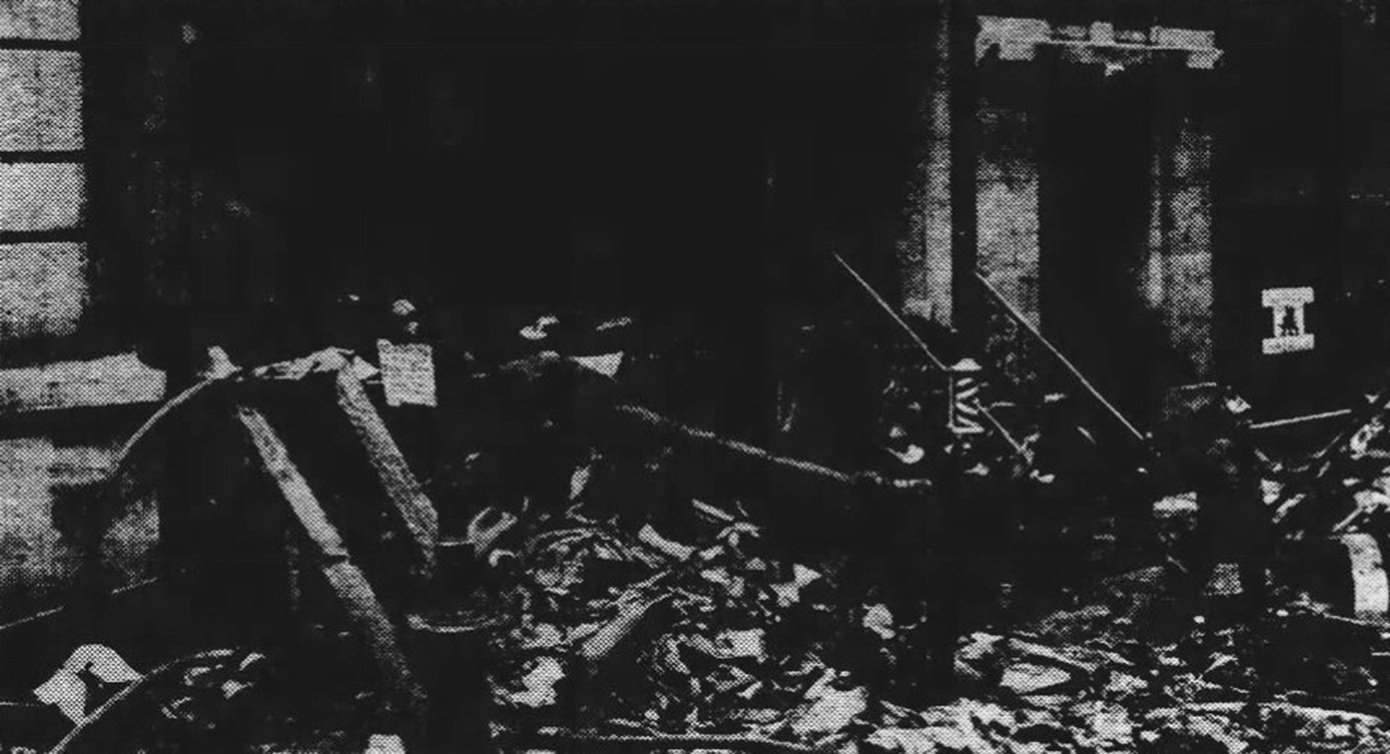
Fire Patrolmen Frederick Lehman and Daniel Shea of Fire Patrol 3 were conducting salvage operations and spreading salvage covers over the lunch counter in the restaurant on the ground floor when the upper floors of the fire-damaged building came crashing down on them and several other Patrol members. The force of the collapse tossed tons of brick, iron, and smoking timbers, along with Lehman and Shea, into the basement of the loft building. The two patrolmen were working near the front of the restaurant when the collapse came. They had no chance to escape.
The last man to see Lehman and Shea before the collapse was Fire Patrolman William Haack who was injured by falling debris. It was his account to Fire Chief Peter J. Loftus, who visited him at St. Vincent’s Hospital, which helped the rescue crews find Lehman’s body. Haack was in fair condition with several broken ribs.
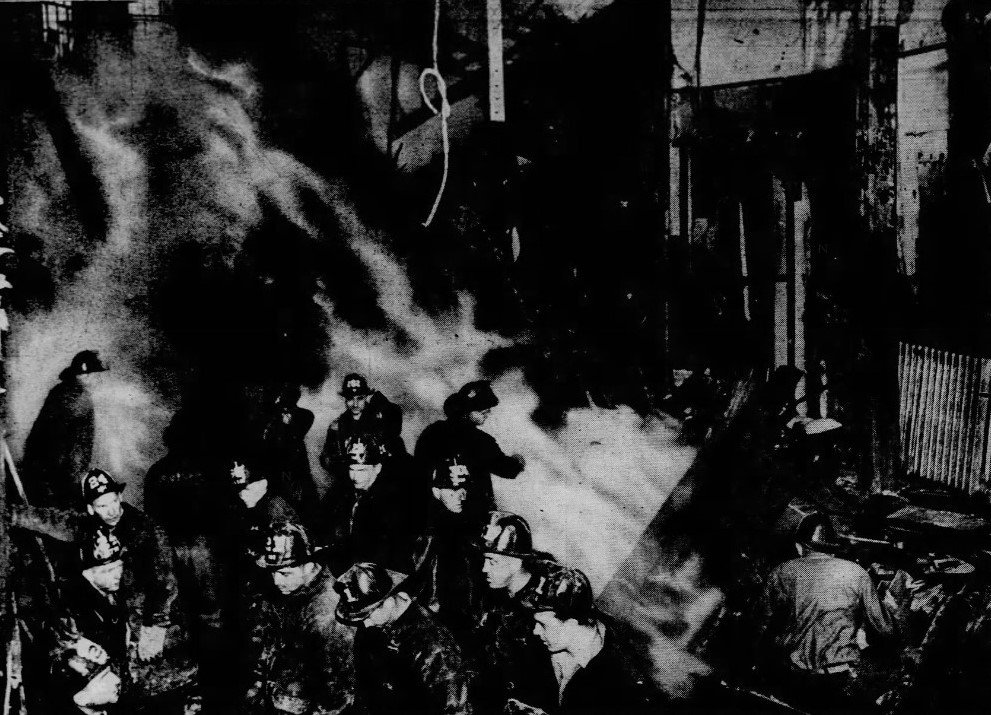
Searchers for the men were hampered by the danger of the one remaining wall crumbling on them and the inadvisability of pouring water on the hot debris for fear of drowning the men if they were still alive. The body of Fire Patrolman Frederick Lehman was recovered at 3 p.m. His body was pinned under a huge compression tank about 25 feet from the sidewalk. Rescuers had reached the spot by boring tunnels at street level from the two adjoining buildings at 23-25-27 and 17-19 West 17th Street.
Two priests, Reverend James E. O’Brien and Reverend Charles W. Rhinehardt, arrived soon after the loft building’s collapse. Borrowing raincoats and helmets from firefighters, they crawled into the hot debris to look for the missing men. They searched for several hours before returning home to rest and returned five hours later. The Reverend Joseph A. Doyle, the Fire Department chaplain, was also on the scene waiting to perform last rites for the missing men.
Although the searchers had a general idea where Patrolman Daniel Shea was working when the building fell in, it took another eight hours to find the younger man. At about 11 p.m., after 22 hours of ceaseless digging in smoldering rubble, firefighters finally recovered the body of the young patrolman. Chief Loftus, directing operations under the glare of five powerful floodlights, finally took the unprecedented step of asking the police for the use of dogs to help in the search. Two specially trained dogs from the Lawrence Avenue station in Brooklyn were on their way, under custody of two patrolmen, when Shea’s body was found.
Shea was entombed between the basement and ground floor levels, about 15 feet from the front of the building and, ironically, only one step from what would have been safety. Dr. Harry M. Archer, Deputy Fire Commissioner, said Shea had been within two feet of an exit.
Fire Marshal William Murphy said the blaze probably originated in the rear of the third-floor studio of David Goldstein’s plastics fabrication firm but the cause remained unknown.
Members of the New York Fire Patrol killed in the line of duty at West 17th Street fire and collapse on October 16, 1949:
- Fire Patrolman Frederick C. Lehman, age 42, was survived by his wife, Edna, and his 14-year-old son, Frederick, Jr.
- Fire Patrolman Daniel P. Shea, age 22, was a member of the New York City Fire Patrol for less than one year. Shea was born in New York City but had resided in Nassau County for 19 years. He graduated from South Side High School. During the Second World War, he served with a crash detachment in the Navy. He was survived by his parents, Patrick and Delia Shea; seven brothers; Christopher, John, James, Martin, Dennis, Joseph, and Thomas; two sisters, Catherine and Margaret; and two uncles and aunts, Mr. and Mrs. John Egan, Mrs. John Harrington and Daniel Sugrue, all of the Bronx.
A joint funeral honoring the two fallen fire patrolmen was held at Our Lady of Loretto Church in Hempstead, Long Island with a Solemn Requiem Mass. The service was attended by a contingent from the FDNY including a deputy fire commissioner; Dr. Harry M. Archer, surgeon of the department; five deputy chiefs of staff in operations; two deputy chiefs of the department; three battalion chiefs and the department chaplain, Reverend Merritt E. Yeager. The Fire Department Glee Club of 16 members sang during the service. A delegation of the rank and file of the Fire Department and the employees of the New York Board of Fire Underwriters, numbering about 50 also participated. Burial services for the two patrolmen followed at Holy Rood Cemetery in Westbury, Long Island, New York.
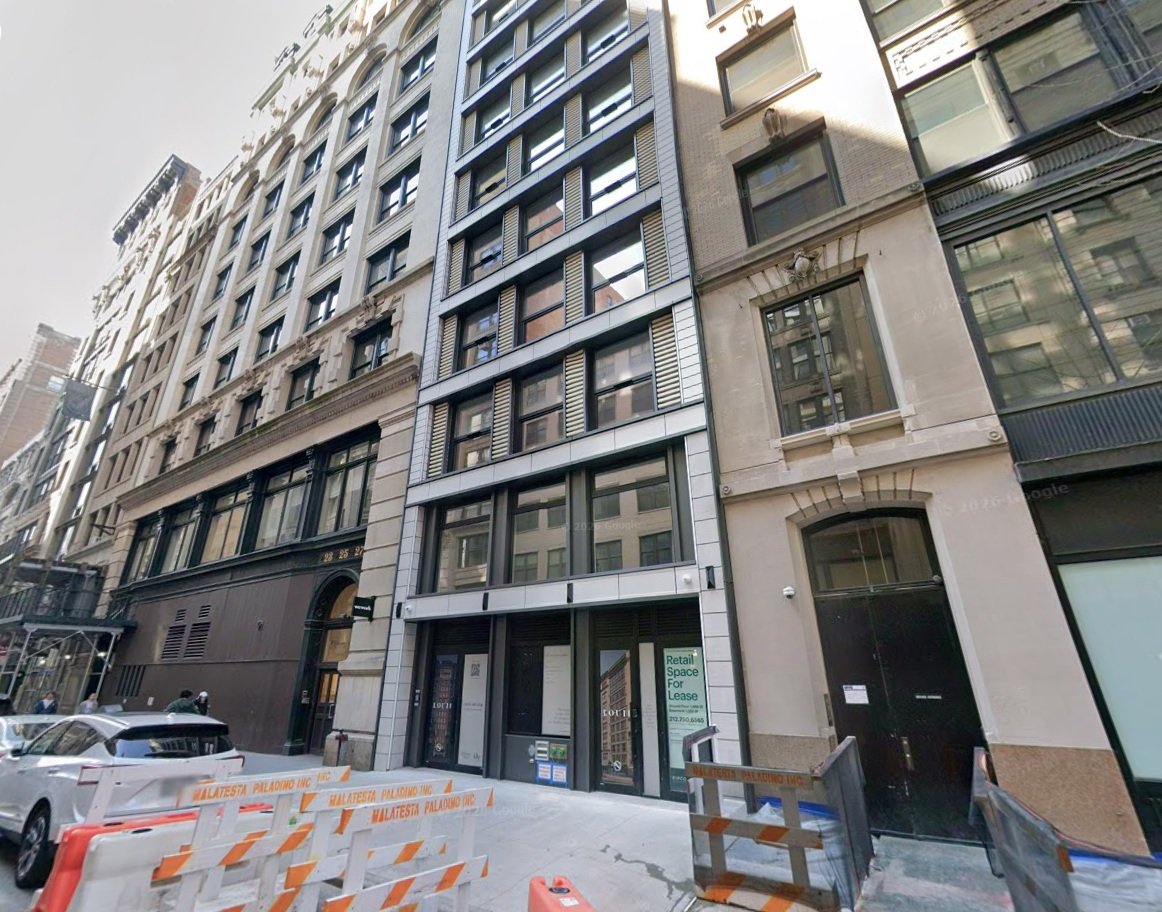
The site of the tragic incident is now occupied by an upscale 17-story condominium apartment building. There is no memorial marker at the site.
Commentary:
Legacy Type III Ordinary construction buildings have a history of collapse following significant fire damage to the wooden interior of these types of buildings. Many were constructed during an era when the full dimensional lumber floor joists were installed using a “fire cut” on the ends of the joists as they were inserted into a joist pocket in the masonry exterior bearing walls. Fire cut beams were meant to be self-releasing after being heavily damaged in a fire and were designed to fall out of the joist pockets without levering the exterior brickwork and causing damage and possible collapse of the brick walls. While further details about the construction of the structure in this case are unavailable, it is likely that fire cut joists may have been present due to the era of construction.
Another factor that likely played a role in the catastrophic collapse of the building may have been that the building had cast iron columns and a cast iron facade supporting the interior floors of the building. Cast iron building components have been implicated in a number of failures in buildings constructed in the late 19th century. A quote from an old construction manual regarding the manufacture of cast iron building components expresses some concerns:
“The quality of the cast and uniformity of the casting has a direct implication of the load carrying capacity of the component. All building castings, and especially columns, should be carefully inspected before being placed in the building. Air bubbles and blowholes are a common and dangerous source of weakness and should be searched for by tapping the casting with a hammer. Bubbles or flaws filled in with sand from the mold, or purposely stopped with loam, cause a dullness in the sound. The casting should be free from flaws of any kind, with the exterior surface smooth and clean, and the edges sharp and perfect. An uneven or wavy surface indicates unequal shrinkage. Cast-iron columns should be straight, and cored directly through the center, the metal being as nearly as possible of uniform thickness throughout. It is not unusual to find cast-iron columns, designed to be 3/4 of an inch thick throughout, 1 inch on one side and 1/4 inch on the other. The base and cap of a cast-iron column should be turned accurately, being true and perpendicular to the center line.” – The Building Trades Pocketbook, 1905.
While we may often find full dimensional lumber floor joists measuring 3 x 12-inches supporting the floors in legacy mercantile occupancies, firefighters must be aware that certain construction components such as fire-cut floor joists, unprotected steel beams, and cast iron columns supporting the floor assembly may be the weak points that if subjected to considerable fire exposure may cause collapse. We should also be aware that many legacy Type III mercantile buildings have been renovated and lightweight engineered floor supports such as parallel chord lightweight wood trusses, engineered wood I-beams and lightweight steel C-channel floor joists may have been used to replace damaged original full dimension wood floor joists. We should also be aware that many small mercantile occupancies are often not equipped with fire sprinklers or fire alarm systems.
We have attached photos from the incident and a detail from the 1908 Sanborn fire insurance map that shows the configuration of the fire building and the surrounding exposures.
This incident shares similarities with another fatal fire that occurred in New York on Wooster Street on February 14, 1958, that killed six FDNY firefighters: https://www.facebook.com/groups/192218352449074/permalink/1454069802930583/
We have also attached the link to a BCFS article on Type III Ordinary construction buildings: https://www.facebook.com/groups/192218352449074/permalink/1656259876044907/
Thanks to multiple media sources for the content of this article.
Honor the service of Fire Patrolmen Frederick C. Lehman and Daniel P. Shea by studying the operational considerations and safety concerns that legacy Type III Ordinary construction buildings pose to firefighters and by touring a legacy Type III commercial structure in your local response district with your crew members today.
Remember Fallen Brothers.
Get Out There And Know Your Local!!!
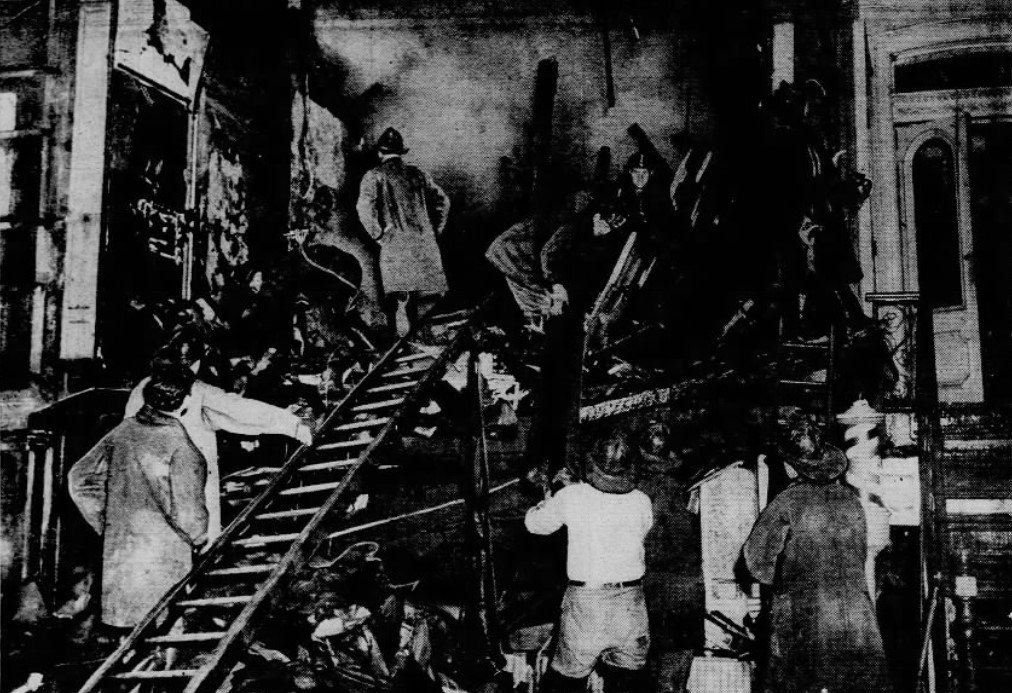
Photo of the rescue and recovery operation on Side Alpha of the fire building.
Note: A mercantile loft-style building is a structure that was originally built for commercial purposes such as warehouses, garment factories and other manufacturing uses. The first floor was usually occupied by a mercantile use while the upper floors contained manufacturing and light industrial uses. In New York City, they were often built using cast iron structural elements including cast iron columns to support the upper floors and cast-iron decorative front facades that provided large arched windows to display merchandise at street level. Built with high ceilings and supported by large wooden beams with cast iron columns, loft buildings provided ample floor space for machinery and materials in manufacturing occupancies, and the display of merchandise in mercantile shops. In recent years, many loft buildings have been repurposed into residential apartments and condominiums. They are usually renovated leaving much of the interior brick walls exposed, and the cast iron columns, cast iron facades, and high ceilings retained for aesthetic purposes.
Detail from the 1908 Sanborn fire insurance map that shows the configuration of the fire building (circled in red) and the surrounding exposures.