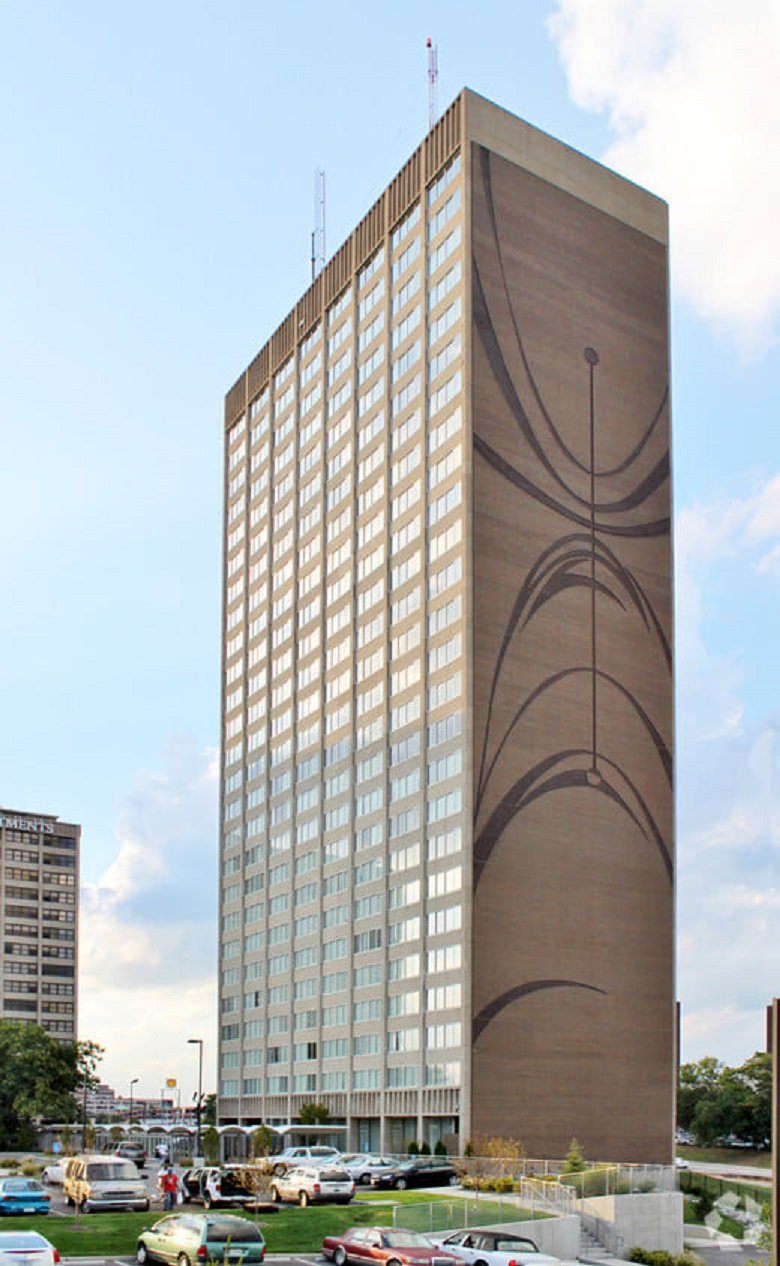
Eight Alarm Fire in 27-Story High-Rise Apartment Building for the Elderly Nearly Claims Life of One Firefighter – Council Tower Apartment Building – St. Louis, Missouri – October 12, 1998 – NIOSH Firefighter Fatality Report F98-26 & USFA Technical Report TR-119
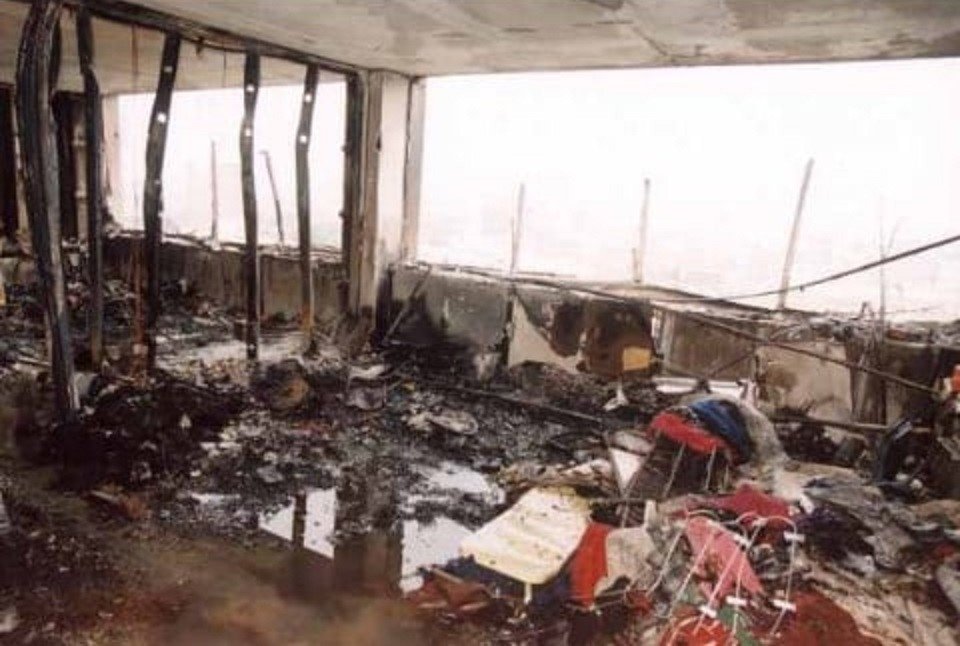
On October 12, 1998, while attempting a rescue, two St. Louis firefighters became disoriented in a smoke charged hallway on the 21st floor of a high-rise apartment building, ran out of air, and one of the two firefighters (Captain of Engine 17) came close to death in this incident. The fire started in the apartment of an elderly woman and was reported as originating from an electrical cause or smoking in bed. The fire started shortly after 0900 hours, and the resident unsuccessfully attempted to extinguish the fire with glasses of water for a period of time. She then called the front desk, reported the fire and exited the apartment, leaving the door open, and took the elevator to the lobby. By the time the fire department arrived, the entire hallway on the 21st floor was fully charged with thick black smoke, and the fire had escalated, breaking out the apartment windows and allowing the wind to blow the apartment door shut. Three oxygen bottles in the apartment, for the resident’s use, accelerated the fire growth when they exploded.
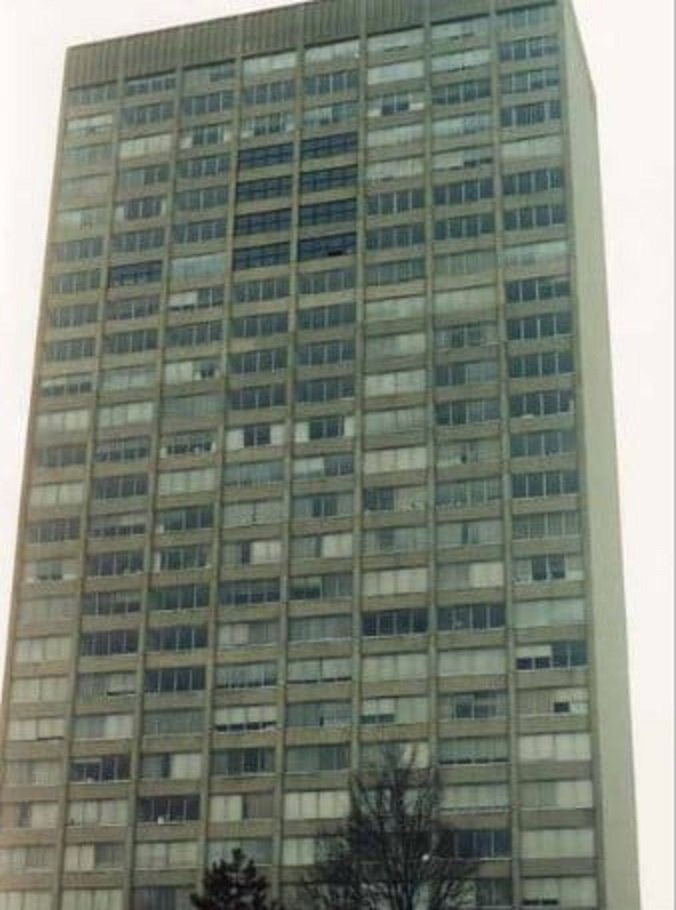
The Council Tower Apartments Building is located at 310 South Grand Boulevard in Saint Louis, Missouri and was built in 1969 to house the elderly. It is part of a three building complex that included a similar high-rise building and a large parking structure. The 27-story structure is constructed of Type I fire resistive materials consisting of poured concrete reinforced with steel. The building has a flat room, a full basement, and contains 150 apartments. There were approximately 160 people living in the building at the time of the fire. The floor plan is similar on floors two through twenty-seven and has a single hallway on each floor that is oriented east to west. There is an enclosed stairwell at each end. The east stairwell could be entered from the lobby, extended from the basement to the roof, and had an exterior exit door located at the ground level. The west stairwell extended from the basement to the roof and had an exterior ground level exit but could not be entered from the lobby. Two passenger elevators and a freight elevator were located off the north side of the hallway. During a fire, the elevators are programmed to automatically return to the lobby.
The exterior apartment doors were solid core pressed composition with a laminated finish, and the interior apartment doors are hollow core. The floors are concrete covered by either carpet or vinyl tile. The ceilings are poured concrete with a mortar acoustic finish. Single glazed tempered glass windows spanned the length of the exterior rooms. The interior walls are constructed of gypsum board that is screwed onto metal studs and the walls in the hallway had wallpaper that had been painted.
The building is equipped with a voice evacuation system, and speakers are located on the south wall in each hallway. There is emergency lighting, and a pull station is located at each stairwell exit. The smoke detectors in the hallways are hard wired and monitored by an alarm company. A simplex alarm panel that displayed the various alarm zones is located in the lobby near the northwest corner of the building. Each apartment is also equipped with a battery-powered smoke detector. The building is equipped with a partial sprinkler system that protects the basement, trash chute, and elevator penthouse located on the top floor. The sprinkler system is inter-connected to the standpipe system. The standpipe system consists of two risers located at the east and west end of the building. A hose cabinet with a 1-1/2-inch connection, a 1-1/2-inch connection, and a fire extinguisher was located adjacent to the doors at each of the stairwells in the interior of the hallway. The two cabinets are 117 feet apart and the standpipe system is supported by a 1,000 gpm fire pump powered by a 100 hp electric motor. The fire department connection is located on the west side of the building.
Saint Louis is located on the west bank of the Mississippi River and has approximately 351,000 residents. The State legislature recognized Saint Louis as a city in 1822 and the fire department has been fully career since 1857. By 1930, Saint Louis had grown to 800,000 residents and the fire department staffed 56 engine companies. Unfortunately, Saint Louis suffered hard economic times during the 1970s and 1980s. The city lost population and many of the fire companies were disbanded due to austerity measures.
At the time of the incident, the 62 square miles of the City of St. Louis was protected by the St. Louis Fire Department from 30 fire stations that housed 30 engine companies, 4 truck companies, and 2 heavy rescue squads. The city was divided into 6 suppression districts and a seventh district protects Saint Louis Lambert International Airport with 2 stations. All of the engine companies ran quints staffed by 4 firefighters. At the time of the fire, 15 of the engine companies were equipped with 50-foot aerial devices and 15 ran with 75-foot aerial devices. In November 1998, a bond referendum was approved replacing all 30 of the engines with 75-foot quints. The ladder companies were equipped with 110-foot quints. The annual budget was approximately $37.8 million and there were 832 personnel of whom 692 were firefighters and officers, 130 were emergency medical service personnel, and 10 were civilians. Firefighters worked a 52-hour workweek. In 1997, the department responded to 109,922 incidents of which there were 30,332 fires, 79,590 EMS calls, and 2,781 false alarms.
Area weather conditions on the morning of the incident included an air temperature of 63 degrees F and a relative humidity of 72% with west-northwest winds at 12 mph under mostly cloudy skies (Weather Underground). Note: Research by the National Institute of Standards and Technology (NIST) has shown wind speeds on the order of 10 to 20 mph are sufficient to create wind-driven fire conditions in a structure with an uncontrolled flow path (Madrzykowski and Kerber 2009). The wind conditions likely had an impact on fire development and the outcome of the incident.
On Monday, October 12, 1998, at 0934 hours, the manager of the complex for the elderly called the fire department to report a fire in apartment 2103. Note: From all the information obtained during this investigation, it is estimated the fire started around 0900 hours (approximately 30 minutes before it was reported to the fire department) in apartment 2103 as a result of an electrical short near the bed or from a burning cigarette. The elderly woman who lived in the apartment attempted unsuccessfully to extinguish the fire with glasses of water. It was reported that many bags of polyester clothing were stored in the bedroom, which could have intensified the fire and smoke conditions. In addition, the occupant was using supplemental oxygen, so there were three oxygen bottles in the apartment. When the occupant of the apartment was unsuccessful in extinguishing the fire, she called the front desk and reported the fire, exited the burning apartment, leaving her apartment door open, which charged the hallway with thick black smoke. The fire accelerated, breaking out the large windows, and the apartment door blew shut. One of the residents on the 21st floor stated he heard the fire alarm sounding at approximately 0910 hours and opened the door to his apartment but did not see any smoke or fire.
The first alarm responded at 0935 hours: Engine 29 (captain and two firefighters), Engine 17 (captain and three firefighters), Engine 2 (captain and three firefighters), Engine 28 (captain and three firefighters), Truck 6 (captain and two firefighters), Rescue Squad 2 (captain and four firefighters), and Battalion Chief 802 (BC-802), Battalion Chief 805 (BC-805) and Deputy Chief 810 (DC-810). Engine 29 was the first to arrive on the scene at 0937 hours and reported to central dispatch that heavy smoke was showing. At 0938 hours, Engine 29 requested that a second alarm be stuck due to the conditions upon arrival.
At 0939 hours the second alarm was dispatched: Engine 5 (captain and three firefighters), Engine 32 (captain and three firefighters), Engine 1 (captain and two firefighters), Truck 15 (captain and three firefighters), Battalion Chief 801 (BC-801), the Fire Commissioner and Chief (CFD) along with several support staff. At 0939 hours, BC-805 and BC-802 reported that they were on the scene. At 0941 hours, BC-805 requested that all companies go to Channel 3 (fireground channel).
Upon arrival, the captain and a firefighter from Engine 29 took the elevator to the 19th floor with the hotel pack (two 50-foot lengths of 1.75-inch hoseline) and then they took the west stairwell to the 21st floor (fire floor). Opening the door to the hallway on the 21st floor, which was charged with thick black smoke, they connected the 1.75-inch hoseline to the standpipe located just to the left inside the door. The Engine 29 captain took the tip of the hoseline down the hallway on the 21st floor in search of the fire, and two firefighters from Squad 2 followed the charged hoseline; however, they could not locate the fire. The Squad 2 firefighters returned to the west stairwell, and the captain and two firefighters from Engine 17 went to the 19th and 20th floors and observed no fire or smoke on these floors. They then took the west stairwell to the 21st floor and observed heavy smoke in the hallway of the 21st floor.
The Squad 2 captain and several firefighters went to the 22nd floor, connected a 1 ¾-inch hoseline to the standpipe, and observed a light haze of smoke in the hallway. Heavy smoke was observed in the apartment directly above the involved apartment on the 21st floor because the flames leaping up from below were breaking the windows. All the residents on the 22nd floor were gathered into one apartment at the east end of the building. A Squad 2 firefighter on the 21st floor stairwell landing re-entered the smoke-filled hallway in an attempt to locate the fire. Following the hoseline to the tip, he could not locate the fire. The firefighter was running low on air, so he returned to the stairwell and shut off his air. He encountered BC-805, the Engine 17 captain, and other firefighters who were also in the landing. At 0956 hours, a report was transmitted over the radio that a civilian was hanging out the window on the 21st floor apartment.
The Engine 17 captain decided to attempt a rescue although he knew he was low on air. A Squad 2 firefighter, who was also low on air, stated he would go with him. Both firefighters descended the steps to the 20th floor, walked down the hallway to the east stairwell landing, and ascended to the 21st floor. They turned on their SCBAs, opened the stairwell door and entered the smoke-laden hallway on the 21st floor, in an attempt to rescue the person who was reported to be hanging out of the window. Low on air and in a dark-hot-heavy smoke environment, both became disoriented, and they attempted to return to the door from which they had just entered. The Squad 2 firefighter stated he thought the Engine 17 captain was right behind him; however, when he found the door and escaped into the landing of the stairwell, he discovered the captain was not behind him. He pulled off his face piece, opened the door again and yelled for the captain; however, there was no response from the captain. The firefighter stated he opened the door two or three times and yelled for the captain, but he received no response.
At approximately 0957 hours, an explosion occurred in Apartment 2103, escalating the fire and causing the flames to leapfrog up the exterior of the building. At approximately 1000 hours, the firefighter from Engine 17, who just exited the fire floor, went down the east stairwell to the 19th floor and changed her air bottle. At the same time, a firefighter on Squad 2 was changing his empty bottle. Both firefighters returned to the 21st floor via the west stairwell. Upon arrival at the 21st floor stairwell landing, the door to the hallway opened, and they encountered a firefighter from Ladder 2 helping a resident out of the hallway. The Engine 17 firefighter entered the hallway and relieved the firefighter at the tip, while the firefighter from Squad 2 assisted in helping the resident down to the 19th floor, and then down the elevator to the lobby.
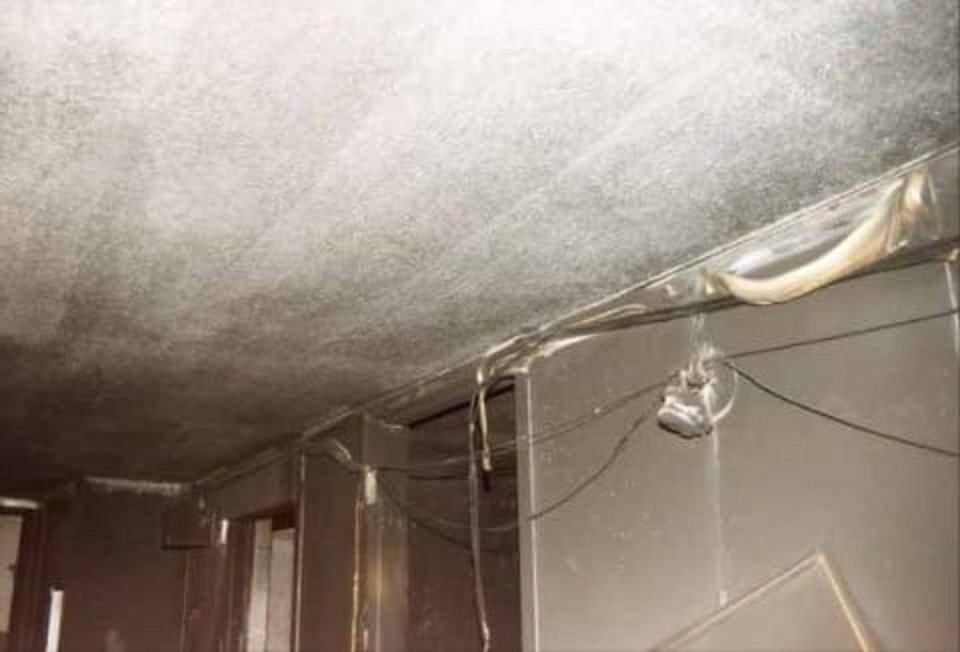
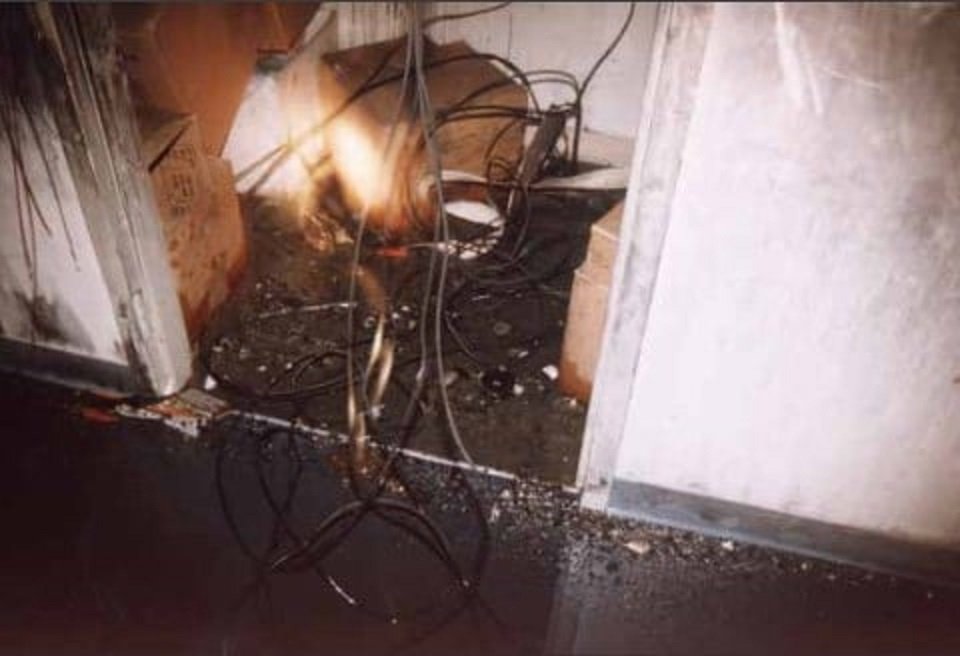
At 1009 hours, DC-810, BC-805 and BC-801 were in the landing of east stairwell on the 21st floor. They opened the door to the hallway and discovered a firefighter’s helmet just inside the door. The Ladder 15 captain, a firefighter from Engine 14, and a firefighter from Engine 28 were trying to pull a second hoseline to the hallway on the 21st floor from the floor below. The effort to pull the second hoseline was hampered by other firefighters trying to move elderly residents down the stairs. Every time the door to the 21st floor was opened, the stairwell became charged with thick black smoke. A firefighter from Engine 14 was advancing a hoseline down the hallway, and within a few feet from the door, found the Engine 17 captain face down and unresponsive laying on the floor of a trash chute room. He had become entangled in fire alarm wiring that had been retrofitted into the original building via plastic tracks attached to the ceiling which had melted allowing the wiring to sag to the floor. The captain was removed by firefighters to the 19th floor, and then to the lobby area. He was transported to a local hospital. The captain was hospitalized for several weeks for smoke inhalation, and to date, has not returned to the fire department. Note: The captain was placed on permanent disability following treatment for his injuries.
The reported trapped tenant was located and successfully removed from the dwelling unit next to the fire apartment by other firefighters.
NIOSH investigators concluded that, to minimize the risk of similar occurrences, fire departments should:
- ensure that all standard operating procedures (SOPs) regarding high-rise firefighting operations are followed.
- ensure that incident command always maintains close accountability to monitor the location of all firefighters on the fireground.
- ensure that all officers and firefighters wear and use a personal alert safety system (PASS) device that are involved in firefighting, rescue, or other hazardous duty.
- ensure that a Rapid Intervention Team be in place before conditions become unsafe.
- develop and implement a written respirator maintenance program for all respiratory protective equipment used by firefighters.
- ensure that firefighters entering immediately dangerous to life and health atmospheres have fully charged air tanks on their self-contained breathing apparatus.
- ensure that at least four firefighters be on the scene before initiating interior firefighting operations at a structural fire – two in, two out.
- consider using a rope attached to a permanent object or placing a bright, narrow-beamed light (e.g., laser) at the entry portal to a structural fire to assist lost or disoriented fire fighters in emergency escape.
- ensure that procedures are established to record fireground radio communications.
NIOSH also concluded that municipalities should require all high-rise apartments for the elderly have sprinkler systems installed and operable wherever feasible.
NOTE: NIOSH was notified by the fire department prior to the release of this investigation report of the following: 1) the fire department is updating the high-rise standard operating procedures, 2) the fire department is updating the self-contained breathing apparatus standard operating and maintenance procedures, 3) the fire department has purchased all necessary equipment to adequately test self-contained breathing apparatus, 4) the fire department has retested all self-contained breathing apparatus and documented test results, and 5) the fire department has made provisions to continuously record fire ground communications.
Commentary:
Fire operations in high-rise buildings are a high risk/low frequency activity for most fire departments. Familiarity and adherence to established standard operating procedures in the high risk high-rise environment are critical to firefighter safety. It is common in older high-rise occupancies to find the fire standpipe outlets in hose cabinets in the public hallway and not in the safety of the enclosed stairwell. This hook-up location, if made on the fire floor, places the fire attack and search teams in danger as the water source is not located in a protected position. Firefighters should consider the use of search ropes anchored to the stairwell exit to assist disoriented firefighters from the fire floor.
Control of the stairs is also critical to occupant safety. Firefighters were hampered by occupants trying to escape the building from the same stairwell as was being used by the fire attack team causing smoke exposure to the escaping occupants. When multiple stairwells are available in a building, incident commanders should designate which stairwell shall be used by firefighters and which stairwell should be used for removal of occupants. Firefighters should also consider when appropriate to have the occupants remain sheltered in place in their apartments in a fire resistive building.
Tracking of all personnel is also critical in high-rise fire operations. In this incident, members of multiple companies were operating independently of their assigned companies. Crew integrity should be maintained at all times. Radio communication is always critical in all types of fire incidents, however, all the more so in high-rise operations. Radio signals are often absorbed by the construction of the structure and will hamper operations. Some departments have found that staging a fire officer two floors below the reported fire location can be useful in relaying messages to the IC in the lobby. The use of internal telephones and other building communications equipment should also be considered.
In this incident, management of the air supply of searching firefighters became an issue. Firefighters should consider have later arriving companies deliver additional air cylinders to a staging area set up below the fire floor. Attempting a rescue deep into a heavily smoke and heat charged hallway without an adequate air supply is a dangerous practice and should be carefully considered before attempted.
Lastly, the Engine 17 captain and a firefighter from Squad 2 entered the hallway to the 21st floor (heavy smoke – no visibility) without anyone knowing they were attempting a rescue. They each also entered the area without an adequate air supply based on the report of a victim trapped in an apartment. Freelancing of this type cannot be tolerated on a disciplined fireground. It places the firefighters in jeopardy as well as places further risk on other firefighters who may be assigned to search for the missing firefighters.
We have attached photos of the building involved in the incident. The link to the NIOSH report is here: https://stacks.cdc.gov/view/cdc/163976
We have also attached a link to an investigative report published by the U.S. Fire Administration comparing the St. Louis high-rise fire to another high-rise fire incident in North Bergen, New Jersey: https://www.hsdl.org/document/774926
Also, we have attached a link to an article published in Fire Engineering magazine by Demetrius A. Kastros on the basics of high-rise fire operations: https://www.fireengineering.com/firefighting/high-rise-101/
And lastly, a link to a podcast produced by Fire Engineering magazine hosted by David Rhodes with Jerry Tracy and Jack Murphy titled: High-Rise Buildings: Understanding the Vertical Challenge: https://fireengineeringpodcastnetwork.podbean.com/e/in-the-books-high-rise-buildings-understanding-the-vertical-challenges/
Prepare your firefighters for the challenge of high-rise fire operations today by reviewing these training materials and discussing your department’s standard operating procedure for high-rise operations. Even if you do not have high-rise structures in your immediate local, these types of incidents rapidly become labor-intensive, and you could easily wind up at one of these incidents on a mutual aid run.
Get Out There And Know Your Local!!!
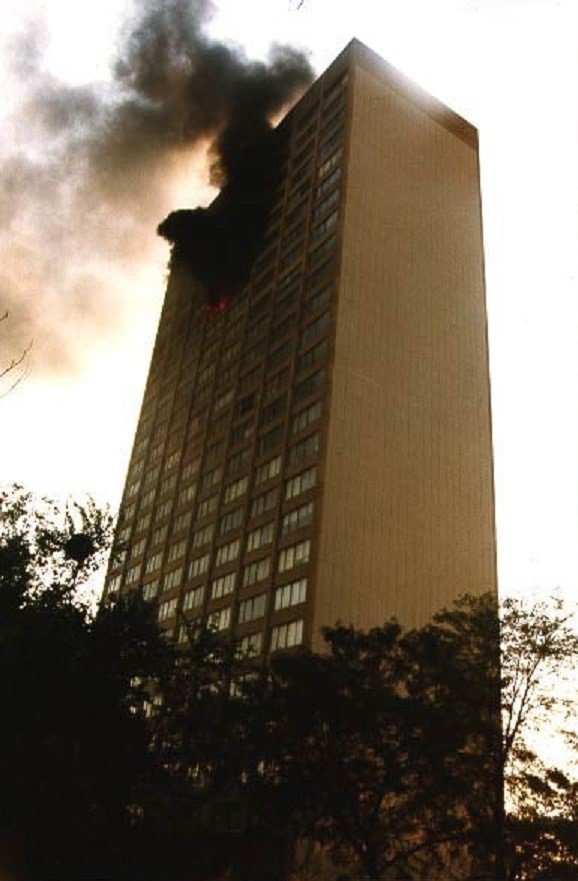
Photo: Smoke pours from the 21st floor of the Council Tower Apartments for the elderly in St. Louis, Missouri on October 12, 1998.
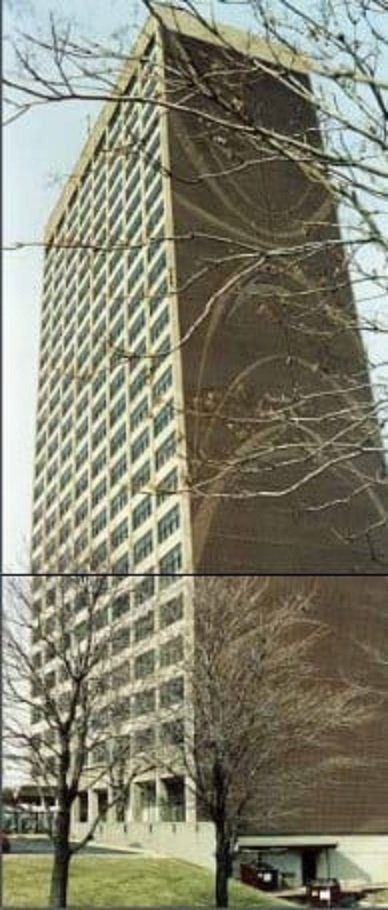
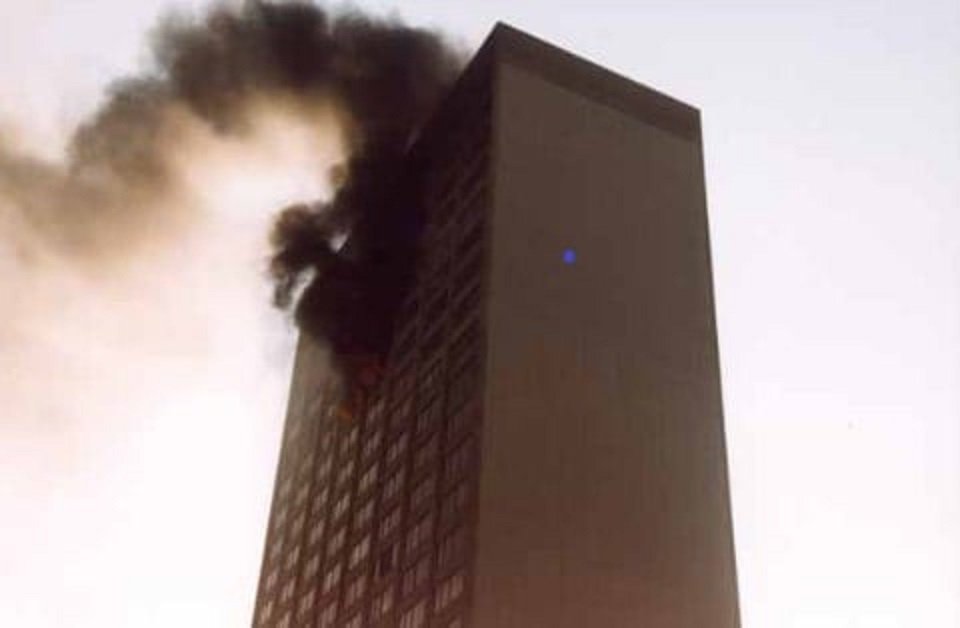
Photo: Flames and smoke coming from Apartment 2103.
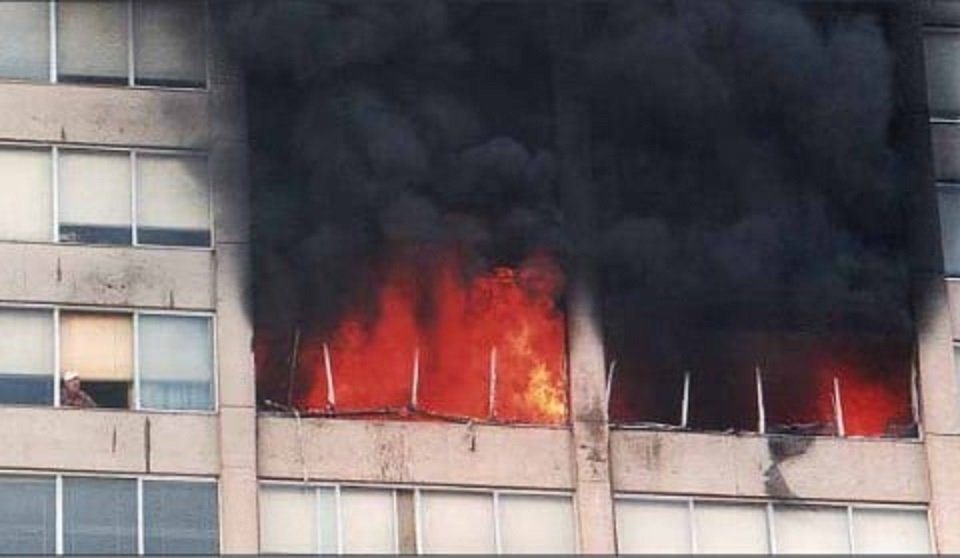
Photo: Occupant of Apartment 2104 on left awaits rescue.
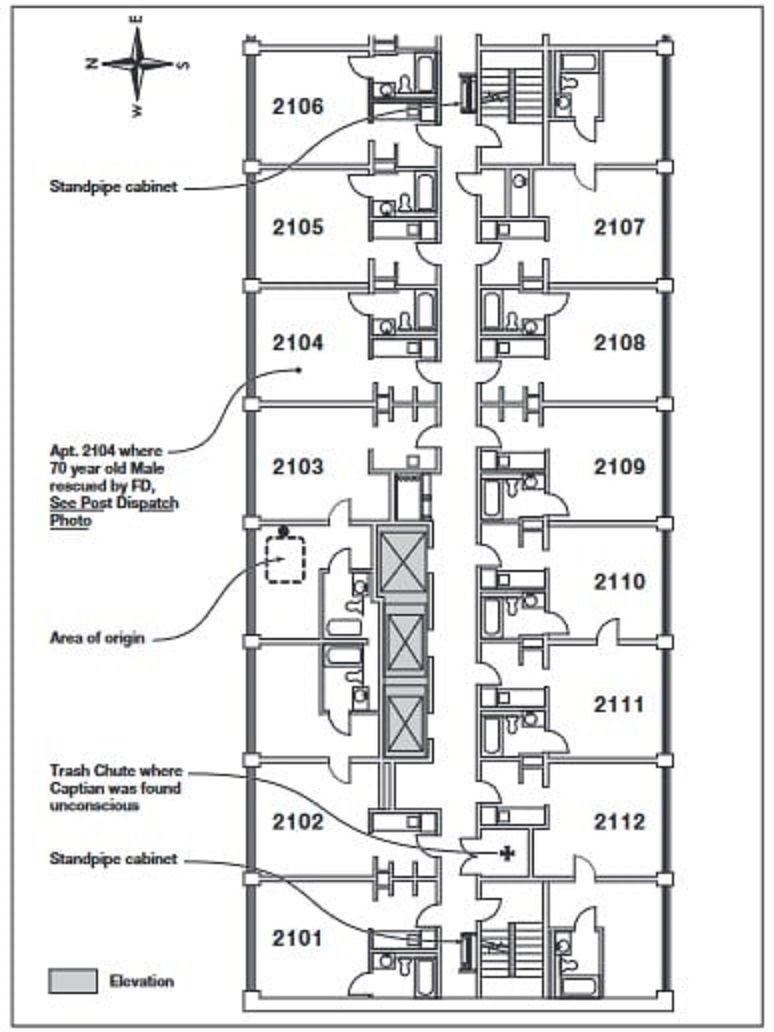
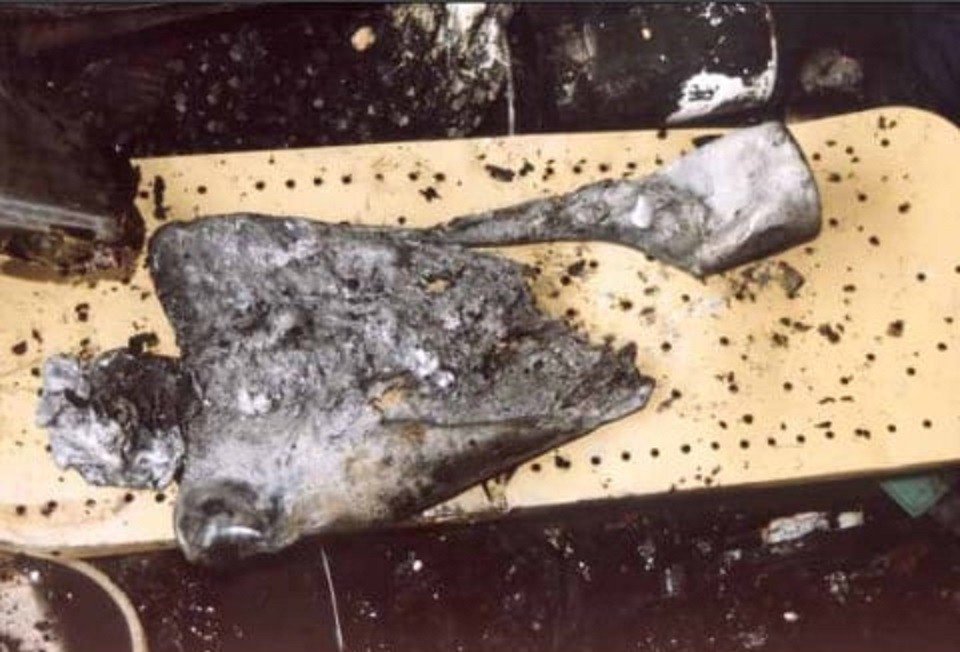
Photo: Ruptured aluminum oxygen cylinder, one of three that ruptured and accelerated the fire in Apartment 2103.