Three Firefighters Killed and Two Severely Injured in Wall Collapse During Warehouse Conflagration – The Crenshaw Warehouse Fire – Richmond, Virginia – October 10, 1915
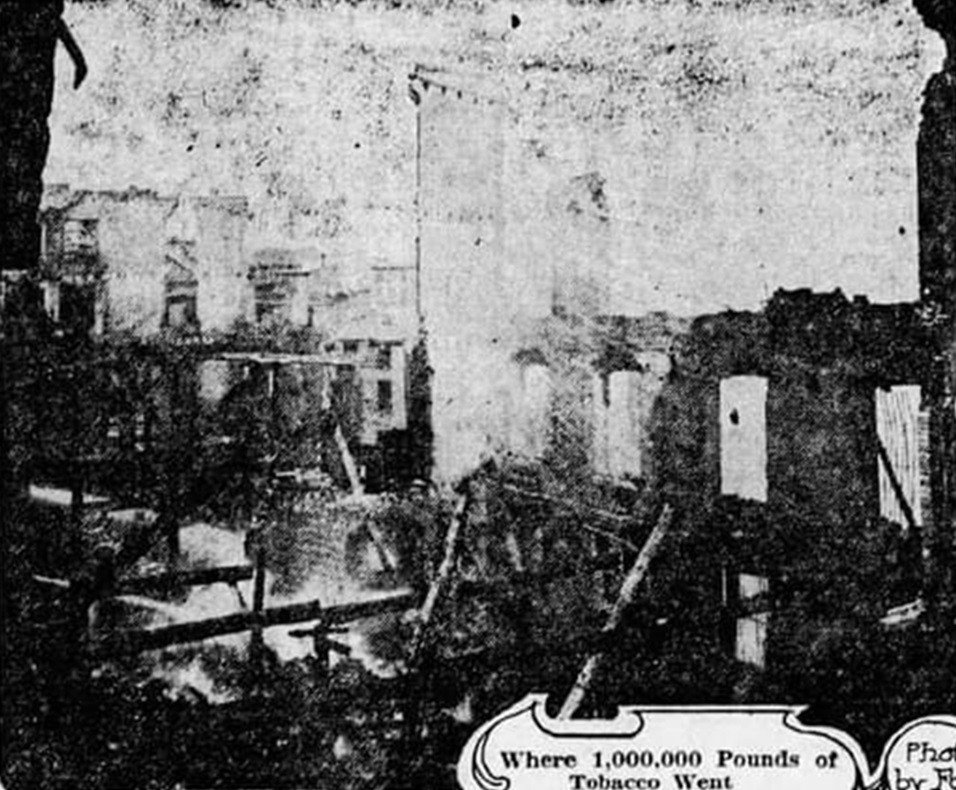
On October 10, 1915, one of the most disastrous fires the City of Richmond Virginia has ever experienced swept an old brick warehouse that stored thousands of pounds of tobacco valued at more than $500,000 in the Shockoe Slip area along the riverfront near the downtown section of the city. A strong wind fanned the flames as the conflagration spread to several adjacent buildings and only by the hard work of the entire city fire department was the blaze contained to the block of origin. The tobacco warehouse and several adjoining warehouses and manufacturing buildings on the block were destroyed. Fire Captain Richard Norment, and Firemen Charles Atkinson and William Odell died after the firefighters entered into the interior of a fire gutted warehouse to douse hot spots after the fire had been placed under control. The walls of the damaged structure suddenly collapsed, and Captain Norment was instantly killed, while Firemen Atkinson and Odell were badly injured and taken to the hospital. Both injured firemen died shortly after arrival from the severity of their injuries. Two other firemen were also hurt in the collapse, but both recovered from their injuries. The loss was placed at more than $500,000. The cause of the blaze which appeared to have originated in a section of the basement remains unknown.
The structure involved in the incident was a four-story with basement Type IV Heavy Timber/Mill construction tobacco storage warehouse located at 107 Shockoe Slip along the James River near the downtown area of Richmond. The large warehouse was owned and operated by the Crenshaw Company and was occupied by several wholesale tobacco dealers. The lower floors of the warehouse were packed with more than one million pounds of tobacco owned by the Italian government. The warehouse was about 250 feet long, 50 feet wide and 44 feet tall with a three-foot-high brick parapet wall along Side Alpha facing 35-foot-wide Shockoe Slip. Due to the slope in the terrain near the riverfront, the building was three stories on Side Alpha and four stories on Side Charlie. The heavy timber roof was slightly sloped and covered with tin sheeting with three raised ventilation cupolas spaced evenly down the centerline of the warehouse. Ceiling heights were 24 feet high on the first floor and 20, 16, and 12 feet high on the successive three upper floors. An unenclosed freight elevator near the center of the building served the upper floors. Office areas were located on the second and third floors. A division wall with two openings ran across the depth of the building dividing the warehouse into two sections on all floors: one third and two thirds in area. The windows had metal sashes and wired glass and all the window openings including the basement were equipped with heavy iron fire shutters on Sides Bravo, Charlie and Delta.
The massive one-story brick and wood joist Shockoe Tobacco Company warehouse and offices of the Tobacco Exchange, measuring about 400 feet long by 150 feet wide, was on the opposite side of the street on Side Alpha from the fire building. The fire building was separated from the rear of a row of three-story brick and wood joist commissary warehouses that faced on East Cary Street across a narrow 20-foot-wide alley on Side Bravo. A row of two and three-story sugar and coffee refinery and wholesale grocery warehouses that faced Virginia Avenue was across a narrow 25-foot-wide alley on Side Charlie. A two-story with basement iron-clad wood frame and brick tobacco warehouse was across a very narrow eight-foot-wide passageway on Side Delta. A row of three-story tobacco, cigar and coffee warehouses that faced on Virginia Street were close to the rear of the Delta exposure. A several large tobacco, sugar refining, wholesale groceries, and wholesale hat warehouses and a paper bag factory were also on the southern end of the congested block. A canal that flowed to the James River was at the southernmost end of the block between a stone arched viaduct on South 13th Street and Virginia Avenue at the Southern Railroad depot and rail yard. The fire building as well as all of the other warehouses and buildings on the block were not equipped with fire alarm or automatic fire sprinkler systems. Several fire hydrants were available on the city streets looping the block fed by six- and eight-inch water mains. Two yard hydrants were located on Shockoe Slip on Side Alpha of the fire building fed by a three-inch water main. Fire alarm call boxes were located one block north at South 13th Street and East Cary Street and one block south on Shockoe Slip near the canal.
Richmond is the capital city of the Commonwealth of Virginia. The 62.57 square mile city’s population at the 2020 U.S. census was 226,610 making it Virginia’s fourth-most populous city. The Richmond metropolitan area, with over 1.3 million residents, is the Commonwealth’s third-most populous. The city is located on the James River 44 miles west of Williamsburg and 92 miles south of Washington, D.C. Surrounded by Henrico and Chesterfield counties, Richmond is at the intersection of Interstate 95 and Interstate 64 and encircled by Interstate 295. Founded in 1737, it replaced Williamsburg as the capital of the Colony and Dominion of Virginia in 1780. During the American Civil War, Richmond was the capital of the Confederate States of America. Near the close of the war, Confederate troops burned much of the city while they evacuated in the face of advancing Union forces and a large portion of city was destroyed. During the Reconstruction period following the war, the central business district was rebuilt and the city prospered as Richmond resumed its position as a major urban center of economic productivity with iron front buildings and massive brick factories. By the beginning of the 20th century, the city’s population had reached 85,050 in five square miles, making it the most densely populated city in the Southern United States. By the 1910 U.S. census, the city’s population had soared 127,628 residents, a 50% increase over the previous census.
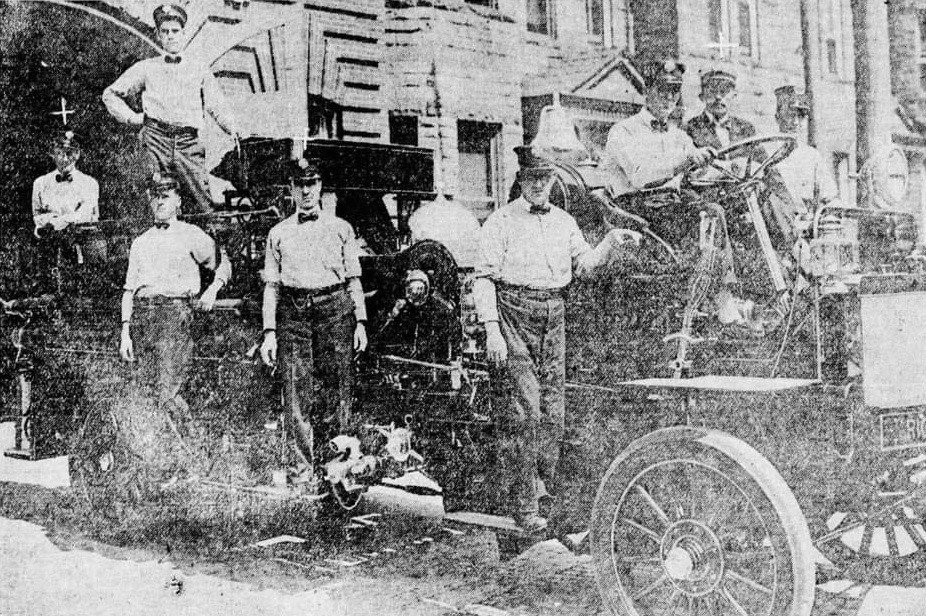
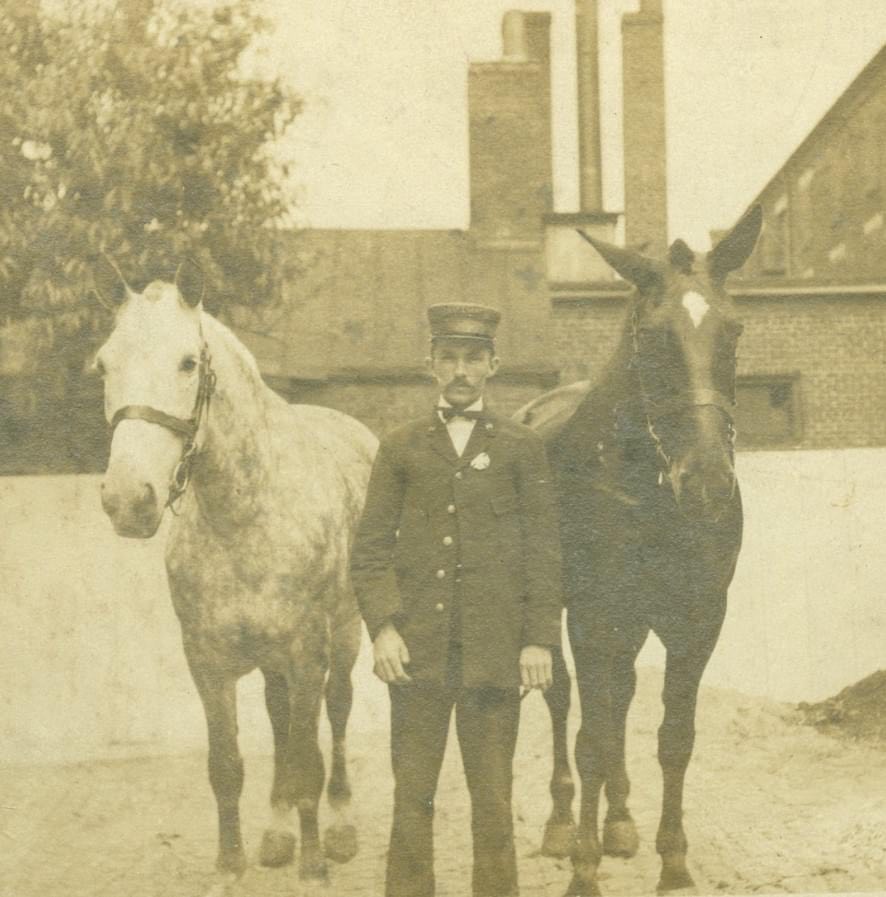
The Richmond Fire Department traces its roots back to 1819 when three volunteer fire companies were organized to provide fire protection for the city. This system was in place until 1858 when the City Council, dissatisfied with the performance of the fire companies at a fire at the State Penitentiary, passed an ordinance disbanding the volunteer department and creating a paid municipal fire department. As the city expanded with annexation of adjoining areas, the Fire Department also grew. By 1908, the department had 85 paid men, 56 call men, and 52 horses staffing 11 fire stations with 9 steam engines, 2 aerial ladder trucks, 1 hook & ladder truck, 6 combination chemical and hose wagons, and 3 hose wagons. Several pieces of apparatus were held in reserve. The city had a Gamewell fire alarm system with 187 boxes including street boxes, boxes in public buildings, and private boxes. The city water works had 2 pumping stations and several reservoirs supplying 747 fire hydrants distributed around the city.
Today the city is protected by the 421 career members of the Richmond Department of Fire and Emergency Services staffing 20 fire stations deploying 20 quints, 3 heavy rescues, 3 tankers, 2 brush trucks, 1 water rescue truck, 1 HazMat unit, 1 technical rescue unit, and numerous staff vehicles. The department responds to an average of 30,000 calls for service annually.
Area weather conditions on the night of the fire included an air temperature in the lower 50s and a humidity level of 67% with a gusty northwest wind at 12 mph under clear skies (Richmond Times-Dispatch). Note: Research by the National Institute of Standards and Technology (NIST) has shown wind speeds on the order of 10 to 20 mph are sufficient to create wind-driven fire conditions in a structure with an uncontrolled flow path (Madrzykowski and Kerber 2009). The wind condition was reported to have had a significant impact on fire development and the outcome of the incident.
On the night of Sunday, October 10, 1915, one of the night watchmen, R.M. Bagby, who lived in the Crenshaw warehouse at 107 Shockoe Slip, was awakened from sleep shortly after 1 a.m. by smoke filling the building. As he rose from his slumber, a tongue of flame darted up the stairway. He quickly threw a bucket of water at the fire and as he went to fill another bucket, he noticed that the fire was climbing the staircase like a flue. Avoiding being cut off from the street door exit, Bagby plunged into the fire and struggled for the exit. Badly scorched about the face and hands, he managed to find his way outside and sped to the alarm box at the corner to turn in the alarm.
Richmond fire units stationed in the downtown area quickly responded to the alarm and found the entire ground floor of the Crenshaw warehouse filled with fire. A second alarm soon to be followed by a third alarm was rung in. Every piece of available apparatus, except for the suburban companies, was hurried to the scene and soon multiple streams of water were playing on the fire. Bagby said that he could not make his way through the police lines that had been set up to hold back the crowds. He stood and watched the firefight until about 3 a.m. when he went to the Lexington Hotel and summoned a doctor to treat his burns. Bagby later said that he had sent the other watchman in the warehouse out to get sandwiches at about 8 p.m. the previous evening and the man never returned to the warehouse. The second watchman was later found to have been arrested for public drunkenness that evening and was held overnight at the local police precinct house.
For a time, it seemed that the firemen would be unable to get control of the fire and confine it to the block, in which many of the principal commission houses and merchandise brokers were quartered, as well as where the tobacco warehouses and the offices of the tobacco exchange were located. A brisk northwest wind was driving a mass of sparks and glowing embers east towards the Southern Railway yards and onto the roofs of several buildings along Virginia Street. Spot fires broke out in some of the buildings and several fire companies had to be redirected to fight the fires in this area. The building occupied by the F.V. Gunn & Company ignited, and it was impossible to prevent the spread to the adjoining buildings including the Gunn Disinfecting Company, the Federal Sugar Refining Company, the R.A, Cauthorne Paper Company and the warehouses of the Fleming Brothers and soon these buildings burned briskly. The walls of the Charles E. Smith building were drenched, and in spite of the heat and sparks, this building was saved. The other buildings on Virginia Street, though, burned like so much tinder, and the heat forced back the throngs of people crowded close to the police ropes. The direction of the wind was instrumental, however, in protecting several exposed buildings to the north along East Cary Street.
Meanwhile back at the Crenshaw warehouse, the firemen were facing one of the hottest fires in the history of the city. With both of the below grade floors a mass of seething flame, the floors above ground became a solid mass of fire. From every window spouted tongues of flame, which licked at the wooden roof cornice of the Shockoe tobacco warehouse across the narrow street. These walls were drenched and several fires on them were extinguished.
From the roof of the Crenshaw warehouse rose a swirling, coiling mass of flame and smoke. The caving in of this roof was spectacular as the great sheets of metal and heavy timbers gave way at the cornice and collapsed into the building with a thunderous crash. Showers of sparks were sent spiraling skyward, where the eddying wind whirled them about in a horribly beautiful spectacle. Underneath them the entire building was still enveloped in solid flame. For hours, the mass burned briskly and then began to die down as the fuel was consumed and the many streams of water gradually quenched the flames.
It was not until the conflagration had been burning for about three hours that the firemen began to have hopes of saving the other buildings on the block. By that time, they had succeeded in extinguishing the fires in the rear of the East Cary Street buildings with the exception of the L. Neal & Company buildings, and in getting the blaze in the Virginia Street establishments well under control. They concentrated their efforts on these structures and within an hour’s fight, succeeded in reducing them to smoldering ruins.
With most of the conflagration out, but most of the apparatus being kept on the scene should the fire break out again, the work of smothering out the last hot spots in smoldering debris began. Several other companies were working in the Crenshaw warehouse and in the Neal buildings, as well as in the rear of the damaged buildings on Virginia Street when Captain Richard Norment of Engine Company 1 led the four men of his company into the doorway of the gutted F.V. Gunn building on Virginia Avenue. Norment was ahead, as he always was, according to Fire Chief William H. Joynes, and Firemen Charles Atkinson and William Odell were at the nozzle of the hoseline. Firemen A.K. Davenport and T.D.C. Johnson followed behind dragging the hose into the building.
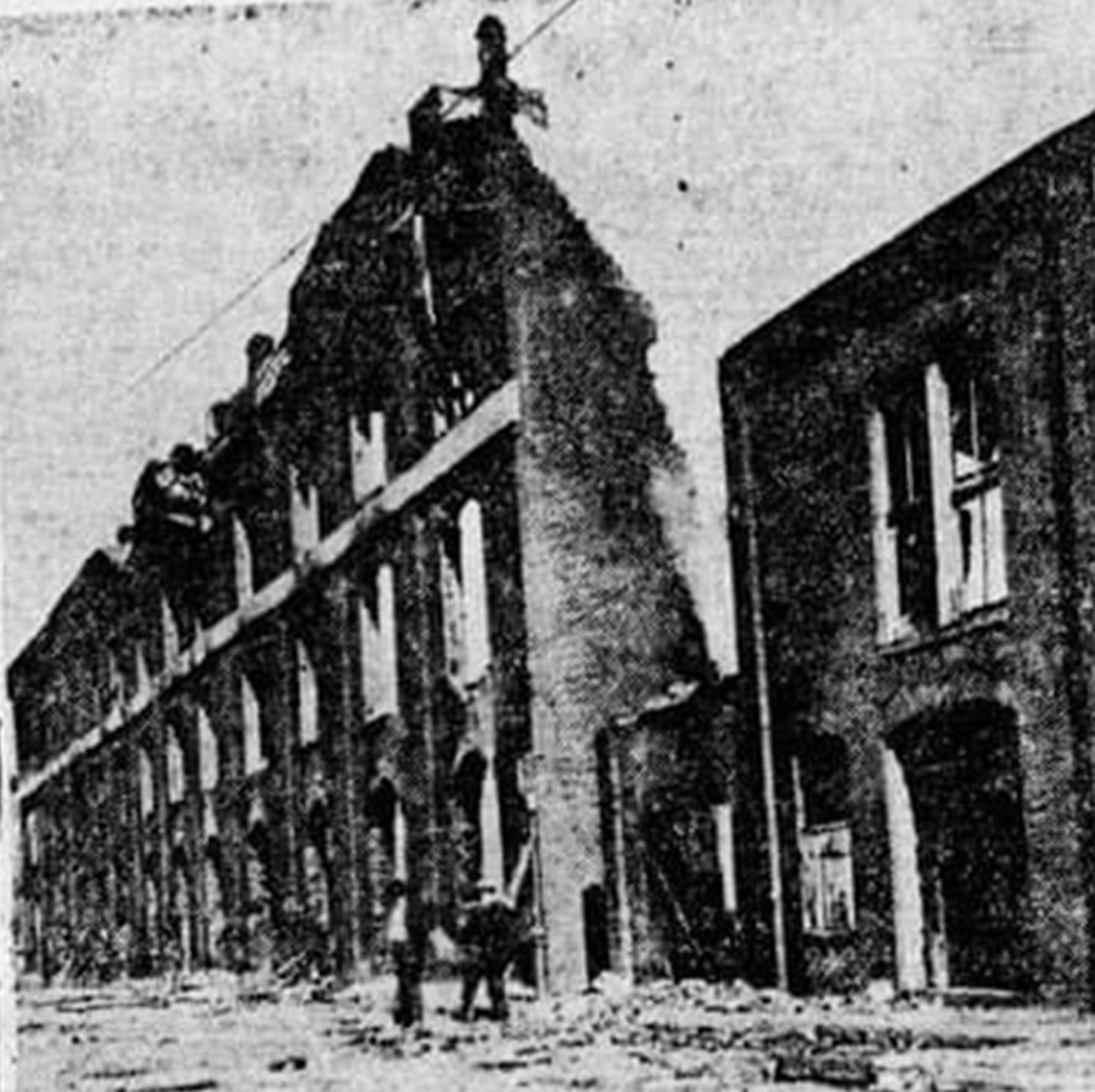
Captain Norment and the nozzle crew had advanced about thirty feet into the building and were playing the stream on the mass of smoldering merchandise when a tank of oil exploded. The tank was located near the partition wall and the shock of the explosion caused the already tottering wall to give way. Buckling near the ground, the wall simply collapsed. Silently the heavy mass of bricks, mortar and metal came down on the men at its base. The crash made when the mass struck the floor was deafening and the air was filled with dust, live coals and ashes.
For a second those who were at work outside the building could not grasp the enormity of the disaster. They stood mutely staring at the high pile under which their comrades were buried. Then the crisp commands of the lieutenants and other officers were heard, and a score of firemen and policemen leaped into the building and began digging in the hot bricks with their bare hands while others ran to the apparatus for picks and shovels. Chief Joynes and Assistant Chiefs Raffo and Wise were notified and hurried to the spot. Then the work of rescue began in earnest. No time was lost as each man plied his implement as though his own life depended upon his exertions, and gradually the height of the mass diminished.
Fireman Johnson was the first to be dug out but was unconscious. While he was being placed in a police patrol automobile, Fireman Davenport was located and place in the patrol wagon, also unconscious. The driver was given instructions and with Patrolman Cousins in the rear with the injured men, dashed for Virginia Hospital where the two men were shortly revived.
Back at the fire the rescuers were still trying to locate the other missing firemen beneath the ruins. It was some time before Firemen Odell and Atkinson were located and started for the hospital, only to die on the way or succumb a few minutes after arrival. Work involved in the search for Captain Norment was laborious, but men with their hands torn and bleeding refused to leave the spot and continued their efforts. The crushed body of the Captain, unrecognizable by men who had worked with him in the department for twenty years, was at last dug out. The ring on his finger mutely identified him.
The Crenshaw tobacco warehouse was completely destroyed as were several buildings on Virginia Avenue including the F.V. Gunn & Company, the Federal Sugar Refining Company, the R.A. Cauthorne Paper Company, and the Fleming Brothers warehouse. The Robert S. Christian and Sons building was seriously damaged. Several commissary warehouses on East Cary Street were damaged or destroyed. The loss was placed at more than $500,000 to the buildings and contents destroyed or damaged in the conflagration. The cause of the blaze which appeared to have begun in a section of the basement remains unknown. Some speculated that a stray cigar stub may have been flung into the basement and caught some rubbish, an amount of which had accumulated in this area, on fire.
Members of the Richmond Fire Department killed in the line of duty during the Crenshaw Warehouse Fire on October 10. 1915:
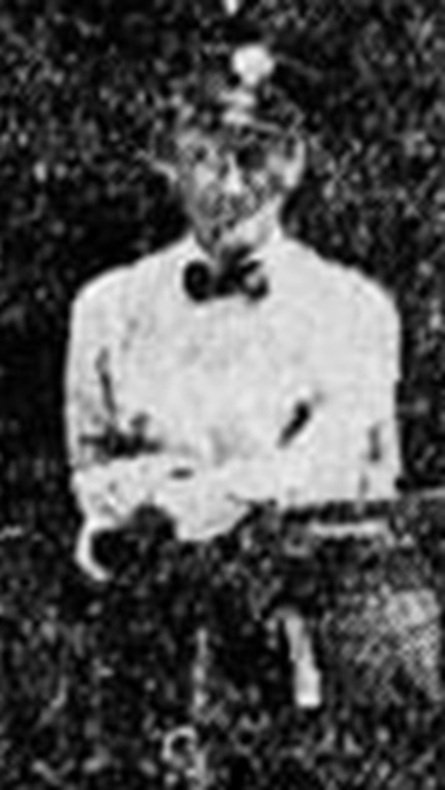
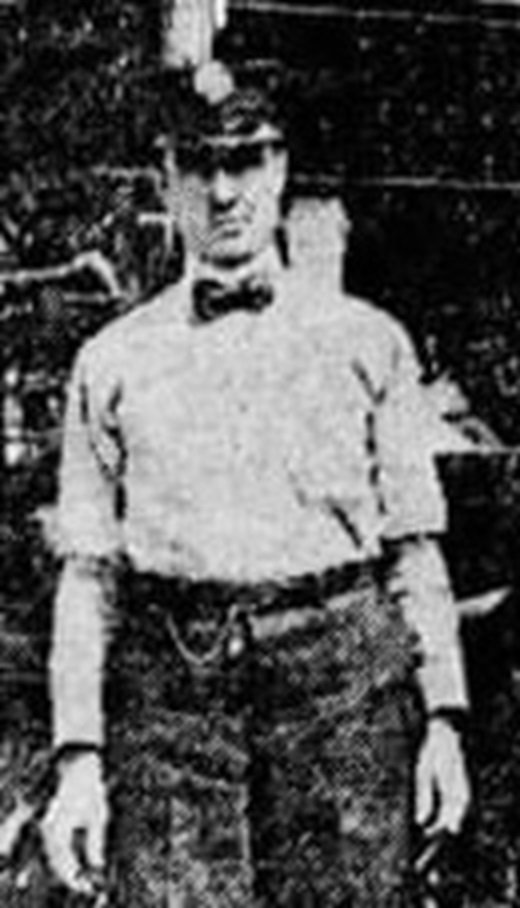
- Captain Richard Meredith Norment, age 41, was a 20-year veteran of the Richmond Fire Department assigned to Engine Company 1. He had fought some of the most challenging fires in the city during his career. He was survived by his wife, Mary, and four children. His funeral was held at the Union Station Methodist Church with interment in Oakwood Cemetery in Richmond.
- Fireman William Redford Odell, age 36, was a six-year member of the Richmond Fire Department assigned to Engine Company 1. He had recently been transferred into the company and was survived by his wife, Cora, and three children, Wilbur, age 15, Gladys, age 14, and Arneta, age 5; his parents, Millard and Roberta Odell; and three sisters and one brother. His funeral was held at his residence with interment following at Riverview Cemetery in Richmond.
- Fireman Charles Lynwood Atkinson, age 36, was a five-year member of the Richmond Fire Department assigned to Engine Company 1. He was unmarried and survived by two dependent sisters. His funeral was held at his residence with interment following at Oakwood Cemetery in Richmond.
Following the tragic fire, the city Board of Aldermen appropriated the sum of $7,500 for relief for the dependent families of the fallen firefighters.
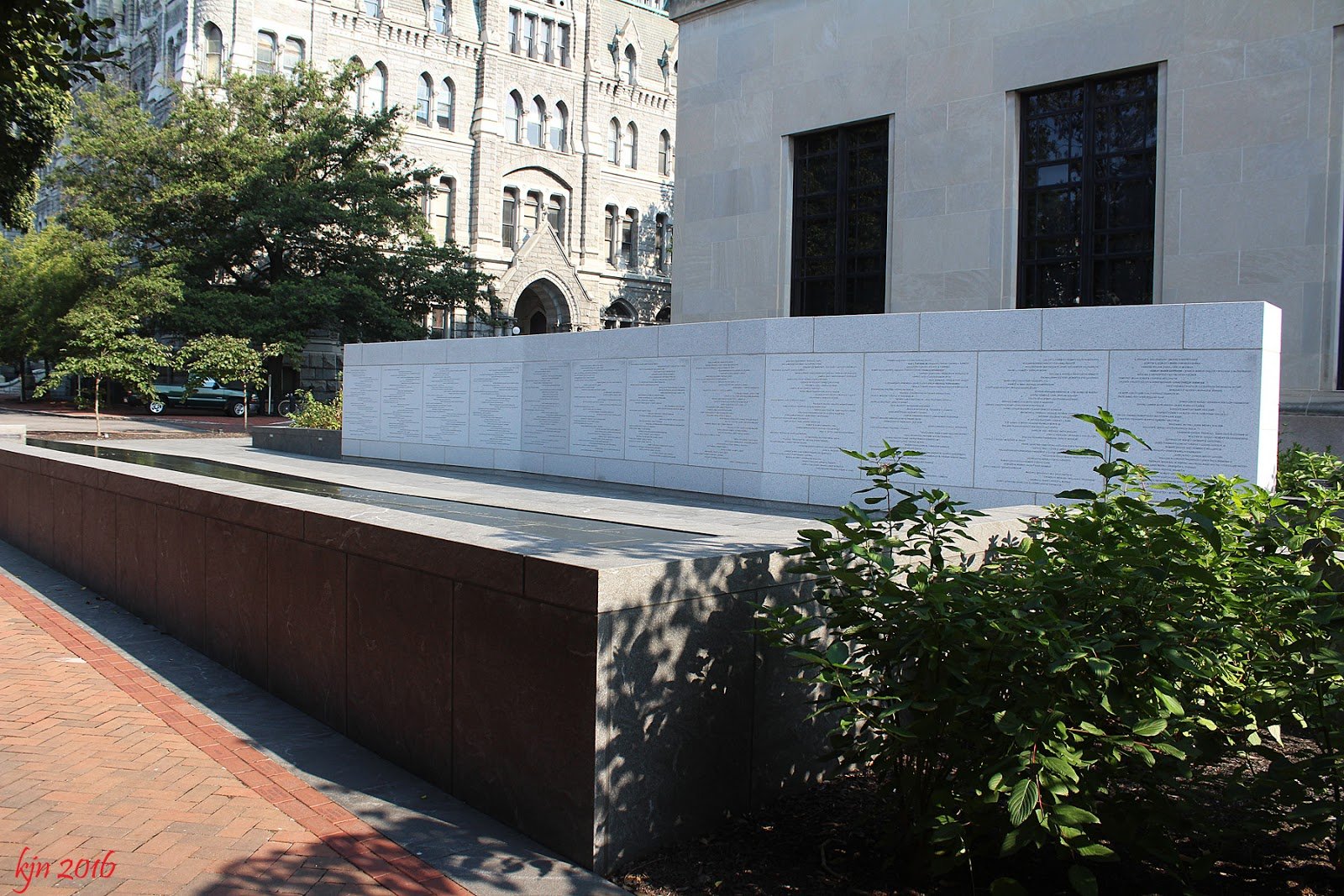
The names of Fire Captain Richard Norment, and Firemen Charles Atkinson and William Odell have been inscribed on the Virginia Public Safety Memorial Wall located in the Darden Garden near Virginia’s Capitol Square in Richmond. The memorial spans 150 feet by 40 feet, with a granite wall of names running east to west along the north side, slightly elevated from the plaza. A wide walkway runs alongside, bordered by a water feature on the south, creating a serene, reflective space. The names of nearly 1,000 Virginia public safety personnel who have died in the line of duty are inscribed on the wall.
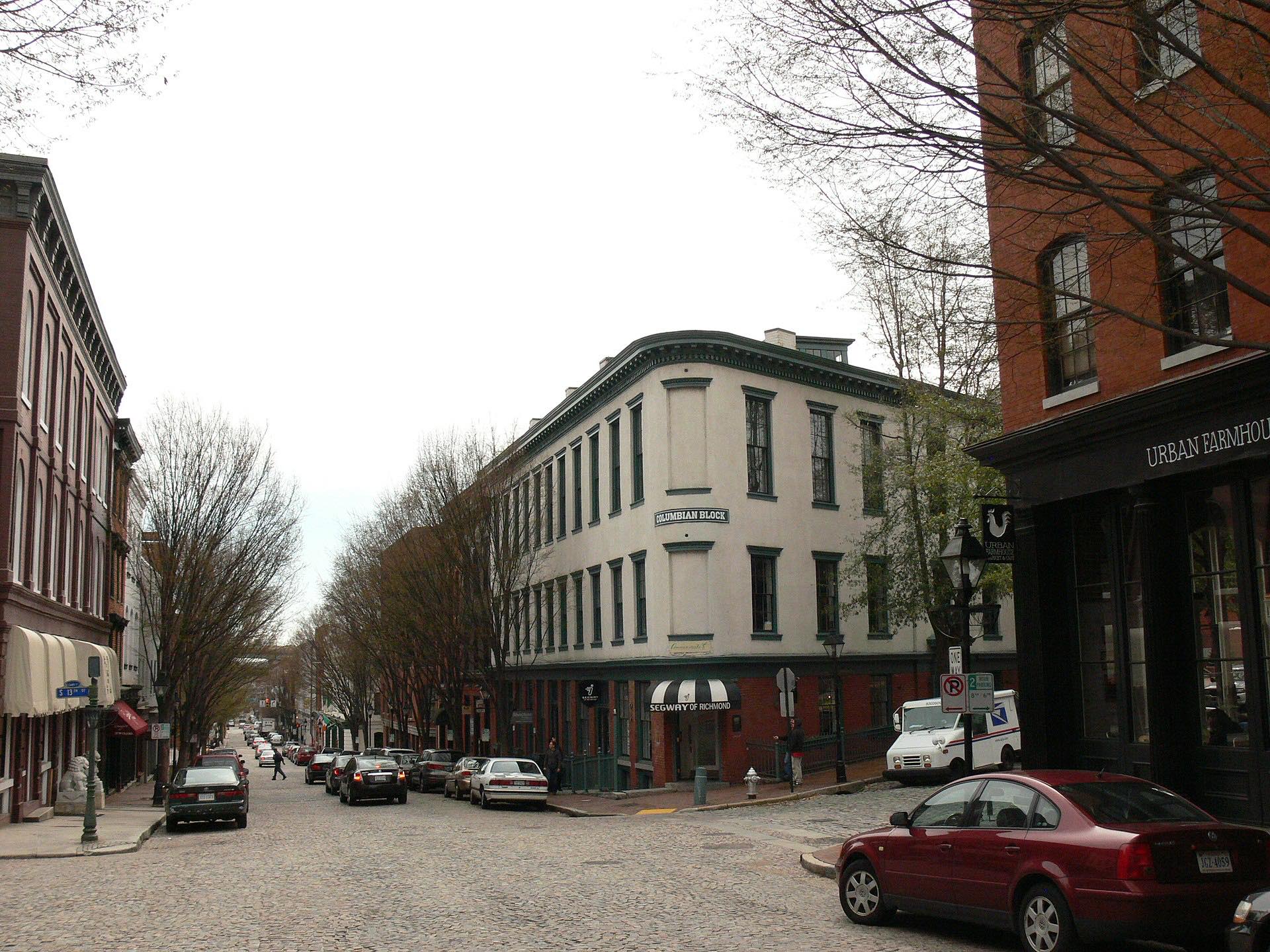
The site of the fatal fire is now occupied by an area of restored former industrial buildings that have been repurposed as restaurants, shops, offices and loft apartments. There is no memorial marker at the site.
Commentary:
Type IV Heavy Timber/Mill construction is characterized as having main framing members measuring no less than eight inches by eight inches in diameter and with exterior walls that are made of a non-combustible material. The building classification is a strong, durable, slow-burning type of joisted masonry construction characterized by heavy floors and thick wooden columns or beams with thick masonry exterior walls. The robust wooden interior structural members and fire-resistive exterior walls reduced the risk of fire destroying the entire building when smaller fires occurred in the structures. The masonry exterior walls also provided a measure of protection from exposure fires from nearby structures. Often these buildings would suffer only light fire damage to the interior and business could resume fairly quickly after clean-up. However, if the fire could not be controlled in its incipient stage by fire brigades or local fire companies, or later by automatic fire sprinkler systems, the large dimension wooden structural members would burn long and furiously, sometimes becoming a conflagration hazard to adjacent structures by generating tremendous amounts of extreme radiant heat and flying brands.
One of the biggest concerns for firefighters with heavy timber construction is structural compromise. Falling walls are characteristic of heavy fire conditions of a fully involved heavy timber/mill construction structure. When any one of the previously mentioned characteristics are removed or there is no operable sprinkler system, fire will ultimately attack the combustible wood structural members. When a building of heavy timber construction takes off, firefighters often are unable to even get close enough to attack it with hoselines due to the extreme radiant heat. This also causes exposure fires from the extreme radiant heat subsequently attacking other structures. It is common for burning embers to be carried blocks away and spark fires on the rooftops of other structures. When a fire becomes untenable for firefighters, the structure must be evacuated, and defensive operations initiated. This means large caliber streams and collapse zone compliance.
The walls of a heavy timber building will ultimately fail after long hours of hot fires. Once the heavy timber interior supporting frame of the structure has been destroyed, the masonry exterior walls become unstable. Firefighting history is unfortunately replete with instances where firefighters have been killed or seriously injured by falling walls in large industrial heavy timber buildings while conducting overhaul following defensive exterior operations. The firefighters who were killed and injured in this incident were conducting overhaul operations in a building that had been gutted after several hours of burning and localized interior collapse during a group fire of industrial buildings. This incident shares similarities with an incident that killed two firefighters in 2018:
Two York, Pennsylvania firefighters were killed, and two firefighters were seriously injured in the partial fire collapse of an old heavy timber mill building that was being renovated into residential apartments on March 22, 2018. The firefighters were operating on the top floor of the four-story building working to extinguish hot spots that were blocked from master streams by a sagging rubber membrane roof. The building had suffered a major fire and partial collapse the previous day and the secondary collapse occurred almost 20 hours after the fire had been placed under control:
https://www.facebook.com/groups/192218352449074/permalink/1484389289898634/
We have attached photos and illustrations from the Richmond incident and a detail from the 1905 Sanborn fire insurance map showing the configuration of the fire building and the surrounding exposures.
We have also attached the link to a BCFS Question of the Week article on Type IV Heavy Timber/Mill construction buildings: https://www.facebook.com/groups/192218352449074/permalink/1665971911740370/
Thanks to multiple media sources for the content of this article.
Honor the service of Fire Captain Richard Norment, and Firemen Charles Atkinson and William Odel by studying the fire and collapse characteristics of Type IV Heavy Timber/Mill construction and by touring a heavy timber/mill building in your local response district with your crew members today.
Remember Fallen Brothers.
Get Out There And Know Your Local!!!
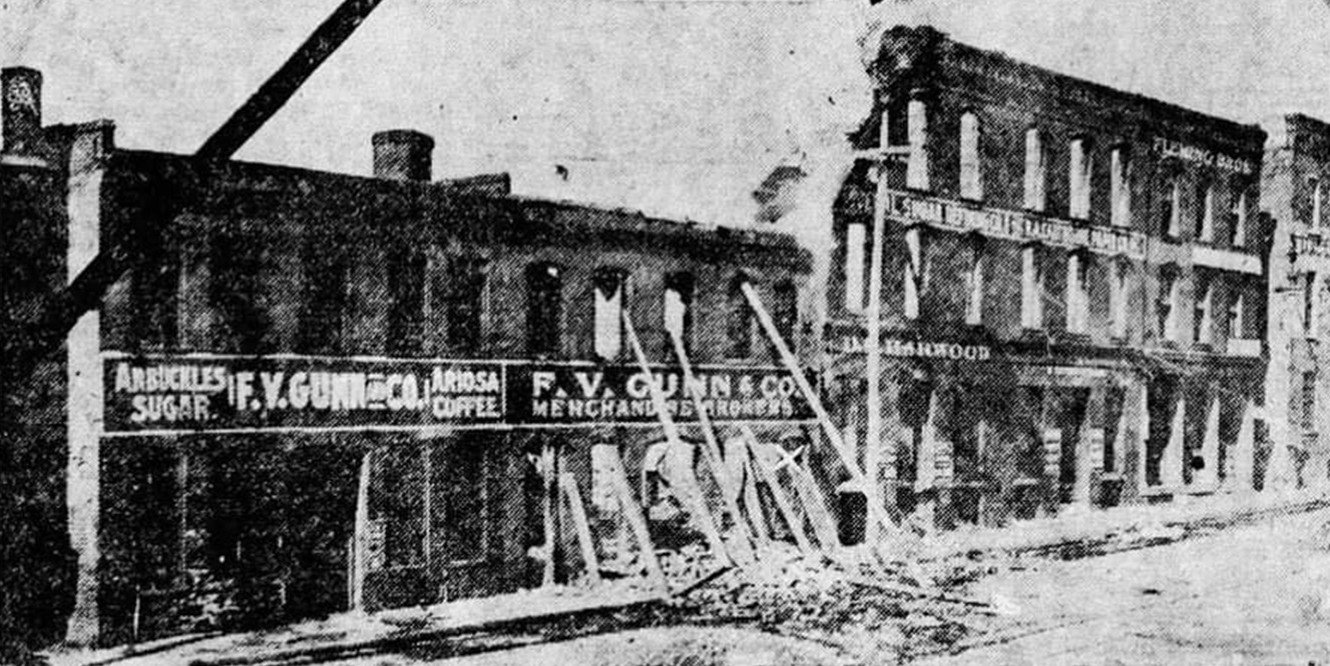
Photo showing the interior collapse of the F.V. Gunn warehouse where the three firefighters were killed.
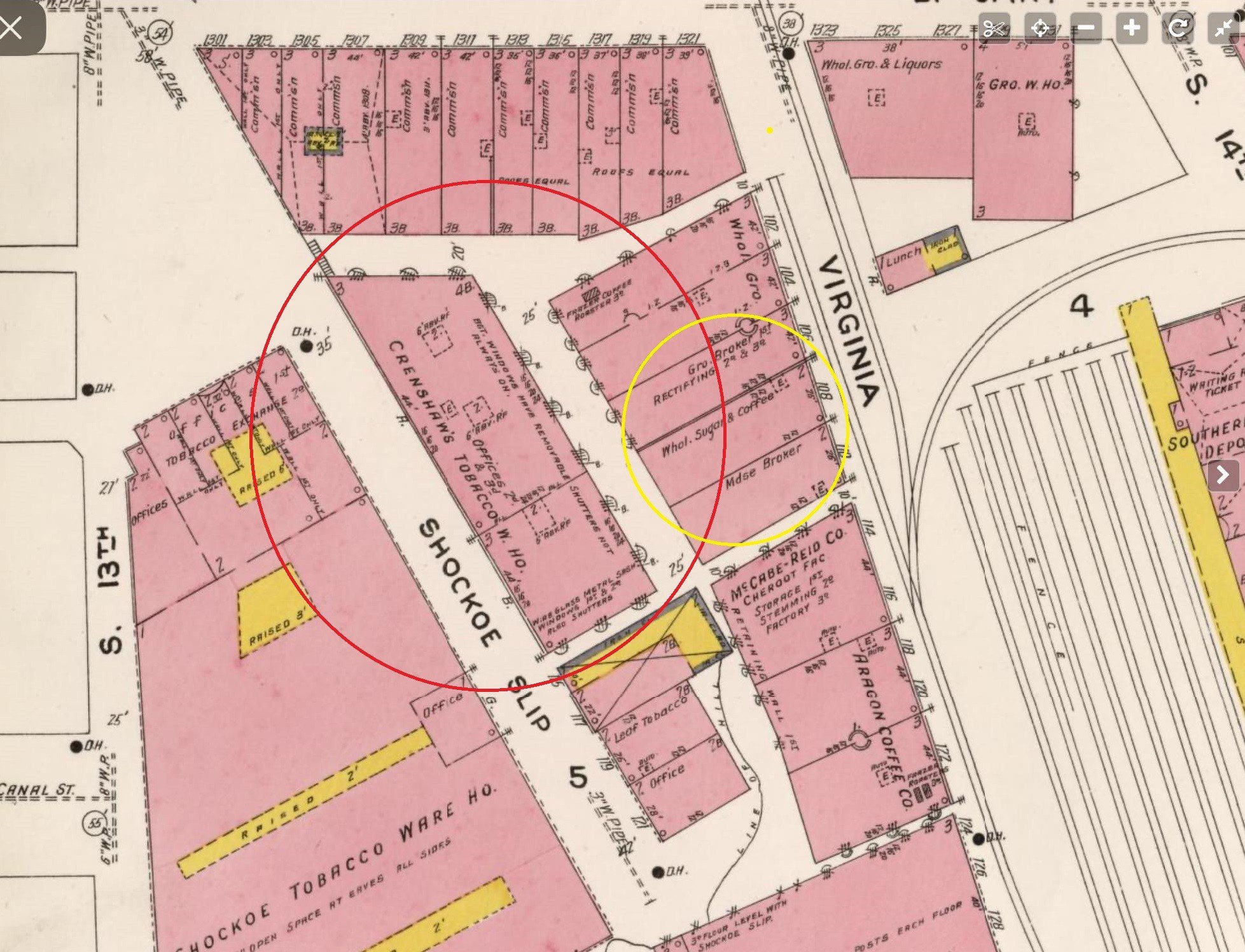
The massive one-story brick and wood joist Shockoe Tobacco Company warehouse and offices of the Tobacco Exchange, measuring about 400 feet long by 150 feet wide, was on the opposite side of the street on Side Alpha from the fire building. The fire building was separated from the rear of a row of three-story brick and wood joist commissary warehouses that faced on East Cary Street across a narrow 20-foot-wide alley on Side Bravo. A row of two and three-story sugar and coffee refinery and wholesale grocery warehouses that faced Virginia Avenue was across a narrow 25-foot-wide alley on Side Charlie. A two-story with basement iron-clad wood frame and brick tobacco warehouse was across a very narrow eight-foot-wide passageway on Side Delta. A row of three-story tobacco, cigar and coffee warehouses that faced on Virginia Street were close to the rear of the Delta exposure. A several large tobacco, sugar refining, wholesale groceries, and wholesale hat warehouses and a paper bag factory were also on the southern end of the congested block. A canal that flowed to the James River was at the southernmost end of the block between a stone arched viaduct on South 13th Street and Virginia Avenue at the Southern Railroad depot and rail yard. The fire building as well as all of the other warehouses and buildings on the block were not equipped with fire alarm or automatic fire sprinkler systems. Several fire hydrants were available on the city streets looping the block fed by six- and eight-inch water mains. Two yard hydrants were located on Shockoe Slip on Side Alpha of the fire building fed by a three-inch water main. Fire alarm call boxes were located one block north at South 13th Street and East Cary Street and one block south on Shockoe Slip near the canal.
Detail from the 1905 Sanborn fire insurance map showing the configuration of the Crenshaw Tobacco warehouse (circled in red) and the exposure F.V. Gunn warehouse (circled in yellow) where the three firefighters were killed in the collapse.