
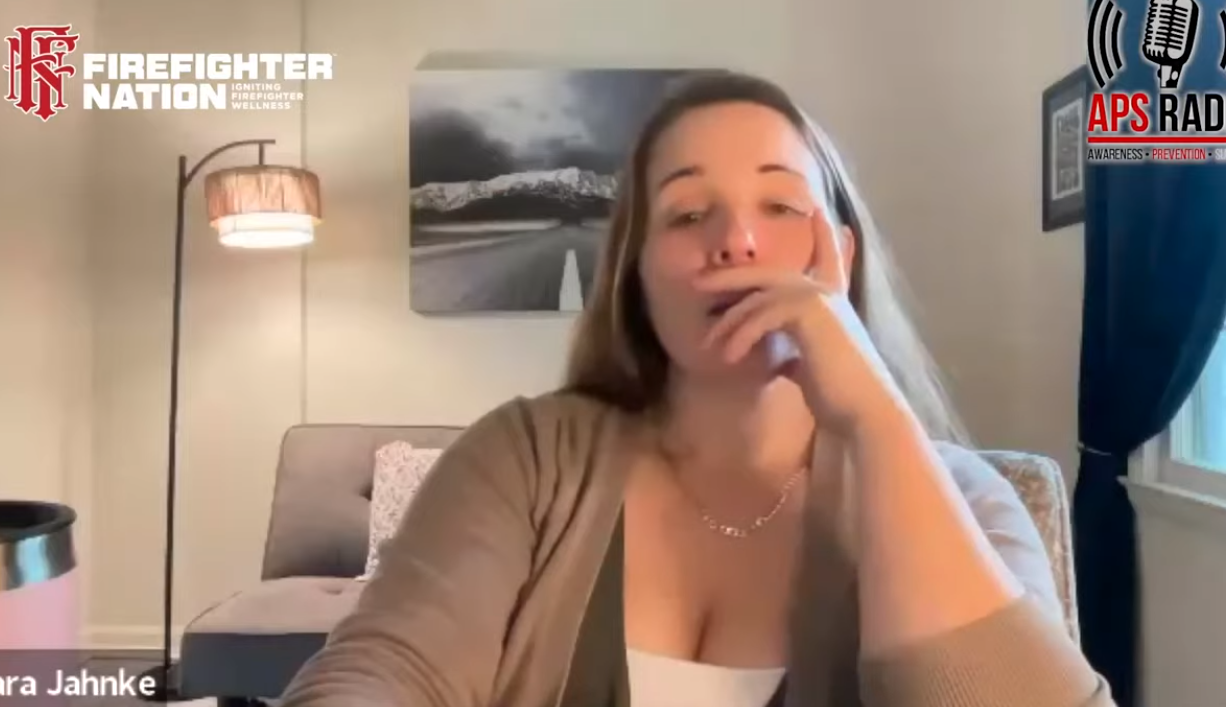
For this episode of APS Radio, host Jim Burneka sits down with longtime friend and researcher Dr. Sara Jahnke to explore the evolving landscape of firefighter health. There’s a little of everything, from lighthearted personal banter to updates about the upcoming Science to the Station conference in Kansas City, MO, November 3-5, 2026. Jahnke highlights ongoing research into sleep schedule modifications, post-traumatic stress interventions, and the cultural approach to alcohol use in the fire service. They also get into complex topics like cancer screening barriers, critical illness pools, and the emerging role of alternative treatments, including psychedelic therapies and ketamine for trauma recovery. Burneka shares his personal experience with mild traumatic brain injuries, emphasizing the vast gaps in health awareness.
1. Funding for Firefighter Research Remains Challenging but Crucial.
Dr. Sara Jahnke outlines the current climate for firefighter-related research funding, emphasizing the intense competition and limited dollars available. Funding agencies have become increasingly selective, funding only about five to six projects annually from more than 70 grant applications. The rigorous review process prioritizes studies that are both scientifically sound and clearly relevant to fire service needs.
This bottleneck means every research project must be directly applicable and feasible for firefighters to implement, or it risks becoming academic without real-world impact. She stresses the importance of collaboration between firefighters and researchers to ensure studies address practical, service-driven questions, reflected in her own work that asks, “If firefighters aren’t going to do it, what’s the point?”
2. Sleep, Mental Health, and Substance Use Are Intertwined Priorities.
Jahnke focuses on sleep patterns within fire departments, especially regarding the impact of shift start times. She highlights data showing that even a one-hour shift delay can yield an entire hour more sleep for firefighters, translating to significant health and performance benefits. Resistance from within departments is common, but changing shift culture and schedules is a tangible step toward improving overall wellness.
They address mental health thoughtfully, specifically PTSD-related nightmares and insomnia, which Jahnke’s research targets through abbreviated, evidence-based treatments. She also reported promising findings from studies on disaster responder support—illuminating how responder prep, resources at the scene, and post-event care must be integrated to sustain firefighters’ mental resilience.
3. Psychedelic-Assisted Therapy Shows Emerging Promise but Requires Careful Implementation.
They explore alternative mental health treatments, particularly psychedelic-assisted therapy with substances like psilocybin mushrooms and ketamine. Jahnke shares candid personal experience with these modalities in traditional ceremonial contexts, emphasizing the importance of structured, supervised settings led by experienced practitioners.
Jahnke and Burneka agree that the popular enthusiasm around these treatments needs to be tempered by science-backed protocols. Inappropriate or unsupervised use carries real risks and does not offer the same therapeutic benefit. Psychedelic therapy requires a carefully controlled environment, integration with ongoing mental health counseling, and attention to the unique neurochemical impacts and “brain rewiring” involved.
