Seven Firefighters Killed in Wall Collapse During Warehouse Fire – FleischmanN Yeast Factory Warehouse Fire – Peekskill, New York – August 1, 1918
On August 1, 1918, seven members of the Peekskill New York Fire Department lost their lives when a wall of a burning grain warehouse collapsed. Just after midnight, firefighters were summoned to the warehouse at the Fleischmann Manufacturing Company factory on Peekskill’s riverfront. Flames engulfed the large grain storage warehouse as firefighters battled the blaze for more than four hours. One firefighter had been working a hoseline at the top of a ladder when other members noticed the wall on which the ladder had been placed was bulging. Before the firefighter could be warned, part of the thirty-foot-tall wall collapsed burying the firefighter in brick and timber debris. As other firefighters rushed in to save their comrade, the remainder of the entire wall came crashing down burying six more firefighters. Within four hours the fire had destroyed more than $100,000 worth of grain and property and taken seven lives. It was believed that the large amount of grain, soaked by water from the fire streams, expanded and burst the wall of the brick warehouse. The cause of the fire was never officially determined although many speculated the cause was incendiary in nature or was the result of spontaneous combustion in the grain supplies. The fire remains the most tragic the community of Peekskill, New York has ever witnessed.
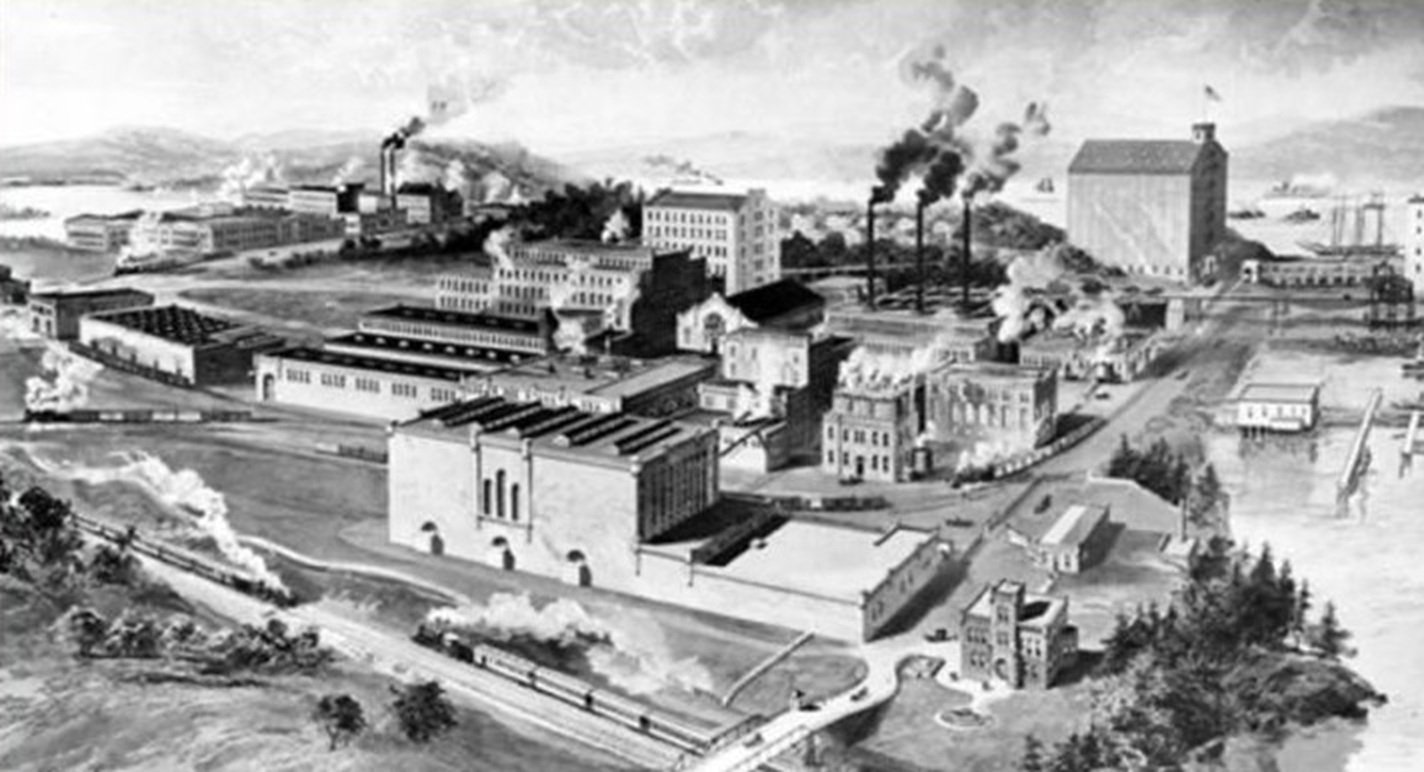
The Fleishmann Manufacturing Company was founded by Charles Fleishmann and his brother in Ohio in the last quarter of the 19th century. The company moved its headquarters from Long Island to Peekskill, New York in 1900 establishing a large factory complex in the Buchanan section of Peekskill, New York. Illustrated postcards and photographs from the early and mid-20th century show the Peekskill plant’s immense factories, buildings, grain elevators, distilleries, storage tanks, warehouses, wharves, laboratories, offices, and employee housing. Touted as the largest yeast factory in the world, the plant consisted of 125 buildings connected by two miles of railroad spread across 65 acres of land on the banks of the Hudson River at Charles Point. In its heyday, the factory produced much of the nation’s yeast, gin, vodka, vinegar and baking powder and the plant employed more than 1,000 area residents.
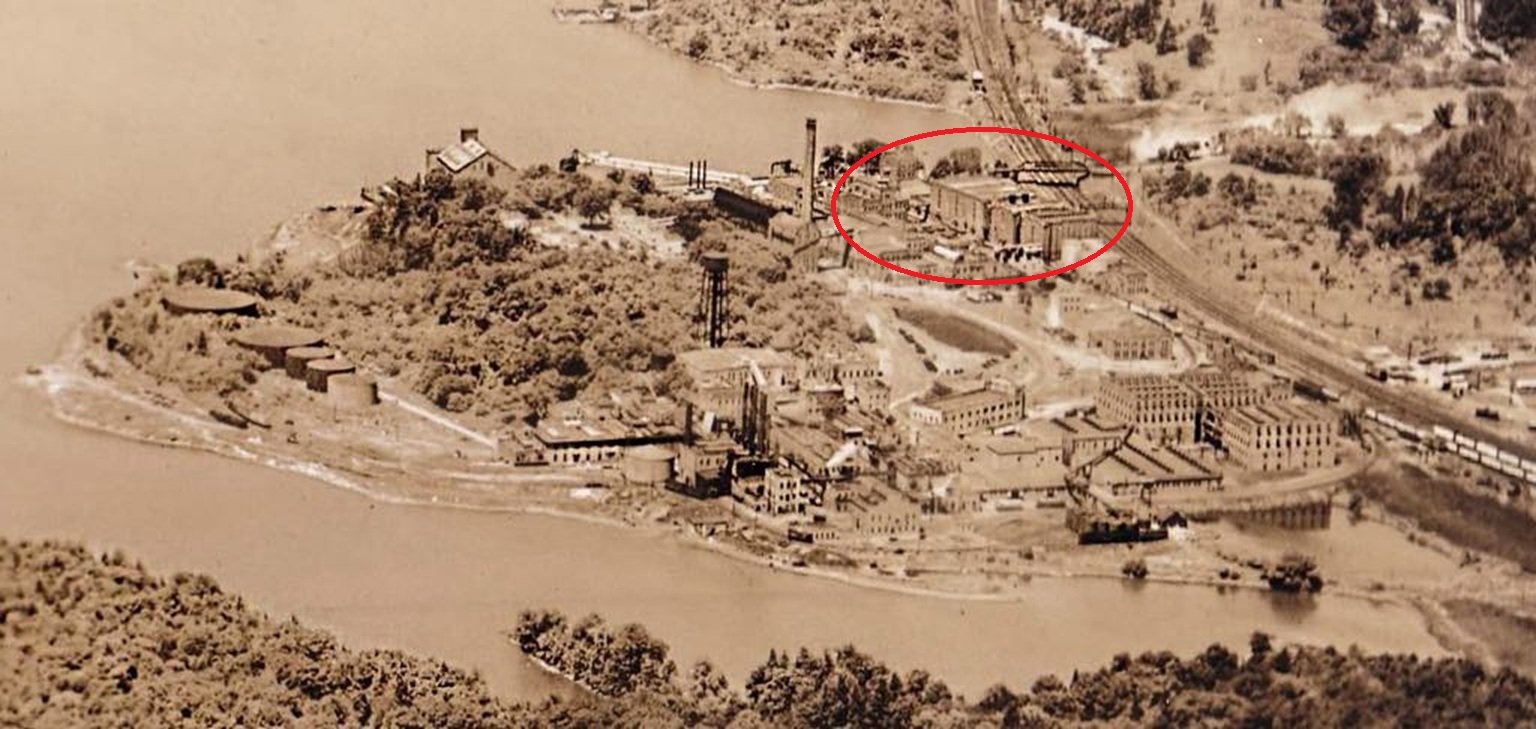
The structure involved in the incident was a five-story Type IV Heavy Timber/Mill construction brick and timber warehouse that was divided into four sections that measured 85 feet wide, 320 feet long and 60 feet in height. Bonded Warehouse No. 6 was part of the Fleischmann company’s sprawling Hudson River plant in Peekskill and was used for the storage of grain and barrels of vinegar in tall racks. Heavy iron fire shutters covered the few windows on the southern section of the warehouse on Sides Alpha and Delta. There were no windows on Side Charlie of the fire building. A masonry firewall separated the large five-story southern section of the warehouse from the three smaller one- and two-story sections attached on Side Bravo. On Side Alpha was a 30-foot-wide street with three rail sidings. A large brick and wood joist plant used for the processing and manufacture of yeast was across the street. On Side Bravo was a small two-story brick and wood joist kitchen and dining hall for the workers. Behind the dining hall were the banks of a small bay on the Hudson River. Side Charlie faced the main four-track line of the New York Central Railroad. On Side Delta was a similarly constructed smaller warehouse separated from the fire building by a narrow 15-foot-wide alley. The unheated grain warehouse was not equipped with an automatic fire sprinkler system or a fire alarm system, but the large factory complex had three night watchmen on duty and two fire alarm call boxes were located in the complex. The complex had its own network of water mains and fire hydrants fed from a pump house on the banks of the river.
Peekskill is a city in northwestern Westchester County, New York, located about 35 miles north from New York City. Established as a village in 1816, it was incorporated as a city in 1940. It lies on a bay along the east side of the Hudson River, across from Jones Point in Rockland County. The population was 25,431 at the 2020 U.S. census and the city is the third-largest municipality in northern Westchester County, after Cortlandt and Yorktown. Today the 5.5 square mile city is protected by the Peekskill Fire Department that is composed of six fire companies: Columbian Engine Co. No. 1, Cortlandt Hook & Ladder Co. No. 1, Washington Engine Co. No. 2, Columbian Hose Co. No. 1, Centennial Hose Co. No. 4, and the Peekskill Fire Patrol. The department has approximately 35 volunteer members and 34 career members operating 4 engines, 1 aerial platform, 1 heavy rescue, and 1 utility vehicle. The department responds to about 2,000 calls for service annually with nearly 50% EMS calls as the career members supplement the local volunteer ambulance corps.
At the time of the fire, the village of Peekskill was protected by the Peekskill Fire Department with 400 volunteer members operating 1 automobile fire engine, 1 combination hose and chemical wagon, 2 hose wagons, 1 hook and ladder truck, and 4000 feet of standard hose. The village of about 15,000 residents had a Gamewell telegraph fire alarm system with 26 street boxes. A municipal water system with 190 double outlet fire hydrants supplied by a pump house and a 22-million-gallon reservoir were connected to city water mains of 12 and 16 inches in diameter. A high-pressure pump. a one-million-gallon reservoir, and a 400,000-gallon standpipe were also available for supplemental water demand.
On Thursday, August 1, 1918, at 11:35 p.m., an alarm was transmitted for a fire discovered in a grain warehouse in the yeast manufacturing section of the Fleischmann complex on Peekskill’s riverfront. Firemen from Cortlandt Hook and Ladder Co. No. 1 rushed to the scene as second and third alarms brought out all six fire companies in the village. The massive five-story brick and heavy timber structure was found to be heavily involved in fire with flames breaching the roof leaping one hundred feet in the air. The glow of the fire could be seen for miles up and down the Hudson on whose banks the building stood. The large crowd of spectators formed to watch the firefight.
Firemen quickly surrounding the massive structure playing their fire streams from many angles and adjacent rooftops. They were successful in containing the fire to the building of origin. The fight with the flames had gone on for more than four hours and it was clear that the building and the one hundred carloads of grain within were doomed. The firemen set their ladders against a thirty-foot-high brick wall on the windward side of the warehouse intending to carry hose up and play a stream directly down on the interior.
At about 4 a.m., Fireman George Casscles was the first man up a ladder with an axe in hand to force open the iron fire shutters covering the few windows on the warehouse. Casscles was already near the top when it was noticed that the wall was beginning to bulge slowly outward. Several warning shouts came too late as a large section of the wall directly above Casscles fell. The collapsing section overhung Casscles for an instant and then the fireman was overwhelmed in a cascade of bricks. Casscles was swept off the ladder and buried beneath a pile of hot masonry and smoking timbers. The other firemen, heedless of the danger, had run forward to try and rescue Casscles, and just as they reached the foot of the ladder, the remainder of the entire wall came down with a roar and a crash, burying them under a mound of rubble. The wall, which was two feet thick, fell outward and everyone near it, as well as those on the ladders, were buried in the debris.
Firemen William Kelly, Ray O’Donnell, Harry Hart and James Manning were on the outskirts of the wreckage, and though knocked down and partially buried, were rescued quickly by their comrades and spectators who rushed forward to lend a hand. All had been injured in the collapse. Under the direction of Fire Chief Clifton Forbush and Chief of Police Henry Burke, the rescuers dug frantically into the steaming mass while firemen sprayed a barrage of water against the flames that shot upward from the gap in the building’s side. The other firemen buried in debris that was so hot it sent hissing jets of steam wherever the water fell. It was nearly four hours before the first bodies were recovered, by which time the fire had almost burned itself out.
Throughout the day, only the bodies of Dr. Charles Greene, Department Surgeon, and Firemen George Casscles and John Torpy were found, and the search continued into the night. The bodies of Captain Clarence Lockwood, Lieutenants James Selleck and Lewis Barmore, and Fireman Walter Cole were found later in the rubble.
Several members suffered serious injuries in the collapse. William Kelly suffered a fractured leg, Ray O’Connell suffered a fractured right knee, Harry Hart had fractured ribs and James Manning sustained cuts, bruises and shock.
Police Chief Burke, Fire Chief Clifton and County Coroner Robert Johns opened an inquiry into the disaster. It was believed that the large amount of grain, soaked by water from the fire streams, expanded and burst the walls of the brick warehouse. There had been some talk of a possible incendiary origin of the fire as it was reported that a small fire was detected and put out at an adjoining warehouse on the previous Sunday morning. Company officials expressed themselves as certain that no incendiary could have eluded the special guards which they had on duty ever since the First World War began and they are of the opinion that the fire was due to spontaneous combustion. The cause of the fire was never officially determined. The property loss was estimated at $250,000.
Members of the Peekskill New York Fire Department killed in the line of duty at the Fleischman Yeast Factory Warehouse Fire on August 1, 1918:
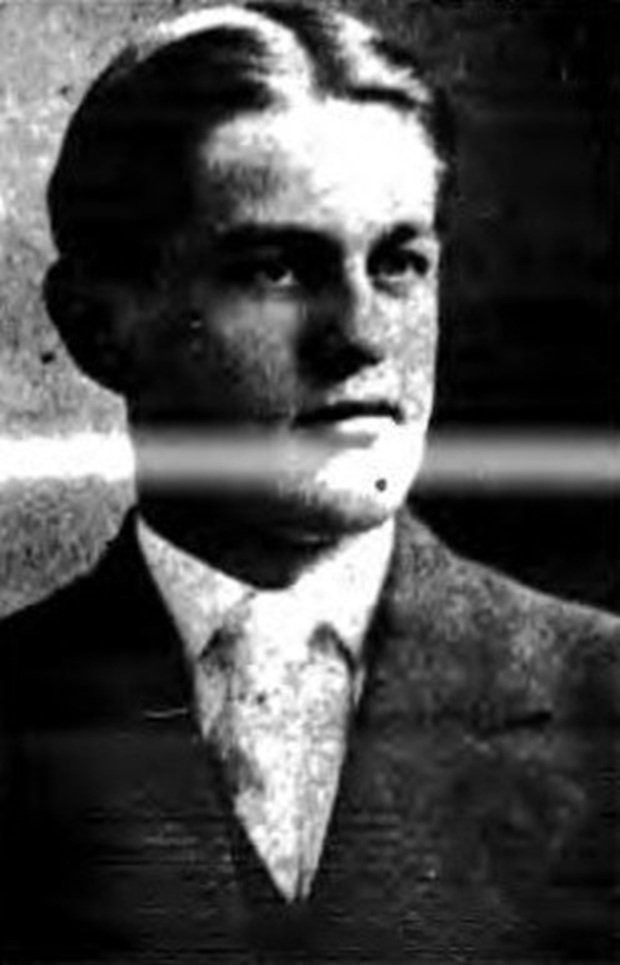
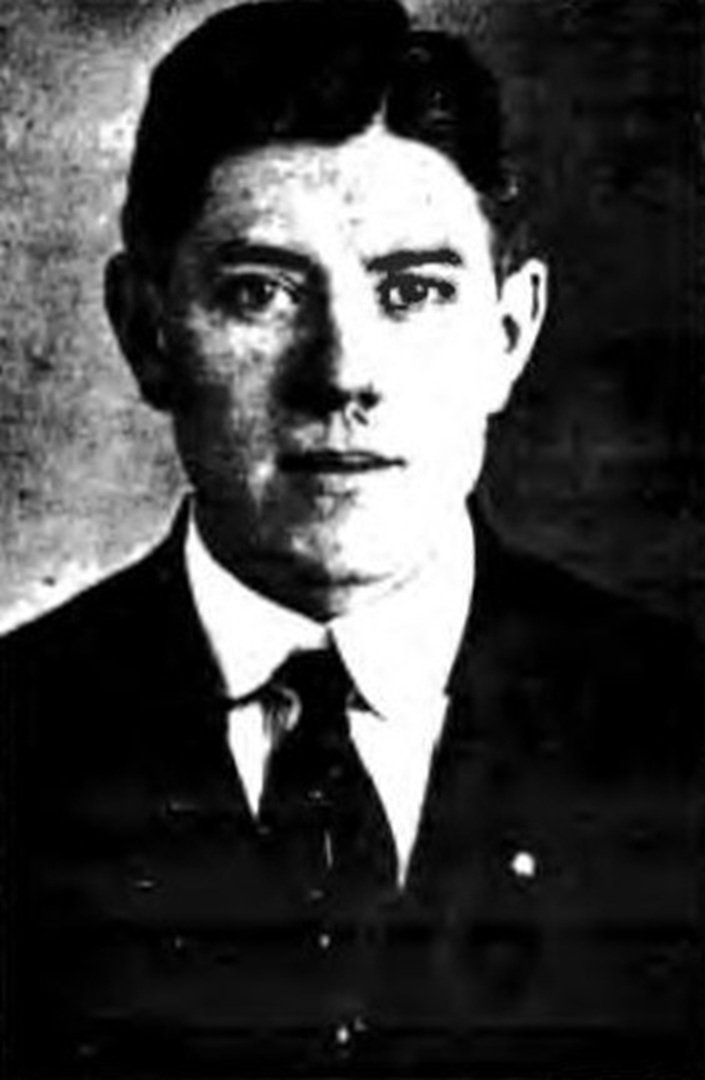
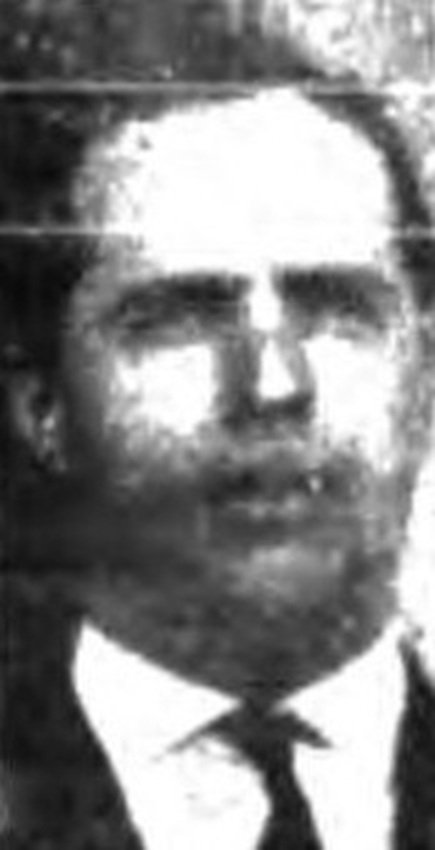
- Charles Robert Frank Greene, age 49, was a 24-year member of Cortlandt Hook and Ladder Co. No. 1. Greene was an Ex-Assistant Engineer and was the Department Surgeon, a position he had held for three years. Greene was a prominent area physician who was devoted to laboratory work. He was survived by his wife and three children and was buried at Hillside Cemetery in Cortland Manor, Westchester County, New York.
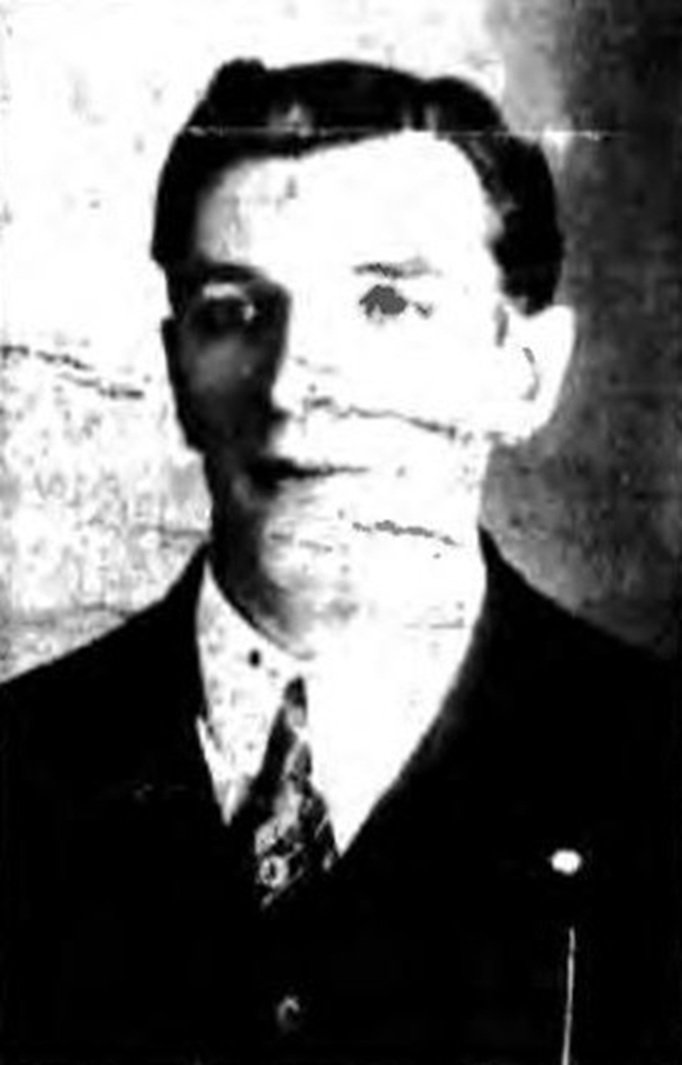
- Captain Clarence J. Lockwood, age 28, was a four-year member of Cortlandt Hook and Ladder Co. No. 1. He was an engineer at the Peekskill Water Department in charge of the filtration plant. He was a member of a number of local fraternal groups including the Cortland Lodge No. 9, Internation Order of Odd Fellows. He was survived by his wife, Clara, his parents, Elijah and Mary Lockwood, and his two brothers, Edwin and Clifford. He was buried at Hillside Cemetery in Cortland Manor, Westchester County, New York.
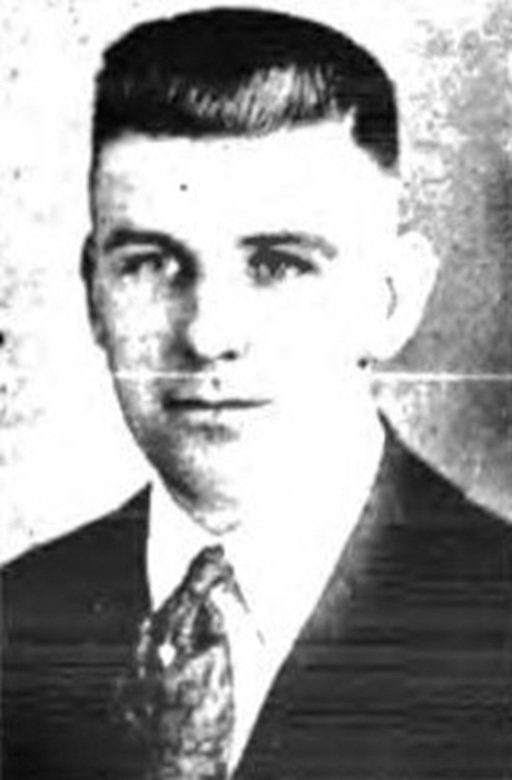
- First Lieutenant James H. Selleck, age 29, was a seven-year member of Cortlandt Hook and Ladder Co. No. 1. Selleck worked as a carpenter and was survived by his wife, Theodora, his infant son, and his father, James Emory Selleck. He was buried at Hillside Cemetery in Cortland Manor, Westchester County, New York.
- Second Lieutenant Lewis Armstrong Barmore, age 40, was an eight-year member of Cortlandt Hook and Ladder Co. No. 1. Barmore worked as a bookkeeper for the Armstrong Coal Yards. He was survived by his wife, Henrietta, and one son, his mother, Mary K. Armstrong Barmore, and his three sisters, Mrs. Sanford Ferry, Mrs. Theodore Austin, and Mrs. Gilbert H. Anderson and his brother, G. Frank Barmore. He was buried at Hillside Cemetery in Cortland Manor, Westchester County, New York.
- Ex-President George A. Casscles, age 34, was a 15-year member of Cortlandt Hook and Ladder Co. No. 1. Casscles was employed by the Standard Oil Cloth Company in Buchanan. He was survived by his wife, Emma, and three children; a boy, and two girls, his father, Joshua T. Casscles, and his stepmother, three brothers, Ward, Howard and Clinton, and two sisters, Edith, and Olive McCutchen. He was buried at Hillside Cemetery in Cortland Manor, Westchester County, New York.
- Fireman John F. Torpy, age 28, was eight-year member of Centennial Hose Co. No. 4. Torphy was employed as a molder by the Union Stove Works. He was survived by his mother, Catherine Torpy, and two brothers, James A. and Daniel, and three sisters, Margaret, Catherine and Mary. He was buried at Assumption Cemetery in Cortland Manor, Westchester County, New York.
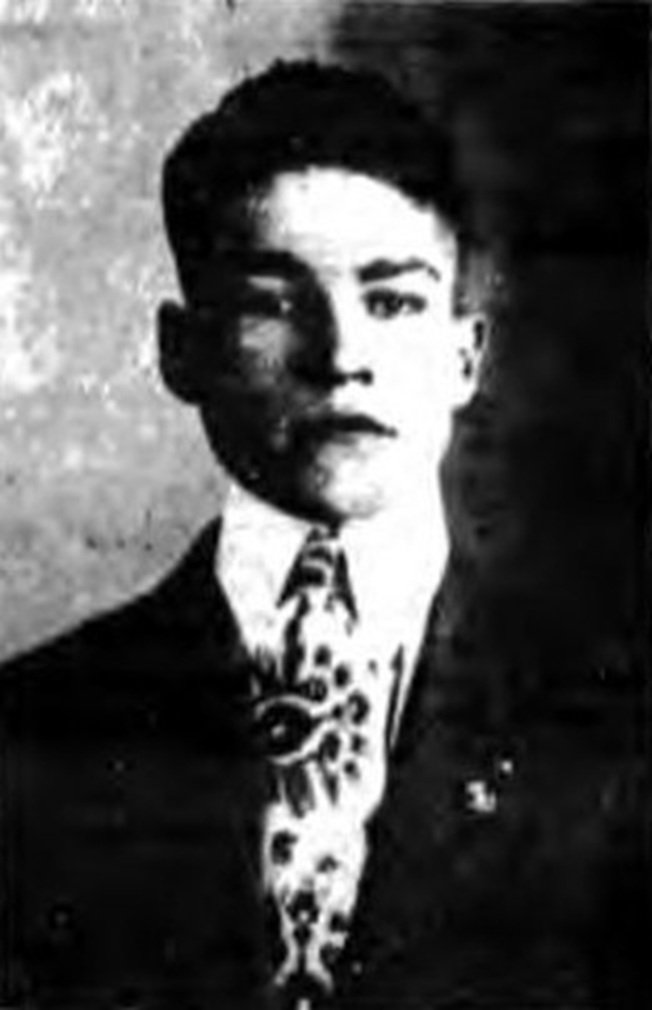
- Fireman Walter Cole, age 17, had been recently appointed as a reserve member of Centennial Hose Co. No. 4. Cole worked as an assistant engineer at the Fleishman plant. He was survived by his parents, Louis and Mary Cole, and one brother. He was buried at Assumption Cemetery in Cortland Manor, Westchester County, New York.
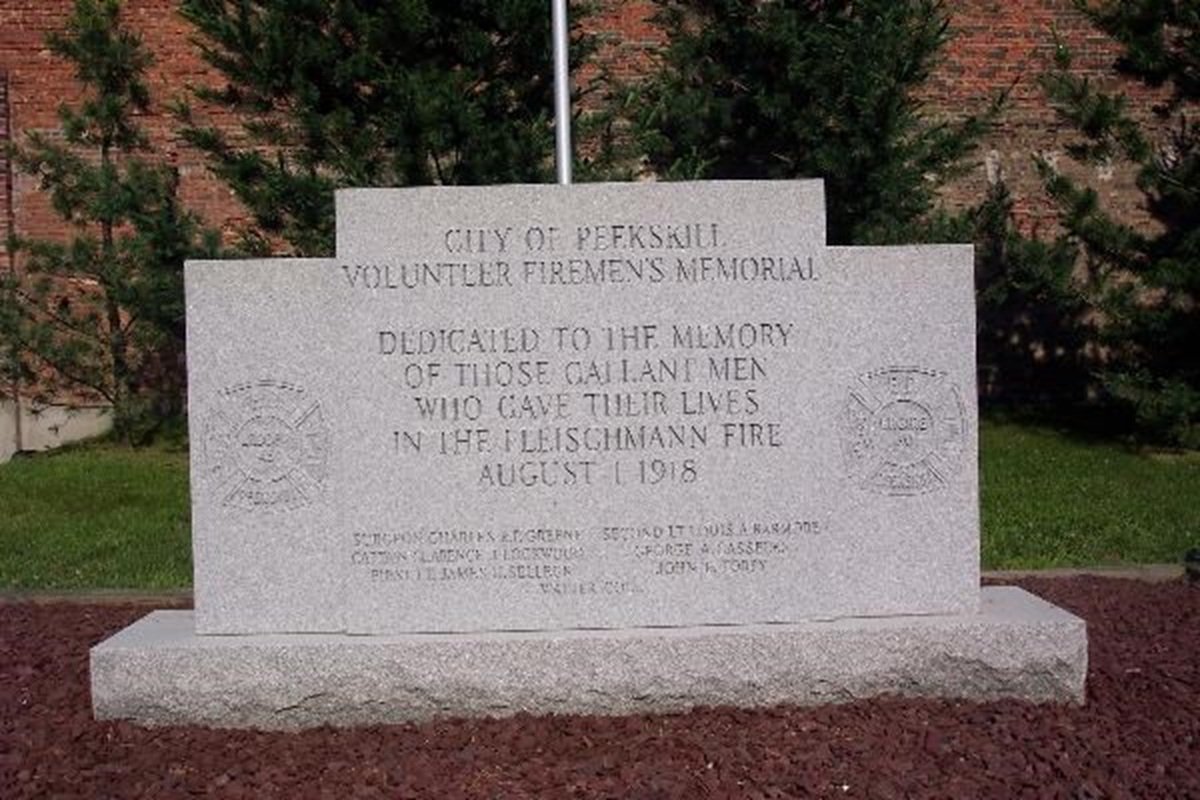
The names of the seven fallen firefighters have been inscribed on a granite memorial at Firemen’s Memorial Park near the site of the former factory complex on Charles Point in Peekskill. The members of the Fire Department hold an annual remembrance for the firefighters each year at the memorial.
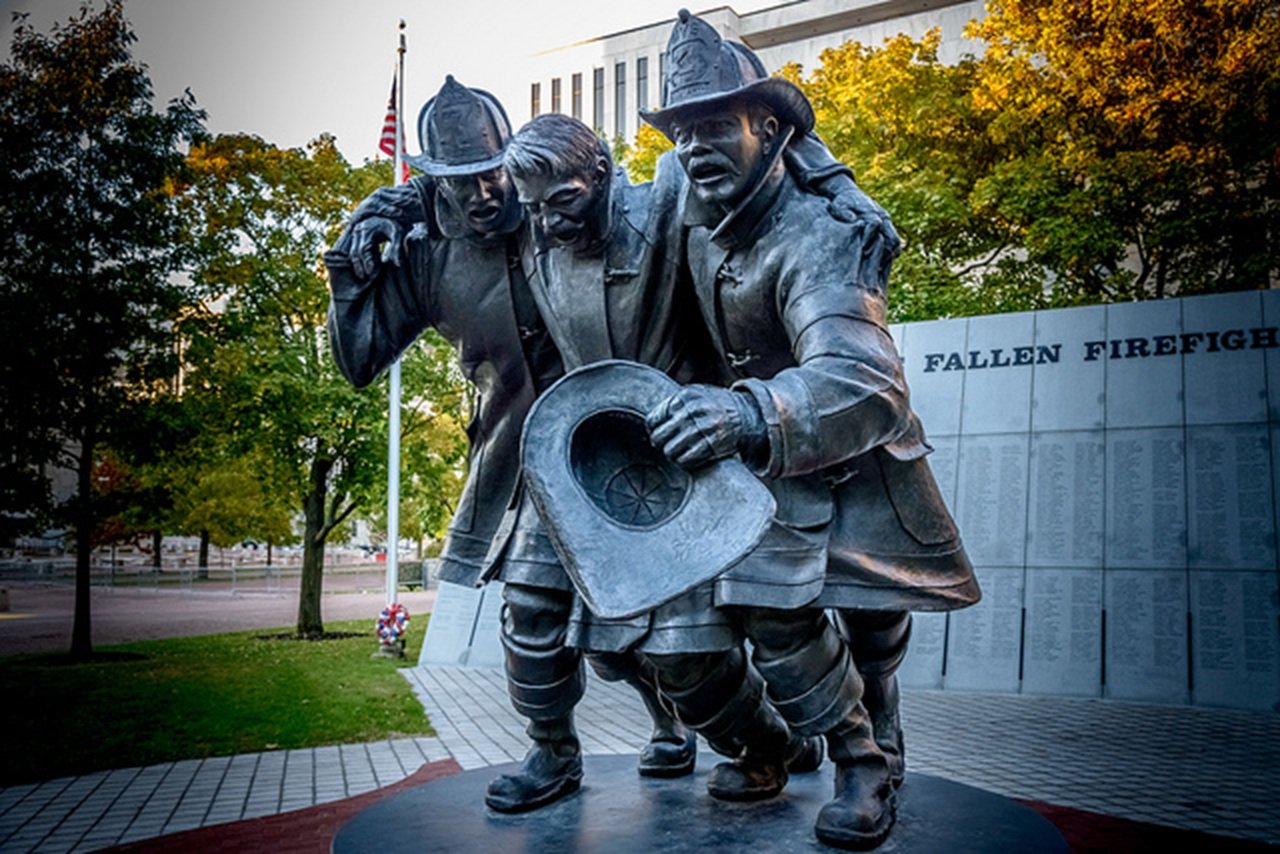
The names of Surgeon Charles Robert Frank Greene, Captain Clarence J. Lockwood, First Lieutenant James H. Selleck, Second Lieutenant Lewis Armstrong Barmore, Ex-President George A. Casscles, Fireman John F. Torpy and Fireman Walter Cole have been inscribed on the New York State Fallen Firefighters Memorial in Empire State Park on the grounds of the State Capitol in Albany. The memorial honors the men and women of the fire service who have perished in the line of duty in the Empire State. The memorial is located between the Justice Building and The Egg in a park-like area bordered by Norway maple trees. Dedicated in 1998, it consists of a ten-foot-high bronze statue of two firefighters rescuing an injured comrade backed by a granite wall fifty-four feet long and fifteen feet high inscribed with the names of New York state firefighters who gave their lives to save others. The memorial is placed on a plaza of charcoal and red brick pavers forming a Maltese Cross. As of October 2025, there are 2,818 names on the wall. The earliest name on the wall is from the year 1811.
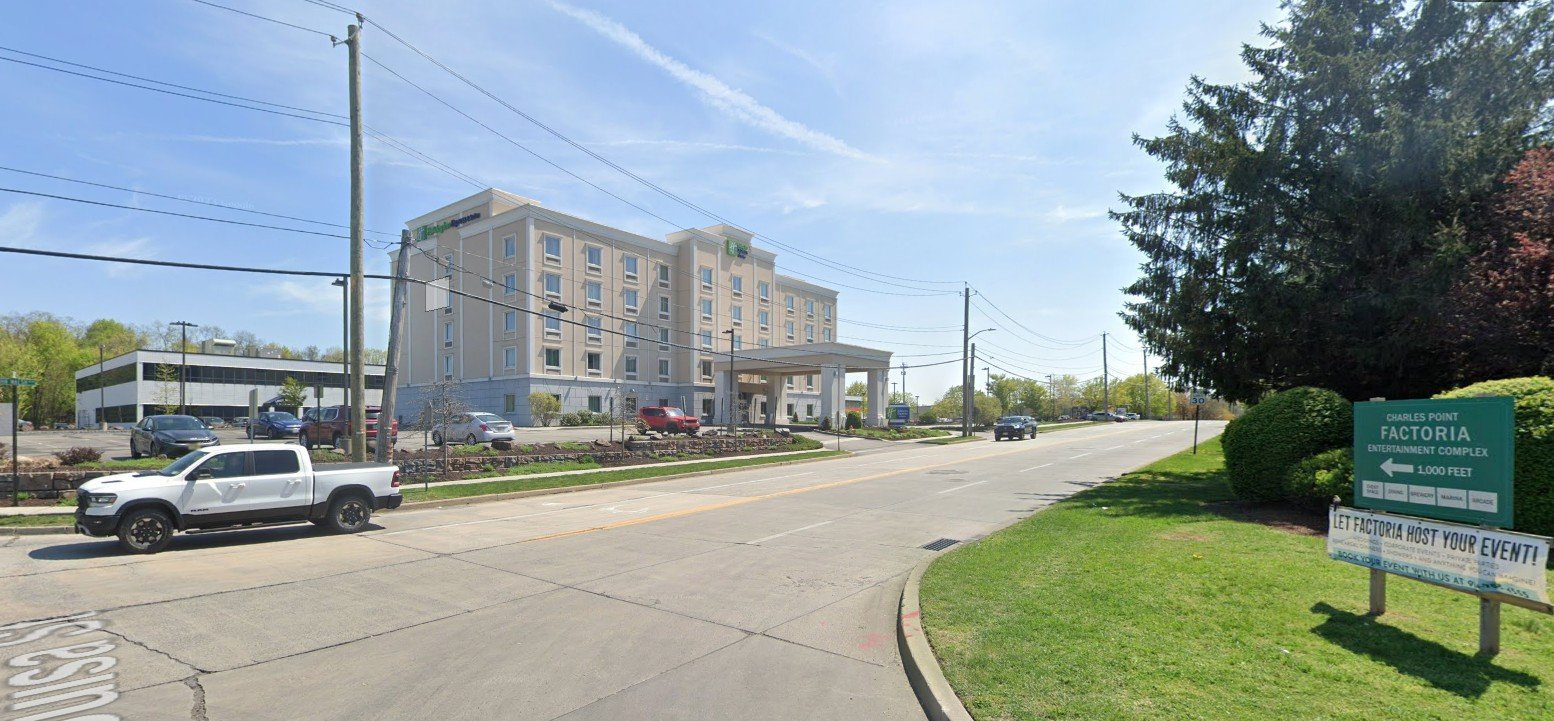
The site of the Fleischmann Manufacturing complex is now occupied by multiple recreational, commercial and entertainment occupancies, a marina, and a public waterfront park.
Commentary:
Fires in manufacturing and storage occupancies pose unique challenges to firefighters due to a number of factors including the size of the floor area, the construction of the structure, and the contents of the occupancy. Highly absorbent commodities such as paper products and cartons, baled cotton, grain, natural or synthetic fabrics, and recycled waste including paper and rags pose special challenges as they tended to absorb the copious amounts of water needed to extinguish a fire in such buildings. As these types of materials readily absorb water, they can be expected to expand while placing an excessive load on the structural components of the building. The added structural load coupled with fire damage to the structure will increase the likelihood of early collapse during an advanced fire. Firefighters should monitor the amount of water runoff during fire operations in occupancies to ensure that firefighters are not exposed to collapse conditions. Firefighters must also be cognizant of the contents of a storage building, especially if the contents are highly absorbent materials such as bailed rags, paper stock, or cardboard. Water runoff from heavy streams must be monitored to ensure that the weight of water retained by absorbent materials does not overload the structure causing the walls or floors to fail. The wall collapse that took the lives of seven firefighters during this incident occurred after heavy fire streams had been applied to the building for more than four hours.
Too often we witness the deaths of firefighters due to the collapse of walls following a long duration fire event in an unreinforced masonry building. Firefighters must be aware that masonry structures built before the year 1933 are prone to wall collapse because they generally lack the type of metal reinforcements that are used in more modern masonry construction. Prior to 1933 masonry structures were often constructed using sand lime mortar rather than modern Portland cement mortar that adheres better to brick and stone. Firefighters must also learn to respect collapse zones and anticipate secondary collapses following a primary collapse of a fire damaged masonry structure.
We have attached an illustration of the factory complex and details from the 1911 Sanborn fire insurance map showing the configuration of the warehouse building and the surrounding exposures in the plant.
We have also attached an article published in Firehouse magazine by group member Christopher Naum on predicting building performance and building collapse factors: https://www.firehouse.com/home/article/12069221/collapse-zones-building-characteristics-occupancy-risks
We have also included a link to an article by the late Philadelphia Deputy Chief James P. Smith published in Firehouse magazine on recognizing the warning signs of building collapse: https://www.firehouse.com/operations-training/article/10544968/building-collapse-indicators
Honor the service of these seven valiant firefighters by studying the indicators of impending building collapse in structures under the destructive effects of fire and explosions and by touring a Type IV Heavy Timber/Mill construction occupancy in your local response area with your crew members today.
Thanks to multiple media sources for the content of this article.
Remember Fallen Brothers.
Get Out There And Know The History Of Your Local!!!
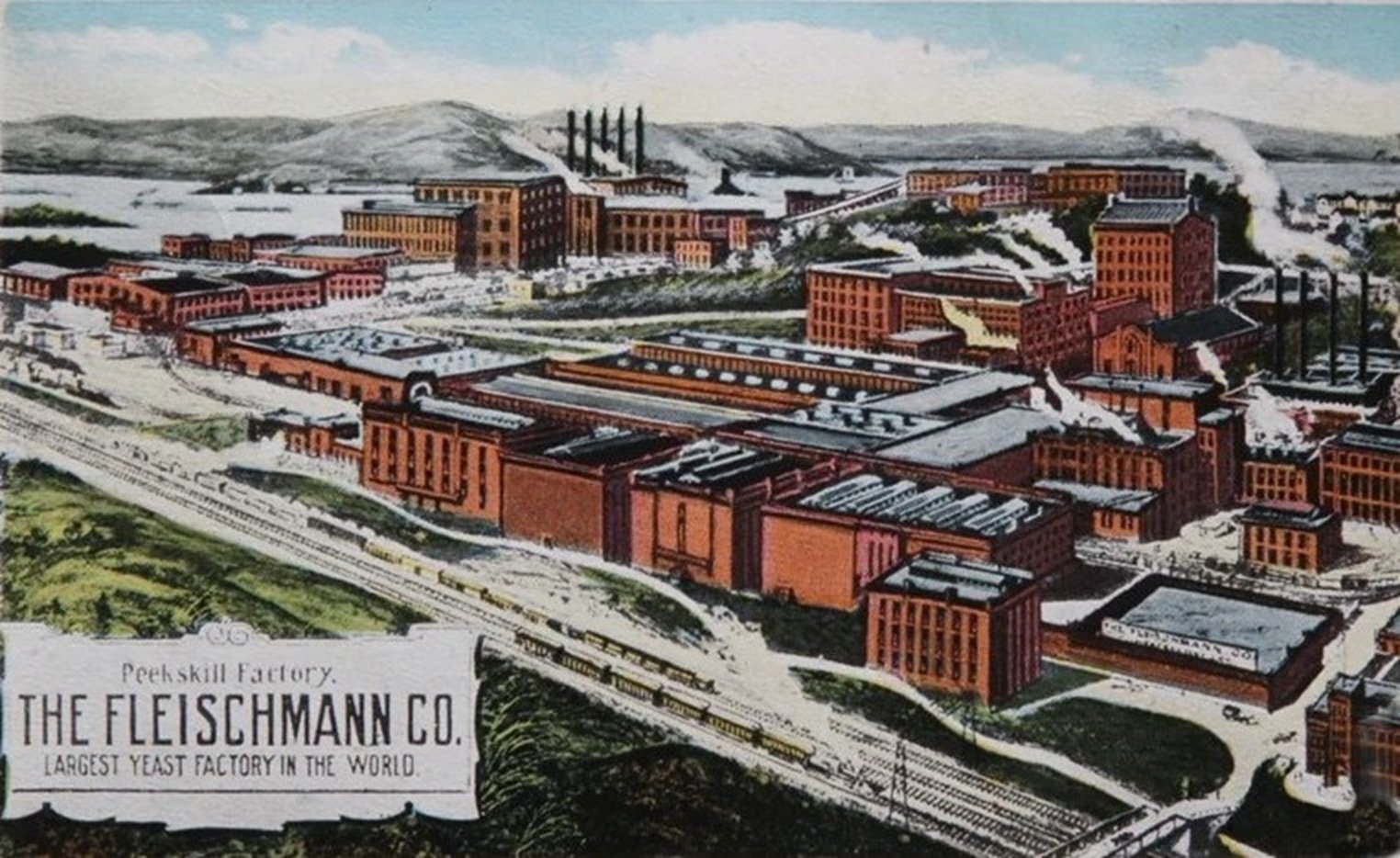
Illustration of the Fleischmann plant at about the time of the incident. The warehouse involved in the collapse is in the foreground near the rail tracks.
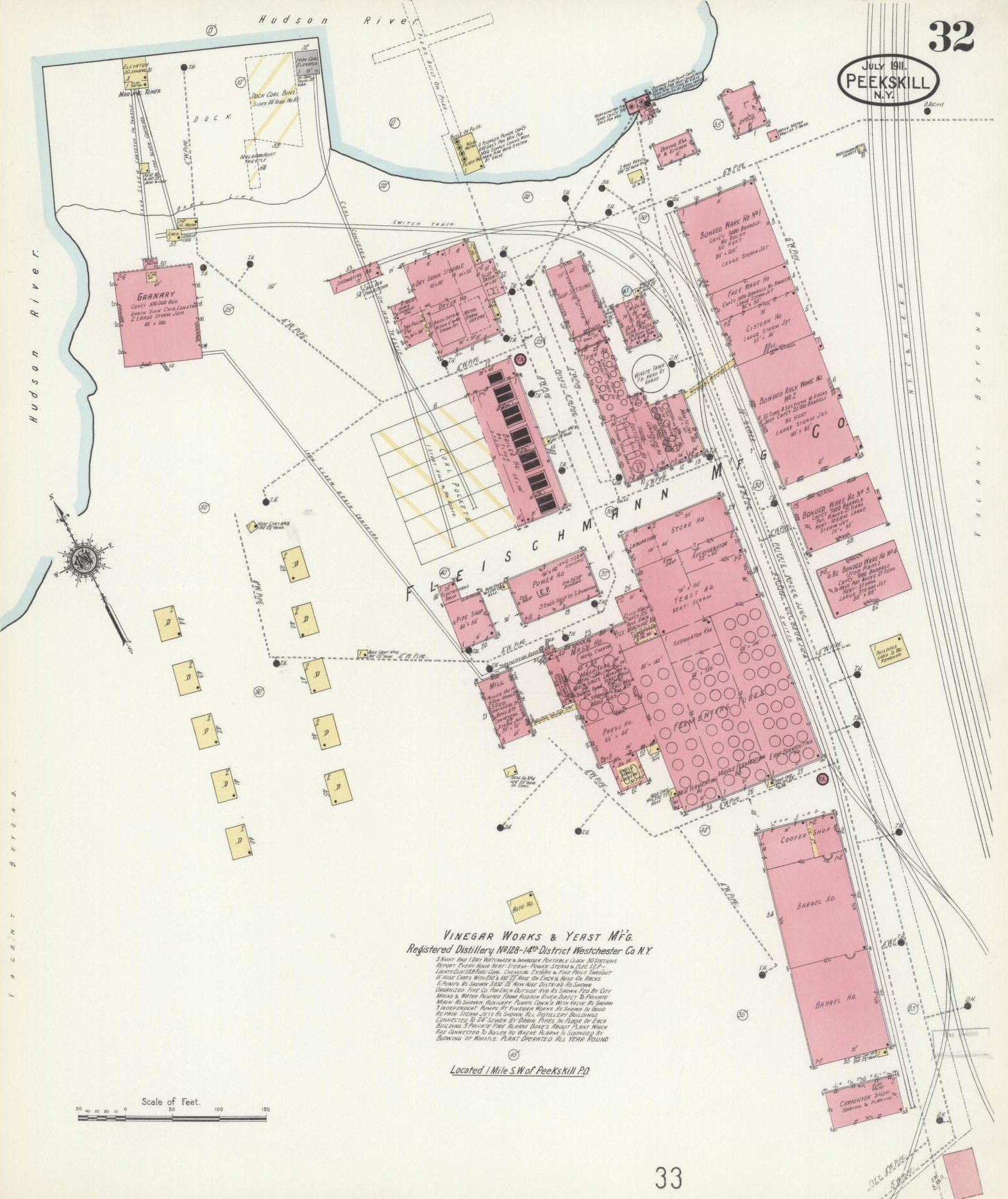
Copy of the 1911 Sanborn fire insurance map of a portion of the plant.
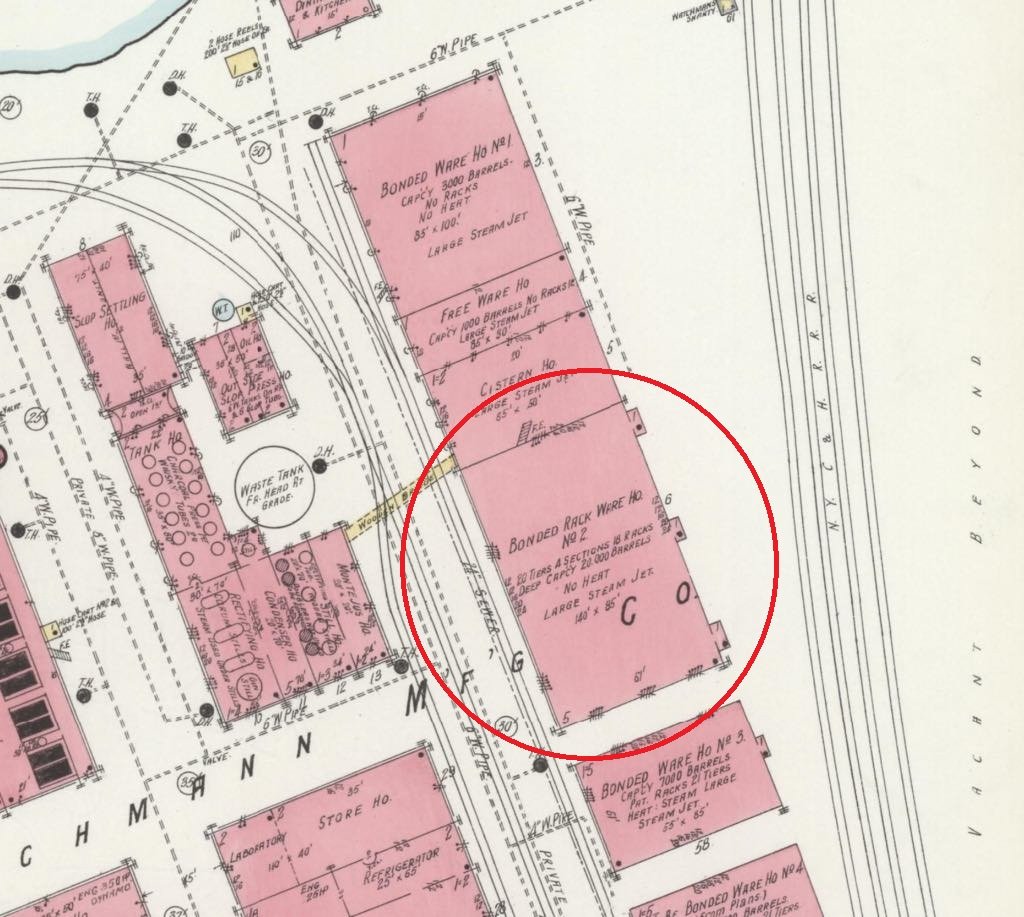
Detail from the 1911 Sanborn fire insurance map showing the configuration of the section of the large warehouse involved in the collapse (circled in red) and the surrounding exposures.