Fire and Explosion in Sub-Cellar of High-Rise Hotel Kills Eight Firefighters – The Ritz Tower Explosion – Manhattan, New York – August 1, 1932
On August 1, 1932, a fire and explosion in a paint storage room in a sub-cellar of the Ritz Towers luxury residential hotel in Midtown Manhattan claimed the lives of eight FDNY firefighters and injured 31 others. The firefighters were attempting to advance hoselines into the burning sub-cellar from a sidewalk access shaft way and from an interior basement stairway. Two powerful explosions occurred instantly killing two firefighters and severely injuring several others. The concussions tossed several firefighters and police officers into the street. A second alarm was transmitted, and rescue companies were special called to assist in the rescue and recovery of several firefighters from the basement. The cause of the fire and explosions was never officially established, but it was presumed that flammable vapors had escaped from the paint storage area and found a source of ignition. The tragic event will forever be known as the Ritz Tower Explosion.
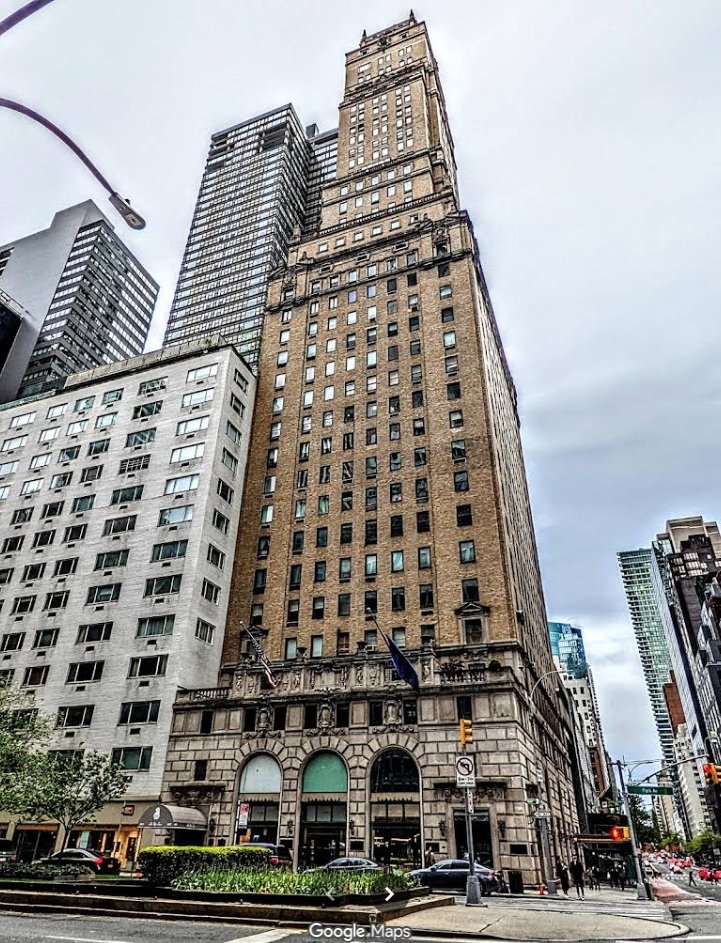
The Ritz Tower is located at 465 Park Avenue at the northeast corner of East 57th Street. The brick, limestone, concrete and protected steel building was constructed in 1925 as a combination apartment building and hotel. At the time of its construction at 41 stories, it was the tallest residential building in New York City. There were 400 rooms in the upscale building, many arranged in one- to five-room suites. The ground floor contained stores, restaurants, and art galleries. The building had a basement and a sub-cellar level. The lower floors functioned as a hotel while the upper floors were residential apartments. The hotel was not equipped with automatic fire alarm or fire sprinkler systems. At the time of the fire, a realty company owned by newspaper magnate William Randolph Hearst owned the building. The Ritz Tower is a registered New York City Landmark.
Manhattan is geographically the smallest and most densely populated of the five boroughs that make up the City of New York. The borough of 22.83 square miles of land area had a population of 1,694,251 according to the 2020 U.S. census. Manhattan has been described as the cultural, financial, media, and entertainment capital of the world. Midtown Manhattan is the central portion of the New York City Borough of Manhattan and serves as the city’s primary central business district. Midtown is home to some of the city’s most prominent buildings, including the Empire State Building, the Chrysler Building, the Hudson Yards Redevelopment Project, the headquarters of the United Nations, Grand Central Terminal, and Rockefeller Center, as well as several prominent tourist destinations including Broadway, Times Square, and Koreatown. Penn Station in Midtown Manhattan is the busiest transportation hub in the Western Hemisphere. The majority of New York City’s skyscrapers, including its tallest hotels and apartment towers, are in Midtown. The area hosts commuters and residents working in its offices, hotels, and retail establishments, tourists and students. Midtown Manhattan is one of the largest central business districts in the world and ranks among the world’s most expensive locations for real estate.
Today Manhattan is protected by the New York City Fire Department (FDNY) which consists of 17,321 career firefighters, EMS personnel and support staff that serve a population of about 8 million residents in the city of approximately 321 square miles. The department staffs 254 fire stations within 14 divisions in 53 battalions operating 197 engine companies, 143 ladder companies, 8 squad companies, 5 rescue companies, 450 ambulances, 1 HazMat company, 1 USAR company, 10 wildland units and 3 fireboats. The FDNY is the largest municipal fire department in the United States, and the second largest in the world after the Tokyo Fire Department. Call volume in Fiscal Year 2023 was more than 1.8 million calls for fire, EMS, and rescue services of which 23,901 were structural fires.
The main part of Midtown Manhattan, between 34th and 59th Streets from Lexington Avenue to Eighth Avenue, is served by five fire stations of the FDNY:
- Engine Company 23 – 215 West 58th Street – 0.7 miles from the fire building.
- Engine Company 54/Ladder Company 4/Battalion 9 – 782 8th Avenue – 1.2 miles from the fire building.
- Engine Company 65 – 33 West 43rd Street – 1.2 miles from the fire building.
- Engine Company 1/Ladder Company 24 – 215 West 38th Street – 1.6 miles from the fire building.
- Engine Company 26 – 222 West 37th Street – 1.8 miles from the fire building.
On the morning of Monday, August 1, 1932, New York City was experiencing a beautiful summer day. At around 0945 hours, Mr. Engwald Haberstadt, the paint foreman for the Ritz Tower hotel left the paint vault in the sub-cellar of the building. He entered his office which was adjacent to the paint vault. Also, in the sub-cellar was a general storage room that had trunks and general storage. The paint vault was not vented to the outer air. It had one door, and the room was 9 feet wide and 6 feet deep with 9-foot-ceiling. The hotel did not have a permit to store paint. Inside the paint vault were cans of paint, kerosene, gasoline, turpentine, enamel, lacquer, alcohol, shellac, linseed oil, paint remover and varnish remover. The general storage room in the sub-cellar had an ash hoist shaft which extended under the sidewalk and could be accessed at the street level. The shaft leading to the street level was unpierced.
At around 1025 hours, the on-duty building engineer smelled smoke in the sub-cellar. He tried to open the paint vault, but it was locked. The on duty building engineer went to stretch a house hoseline. When he returned with the hoseline, the smoke was so thick that he could not tolerate it. He called Mr. Frank Mainer, the Chief Building Engineer of the building, from a distant part of the hotel. The Chief Building Engineer arrived at the stairway. He was thwarted by the heavy smoke coming up the stairway from the sub-cellar. Both the on-duty Engineer and the Chief Engineer failed in their attempt to fight the fire. They sent a man to the street to alert an NYPD patrolman. The police officer went to the street fire alarm box and “snapped” the fire alarm box. The time was 1036 hours.
Manhattan fire alarm dispatchers tapped out Box 924 on the fire alarm telegraph system. Engines 8, 39, 23 and 65, Ladders 2, and 16, and Battalions 8 and 9 would respond. Upon arrival, there was nothing showing on the outside of the building. It appeared to be a malicious false alarm. However, a building employee approached
Captain George F. McGinty of Engine 8 and told him that there was a fire in the paint storage vault in the sub-cellar. Captain McGinty ordered his unit to stretch a 2.5-inch hoseline to the service entrance on East 57th Street and advance two floors down to the sub-cellar. Captain William McDonald was in command of Engine 39. He ordered his unit to stretch a second 2.5-inch hoseline down the same service entrance stairway to back-up Engine 8. As the two engine companies went down the stairway, they encountered a daunting smoke condition.
Ladder 2 arrived at the scene commanded by Captain John A. Herold. He and his members went down the stairway used by the two engine companies to perform truck duties. Battalion Chief John J. Ryan of the 8th Battalion arrived at the scene. He saw the fire problem unfolding in front of him. He transmitted the “All-Hands,” which would bring Acting Deputy Chief James F. Roche of the 3rd Division to the scene. Battalion Chief Michael F. Powers of the 9th Battalion arrived at the fire. Ladder 16 arrived at the scene commanded by Lieutenant James Hartnett. They proceeded to the 57th Street side of the building to open the sidewalk grate which led to the ash hoist shaft. This would help to ventilate the sub-cellar area. A 35-foot portable ladder would be placed into the ash hoist shaft to provide direct access to the sub-cellar. Engines 65 and 23 stretched 2.5-inch hoselines to the shaft and prepared to stretch a hoseline down the ash hoist shaft.
Upon arriving at the sub-cellar level, the conditions were much different than in the stairway. The smoke was thick and oily black. The passageways in the sub-cellar were small. The door to the paint vault could not be located. Firefighters from Ladder 2 were sent to the area above the sub-cellar in the cellar. They were looking for an area where they could ventilate from the floor above. They soon discovered that there was a concrete floor in the cellar that was 12 inches thick. Rescue 1 was special called to use their specialized tools to cut through the concrete floor.
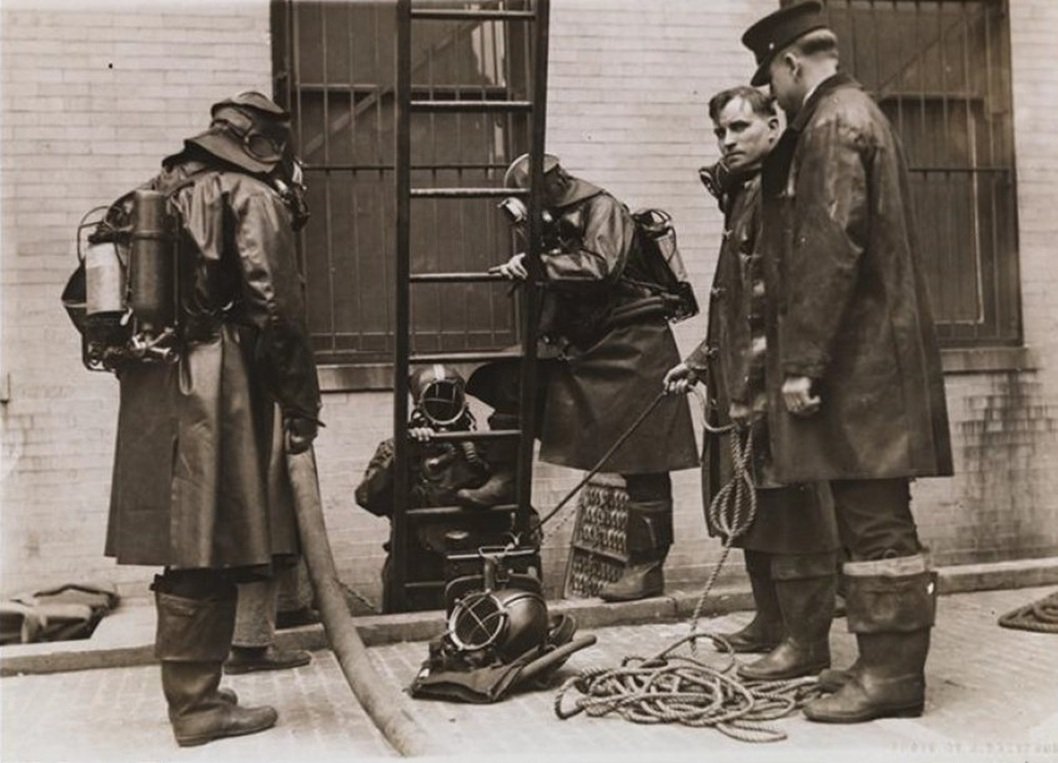
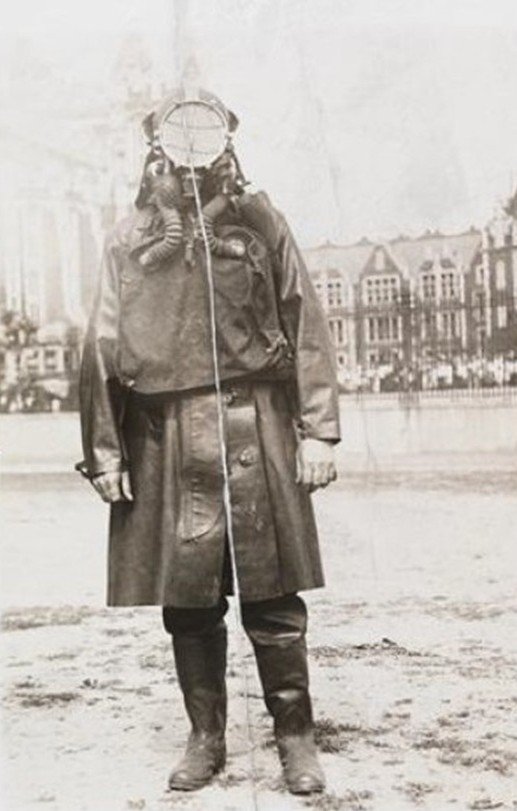
Battalion Chief John Ryan of the 8th Battalion went to his chief’s car and obtained a mask. He went down into the sub-cellar in an attempt to help find the fire. Captain George McGinty of Engine 8 obtained an ammonia mask from building personnel to try to penetrate the smoke. The ammonia mask was ineffective. Rescue 1 arrived at the fire. They came equipped with their filter masks and their smoke helmets. At first, they tried to get down the stairs without their masks. They could not make it down the two flights of smoke infused stairs. They went back to their apparatus to get their masks.
Engine 65, led by Lieutenant John H. Cosgrove, advanced their hoseline down the 35-foot portable ladder in the ash hoist shaft, which led to the sub-cellar. With them were members of Ladder 16.
Fireman William L. Pratt of Ladder 7 was detailed to Ladder 2 for the tour. He was a First World War veteran and was 34 years old. He was given the assignment of going to the cellar of the Thomas Kirkpatrick Jewelry Store which was directly above the paint vault. He was ordered to direct Rescue 1 where to use their heavy equipment to ventilate the fire area.
Battalion Chief John Ryan of Battalion 8 was still in the sub-cellar trying to find the elusive paint vault. Acting Deputy Chief James Roche of the 3rd Division sent his Aide to scout out an area where cellar pipes could be deployed. There were approximately 30 fire officers and firefighters in the sub-cellar, cellar, service stairway, and the ash hoist shaft. The time was 1056 hours, and as Ladder 16 forced entry into the sub-cellar from the ash hoist shaft, an explosion occurred.
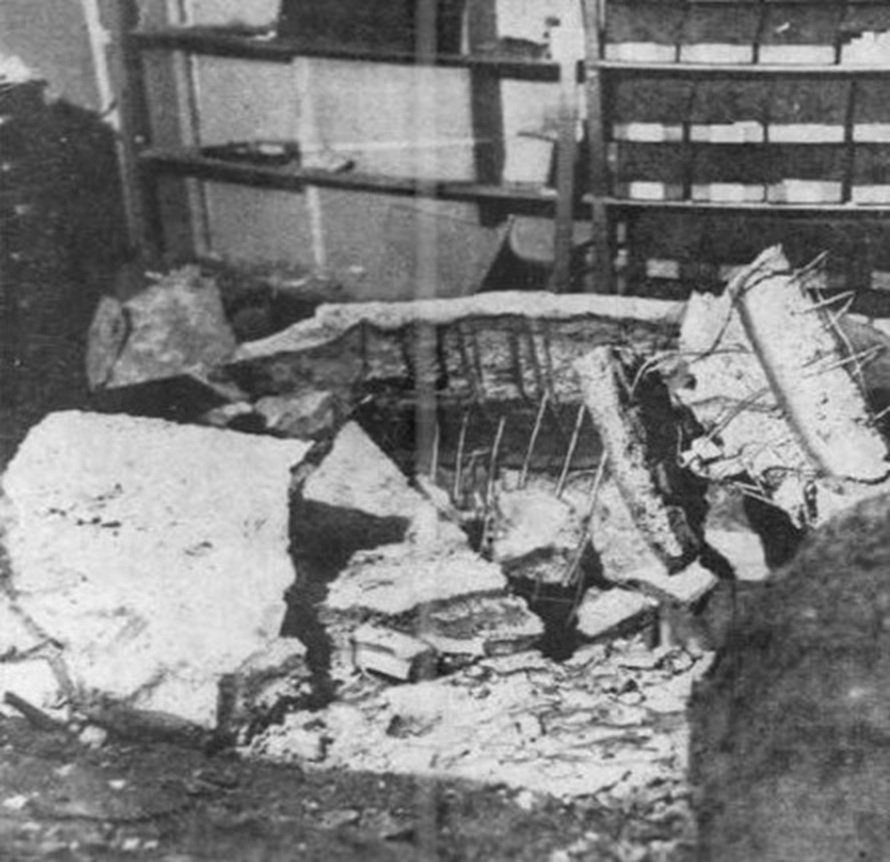
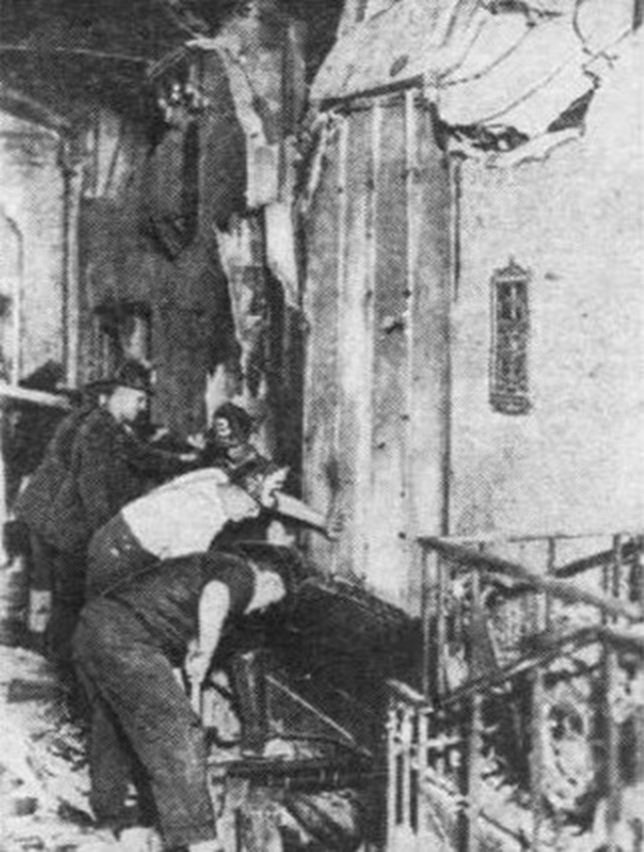
Lieutenant James Hartnett of Ladder 16 and Fireman Thomas S. Finn of Engine 65, who were in the ash hoist shaft, were killed instantly. A sheet of flame came at the firefighters in the sub-cellar. The brick partitions that separated rooms collapsed sending shrapnel-like debris at the firefighters. The ash hoist was twisted and bent. An ammonia system which had two 15-ton machines ruptured. Firefighters in the sub-cellar were severely injured. Blood streamed down their faces and from their hands. They groped and searched around the sub-cellar looking for their fellow firefighters. The rescuing firefighters valiantly grabbed their wounded and dying fellow firefighters.
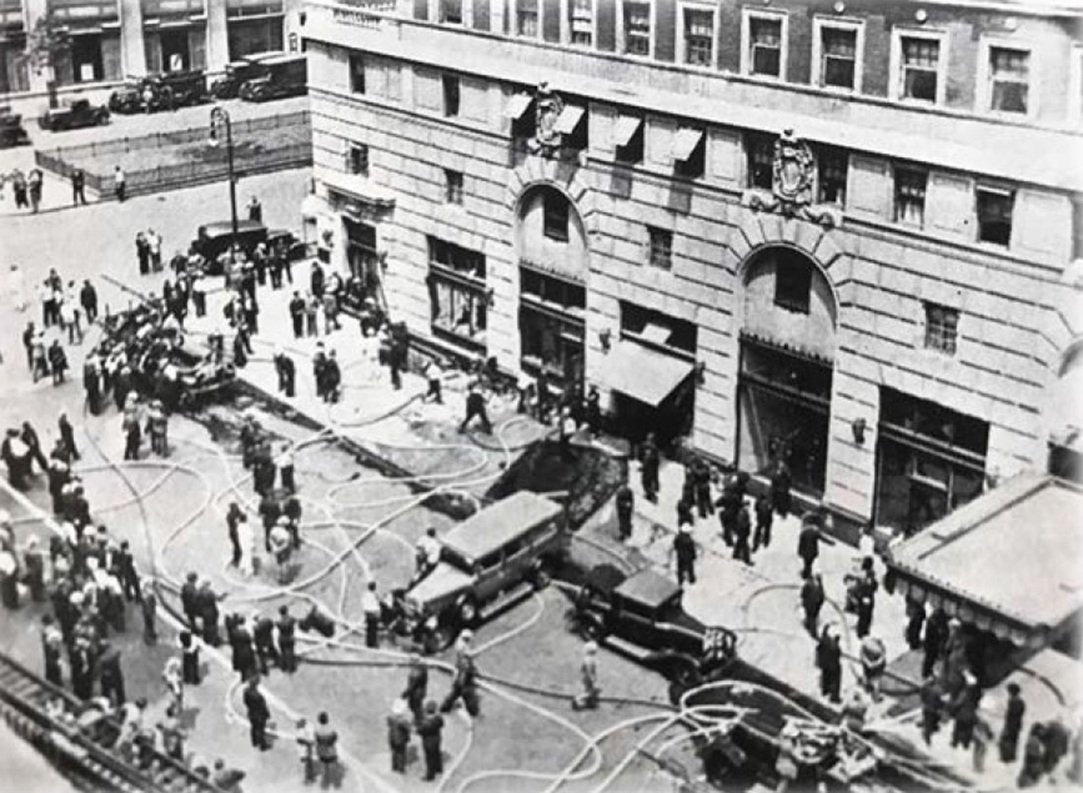
Roughly three minutes after the first explosion, a second and more violent explosion occurred. This caused more debris, timbers, and masonry to come down upon those who were already incapacitated from the first explosion. Holes were blown in the masonry construction and damaged the stairway. The storage area was now on fire. The second explosion was heard a mile away from the building.
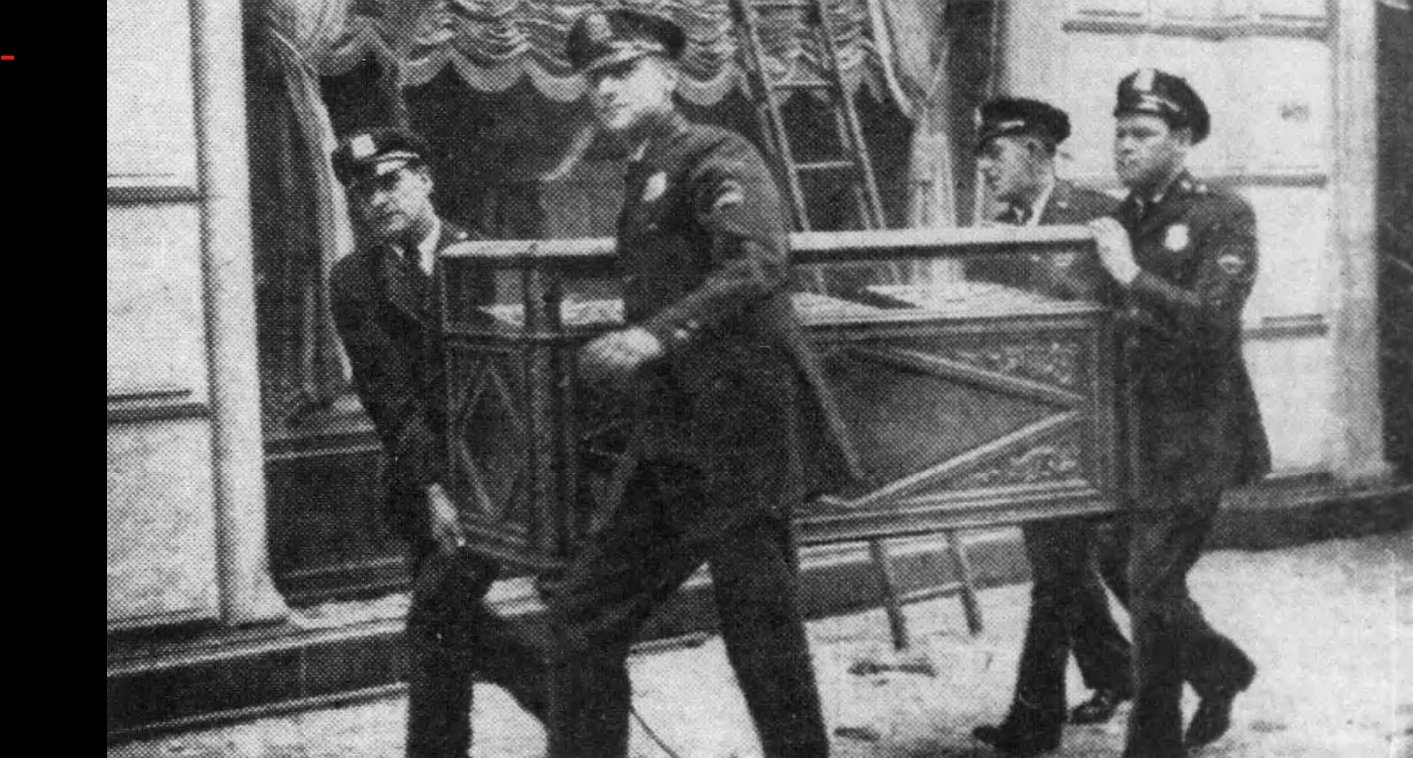
A firefighter was on the 35-foot portable ladder going down the ash hoist shaft. The second explosion vented upward through the ash hoist shaft. The force of the second explosion blew the firefighter out of the shaft and onto the sidewalk. The member’s helmet was found on a second-floor awning. The force of the second explosion knocked bystanders down in the street. It shattered show windows of the Thomas Kirkpatrick Jewelry Store, strewing $100,000 worth of gems and jewelry out into the street.
Acting Deputy Chief James F. Roche, of the 3rd Division, was knocked to the ground by the second explosion. He quickly composed himself and transmitted a second alarm. As the second alarm units arrived at the scene, Chief Roche split them into two different groups to complete different missions. One mission would be to find and rescue any firefighters that are injured or dying. Finding the injured and dying was the highest priority. The second group’s mission would be to extinguish the fire that was still burning in the sub-cellar. Rescue 3 would be special called to the fire.
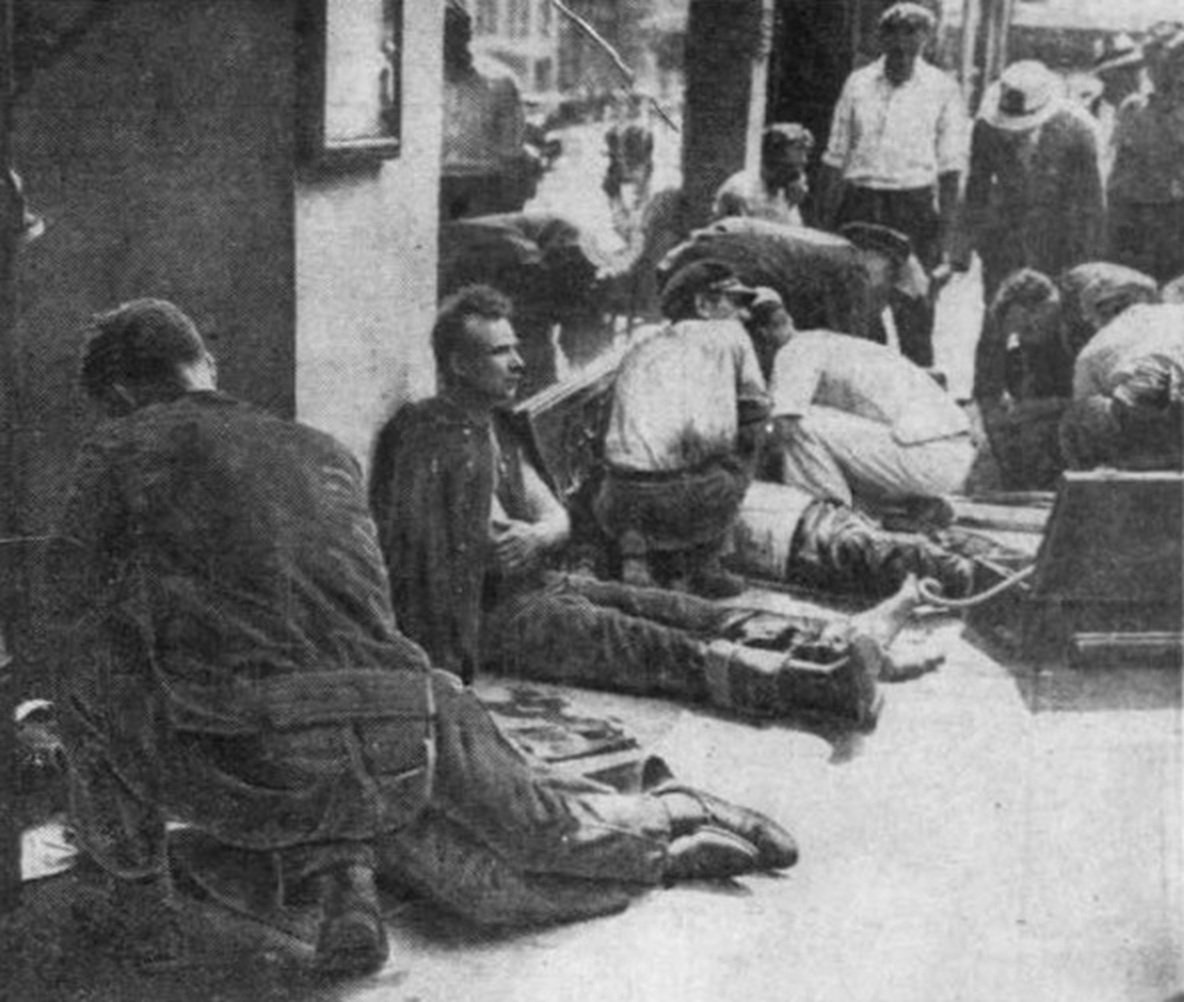
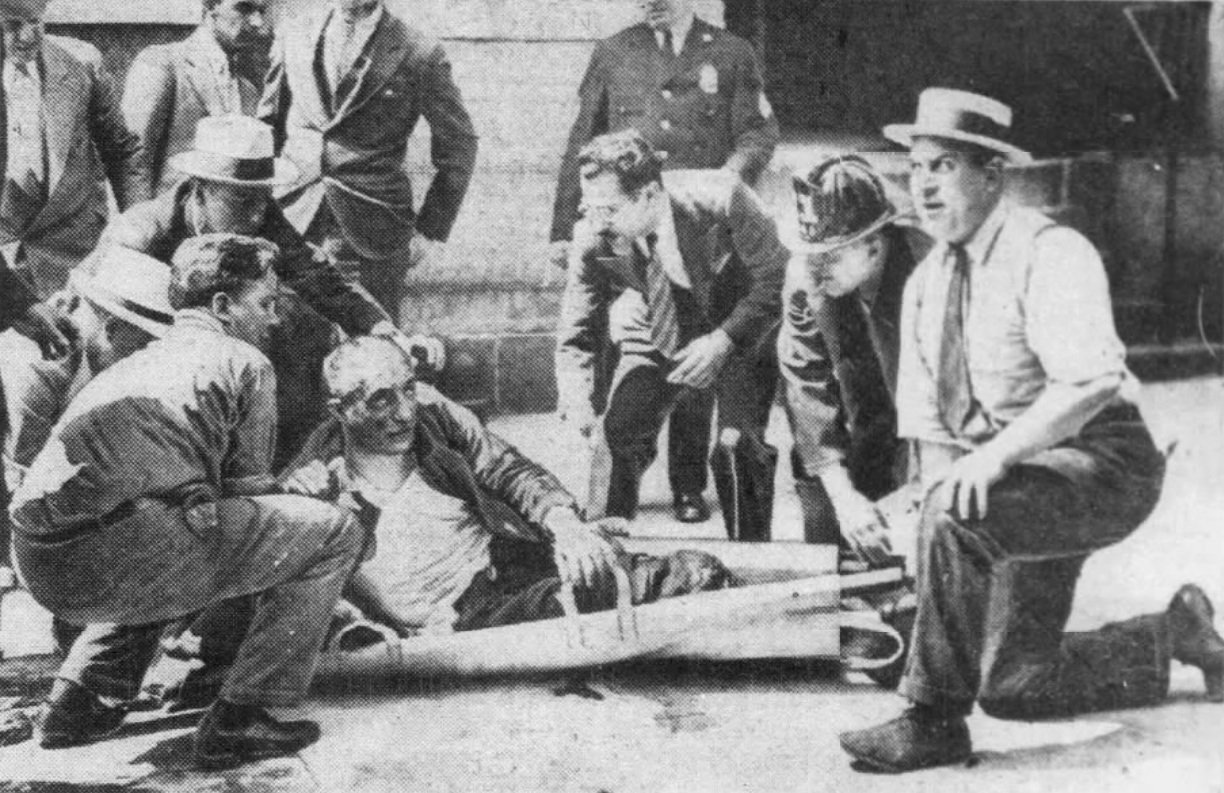
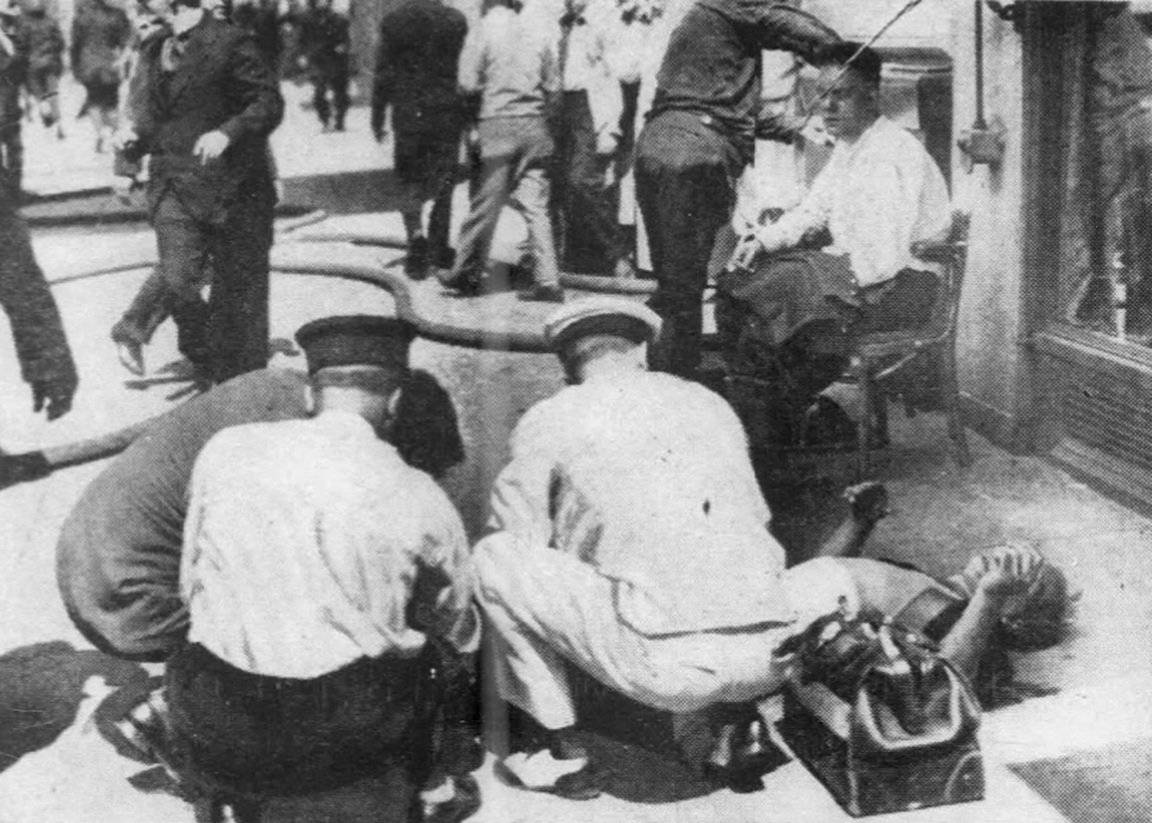
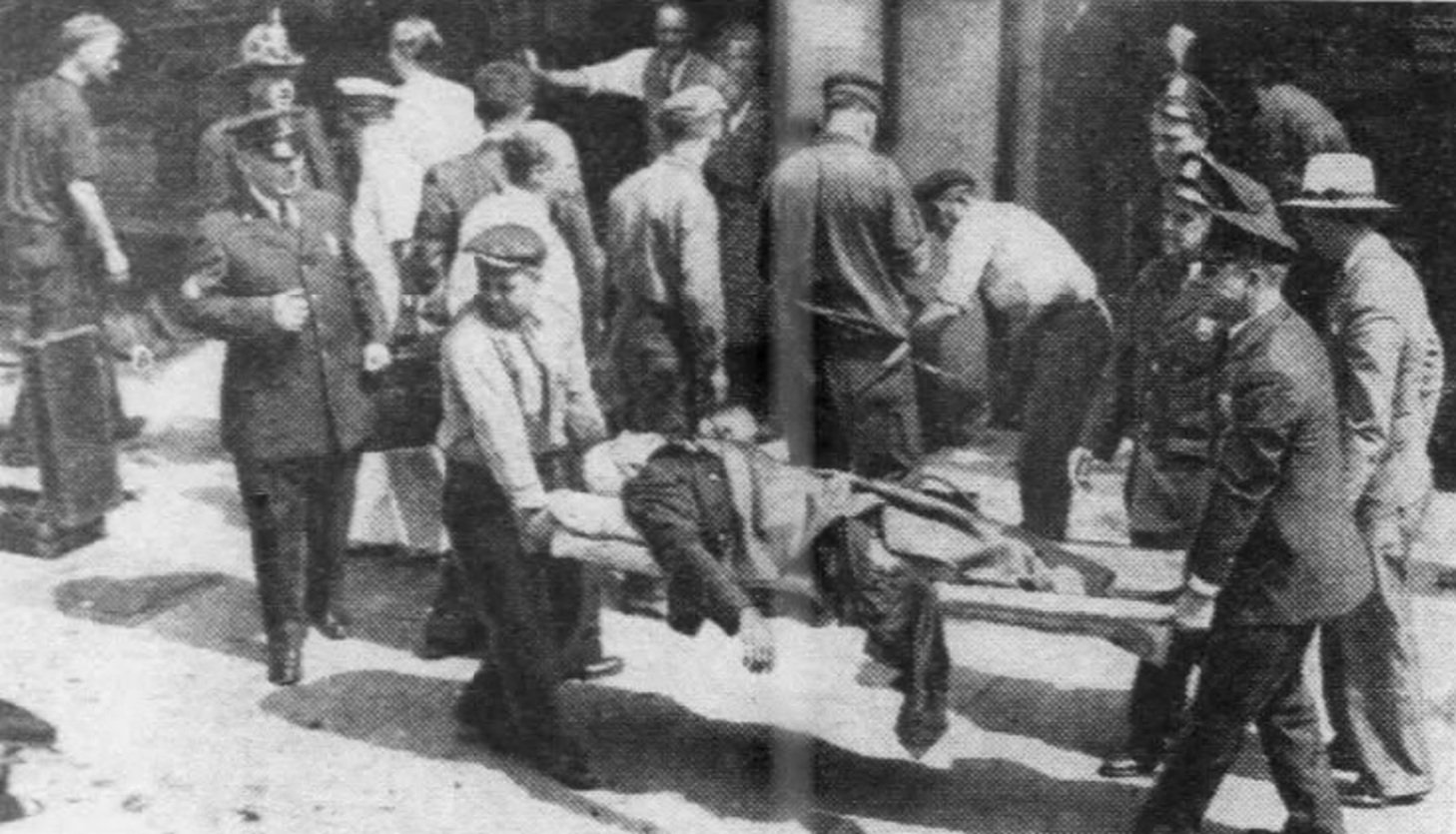
FDNY Medical Officer Dr. Harry M. Archer arrived at the scene. He started treating firefighters as they were removed from the smoky cauldron. Six public ambulances were called to the scene. As firefighters exited the service stairway to the street, their faces were bloodied, burned and smoke stained. Every firefighter that responded on the initial alarm was injured. 19 of those injured were able to continue working after being treated at the makeshift first aid stations.
Acting Chief of Department Thomas Dougherty arrived at the scene. He would start directing the rescue efforts. Chief of Department John J. McElligott was on vacation but would arrive later in the day. He would spend most of his time visiting those injured and dying in hospitals.
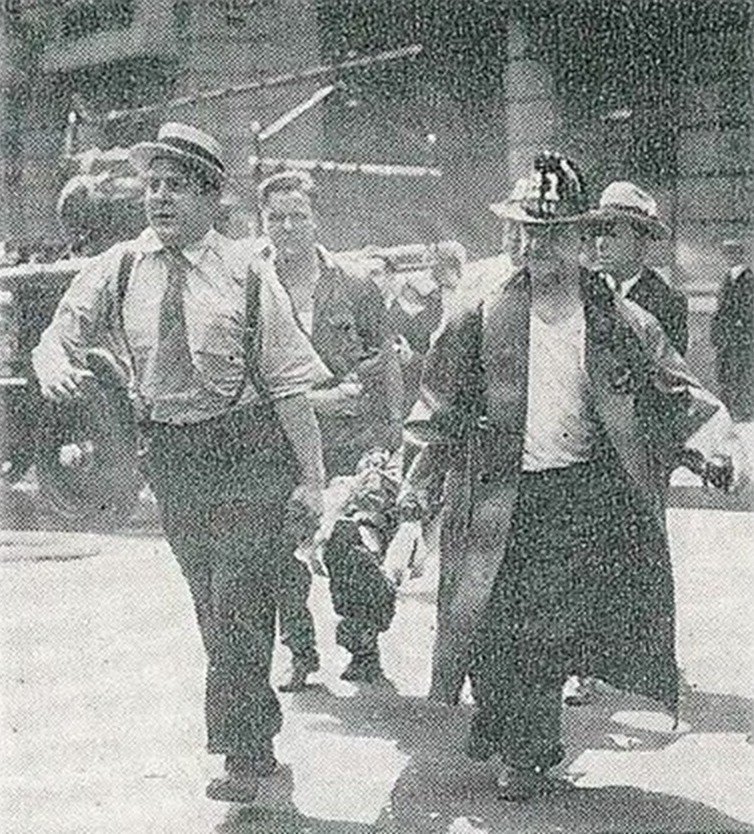
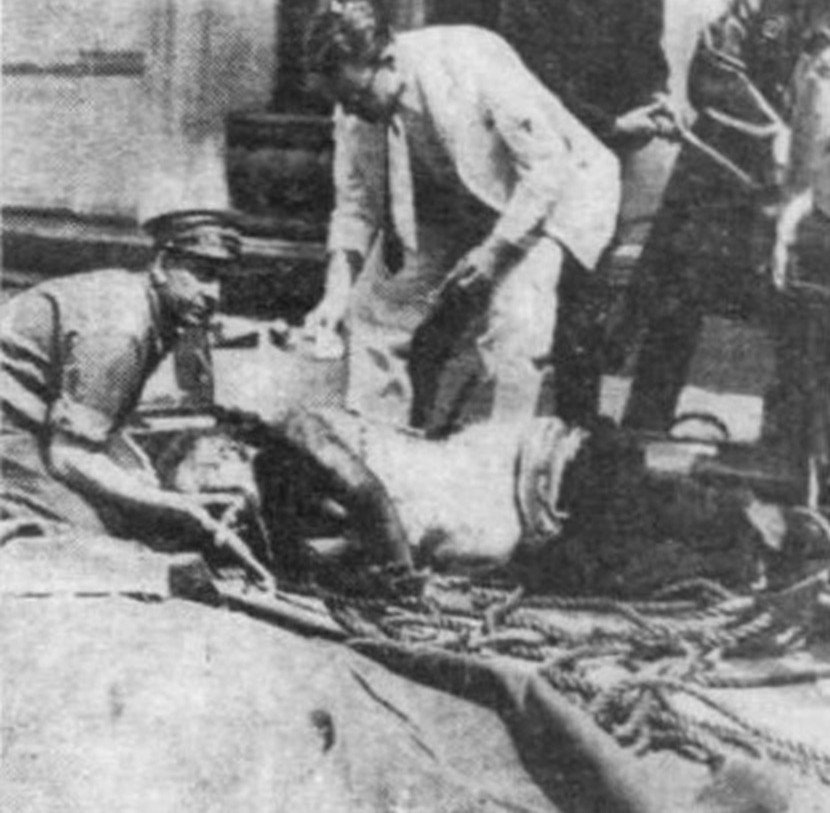
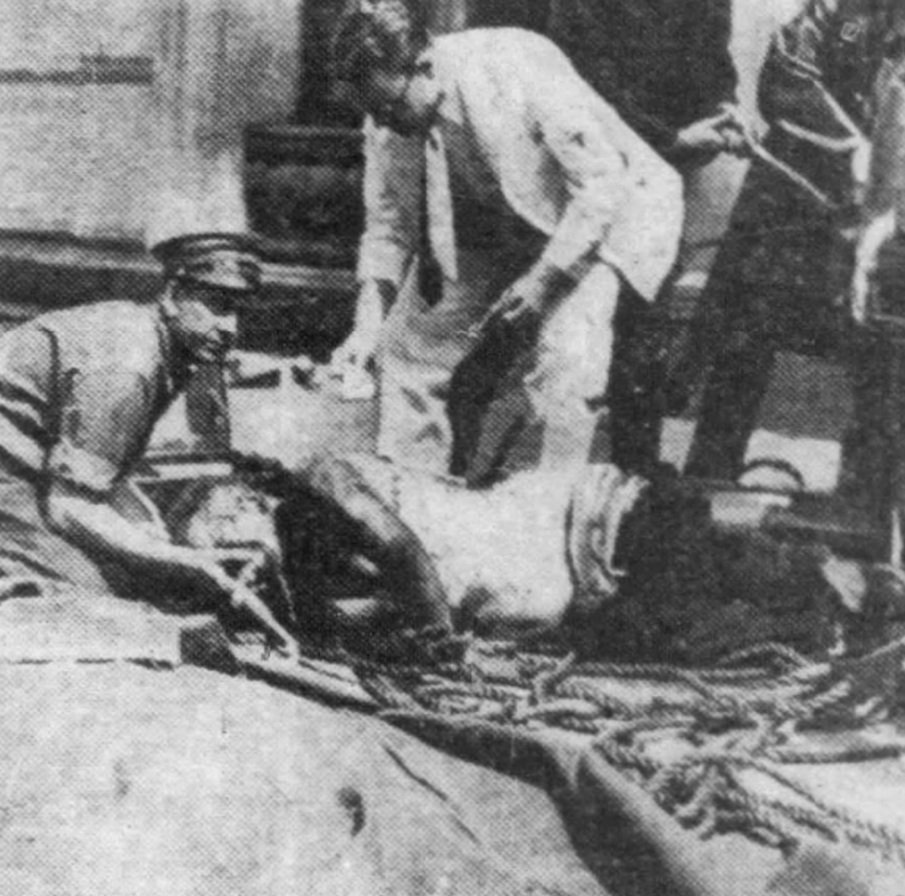
The firemen and fire officers that were in the ash hoist shaft needed rescue. The shaft was 30-feet deep. Rescuing firefighters used the 35-foot ladder and ropes to extricate the injured and dead. Fireman James F. Greene of Engine 65 was removed from the ash hoist shaft. He was pronounced dead shortly after being brought to street level. Fireman William F. Pratt of Ladder 7 (detailed to Ladder 2) was over the paint vault when the explosions occurred. It took over two hours for rescuing firefighters to find him. He was buried under collapse debris. Lieutenant John H. Cosgrove of Engine 65, Fireman Peter A. Daly of Engine 39, and Fireman Louis Hardina of Ladder 16 were removed to the hospital and died later in the day. In addition to the fatalities, there were 31 injuries. Eight of those firefighters injured were considered serious. One police officer’s injuries were considered serious. In addition to the firefighters that were injured, police officers, reporters, and civilians were also injured.
The funeral director notified the family of Fireman James F. Greene of Engine 65 and Fire Department officials that the body of Fireman Greene was so severely damaged that embalming was not possible. Fireman Greene’s funeral would have to be conducted immediately. His funeral took place on August 3. After the funeral mass, a procession worked its way through the city streets where it passed the quarters of Engine 65 which was draped in black bunting.
A funeral mass for six of the fallen members was held at St. Patrick’s Cathedral on August 4. Six caskets were positioned at the alter in order of seniority in the FDNY. Fire Department Chaplain Edward P. Costello sang the requiem. The six fallen members were Lieutenant James Hartnett of Ladder 16, Lieutenant John H. Cosgrove of Engine 65, Fireman Thomas S. Finn of Engine 65, Fireman Louis Hardina of Ladder 16, Fireman William L. Pratt of Ladder 7, and Fireman Peter A. Daly of Engine 39.
After the funeral mass there was a cortege up Fifth Avenue which turned toward the site of the fire on Park Avenue and East 57th Street. It passed the fire building. There were six hearses abreast. The Fire Department Band played a dirge during the somber procession.
On August 18, the Ritz Tower Explosion claimed the life of one more firefighter. Fireman Edward R. Maloney of Engine 39 did not recover from the concussive effects of the explosions. His funeral would take place on August 22 with full Fire Department honors. The total of those killed in the line of duty at the Ritz Tower Explosion was now eight.
The cause of the incident was never officially designated. However, during inquiries into the fire, Acting Chief of Department Thomas Dougherty and Acting Deputy Chief James Roche of the 3rd Division believed it may have been spontaneous combustion from heat and lack of proper ventilation from the paint vault. On August 28, the Office of the District Attorney of New York County issued a statement that “the cause has not been definitely ascertained. It is presumed that gas emanating from the paint closet exploded. Nobody is to be held criminally culpable.”
Battalion 9 Chief Michael F. Powers would eventually be promoted to Deputy Assistant Chief. Chief Powers was a Deputy Chief in the 5th Division on December 11, 1946, and is credited with saving the lives of several firefighters from Engine 93 on the roof of the Knickerbocker Icehouse Fire and Collapse. Chief Powers went on to start writing “Fire College Lectures” which were the precursors to the FDNY’s “Firefighting Procedures.”
Battalion Chief John J. Ryan of Battalion 8 wrote about and heaped accolades upon Captain George F. McGinty of Engine 8. He stated: “From the time the Captain arrived at the scene in command of the first-due engine until he was carried from the sub-cellar with a piece of two-by-four imbedded in his thigh and other injuries and burns, he proved himself a top-notch fireman. His conduct at the Ritz Tower Fire, and other innumerable bad workers, rates Captain McGinty as one of the best firefighters in the annals of our department.”
Due to his injuries, Captain George F. McGinty could not perform firefighting duties after the Ritz Tower Explosion. He became the Captain of the Probationary Fireman’s School and taught thousands of probies how to be firefighters. Many of those he taught were veterans of the Second World War. Captain McGinty is written about in Lieutenant Richard Hamilton’s book, “20,000 Alarms.”
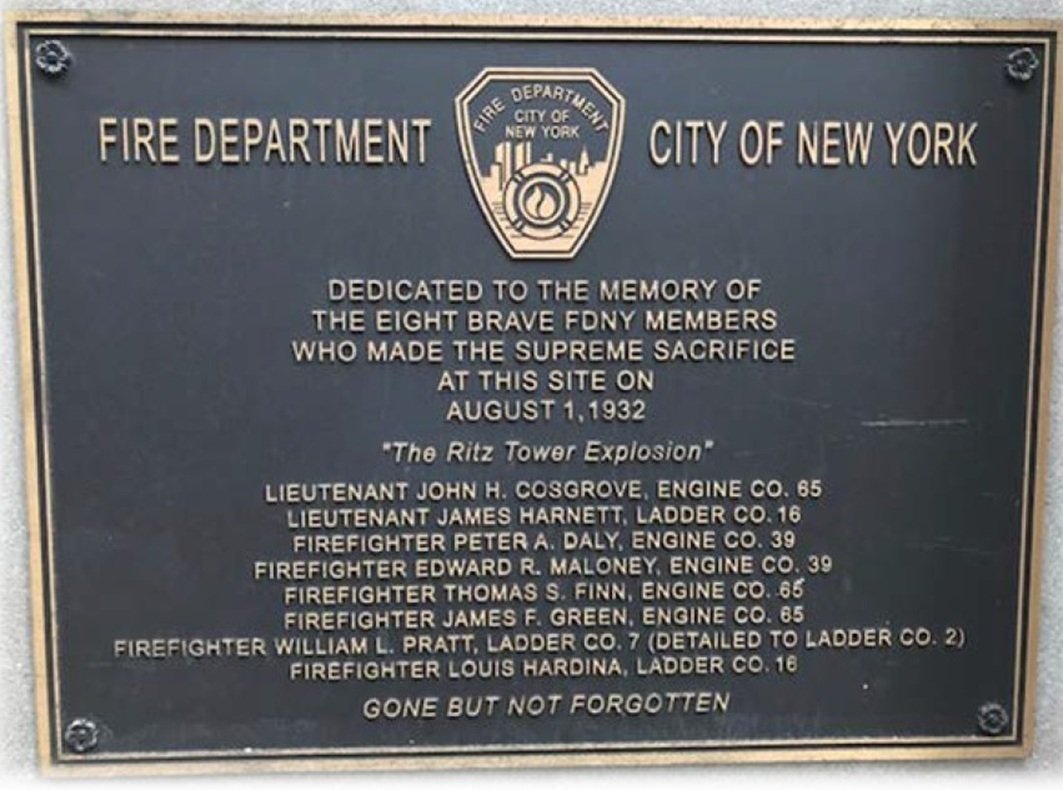
On August 1, 2014, FDNY unveiled a bronze plaque attached to the exterior of the Ritz Tower building near the service entrance where firefighters accessed the fire in the sub-cellar honoring the eight firefighters who were killed in the explosion 82 years to the day.
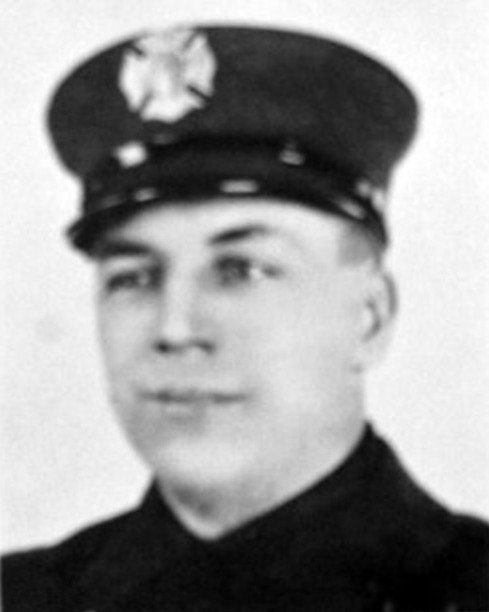
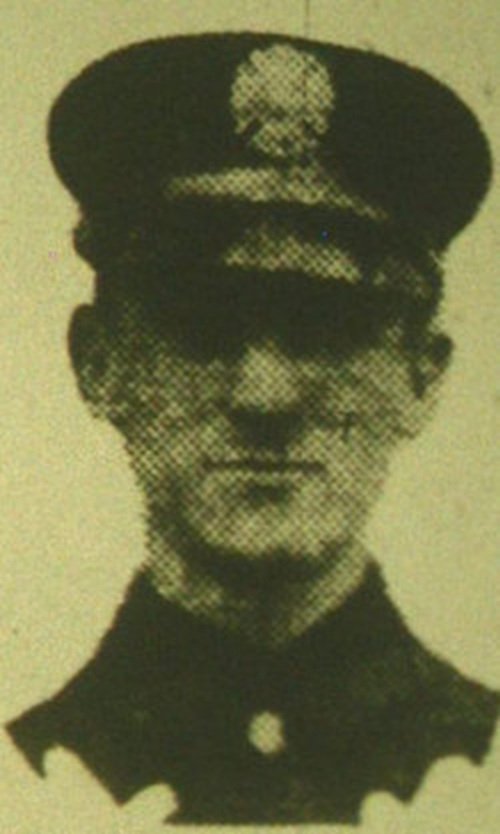
Members of the FDNY who were killed in the line of duty at the Ritz Tower Explosion on August 1, 1932:
- Lieutenant John H. Cosgrove, age 54, was assigned to Engine 65. Cosgrove was a widower and the father of eight children. He was buried in Calvary Cemetery in Woodside, Queens, New York.
- Lieutenant James Harnett, age 48, was assigned to Ladder 16. Harnett was a father to two motherless children, Margaret, age 12, and William, age 10. He was buried in Calvary Cemetery in Woodside, Queens, New York.
- Fireman Peter A. Daly, age unknown, was assigned to Engine 18. Daly was the inventor of the oxygen tent used at the time by the FDNY. He was buried at Saint John Cemetery in Middle Village, Queens, New York.
- Fireman Thomas S. Finn, age unknown, was assigned to Engine 65. He was a First World War veteran and was buried at All Faiths Cemetery in Middle Village, Queens, New York.
- Fireman James F. Greene, age 37, was assigned to Engine 65. He was survived by his wife, Elizabeth, and his son, James, age 5. He was buried in Calvary Cemetery in Woodside, Queens, New York.
- Fireman William L. Pratt, age 34, was assigned to Ladder 7 (detailed to Ladder 2 on the day of the incident). Pratt had recently returned to duty after being injured in a fire in Coney Island. He was survived by his wife, Margaret, and was buried at Saint John Cemetery in Middle Village, Queens, New York.
- Fireman Louis Hardina, age unknown, was assigned to Ladder 16. Hardina was a veteran of the First World War. His burial details are unknown.
- Fireman Edward Russell Maloney, age 38, was assigned to Engine 39. He died from the wounds he suffered at the Ritz Tower Explosion on August 18. Maloney was a veteran of the First World War. He was survived by his wife, Mary, and was buried at Mount Saint Mary Cemetery in Flushing, Queens, New York.
The Ritz Tower Building is still in operation at the corner of Broadway and East 57th Street. On August 1, 2014, FDNY unveiled a bronze plaque attached to the exterior of the Ritz Tower building near the service entrance where firefighters accessed the fire in the sub-cellar honoring the eight firefighters who were killed in the explosion 82 years to the day.
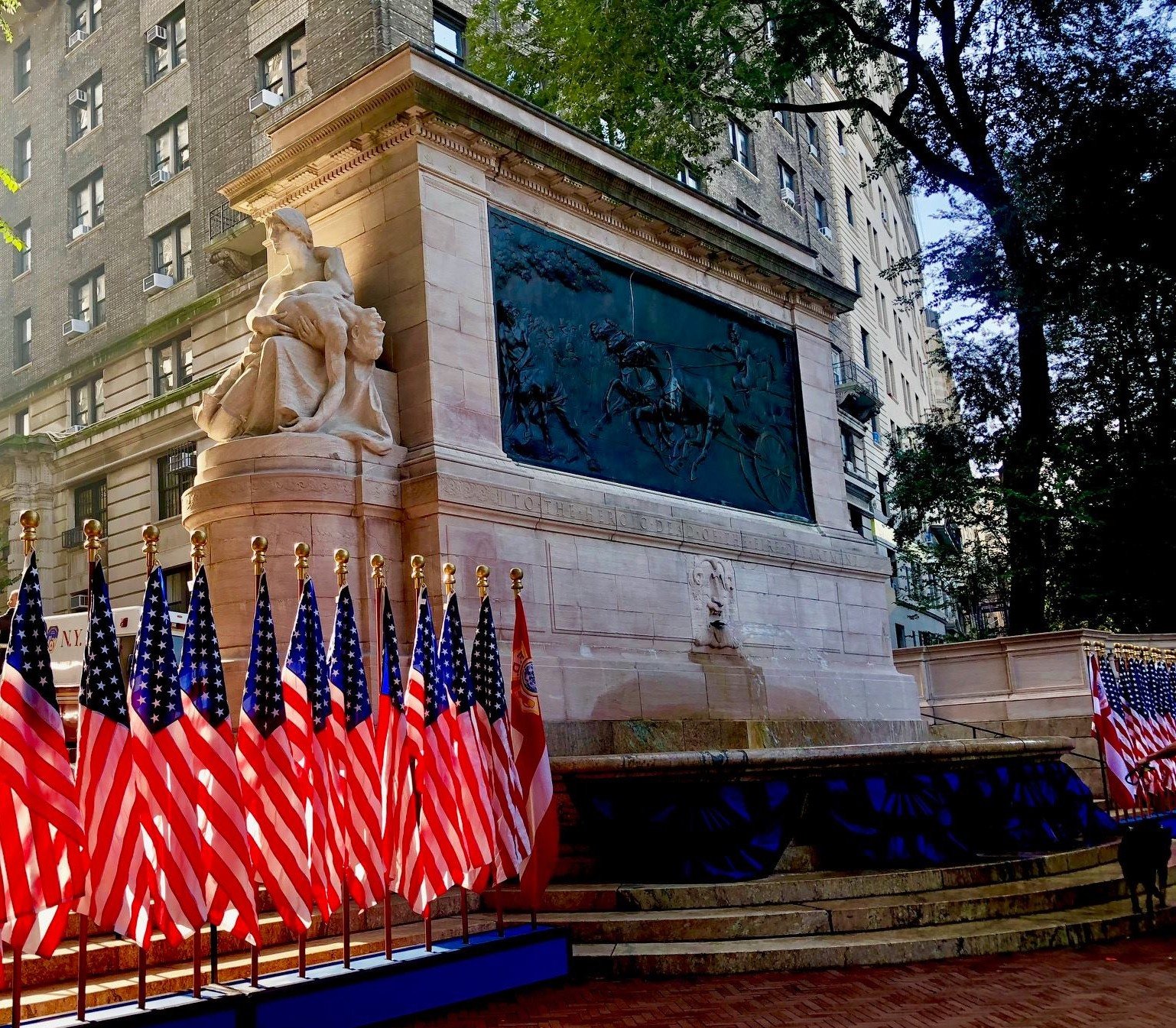
The names of the eight fallen FDNY members have been honored at the New York Firemen’s Memorial on Riverside Drive at 100th Street in Manhattan, New York. The memorial honors the members of the NYFD and the FDNY who have made the ultimate sacrifice in the line of duty. Built in 1913 on a hillside facing the Hudson River, the memorial comprises a grand staircase, a balustraded plaza, a fountain basin, and the central monument. Made of Knoxville marble, the monument is a sarcophagus-like structure with a massive bronze bas-relief of horses drawing an engine to a fire. To the south and north are allegorical sculpture groups representing “Duty” and “Sacrifice.”
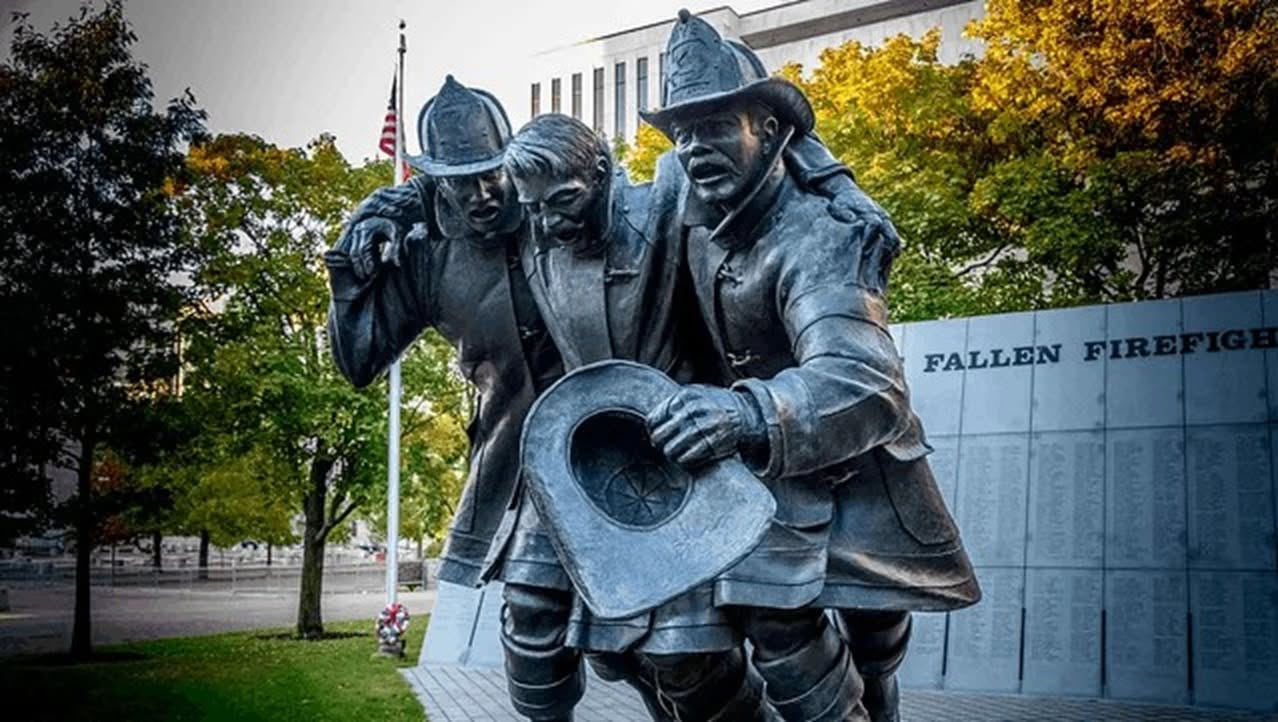
The names of the eight fallen FDNY members have been inscribed on the New York State Fallen Firefighters Memorial in Empire State Park on the grounds of the State Capitol in Albany. The memorial honors the men and women of the fire service who have perished in the line of duty in the Empire State. The memorial is located between the Justice Building and The Egg in a park-like area bordered by Norway maple trees. Dedicated in 1998, it consists of a ten-foot-high bronze statue of two firefighters rescuing an injured comrade backed by a granite wall fifty-four feet long and fifteen feet high inscribed with the names of New York state firefighters who gave their lives to save others. The memorial is placed on a plaza of charcoal and red brick pavers forming a Maltese Cross. As of October 2025, there are 2,818 names on the wall. The earliest name on the wall is from the year 1811.
Commentary by FDNY Division 7 Deputy Chief (retired) Jay Jonas:
In 1932, firefighters were equipped with a rubber coat, boots and a helmet. They did not have gloves issued to them. Only selected companies had “masks.” At the Ritz Tower Explosion, Rescues 1 and 3 and Battalion 8 had smoke helmets and/or filter masks. Today, every firefighter is equipped with complete bunker gear, boots, gloves, hoods, helmets, self-contained breathing apparatus (SCBA), and integrated Personal Alert Safety Systems (PASS).
In 1932, there were no portable radios. Communications were conducted face to face. Today, command and control is sophisticated and high-tech. Electronic BF-4s, Electronic Fireground Accountability System (EFAS), sectoring of the fire, communications with units and fire department dispatchers, command boards, all help to manage the fire.
Other firefighting tools and equipment that would be used in a similar fire today would be thermal imaging cameras, meters to detect explosive limits, search ropes, Halligan tools, Rabbit tools, high-powered ventilation fans, torches, saws. The Fire Prevention Program now is very thorough. In addition to enforcing fire prevention and building codes, the Critical Incident Dispatch System (CIDS) helps to prepare responding firefighters to hazards that may be present.
There were no automatic fire alarms or automatic sprinkler systems at the Ritz Tower in 1932. If they were present, there would not have been a delayed alarm to the FDNY, and the sprinkler system would have knocked down the incipient fire. Current fire prevention regulations do not allow storage of flammable liquids below grade. Combustible liquids (flash point above 100 degrees F) are allowed if the entire area is protected by a sprinkler system.
We have attached photos from the incident.
Thanks to FDNY Deputy Chief Jay Jonas for his excellent article in the March 2018 edition of the Division 7 Newsletter for much of the content of this article.
Honor the service of these eight brave firefighters by touring a commercial building equipped with a sub-cellar in your local response district and by discussing the hazards of below-grade firefighting with your crew members today.
Remember Fallen Brothers.
Get Out There And Know The History Of Your Local!!!
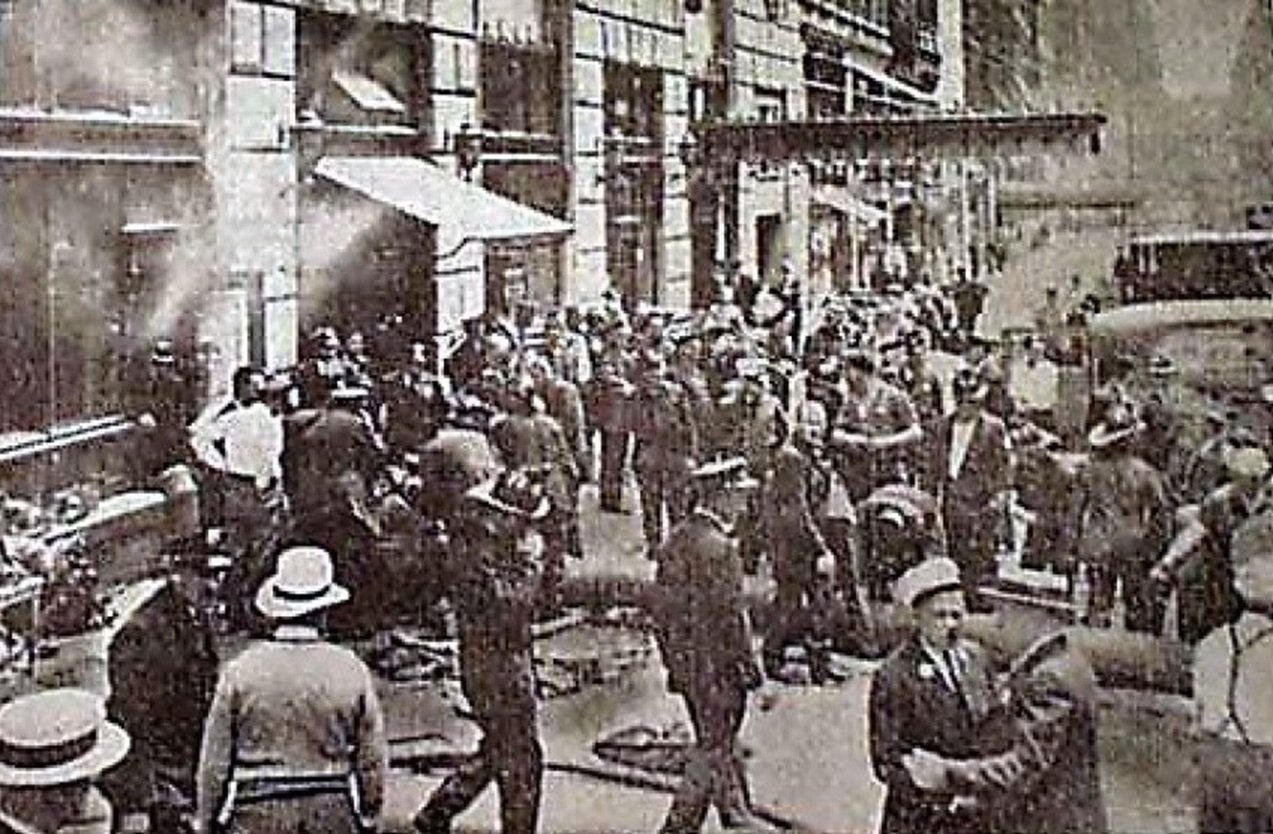
Photo of the chaotic scene in front of the hotel following the explosions.
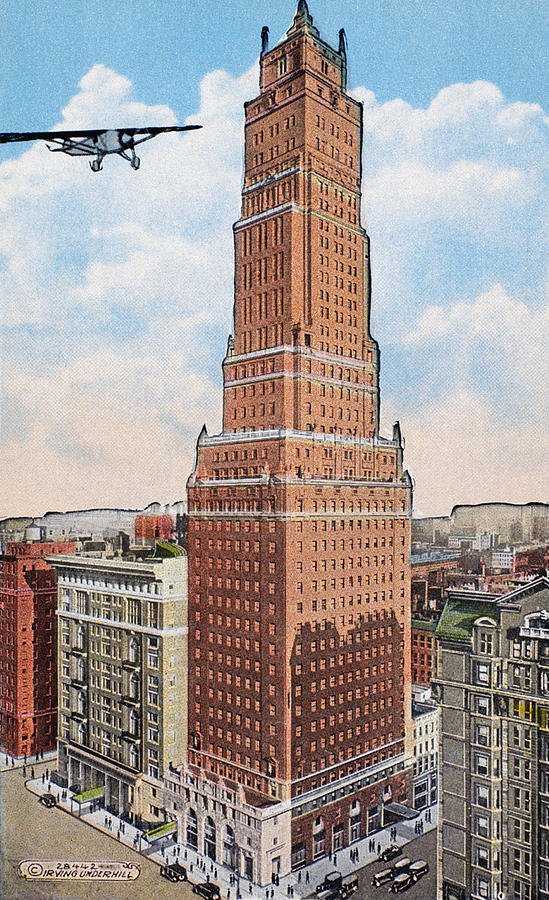
Illustration+ of the Ritz Tower shortly after its completion in 1926.
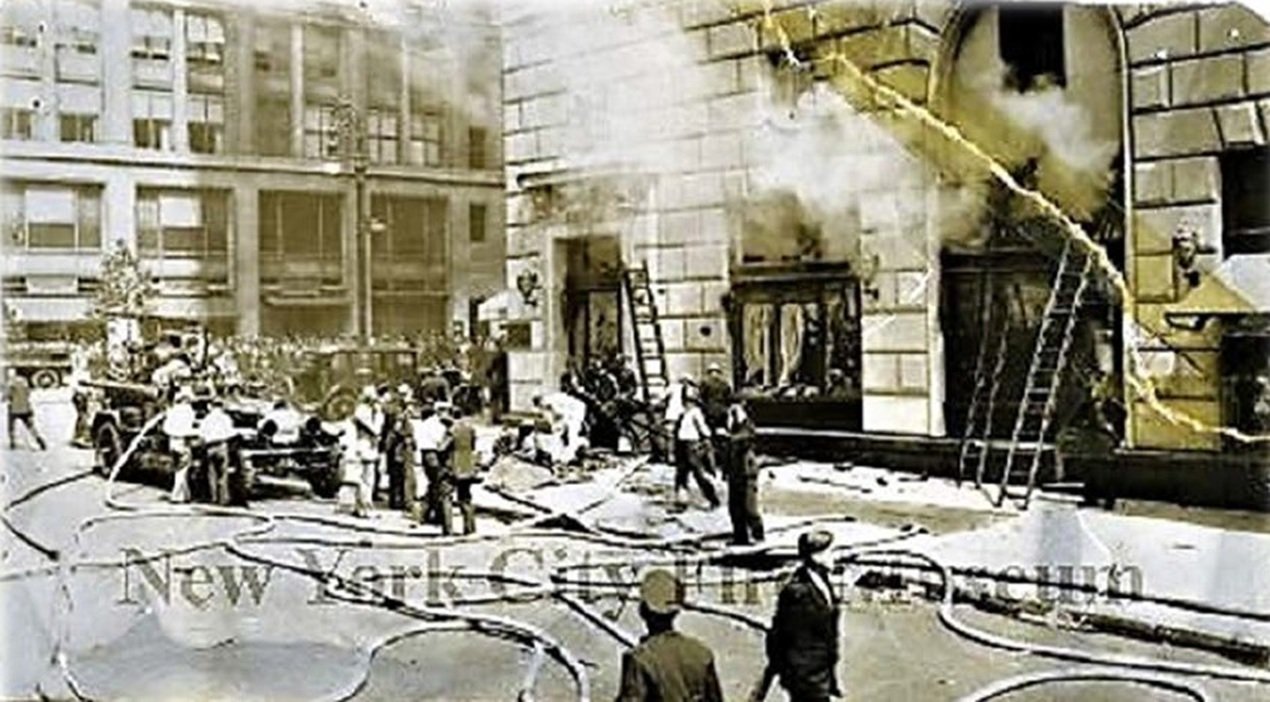
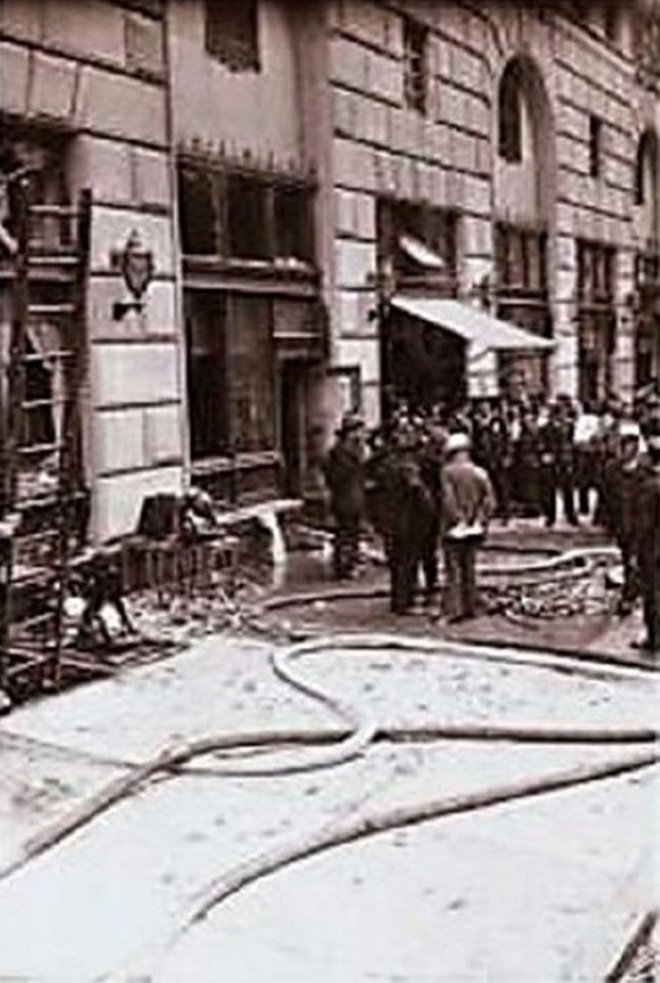
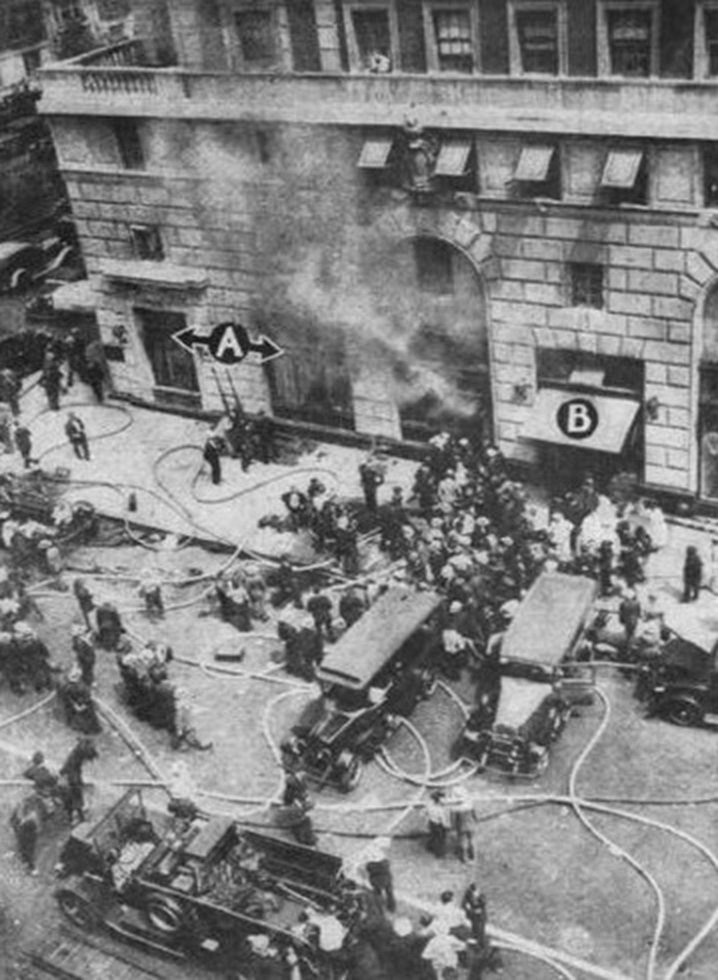
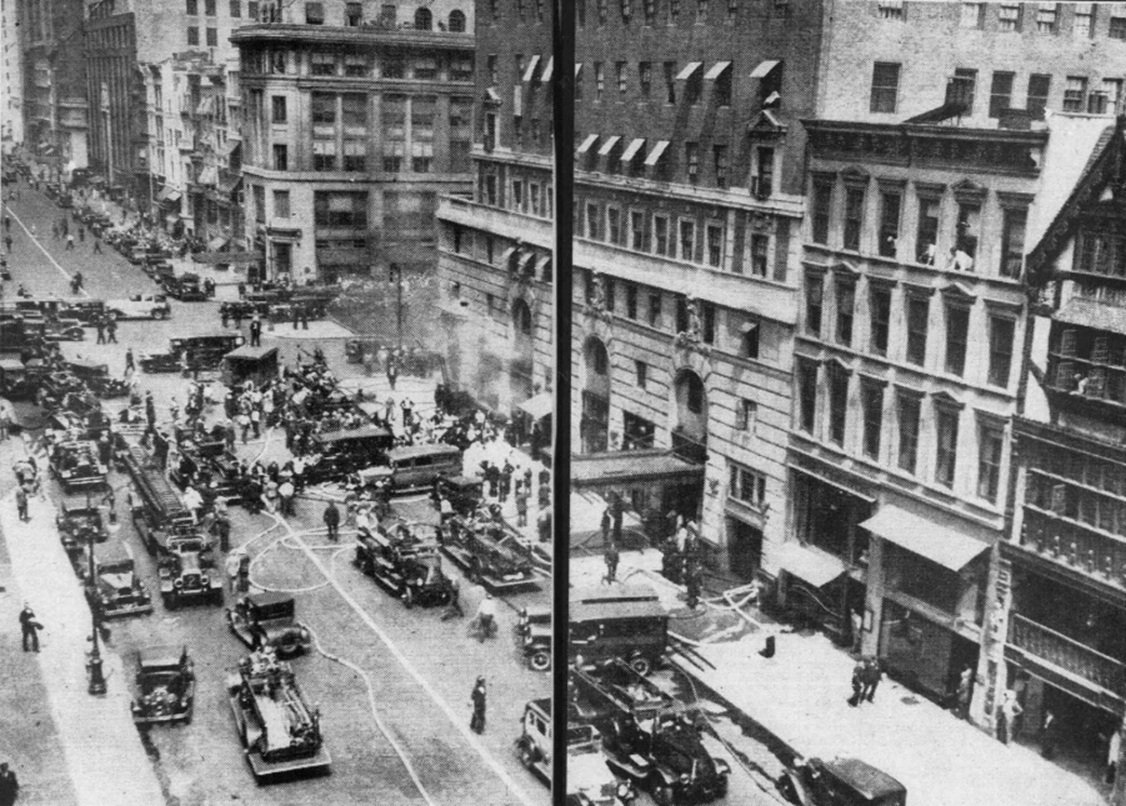
Ambulances line up outside the hotel as the injured and dead are removed. Note the 35-foot ground ladder that was lowered into the ash removal shaft to access the sub-cellar.
Ambulances line up outside the hotel as the injured and dead are removed. Note the 35-foot ground ladder that was lowered into the ash removal shaft to access the sub-cellar.
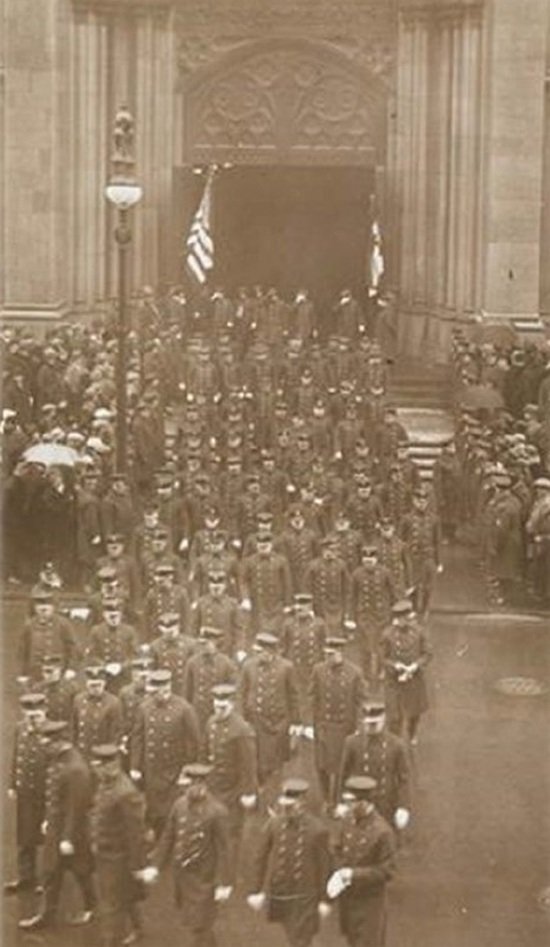
After the funeral mass there was a cortege up Fifth Avenue which turned toward the site of the fire on Park Avenue and East 57th Street. It passed the fire building. There were six hearses abreast. The Fire Department Band played a dirge during the somber procession.