Fire Captain Killed in Floor Collapse During Restaurant – White Shutter Restaurant Fire – Bay Ridge, Brooklyn – June 27, 1961
On June 27, 1961, FDNY Fire Captain Walter Bersig of Ladder 149 was killed during an early morning three-alarm fire in a one-story restaurant when the floor collapsed and Captain Bersig was hurled into the water-filled cellar below. Just before the collapse, the Captain sensed that the masonry terrazzo floor was weakening and he ordered all of his men out of the building. Bersig was the last to leave but he was caught in the collapse. Multiple rescue attempts were made before the Captain was found about 15 minutes later in several feet of water in the cellar. He was rushed to the hospital where he was pronounced dead on arrival. The coroner’s report stated that he died from smoke inhalation, multiple injuries and submersion. The cause of the fire was undetermined.
The occupancy involved in the incident was the White Shutter Restaurant, a small, one-story café-style restaurant located at 7509 Third Avenue in the Bay Ridge neighborhood of Brooklyn, New York. The restaurant was located midblock between 76th Street and the busy commercial corridor of Bay Ridge Parkway. The one-story Type III Ordinary construction brick and wood joist building measured 25 feet wide by 100 feet deep with a flat roof and a wooden cornice along the front of the building. A cellar ran under the length of the building. Side Alpha faced Third Avenue; a main commercial corridor lined with shops on the first floor and apartments on the upper floors. On Exposure Bravo a narrow passageway separated the fire building from the fire building from a three-story Type III Ordinary construction brick and wood joist building with shops on the first floor and apartments on the upper floors. On Side Charlie was a narrow rear passageway. Attached on Exposure Delta was a three-story Type III Ordinary construction brick and wood joist building with shops on the first floor and apartments above. The building was not equipped with a fire alarm system or an automatic fire sprinkler system. Fire hydrants were located near the intersections at each end of the block. The nearest fire alarm call box was located one half block south at Third Avenue and 76th Street.
Brooklyn is one of five boroughs that make up the City of New York. With a population of 2,736,074 residents according to the 2020 U.S. census, if Brooklyn were an independent city, Brooklyn would rank as the third-most populous in the country behind the rest of New York City and Los Angeles, and ahead of Chicago. The incident occurred in the Bay Ridge section of the borough. Bay Ridge is a neighborhood in the southwest corner of Brooklyn bounded by Sunset Park to the north, Dyker Heights to the east, the Narrows and the Belt Parkway to the west, and Fort Hamilton Army Base and the Verrazzano-Narrows Bridge to the south. Until the late 19th century, Bay Ridge was a relatively isolated rural area. In 1892, the first electric trolley line was built in Brooklyn, starting at a ferry terminal at 39th Street and running via Second Avenue to 65th Street. This had the effect of raising land prices and started a building boom in South Brooklyn as thousands of people started coming to the area from Manhattan and from other places. By the 1920s, the number of apartment buildings had increased fivefold, replacing old farms, homesteads and houses. Schools, churches, stores, movie theaters, and other structures were also created to serve the growing population. By the 1970s, Bay Ridge had reached a population of more than 80,000 residents.
Today the borough is protected by the New York City Fire Department (FDNY) which consists of 17,321 career firefighters, EMS personnel and support staff that serve a population of about 8 million residents in the city of approximately 321 square miles. The department staffs 254 fire stations within 14 divisions in 53 battalions operating 197 engine companies, 143 ladder companies, 8 squad companies, 5 rescue companies, 450 ambulances, 1 HazMat company, 1 USAR company, 10 wildland units and 3 fireboats. The FDNY is the largest municipal fire department in the United States, and the second largest in the world after the Tokyo Fire Department. Call volume in fiscal year 2023 was more than 1.8 million calls for service including 23,901 structural fires, 12,594 non-structural fires, 233,320 non-fire emergencies, and 1.6 million emergency medical calls including 605,140 life-threatening medical emergencies.
The Bay Ridge neighborhood is protected by units from the FDNY including:
- Engine 241 and Ladder 109 quartered at 6630 Third Avenue – 0.5 miles from the fire building.
- Engine 242 quartered at 9219 Fifth Avenue – 1.1 miles from the fire building.
- Engine 284, Ladder 149, and Satellite 3 quartered at 1157 79th Street – 1.5 miles from the fire building.
At 4:45 a.m. on Tuesday, June 27, 1961, FDNY fire units in the Bay Ridge area of Brooklyn were alerted to Brooklyn Box 1135, Third Avenue and 76th Street for the report of a fire in the White Shutter Restaurant at 7509 Third Avenue. Brooklyn fire units including Ladder 149 with Captain Walter Bersig in command arrived on the scene to find a working fire in the one-story building. A second alarm was transmitted at 5:16 a.m. followed by a third alarm at 5:56 a.m. More than 100 firemen turned out to fight the blaze which ravaged the restaurant.
At about 6 a.m., the members of Ladder 149 led by Captain Bersig were working on the first floor of the restaurant when Bersig noted that the masonry terrazzo floor was weakening and he ordered his men out of the building. Captain Bersig, a 24-year veteran of the FDNY, was the last member to leave when suddenly the floor beneath him collapsed sending him plunging into the cellar below.
“He was talking to a lieutenant standing beside him when it happened,” said one fireman who had known and worked with Captain Bersig for 17 years. The lieutenant, he said, was saved because he “probably was standing over beam when it went.”
Rescuers made multiple attempts to reach the Captain as fire continued to envelope the cellar. Fellow firemen were unable to reach him for 15 minutes before finally bringing him out of the cellar. The unresponsive fire officer was rushed by a waiting ambulance to Lutheran Medical Center where he was pronounced dead on arrival. The coroner’s report stated that he died from smoke inhalation, multiple injuries and submersion.
The cause of the fire was unknown, but Fire Commissioner Edward Cavanagh ordered a probe into the origin of the blaze.
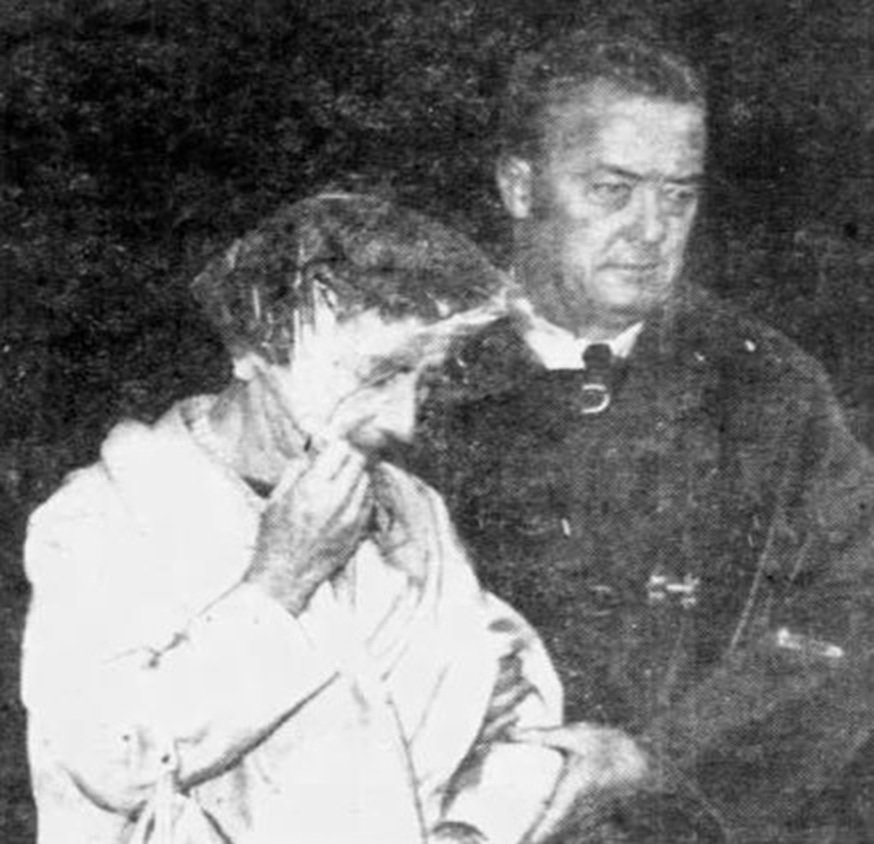
Fire Captain Walter C. Bersig, age 51, was a 24-year veteran of the FDNY assigned to Ladder 149. He joined the Department in 1937, was promoted to lieutenant in 1951, captain in 1955, and was made a provisional battalion chief in 1955. He was survived by his wife, Ann Patricia, a teacher at P.S. 104; three daughters, Patricia Ann, age 22, a nurse at Methodist Hospital, Kathleen, age 19, in nurses’ training elsewhere, and Jean Marie, age 17, student at St. Saviour High School, and a son, James, age 14, a student at Xaverian High School.
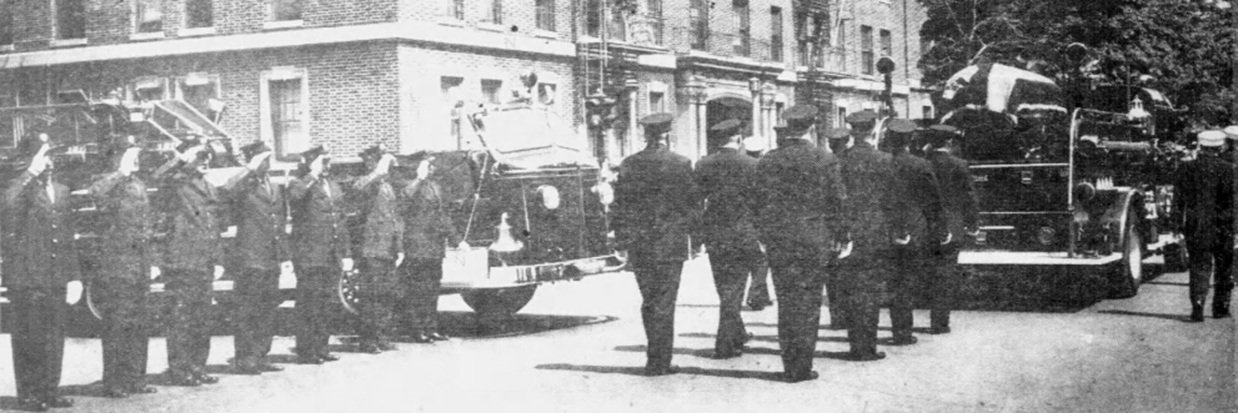
A funeral with full departmental honors was held for Captain Walter C. Bersig on July 1, 1961, with a Solemn Requiem Mass at St. Anselm’s Church in Bay Ridge. Following the services interment was at Holy Cross Cemetery in Brooklyn. Fire Commissioner Cavanagh and several city officials along with hundreds of city firemen were in attendance.
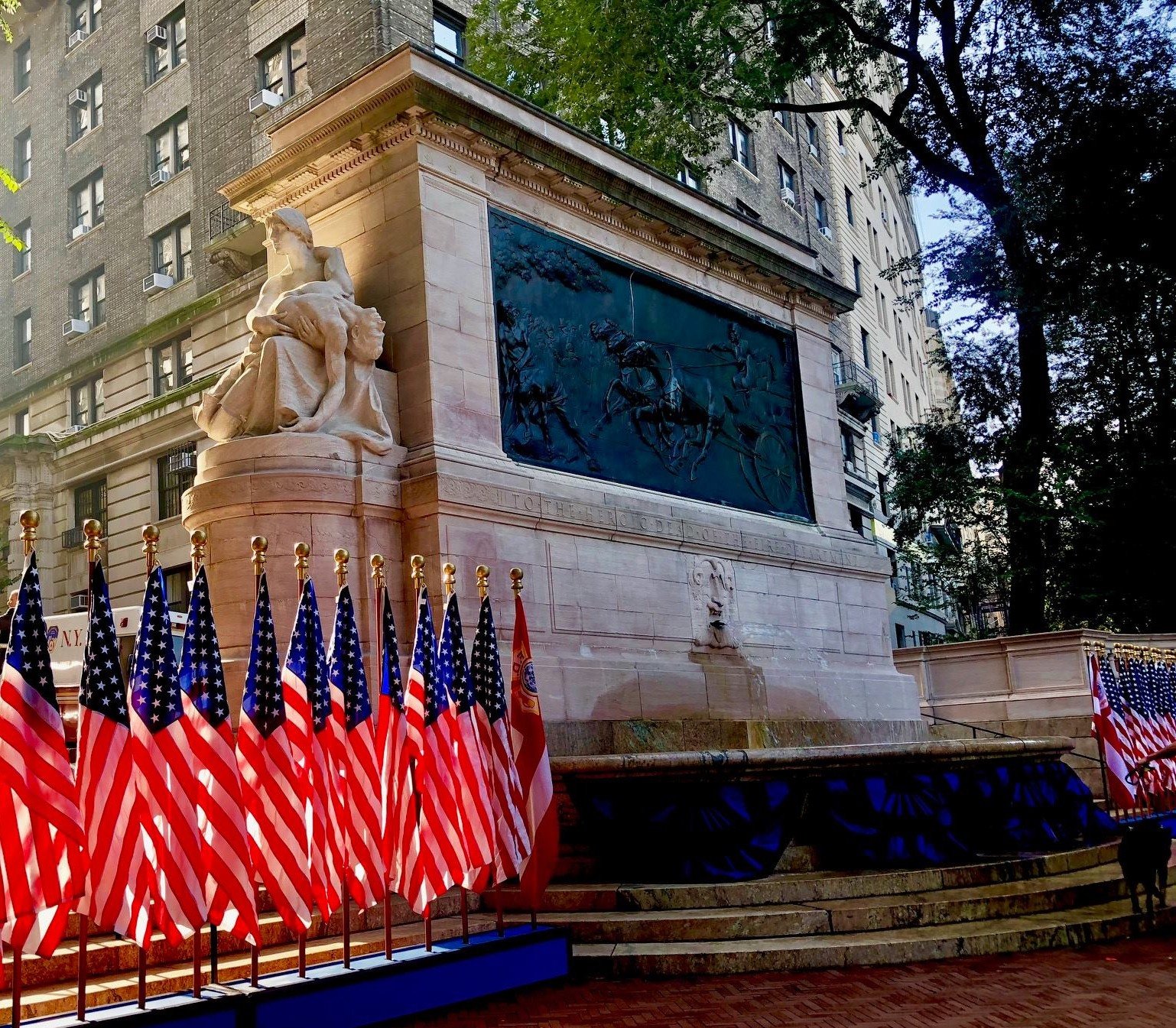
The name of Captain Walter C. Bersig has been honored at the New York Firemen’s Memorial on Riverside Drive at 100th Street in Manhattan, New York. The memorial honors the members of the NYFD and FDNY who have made the ultimate sacrifice in the line of duty. Built in 1913 on a hillside facing the Hudson River, the memorial comprises a grand staircase, a balustraded plaza, a fountain basin, and the central monument. Made of Knoxville marble, the monument is a sarcophagus-like structure with a massive bronze bas-relief of horses drawing an engine to a fire, To the south and north are allegorical sculpture groups representing “Duty” and “Sacrifice.”
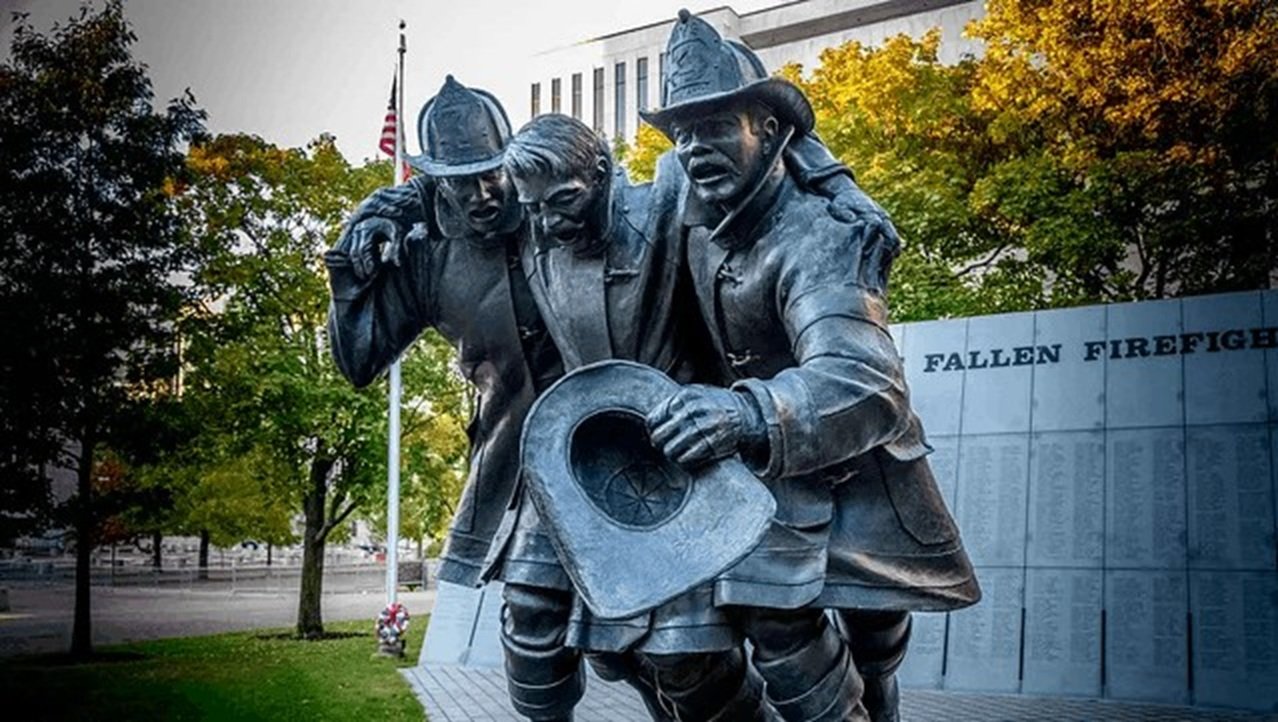
The name of Captain Walter C. Bersig has been inscribed at the New York State Fallen Firefighters Memorial on the grounds of the New York State Capitol in Albany. The memorial features a 54-foot-long by 15-foot-high gray granite wall with the names of New York State fallen firefighters permanently etched into the stone. In front of the wall stands a 10-foot-high dark bronze sculpture of two firefighters rescuing an injured colleague created by New York sculptor Robert Eccleston. The sculpture rests on a paved plaza with charcoal and red bricks forming a Maltese Cross. As of October 2024, there are 2,692 names on the wall. The earliest name on the wall is from the year 1811.
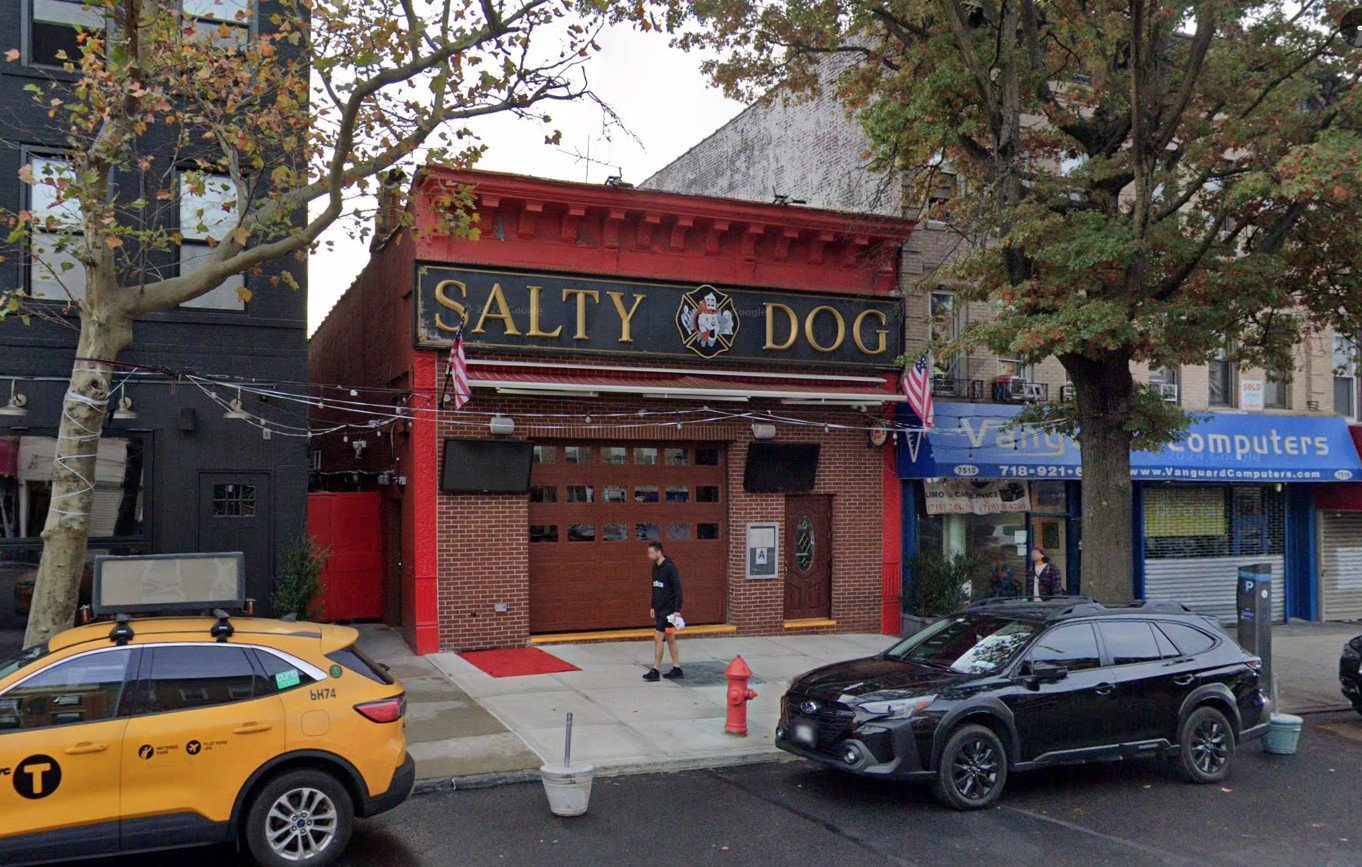
Ironically, the site of the fatal fire is now occupied by the Salty Dog sports bar, a firehouse-themed restaurant with fire department memorabilia and an antique 1947 Mack fire engine on display. There is a memorial plaque honoring Captain Bersig inside the establishment.
Training advisory on operations in vacant and abandoned structures from the Book of Remembrance Bulletins – Bureau of Training – FDNY 2022:
Floors of restaurants are often overloaded with several inches of masonry products such as tile or terrazzo:
- Floor joists may be trimmed to fit tile. Holes also may be drilled through the joists to run large waste lines, which significantly weakens the floor joists.
- Additionally, restaurants usually contain extremely heavy commercial refrigerators, ovens and other related equipment.
- Overloaded wood floors will collapse sooner when exposed to fire.
- Wood joists tend to sag prior to collapse. When sagging is discovered, evacuate the area, notify the IC and the unit’s operating below.
Commentary:
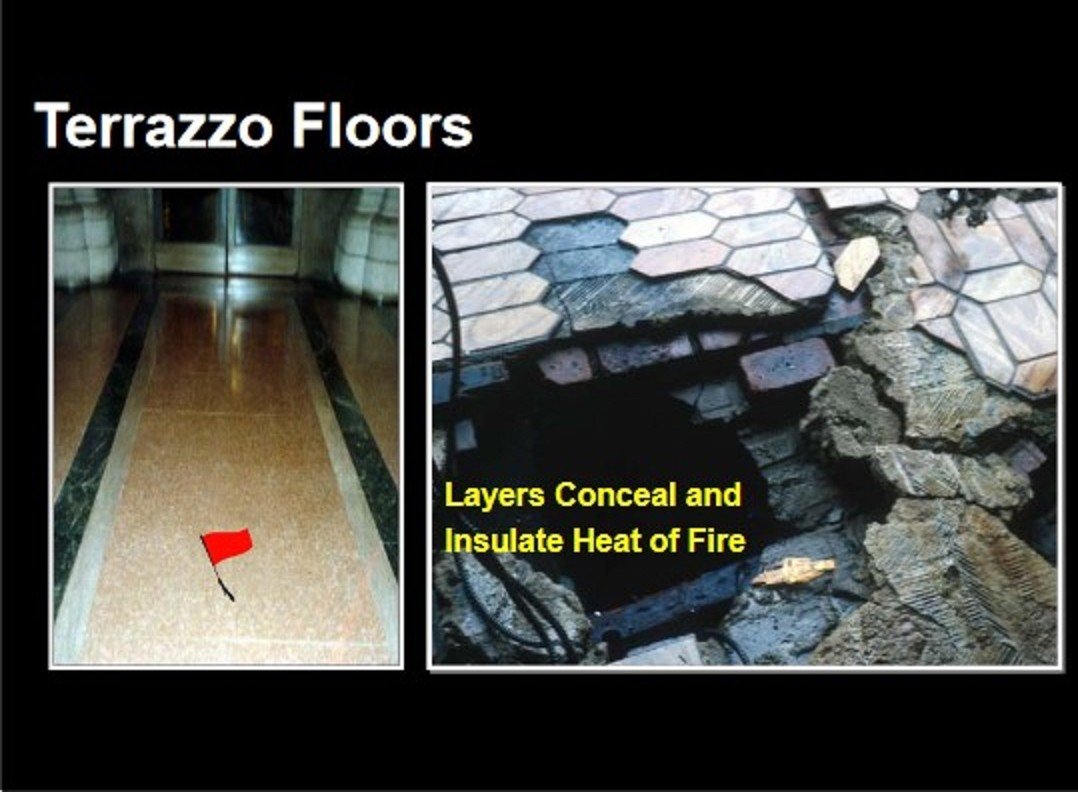
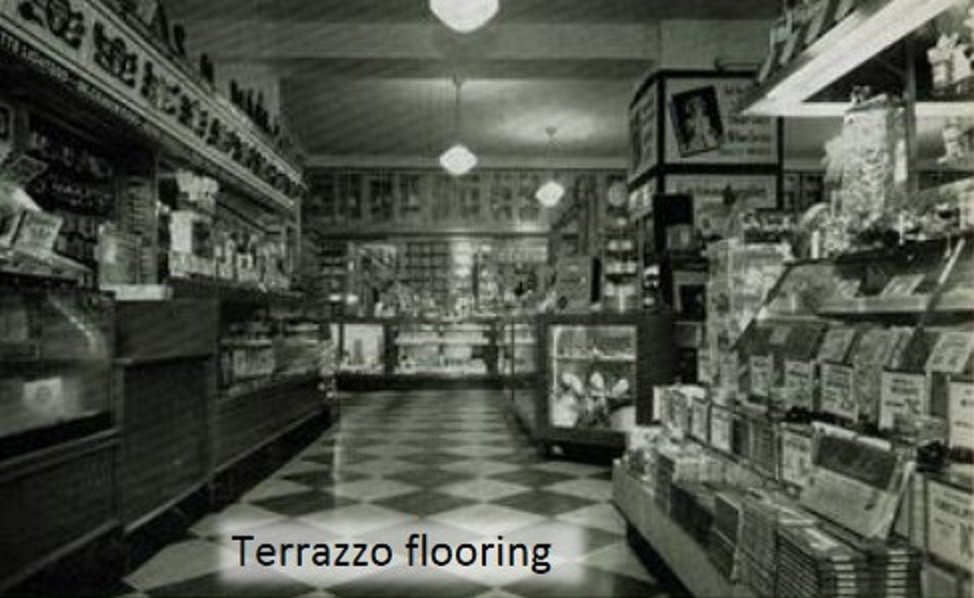
Terrazzo is a composite material, poured in place or precast, which is used for floor and wall treatments. It consists of chips of marble, quartz, granite, glass, or other suitable material, poured with a cementitious binder (for chemical binding), polymeric (for physical binding), or a combination of both. Metal strips often divide sections, or changes in color or material in a pattern. Additional chips may be sprinkled atop the mix before it sets. After it has cured, it is ground and polished smooth or otherwise finished to produce a uniformly textured surface. Very popular for floors in commercial applications due to their high durability, they were installed in many legacy Type III Ordinary construction commercial and mercantile buildings. They have also seen a bit of a comeback recently in new commercial and residential applications.
Terrazzo flooring tends to mask an advanced fire on the floor below, such as in a basement, and has a history of sudden failure as the supporting wood floor joists are consumed by the fire. The heavy masonry construction of a terrazzo floor tends to insulate the heat of a fire burning below in a basement from unsuspecting firefighters operating above while the unprotected wood floor supports are being eaten away by the flames. The collapse of a terrazzo tile floor during a fire often happens with little or no warning. In many cases, a partial collapse of the floor occurs where the falling floor hinges down from a sidewall pitching firefighters into a burning basement or lower level.
Terrazzo tile floors have a tragic fire history for the North American Fire Service:
On October 17, 1966, a fire in the basement of a commercial occupancy in the Flatiron District of Manhattan, New York claimed the lives of a dozen firefighters of the New York City Fire Department (FDNY). It was a most tragic and mournful day that touched the heart and soul of every member of the department. Prior to the events of September 11, 2001, the incident was the greatest life loss at a single incident in the history of the FDNY. Every rank except for the rank of Captain was touched by this tragedy: one Deputy Chief, one Battalion Chief, two Lieutenants, and eight Firefighters were killed, one of which was a Probationary Firefighter. The scourge of “renovated buildings” played a major role in this cataclysmic event. The fire in the basement destroyed the unprotected wood joists supporting a heavy masonry terrazzo floor in the drug store above where the firefighters were operating. The cause of the fire which started in the basement of an adjacent building remains unknown:
https://www.facebook.com/groups/192218352449074/permalink/1355229756147922/
On May 16, 1976, Philadelphia Firefighters David Stewart of Ladder 20, Firefighter Aloysius Welsh of Ladder 28, and Firefighters Bernard McSloy and Richard Iannacone of Ladder 34, were killed while fighting a fire in a restaurant when the floor partially collapsed sending the firefighters sliding into the burning basement. The one-story Barson’s Overbrook Delicatessen located in a strip mall shopping center in Northeast Philadelphia featured a heavy masonry terrazzo floor supported by unprotected wood joists. A fire that originated in the basement weakened the wooden floor joists causing a section of the floor to hinge down into the basement. Four firefighters who had been operating on the first floor of the restaurant above the fire then fell into the blazing cellar. Additional alarms were struck as other firefighters tried to reach their trapped comrades. Shortly after the fourth alarm was struck, the bodies of Firefighters Stewart and McSloy were pulled from the rubble. Further rescue efforts had to be halted when the building began to collapse as a large HVAC unit on the roof fell into the basement. The bodies of Firefighters Welsh and Iannacone were recovered later that evening after heavy cranes were brought in to remove the wreckage. The fire was later determined to have been caused by defective electrical wiring in the basement. The event is remembered as one of the greatest loss of firefighter lives in the history of the Philadelphia Fire Department: https://www.facebook.com/groups/192218352449074/permalink/1228731208797778/
On the morning of December 20, 1991, four members of the Hilltop Hose Company of Natrona Heights, Pennsylvania died when they were trapped by a partial floor collapse while operating at a mutual aid commercial structure fire in the nearby community of Brackenridge. Lieutenant Rick Frantz, and Firefighters Frank Veri Jr., David Emanuelson and Michael Cielicki Burns were members of a mutual aid truck company that had responded to the early morning incident and were assigned to prevent fire extension from the basement to the ground floor of a two-story commercial building that housed a furniture refinishing business. Although they were wearing full protective clothing and using self-contained breathing apparatus, the firefighters were overwhelmed by the severe fire conditions that erupted when a section of the ground floor collapsed into the basement. The collapse cut off their primary escape path, and the fire burned through their hoseline, leaving them without protection from the flames. Despite several heroic rescue attempts, the bodies of all four members were later recovered from the ground floor of the building. Fire investigators determined that the fire originated in the basement finishing room, which was directly below the front entrance. The investigation indicated that the cause was most likely an accumulation of overspray residue that was ignited by the electric heating unit. The incident remains one of the deadliest to firefighters in Western Pennsylvania:
https://www.facebook.com/groups/192218352449074/permalink/1406259207711643/
We have attached photos from the incident.
Thanks to multiple media sources for the content for this article.
Honor the service of Captain Walter C. Bersig by reviewing the collapse dangers of terrazzo tile floors and by visiting commercial occupancies in your local response district that may be equipped with this type of flooring with your crew members today.
Remember Fallen Brothers.
Get Out There And Know Your Local!!!
The occupancy involved in the incident was the White Shutter Restaurant, a small, one-story café-style restaurant located at 7509 Third Avenue in the Bay Ridge neighborhood of Brooklyn, New York. The restaurant was located midblock between 76th Street and the busy commercial corridor of Bay Ridge Parkway. The one-story Type III Ordinary construction brick and wood joist building measured 25 feet wide by 100 feet deep with a flat roof and a wooden cornice along the front of the building. A cellar ran under the length of the building. Side Alpha faced Third Avenue; a main commercial corridor lined with shops on the first floor and apartments on the upper floors. On Exposure Bravo a narrow passageway separated the fire building from the fire building from a three-story Type III Ordinary construction brick and wood joist building with shops on the first floor and apartments on the upper floors. On Side Charlie was a narrow rear passageway. Attached on Exposure Delta was a three-story Type III Ordinary construction brick and wood joist building with shops on the first floor and apartments above. The building was not equipped with a fire alarm system or an automatic fire sprinkler system. Fire hydrants were located near the intersections at each end of the block. The nearest fire alarm call box was located one half block south at Third Avenue and 76th Street.
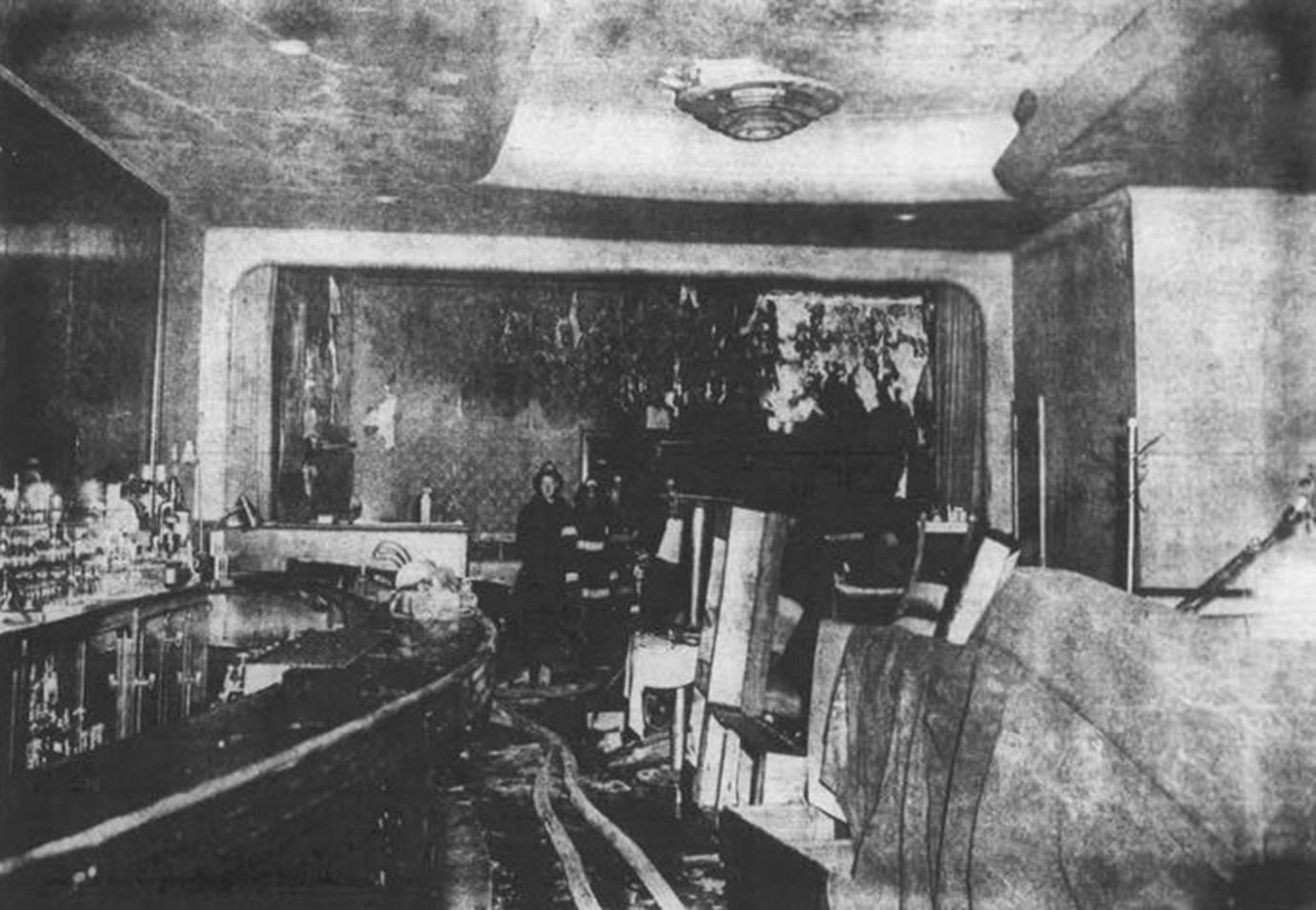
Photo of the gutted interior of the restaurant after the fire and fatal collapse.