
Deputy Fire Chief Dies after Falling Through Floor in Residential Structure During Fire Attack – Lafayette, Indiana – June 25, 2006 – NIOSH Firefighter Fatality Report F2006-24
On June 25, 2006, Deputy Fire Chief Steven Smith of the Wea Township Volunteer Fire Department in Lafayette, Indiana died after falling through a failed section of floor supported by engineered lightweight wood floor joists while attacking a basement fire from above. Attempts were made to reach the firefighter via a 14-foot roof ladder, but due to debris in the basement, fire/smoke conditions, and the angle of the failed floor, all attempts to reach him via the ladder failed. Firefighters entered the house, traversed the floor, and gained interior access to the basement to retrieve Smith. He was immediately found but was unresponsive. The crews had difficulty in moving him up the basement stairs, but after approximately 20 minutes they were able to remove him, provide medical treatment, and transport him via ambulance to the hospital where he was pronounced dead. The fire was later determined to be caused by a lightning strike and was fed by propane gas leaking from a fire damaged supply line in the basement. The death of Deputy Chief Smith was the first line of duty death in the 30-year history of the department.
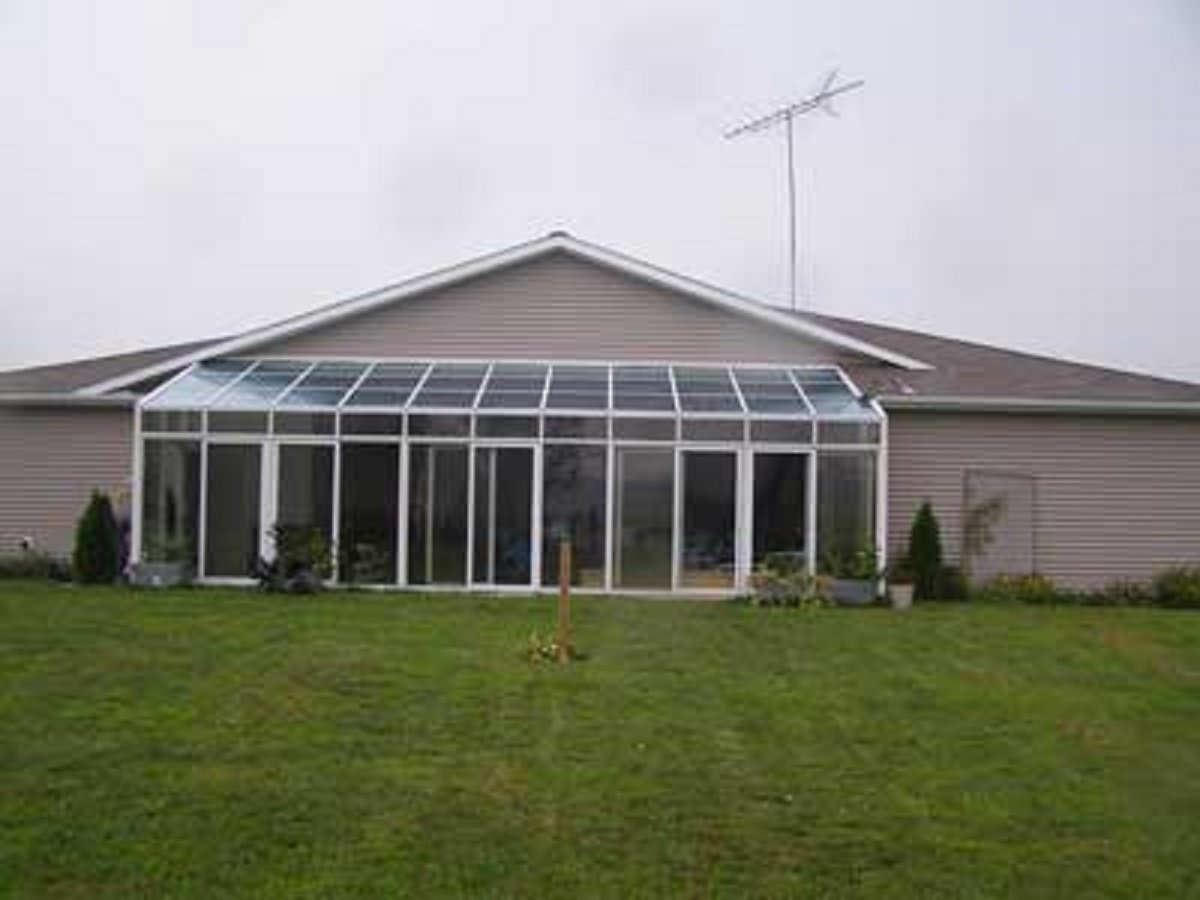
The structure involved in the incident was a one-story Type V Wood Frame ranch-style residential structure built in 2004 that was approximately 2,000 square feet in size on the main floor. There was a partial unfinished basement of approximately 1,200 square feet. The exterior was finished with horizontal vinyl siding. The main level flooring system was comprised of pre-engineered lightweight wood I-joists that measured 26 feet in length by 18 inches deep with 3 ½-inch flanges. The joists were set 19 ½-inches on center. Two main beams supporting the system were 26 feet long and consisted of 2 by 12-inch laminated beams. The floor decking in the area of the collapse consisted of ¾-inch oriented strand board (OSB), covered by ¼-inch luan plywood underlayment and vinyl tile. The structure was heated and cooled via propane gas and electricity. There was a glass-enclosed porch covering an in-ground pool that was attached to Side Charlie of the home.
Wea Township is one of thirteen townships in Tippecanoe County, Indiana. As of the 2010 U.S. census, the 36 square mile township had a population of 31,660 residents and contained 13,022 housing units. The township is located just south of Lafayette and 60 miles northwest of Indianapolis. At the time of the incident the township was protected by the Wea Township Volunteer Fire Department which operated 7 front-line responding apparatus from a single station with 30 volunteer firefighters. The acting Chief (Assistant Chief) was the only paid firefighter at the department which served a rural population of approximately 25,000 in an area of about 26 square miles.
Deputy Chief Steven Smith was a firefighter for 10 years and attended 149 hours of firefighter-related training in addition to EMS training – all received at the fire department. He was certified as an Emergency Medical Technician‚ Firefighter l‚ Firefighter ll‚ and Fire Medic ll.
On the afternoon of the incident, a severe thunderstorm had recently passed through the area, and light rain and winds persisted throughout this incident. The air temperature was 79 degrees F with the humidity level at 54% with east-northeast winds at 13 mph under cloudy skies (Weather Underground). Note: Research by the National Institute of Standards and Technology (NIST) has shown wind speeds on the order of 10 to 20 mph are sufficient to create wind-driven fire conditions in a structure with an uncontrolled flow path (Madrzykowski and Kerber 2009). The weather conditions had a significant impact on fire cause and development and the outcome of the incident.
On Sunday, June 25, 2006, at approximately 1429 hours, a neighbor called 911 to report a lightning strike and that there was light smoke coming from the residence. Note: A severe thunderstorm had passed/was passing through the area at the time. The thunderstorm also incapacitated the 800 MHz radio system in the area, complicating the dispatch of the fire department and the subsequent communication between the fire department and the 911 center. The initial caller indicated that there was no one home at the time and that the residents were gone for the day. At 1430 hours, the Wea Township Volunteer Fire Department received tones for dispatch, but it received no audio. The Assistant Chief reported attempting to contact the 911 center via the 800 MHz system to no avail. He also reported attempting to contact the 911 center on low band, also to no avail. He then called the 911 center on his cell phone and informed the 911 dispatcher that the department had heard tones, but no audio. At 1432, the department was re-dispatched via low-band by the county 911 dispatch.
Deputy Chief Steven Smith was the first to arrive on-scene in his personal vehicle at approximately 1438 hours. Initial size-up indicated that there was nothing apparent, and Smith radioed to incoming units to slow, but continue their response. Note: There was heavy rain in the area at this time. After completing his size-up, Deputy Chief Smith discovered that the windows in the front of the house were darkened, and upon his opening the front door, heavy smoke rolled out. He immediately radioed all incoming units to return to emergency response mode. Shortly thereafter, Engine 402 with a captain and one firefighter arrived on scene at approximately the same time as a county medic unit. Note: The 911 center in this area did not have time-stamp capability at the time of the incident; therefore, exact times are unknown. Both units positioned on Side Alpha of the residence and the captain on Engine 402 established Command.
Deputy Chief Smith and Command conversed briefly and decided to make entry through the front door with a 1 ¾-inch hoseline charged by a compressed air foam system (CAFS) for search/rescue and to search for the seat of the fire. Command also served as the pump operator. After donning their SCBAs, Smith and the firefighter from Engine 402 entered the structure through the front door entrance on Side Alpha at approximately 1442 hours, noting that a section of the floor just to the left of the front door had already given way. Once inside to the right approximately six feet, the team realized the floor under them was very hot and “spongy.” At the same time, the conditions inside the structure became untenable, with intensifying heat and “zero visibility” as a result of thick, black smoke.
Within 30 to 45 seconds of making entry, Deputy Chief Smith informed the firefighter that they were going to evacuate to get a light. As they exited the structure, they pulled the hoseline out with them. Smith stayed at the front entrance with the nozzle and sent the firefighter to Engine 402 to retrieve a box light and to pull another hoseline. Note: At this point, team integrity was compromised leaving one firefighter operating alone in close proximity to the fire. After retrieving the light, Deputy Chief Smith instructed the firefighter to stretch the additional hoseline around to Side Bravo to hit the fire in the basement through a window. Note: The basement window led to a crawl space, so no water actually reached the basement, or the fire. Also, during this time, another firefighter set up a positive pressure ventilation (PPV) fan at the entrance on Side Alpha. Smith remained at the front entrance to reportedly attack the fire through the hole in the floor just to the left of the entrance.
Around this time, the Assistant Chief arrived on scene in Engine 406, along with one firefighter, but did not assume Command. As the Assistant Chief made his way to Side Alpha of the structure, he saw a hoseline going down through a hole in the floor just inside the main entrance. He yelled down into the hole and heard a muffled reply. He could not hear what was being said, so he turned down the positive pressure ventilation (PPV) fan and then very clearly heard Deputy Chief Smith call for help. Note: It was stated by the Assistant Chief that the clarity of the victim’s voice indicated that he had apparently taken his SCBA facepiece off to communicate. The Assistant Chief immediately called Engine 402 for a 14-foot roof ladder to be placed into the hole in the floor. At this time, the first firefighter returned to Side Alpha and started to slide down into the hole to try to retrieve Deputy Chief Smith.
The basement area to the left of the first firefighter (Alpha/Bravo corner in basement) as well as the unfinished ceiling and unprotected floor joists were burning, and the firefighter had to use a hoseline to put water on the fire before descending. As soon as he reached the lower level, his low-air alarm went off, so he immediately climbed out of the basement and went to replace his air supply. The second firefighter and the Assistant Chief then attempted to position the 14-foot ladder for safe access into the basement, but as a result of debris and clearance inadequacies, the ladder did not reach the lower level. Once the ladder was somewhat in place, the Assistant Chief and the second firefighter descended into the basement and immediately found Deputy Chief Smith near the hole in the floor. The unresponsive officer, who was found with his SCBA facepiece off, was dragged to the area of the basement stairs.
The homeowner arrived on scene and made the firefighters aware that a 900-pound safe was positioned in the area above where the Assistant Chief and the second firefighters were working. The safe was on the East wall – near the center of the room and had fallen into the main support of the structure. The Assistant Chief and the second firefighter moved Smith from under this area. By this time, Tanker 404 with two firefighters aboard and Rescue 405 with one firefighter aboard had arrived on scene, as well as several firefighters via personal vehicles. The first firefighter returned with a fresh air cylinder just as the second firefighter ascended the ladder.
The Assistant Chief then came out of the structure due to being low on air, assumed Command and immediately advised Dispatch (at approximately 1450 hours) that they had a firefighter down and he requested mutual aid. The first firefighter started to descend the ladder but part of the burned-out floor supporting the ladder gave way and he fell into the basement injuring his knee. Since the ladder attempt was not successful at retrieving the victim, additional members quickly formed to enter the house, traversed the floor, and gained interior access to the basement to assist the first firefighter and to retrieve Deputy Chief Smith.
Smith was found almost immediately and was unresponsive. The initial crew experienced great difficulty in moving the officer over to and up the basement stairs because of the debris into which Smith had fallen and the limited personnel available to move him. After approximately 20 minutes, with the help of other firefighters, the crews were able to remove the fallen fire officer. Note: Difficulty in moving the unresponsive officer highlights the need for adequate staffing on hand before beginning offensive firefighting operations. Immediate medical treatment was provided, and an ambulance transported Deputy Chief Steven Smith to the hospital, where he was pronounced dead. The first firefighter was treated for his injured knee.
According to the County Coroner, the cause of death was carbon monoxide intoxication.
State fire marshals determined that the fire was accidentally started as a result of a lightning strike and was fed by propane gas leaking from a fire damaged supply line in the basement.
NIOSH investigators made a number of recommendations including:
- ensure that firefighters and incident commanders are aware that unprotected pre-engineered I-joist floor systems may fail at a faster rate than solid wood joists when exposed to direct fire impingement, and they should plan interior operations accordingly.
- ensure that the Incident Commander (IC) maintains the role of director of fireground operations and does not become directly involved in firefighting operations.
- ensure that risk vs. gain is evaluated during size-up prior to making entry in fire-involved structures.
- ensure that team continuity and accountability is maintained.
- ensure that a rapid intervention team (RIT) is on the scene as part of the first alarm and in position to provide immediate assistance prior to crews entering a hazardous environment.
- use defensive firefighting tactics when adequate staff (including command staff), apparatus and equipment for offensive operations are not available or when offensive operations are not practical.
- establish standard operating procedures (SOPs) regarding thermal imaging camera (TIC) use during interior operations.
Deputy Fire Chief Steven A. Smith, age 34, was a 10-year volunteer member of the Wea Township Volunteer Fire Department and had held the ranks of lieutenant and captain before becoming Deputy Chief in 2006. He was a 1990 graduate of Jefferson High School and later trained as an EMT at Ivy Tech State Collage. He worked for Alcoa in Lafayette as a millwright and general mechanic and was also a first responder at the plant. He is survived by his wife, Tammy, and three daughters, Kirstyn‚ age 13, Baylee‚ age 8 and Samantha, age 2; his parents, William and Eleanor Smith; and his two brothers, William and Robert and their wives.
On June 30, 2006, thousands of firefighters joined family and friends at Jefferson High School for the funeral service of the young fallen fire officer. Eighteen of Deputy Chief Smith’s fellow members of the Wea Township Fire Department served as pallbearers. Following the service, a long procession of emergency vehicles, led by a color guard, bagpipers and drummers from numerous fire departments, escorted the engine carrying the flag-draped casket of the fire officer into the entrance of Meadow View Cemetery in Lafayette, Indiana for the interment service.
The name of Deputy Chief Steven A. Smith has been honored at the Indiana Law Enforcement and Firefighters Memorial at the Indiana Government Center North in downtown Indianapolis. The memorial is located in a park-like setting with a central fountain. Two large Indiana limestone pylons with bronze medallions, one each to honor the law enforcement officers and firefighters who have died in the line of duty in the state. The names of the fallen are inscribed on thirty-three large polished gray granite panels that are arranged in a semi-circle behind the pylons.
Deputy Chief Steven A. Smith’s name has been inscribed on the 2006 plaque displayed at the National Fallen Firefighters Memorial on the campus of the National Fire Academy in Emmitsburg, Maryland.
Commentary:
Basement fires are particularly difficult and dangerous fires to attack. Adequate staffing and support are needed to approach the fire from a safe vantage point. In this incident, a number of factors including a delayed alarm, a well-involved basement fire, unprotected lightweight engineered wood I-joists supporting the first floor, and inadequate staffing to mount an aggressive interior attack on the fire, all came together to take the life of a young fire officer. Knowledge of the types of lightweight materials that are used in the construction of structures in your response district is critical to the decision-making process early in an incident. Lightweight engineered wood I-joists have a history of early collapse when exposed to direct flame impingement. Recognizing the limitations of inadequate initial staffing is crucial to firefighter safety.
This incident has similarities to two other firefighter fatalities that occurred during residential fires where the floor collapsed tossing the firefighters into the burning lower level. In both cases, the fires were caused by a lightning strike:
On August 11, 2021, Captain Joshua D. Laird of the Frederick County, Maryland Division of Fire and Rescue Services lost his life in the line of duty after falling through the floor of a burning two-story single-family dwelling at 9510 Ball Road in the Ijamsville section of the county. County fire units were dispatched at 4:48 p.m. to reports of a house possibly struck by lightning after a severe storm passed through the area. First arriving firefighters saw heavy fire coming from the large residence and requested a rapid intervention dispatch with a task force which was quickly upgraded to a second alarm due to heavy fire conditions. During the initial phase of the firefight, Captain Laird entered the first-floor breakfast nook area with a hoseline by himself. Laird fell through the fire-weakened floor into the burning basement. Lost and disoriented, he was unable to find and exit the basement level as he transmitted a Mayday. After an intense rescue effort by on scene firefighters, Captain Laird was located and removed from the basement. He was transported via medical helicopter to a regional trauma center. Despite extraordinary medical treatment, Captain Joshua D. Laird died in the line of duty. Fire investigators later determined the fire was caused by a lightning strike that damaged corrugated stainless-steel tubing (CSST) causing a propane gas leak and igniting a fire in the basement:
https://www.facebook.com/groups/192218352449074/permalink/1296797818657783/
On July 23, 2018, at about 0120 hours, a lightning strike ignited a fire within a large private residence located at 7005 Woodscape Drive in Clarksville, Maryland. Smelling smoke, the residents called 911 to report the lightning strike and visible smoke in their home. Howard County Fire Rescue units were dispatched to investigate the smoke condition. On arrival, fire crews reported a working fire in the residence and called for additional resources. As firefighters searched for the seat of the fire while advancing hoselines into the structure, Firefighter Nathan Flynn fell through the first floor and was trapped in a crawlspace area. A Mayday was declared, and firefighters were able to locate and remove the downed firefighter. He was treated and quickly transported to a local hospital but was unable to be revived. Investigators later determined that the area of origin to be in the unfinished basement crawlspace below the first-floor family room and breakfast area. Investigators identified the ignition sequence of the fire to be a lightning strike causing the failure of a residential corrugated stainless-steel tubing (CSST) system that carried liquid propane gas from an outside tank to serve the appliances in the residence. Lieutenant Nathan Flynn was the first member of the Howard County Department of Fire and Rescue Services to be killed in the line of duty.
https://www.facebook.com/groups/192218352449074/permalink/1278001320537433/
We have attached photos from the incident from the NIOSH report and other sources. The link to the NIOSH report is here:
https://stacks.cdc.gov/view/cdc/163653
We have also attached the link to an article published by Azarang (Ozzie) Mirkhah and Sean DeCrane in Fire Engineering magazine titled “Entering Through the Door, Falling Through the Floor: Catastrophic Structural Collapse” that highlights the fire performance of lightweight engineered wood I-joists: https://www.fireengineering.com/fire-prevention-protection/entering-through-the-door-falling-through-the-floor-catastrophic-structural-collapse/
We have also attached the link to a BCFS Question of the Week article on engineered wood I-beams: https://www.facebook.com/groups/192218352449074/permalink/1537235454614017/
Honor the service of Deputy Chief Steven Smith by reviewing the dangers of lightweight engineered wood I-joists with your crew members today.
Remember Fallen Brothers.
Get Out There And Know Your Local!!!
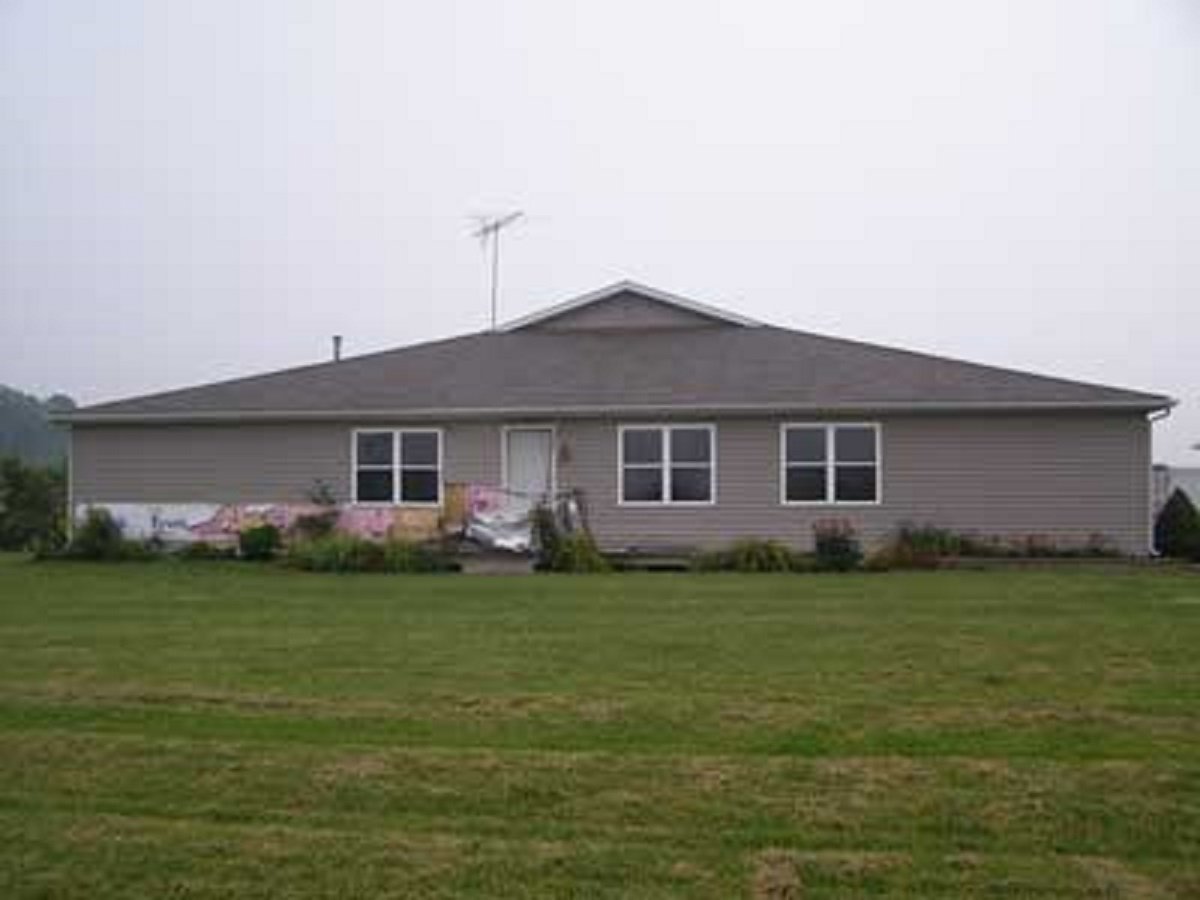
View of Side Alpha of the fire building.
he structure involved in the incident was a one-story Type V Wood Frame ranch-style residential structure built in 2004 that was approximately 2,000 square feet in size on the main floor. There was a partial unfinished basement of approximately 1,200 square feet. The exterior was finished with horizontal vinyl siding. The main level flooring system was comprised of pre-engineered lightweight wood I-joists that measured 26 feet in length by 18 inches deep with 3 ½-inch flanges. The joists were set 19 ½-inches on center. Two main beams supporting the system were 26 feet long and consisted of 2 by 12-inch laminated beams. The floor decking in the area of the hole consisted of
¾-inch oriented strand board (OSB), covered by ¼-inch luan plywood underlayment and vinyl tile. The structure was heated and cooled via propane gas and electricity. There was a glass-enclosed porch covering an in-ground pool that was attached to Side Charlie of the home.
Photo: Side Charlie showing the glass enclosed swimming pool. at the rear of the dwelling.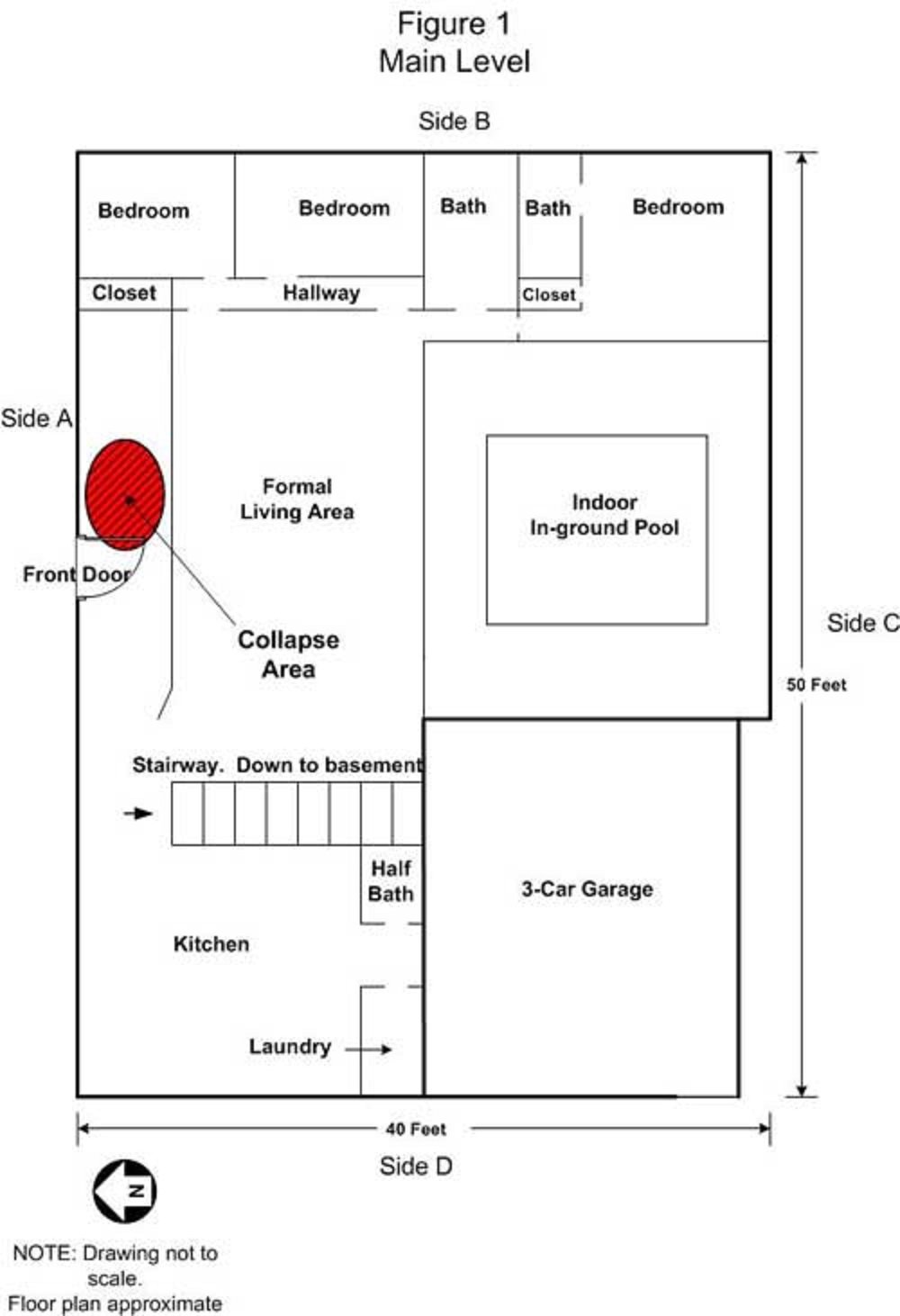
Floor plan of the ranch-style residence showing the location of the collapse area near the front entrance door.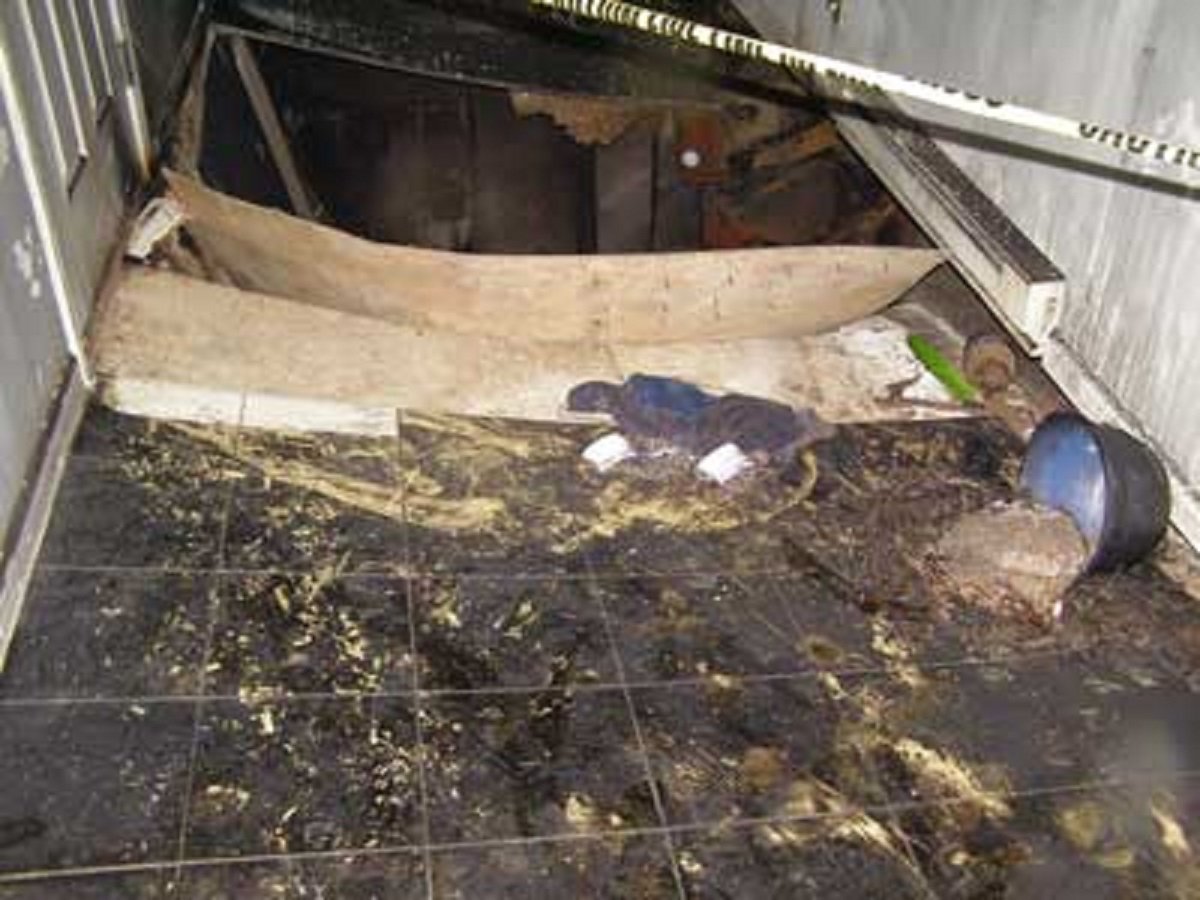
Floor plan of the ranch-style residence showing the location of the collapse area near the front entrance door.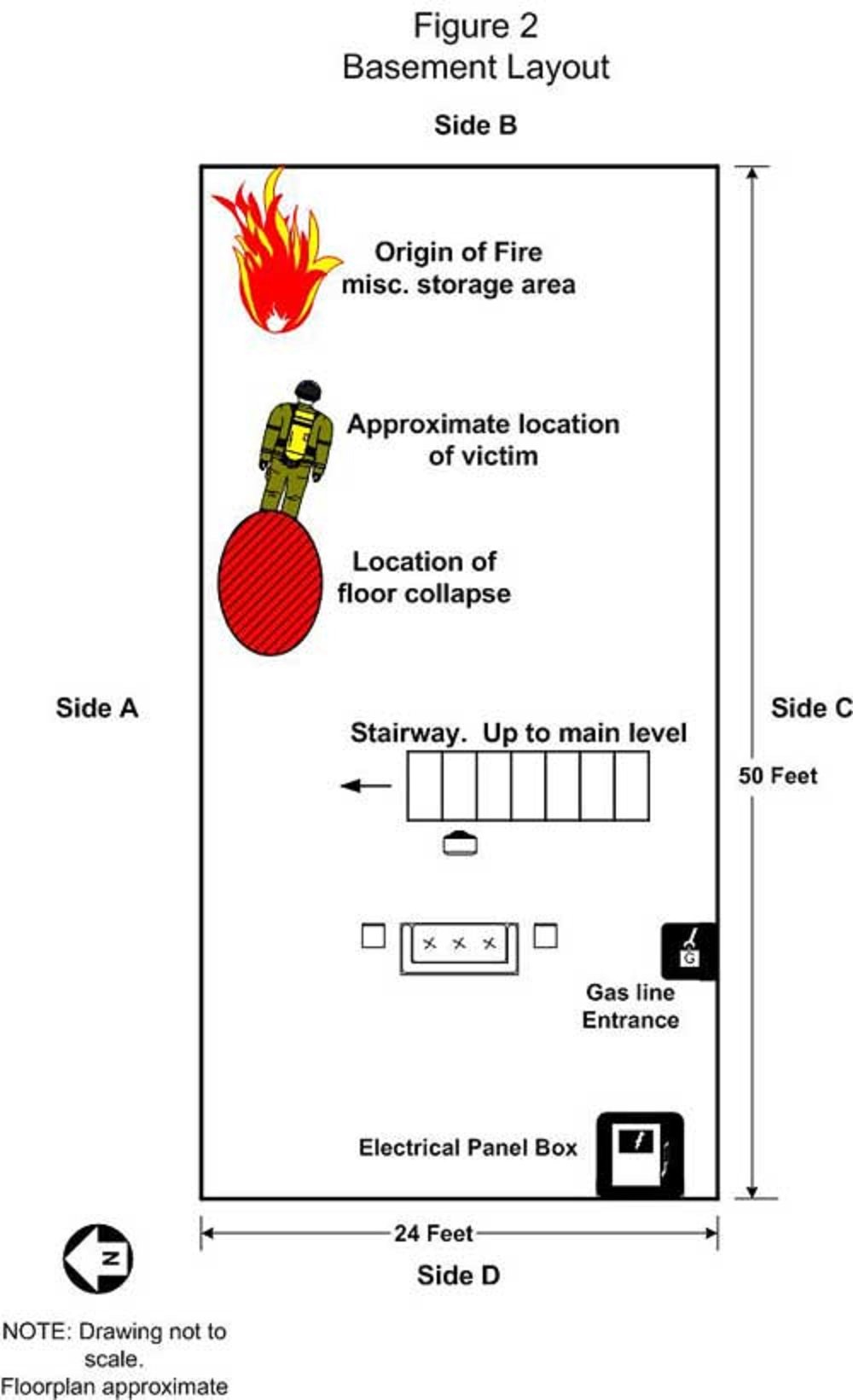
Basement floor plan showing the location of the fire and where the fire officer was found.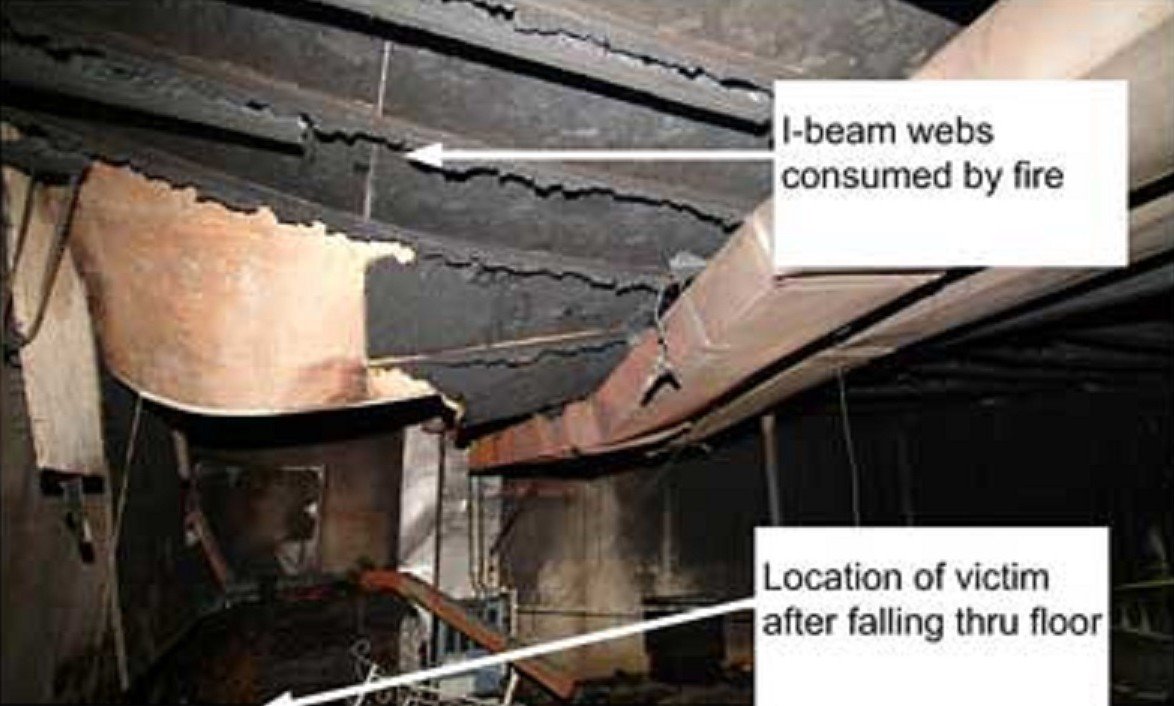
The floor failure area as viewed from the basement.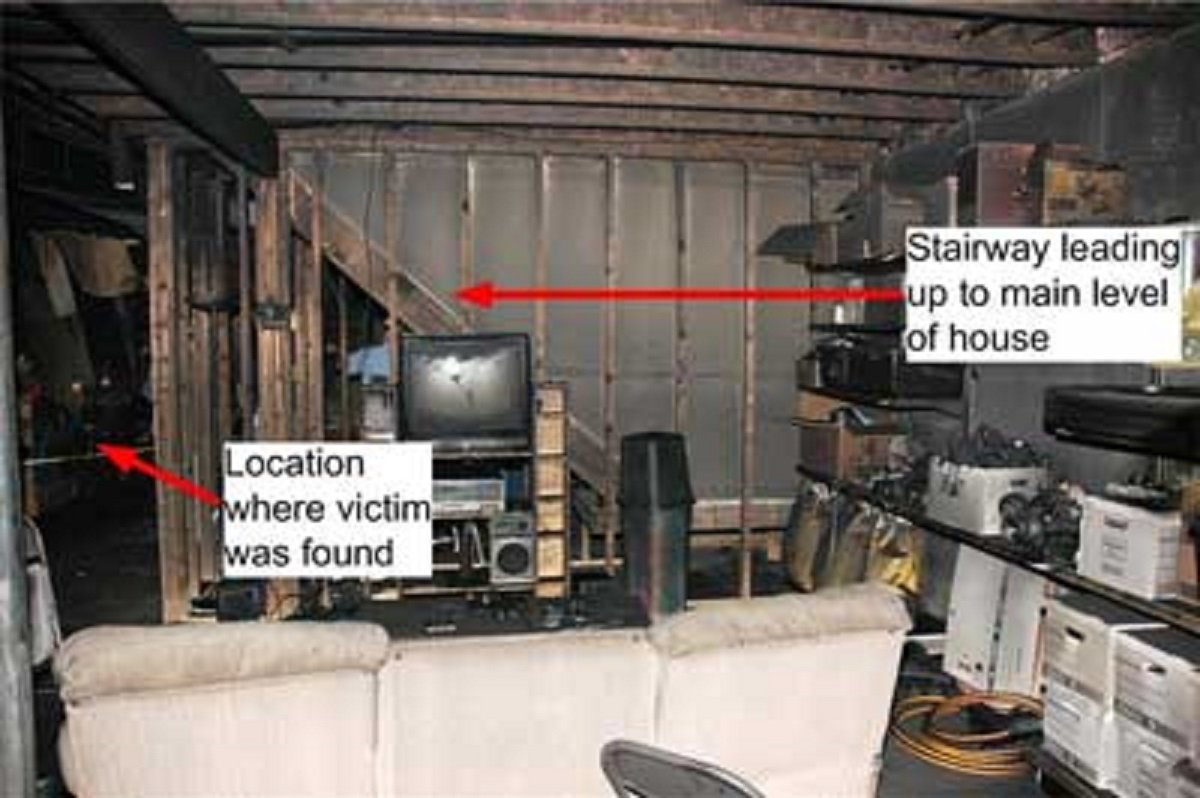
Basement layout showing stairway to main level of house.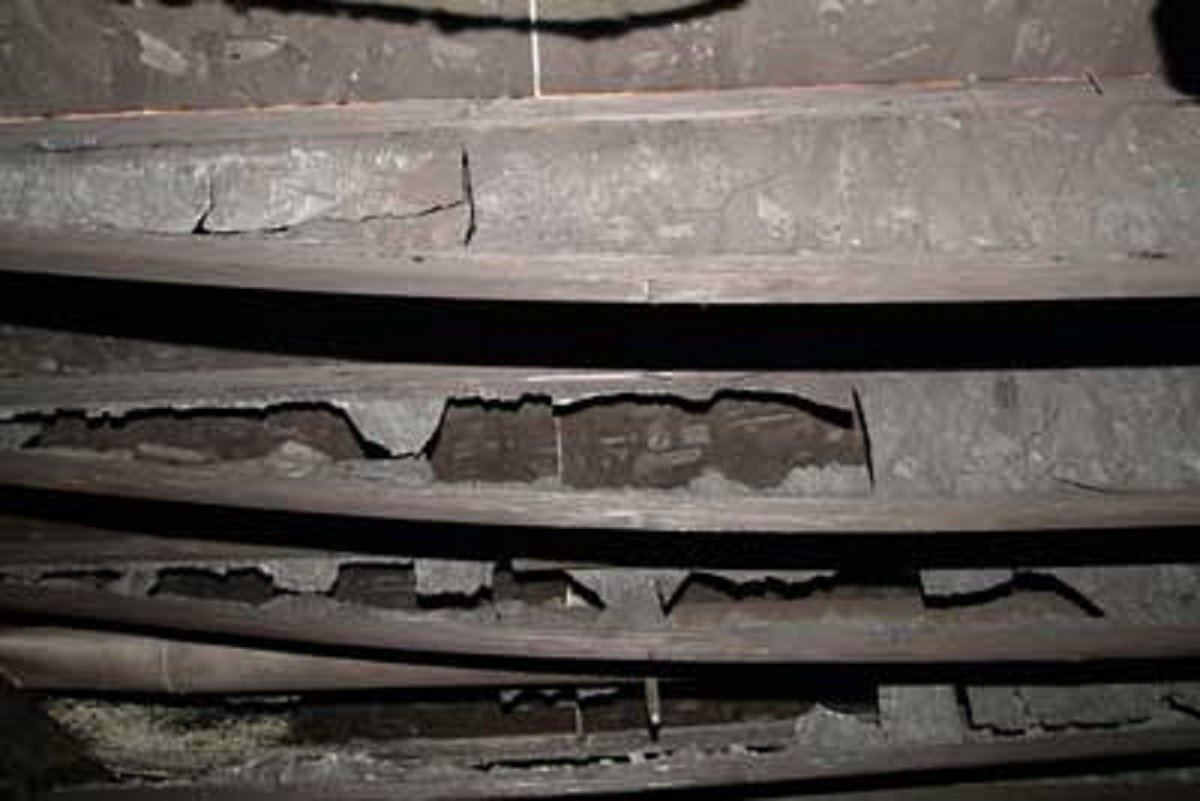
Significant damage suffered by the webbing of the I-joists as compared to the flanges. This damage resulted in floor instability and failure.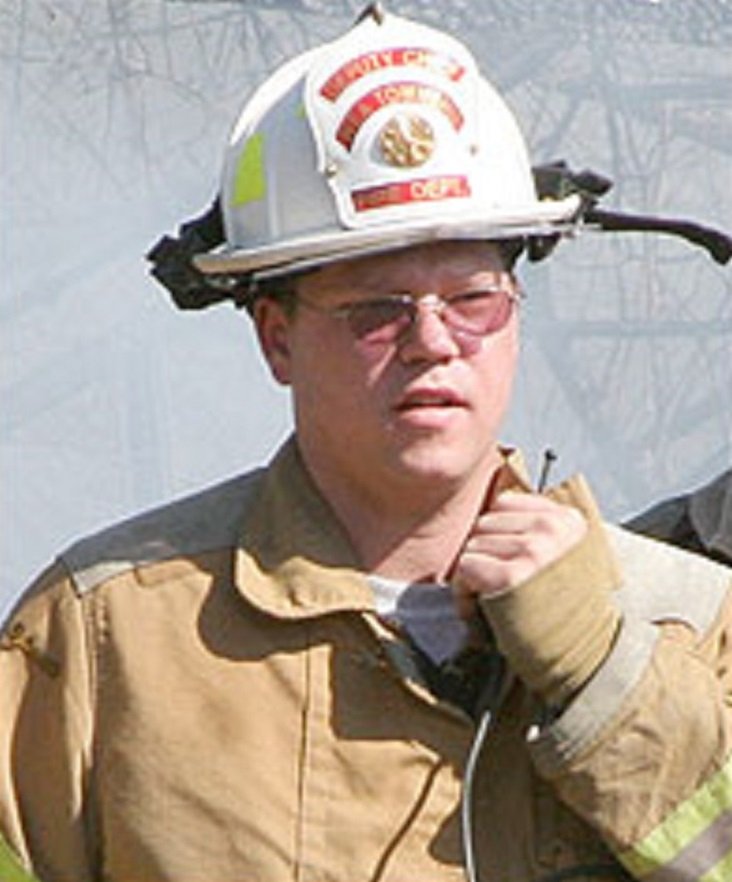
Deputy Fire Chief Steven A. Smith, age 34, was a 10-year volunteer member of the Wea Township Volunteer Fire Department and had held the ranks of lieutenant and captain before becoming Deputy Chief in 2006. He was a 1990 graduate of Jefferson High School and later trained as an EMT at Ivy Tech State Collage. He worked for Alcoa in Lafayette as a millwright and general mechanic and was also a first responder at the plant. He is survived by his wife, Tammy, and three daughters, Kirstyn‚ age 13, Baylee‚ age 8 and Samantha, age 2; his parents, William and Eleanor Smith; and his two brothers, William and Robert and their wives.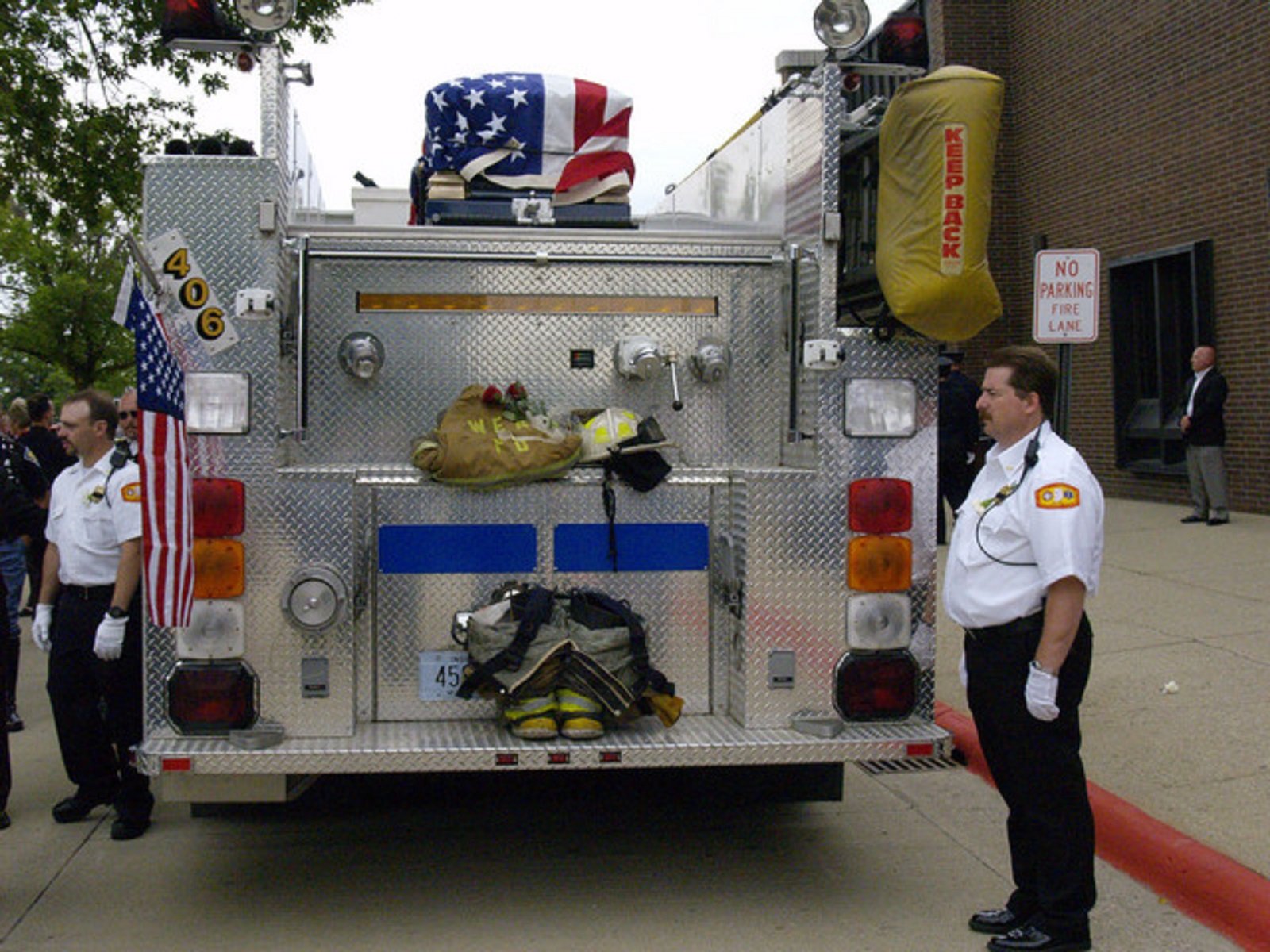
On June 30, 2006, thousands of firefighters joined family and friends at Jefferson High School for the funeral service of the young fallen fire officer. Eighteen of Deputy Chief Smith’s fellow members of the Wea Township Fire Department served as pallbearers. Following the service, a long procession of emergency vehicles, led by a color guard, bagpipers and drummers from numerous fire departments, escorted the engine carrying the flag-draped casket of the fire officer into the entrance of Meadow View Cemetery in Lafayette, Indiana for the interment service.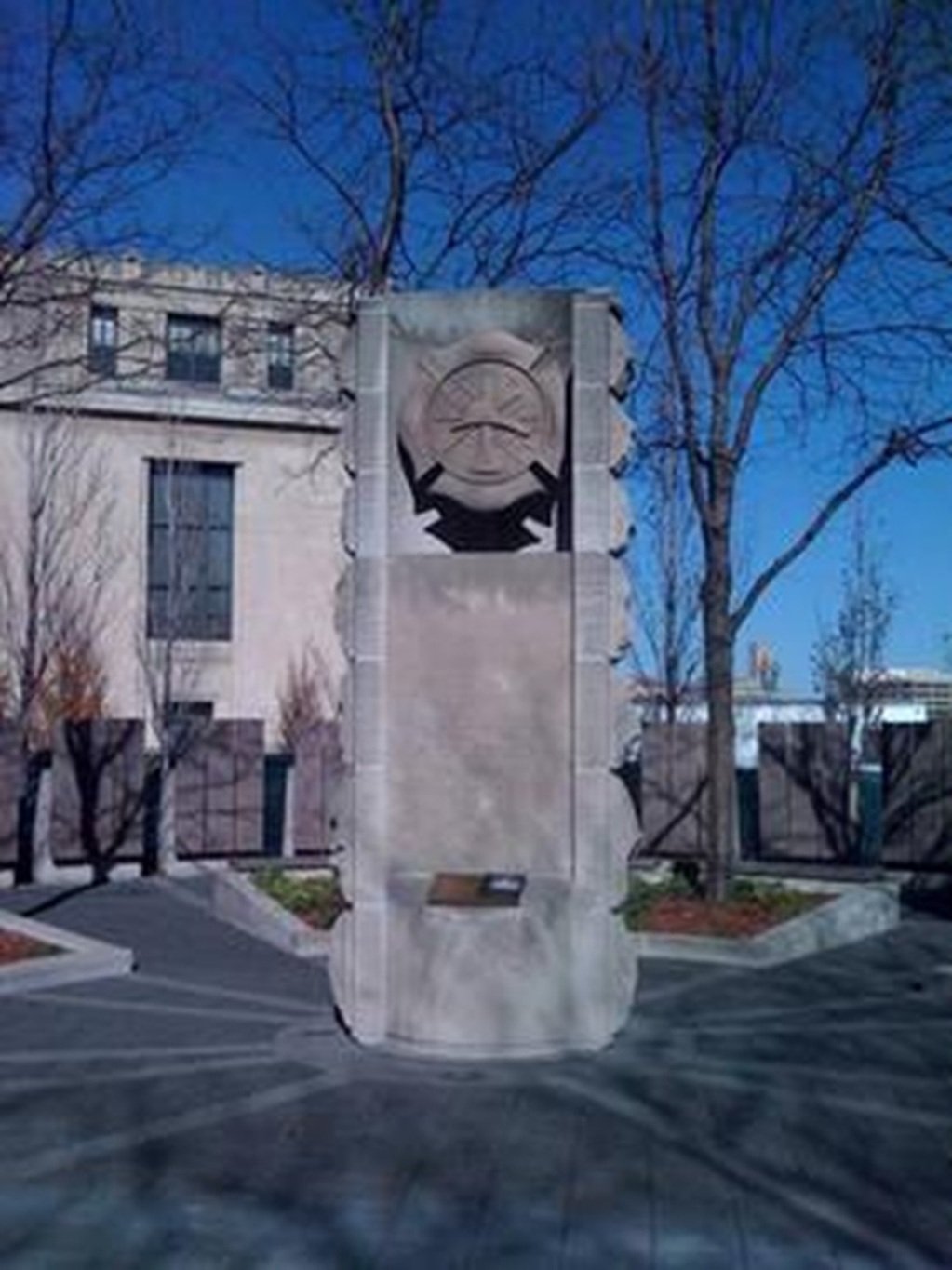
The name of Deputy Chief Steven A. Smith has been honored at the Indiana Law Enforcement and Firefighters Memorial at the Indiana Government Center North in downtown Indianapolis. The memorial is located in a park-like setting with a central fountain. Two large Indiana limestone pylons with bronze medallions, one each to honor the law enforcement officers and firefighters who have died in the line of duty in the state. The names of the fallen are inscribed on thirty-three large polished gray granite panels that are arranged in a semi-circle behind the pylons.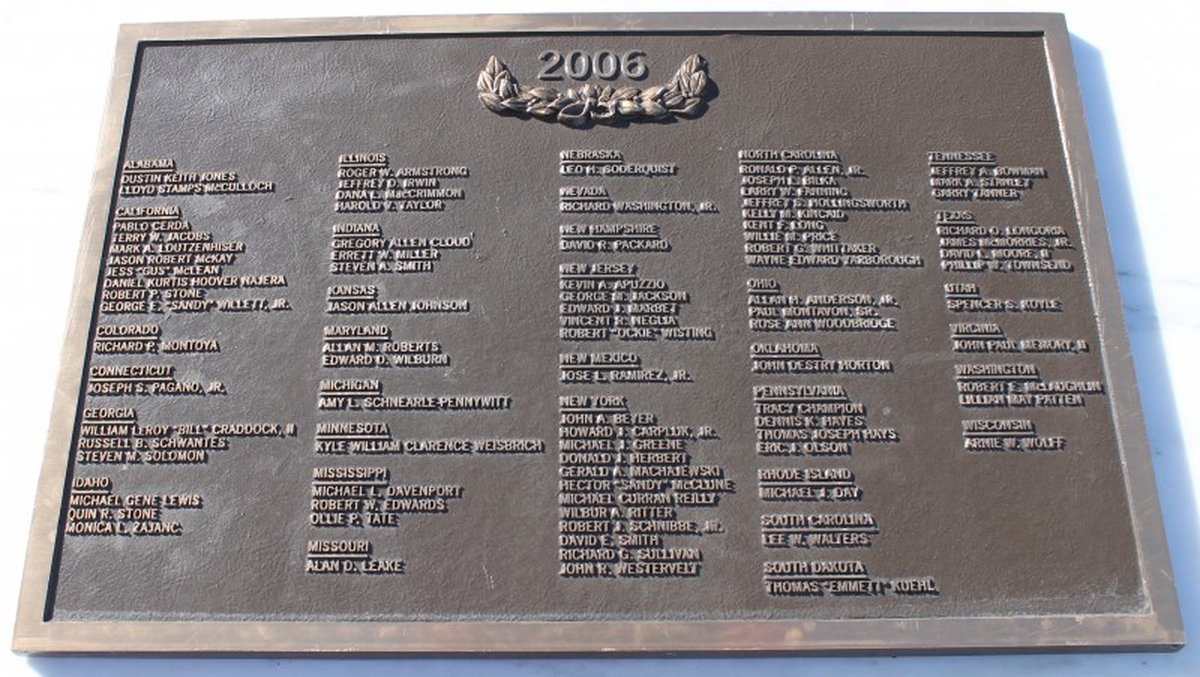
Deputy Chief Steven A. Smith’s name has been inscribed on the 2006 plaque displayed at the National Fallen Firefighters Memorial on the campus of the National Fire Academy in Emmitsburg, Maryland.
