
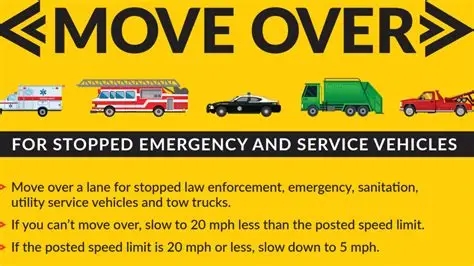
A 43-year-old woman was killed Friday morning on Route 1 in West Windsor after she drove through a police barricade set up following an earlier crash and slammed into a tractor-trailer, authorities said.
The woman was driving south on Route 1 at 5:20 a.m. when she proceeded through barricades that had been set up at the intersection of Harrison Street and crashed into the tractor-trailer still on the highway from the first collision, West Windsor police said. Her vehicle narrowly missed emergency workers at the scene investigating the earlier crash.
The woman, a resident of Media, Pennsylvania, was pronounced dead at the scene. She was not identified by police.
The first crash occurred just before 2 a.m. when a 22-year-old Philadelphia man driving south went through a red light and collided with the passenger side of a tractor-trailer turning left from Washington Road onto southbound Route 1, according to police.
The driver of the vehicle had to be cut out of the car by emergency workers and was hospitalized with life-threatening injuries, officials said.
Police said the truck driver, a 28-year-old Edison man, suffered minor injuries.
Anyone with information about either crash is asked to call West Windsor police officers Alex Mangone or Kyle LaForge at 609-799-1222. The department’s anonymous tip line can be reached at 609-799-0452.
At approximately 0200 hours on Friday, May 29, 2026, fire, EMS, and law enforcement agencies were dispatched to a reported motor vehicle accident with entrapment on Route 1 South at Washington Road.
Upon arrival, responders encountered a serious collision involving a passenger vehicle and the tractor portion of a tractor-trailer. One occupant was trapped and required extrication. Firefighters and EMS personnel worked together to stabilize the vehicle, complete the rescue, and provide patient care. The victim was transported from the scene, while investigators remained to process the crash investigation.
Due to the severity of the incident, Route 1 South remained closed for several hours. Personnel from multiple agencies, including fire, EMS, law enforcement, towing and recovery services, the New Jersey Department of Transportation, and traffic management personnel from the New Jersey State Police, operated within the roadway. Numerous traffic control measures were in place, including complete roadway closures, traffic cones, arrow boards, warning devices, and DOT personnel assigned to traffic control functions.
As the investigation was concluding and towing operations were underway to remove the involved vehicles and reopen the highway, a second vehicle entered the closed work zone and accelerated to highway speeds. Despite extensive traffic control measures and multiple warnings directing traffic away from the scene, the vehicle entered the incident area and struck the trailer involved in the original crash.
At the time of impact, numerous responders and support personnel were operating in and around the roadway. Several firefighters, law enforcement officers, and other personnel were forced to take immediate evasive action, diving, running, or jumping out of the path of the oncoming vehicle to avoid being struck.
The vehicle ultimately collided with equipment within the work zone, resulting in the driver’s fatality. Miraculously, no emergency responders, investigators, DOT personnel, or tow operators were physically struck. However, the margin between a tragic responder fatality event and a near miss was measured in only a matter of feet and seconds.
Following the collision, responders immediately transitioned from scene demobilization back into rescue and emergency operations while simultaneously accounting for personnel and ensuring scene safety. Unfortunately, the driver of this vehicle did not survive.
Lessons Learned: A roadway closure should never be considered completely secure, regardless of the incident duration or the level of traffic control in place.
Personnel should continuously maintain awareness of traffic threats and identify escape routes throughout an incident.
During extended operations, responder fatigue and a false sense of security can develop as traffic patterns stabilize and the incident winds down.
Blocking apparatus shall remain in place, even with a full closure of the road until all personnel have cleared the hazard area.
Incident commanders should consider assigning a dedicated safety officer or lookout to monitor traffic conditions during prolonged roadway operations.
